Uli Paetzel – författare
Visar alla böcker från författaren Uli Paetzel. Handla med fri frakt och snabb leverans.
4 produkter
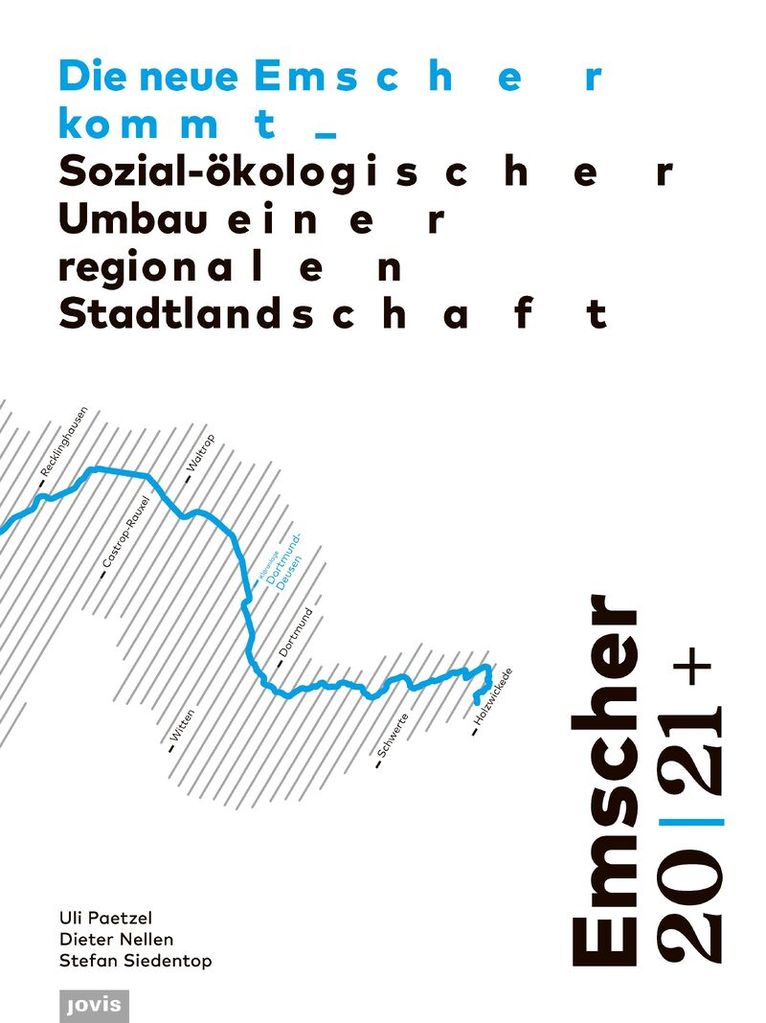
Emscher 20 | 21+: Die neue Emscher kommt
Sozial-ökologischer Umbau einer regionalen Stadtlandschaft
Av Uli Paetzel, Dieter Nellen m. fl.
Inbunden, 2022
637 kr
Lägg i varukorg
For a long time, the Emscher was Germany’s dirtiest river. Now, however, it runs clear again. This volume documents the social and ecological restoration of the Emscher, which flows through the northern Ruhr area for 81 km. Used as a mining wastewater system during the industrial period, it has now …
ESSEN | RUHRMETROPOLE - Stadtentwicklung 21+
Av Martin Harter, Dieter Nellen m. fl.
Inbunden, 2024
534 kr
Lägg i varukorg
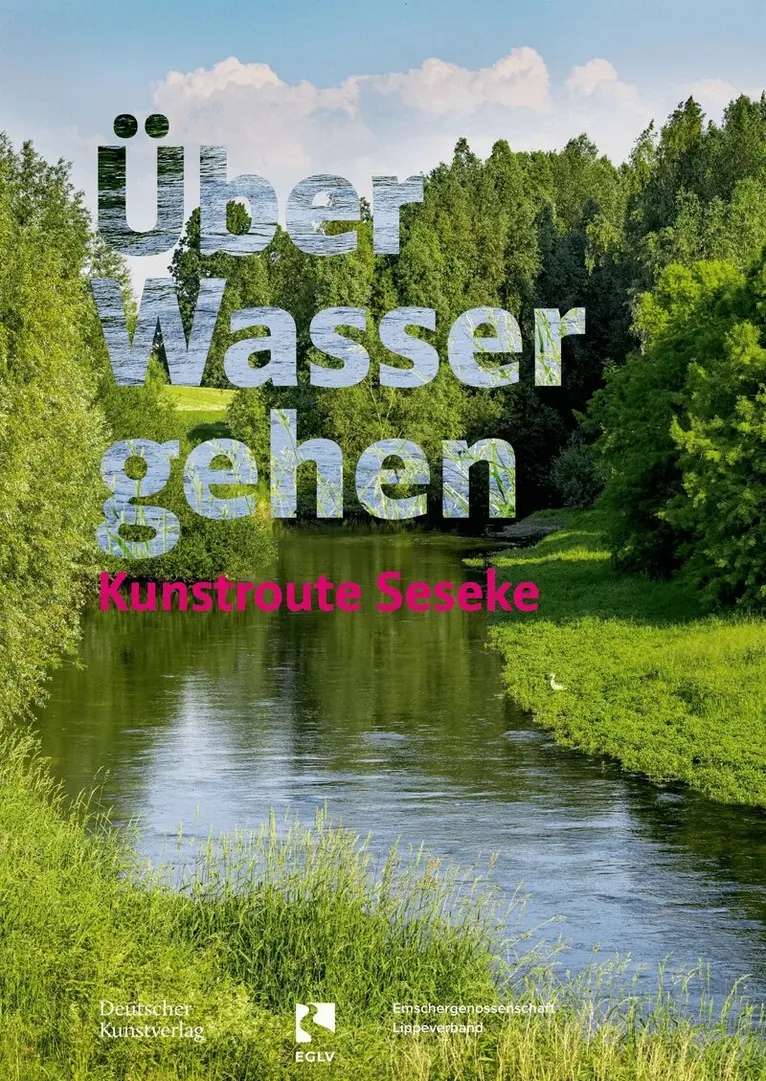
Über Wasser Gehen
Kunstroute Seseke
Häftad, 2025
269 kr
Tillfälligt slut
During industrialisation, the Seseke – a tributary of the Lippe – was straightened, dyked, and turned into an open sewage canal. Between the 98 s and 2 4, the Lippeverband restored the watercourse to its natural state as part of the " Seseke Programme" . This transformation was accompanied by an …
Emscherkunstweg
Av Vera Battis-Reese, Karola Geib-Netthofel m. fl.
Häftad, 2024
106 kr
Tillfälligt slut
The Emscherkunstweg (Emscher Art Trail) currently comprises 24 works of public art on the banks of the Emscher River in the heart of the Ruhr region in western Germany. Once the most polluted river in Europe, the Emscher has been dramatically transformed from a drainage system into a natural river …