Ulla Tervahauta – författare
Visar alla böcker från författaren Ulla Tervahauta. Handla med fri frakt och snabb leverans.
7 produkter
7 produkter
Häftad, Engelska, 2019
651 kr
Skickas inom 10-15 vardagar
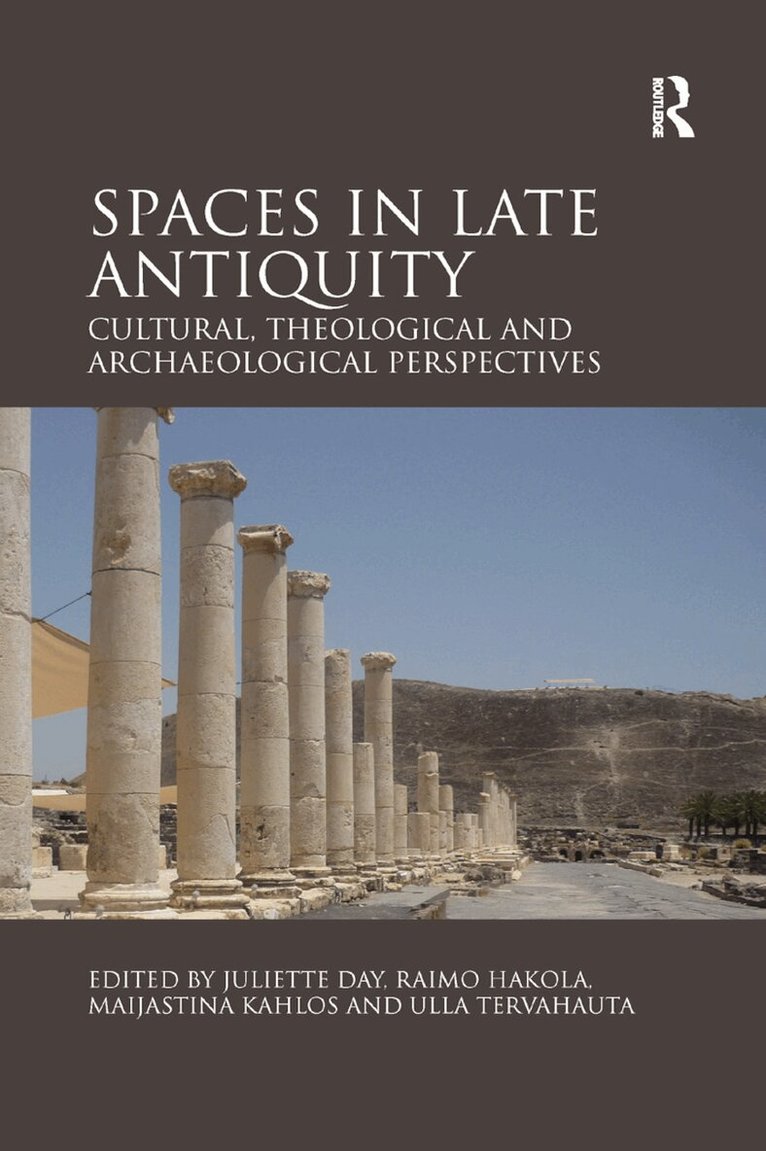
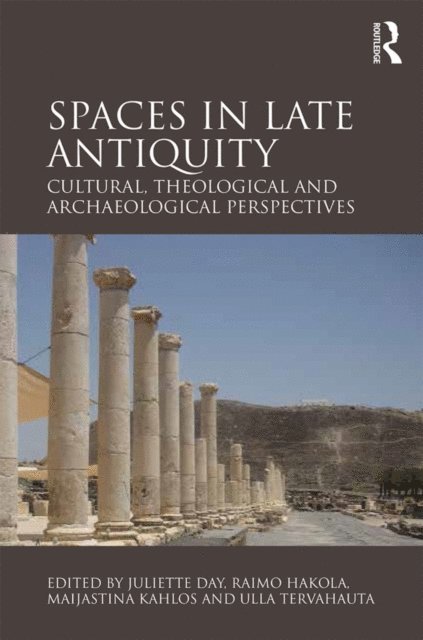
Places and spaces are key factors in how individuals and groups construct their identities. Identity theories have emphasised that the construction of an identity does not follow abstract and universal processes but is also deeply rooted in specific historical, cultural, social and material environments. The essays in this volume explore how various groups in Late Antiquity rooted their identity in special places that were imbued with meanings derived from history and tradition. In Part I, essays explore the tension between the Classical heritage in public, especially urban spaces, in the form of ancient artwork and civic celebrations and the Church's appropriation of that space through doctrinal disputes and rival public performances. Parts II and III investigate how particular locations expressed, and formed, the theological and social identities of Christian and Jewish groups by bringing together fresh insights from the archaeological and textual evidence. Together the essays here demonstrate how the use and interpretation of shared spaces contributed to the self-identity of specific groups in Late Antiquity and in so doing issued challenges, and caused conflict, with other social and religious groups.
769 kr
Läs direkt efter köp
Places and spaces are key factors in how individuals and groups construct their identities. Identity theories have emphasised that the construction of an identity does not follow abstract and universal processes but is also deeply rooted in specific historical, cultural, social and material environments. The essays in this volume explore how various groups in Late Antiquity rooted their identity in special places that were imbued with meanings derived from history and tradition. In Part I, essays explore the tension between the Classical heritage in public, especially urban spaces, in the form of ancient artwork and civic celebrations and the Church''s appropriation of that space through doctrinal disputes and rival public performances. Parts II and III investigate how particular locations expressed, and formed, the theological and social identities of Christian and Jewish groups by bringing together fresh insights from the archaeological and textual evidence. Together the essays here demonstrate how the use and interpretation of shared spaces contributed to the self-identity of specific groups in Late Antiquity and in so doing issued challenges, and caused conflict, with other social and religious groups.
E-bok
PDF, Engelska, 2016769 kr
Läs direkt efter köp
Places and spaces are key factors in how individuals and groups construct their identities. Identity theories have emphasised that the construction of an identity does not follow abstract and universal processes but is also deeply rooted in specific historical, cultural, social and material environments. The essays in this volume explore how various groups in Late Antiquity rooted their identity in special places that were imbued with meanings derived from history and tradition. In Part I, essays explore the tension between the Classical heritage in public, especially urban spaces, in the form of ancient artwork and civic celebrations and the Church''s appropriation of that space through doctrinal disputes and rival public performances. Parts II and III investigate how particular locations expressed, and formed, the theological and social identities of Christian and Jewish groups by bringing together fresh insights from the archaeological and textual evidence. Together the essays here demonstrate how the use and interpretation of shared spaces contributed to the self-identity of specific groups in Late Antiquity and in so doing issued challenges, and caused conflict, with other social and religious groups.
Inbunden, Engelska, 2016
2 389 kr
Skickas inom 10-15 vardagar
Places and spaces are key factors in how individuals and groups construct their identities. Identity theories have emphasised that the construction of an identity does not follow abstract and universal processes but is also deeply rooted in specific historical, cultural, social and material environments. The essays in this volume explore how various groups in Late Antiquity rooted their identity in special places that were imbued with meanings derived from history and tradition. In Part I, essays explore the tension between the Classical heritage in public, especially urban spaces, in the form of ancient artwork and civic celebrations and the Church's appropriation of that space through doctrinal disputes and rival public performances. Parts II and III investigate how particular locations expressed, and formed, the theological and social identities of Christian and Jewish groups by bringing together fresh insights from the archaeological and textual evidence. Together the essays here demonstrate how the use and interpretation of shared spaces contributed to the self-identity of specific groups in Late Antiquity and in so doing issued challenges, and caused conflict, with other social and religious groups.
Inbunden, Engelska, 2015
1 925 kr
Skickas inom 11-20 vardagar
Authentikos Logos (NHC VI,3), also known as Authoritative Teaching,is a little studied story of a souls descent and ascent in the Nag Hammadi library. With her book Ulla Tervahauta fills a gap in the scholarship and provide the first monograph-length study that has this writingas its primary focus. The aim is to find a place and context for Authentikos Logos within early Christianity, but Tervahauta also adds new insight into the scholarship of the Nag Hammadi Library and study of early Christianity. Contrary to the usual discussion of the Nag Hammadi writings from the viewpoint of Gnostic studies, she argues that Authentikos Logos is best approached from the context of Christian traditions of late ancient Egypt between the third and the fifth centuries. Tervahauta discusses the story of the souls journey in light of various Christian and Platonic writings. Also, she analyses the relationship of Authentikos Logos with the Valentinian Wisdom myth and suggests that no firm evidence connects the writing closely with Valentinian traditions. And although a Platonic mind-set can be assumed, the writing combines motifs in a unique manner. For example, the four epithets used in the writing the invisible soul, the pneumatic soul, the material soul, and the rational soul are not found thus combined elsewhere. Discussion of matter (hyle) is connected with Christian scriptural allusions and the focus is on ethics and the evilness of matter. The body, on the other hand, is the souls place of contest and progress. The Pauline term pneumatic body (1 Cor 15:44) is used allusively and from a Platonic perspective. With this book Ulla Tervahauta makes an important contribution to the study of early Christianity in late ancient Egypt by discussing a writing thatshows knowledge and creative combination of literary traditions that circulated in late ancient Egypt.
E-bok
PDF, Engelska, 20201 491 kr
Läs direkt efter köp
This book brings together leading experts in the field of ancient synagogue studies to discuss the current issues and emerging trends in the study of synagogues in ancient Palestine. Divided into four thematic units, the different contributions apply archaeological, textual, historical and art historical methodologies to questions related to ancient synagogues.Part One addresses issues related to the origins and early development of synagogues up to 200 CE. The contributions provide different explanations to the alleged lack of evidence for synagogues built in the second and third centuries CE and ask how much continuity or change there is between the late Second Temple and late Roman/early Byzantine synagogues. Part Two deals with architecture and dating of ancient synagogues. It gives an overview of all synagogues found so far, approaches the dating of Galilean synagogues in the light of the recently-exposed synagogue at Huqoq, and provides a stylistic re-evaluation of the Capernaum synagogue decoration.Part three examines leadership, power and daily life in late antique synagogue contexts, illustrating non-monumental inscriptions, amulets and dining in synagogue contexts as well as the role of individual benefactors. Section four contextualizes synagogue art. An overview of synagogue mosaics in late antique Palestine is complemented with reinterpretations of the mosaics two synagogues. The section also offers a discussion of the appearance of the menorah.
E-bok
PDF, Engelska, 20151 372 kr
Läs direkt efter köp
Authentikos Logos (NHC VI,3), also known as Authoritative Teaching,is a little studied story of a soul''s descent and ascent in the Nag Hammadi library. With her book Ulla Tervahauta fills a gap in the scholarship and provide the first monograph-length study that has this writingas its primary focus. The aim is to find a place and context for Authentikos Logos within early Christianity, but Tervahauta also adds new insight into the scholarship of the Nag Hammadi Library and study of early Christianity. Contrary to the usual discussion of the Nag Hammadi writings from the viewpoint of Gnostic studies, she argues that Authentikos Logos is best approached from the context of Christian traditions of late ancient Egypt between the third and the fifth centuries.Tervahauta discusses the story of the soul''s journey in light of various Christian and Platonic writings. Also, she analyses the relationship of Authentikos Logos with the Valentinian Wisdom myth and suggests that no firm evidence connects the writing closely with Valentinian traditions. And although a Platonic mind-set can be assumed, the writing combines motifs in a unique manner. For example, the four epithets used in the writing – the "invisible soul", the "pneumatic soul", the "material soul", and the "rational soul" – are not found thus combined elsewhere. Discussion of matter (hyle) is connected with Christian scriptural allusions and the focus is on ethics and the evilness of matter. The body, on the other hand, is the soul''s place of contest and progress. The Pauline term "pneumatic body" (1 Cor 15:44) is used allusively and from a Platonic perspective. With this book Ulla Tervahauta makes an important contribution to the study of early Christianity in late ancient Egypt by discussing a writing thatshows knowledge and creative combination of literary traditions that circulated in late ancient Egypt.