Ulrich Foelsche – författare
Visar alla böcker från författaren Ulrich Foelsche. Handla med fri frakt och snabb leverans.
9 produkter
9 produkter
Inbunden, Engelska, 2004
2 173 kr
Skickas inom 10-15 vardagar
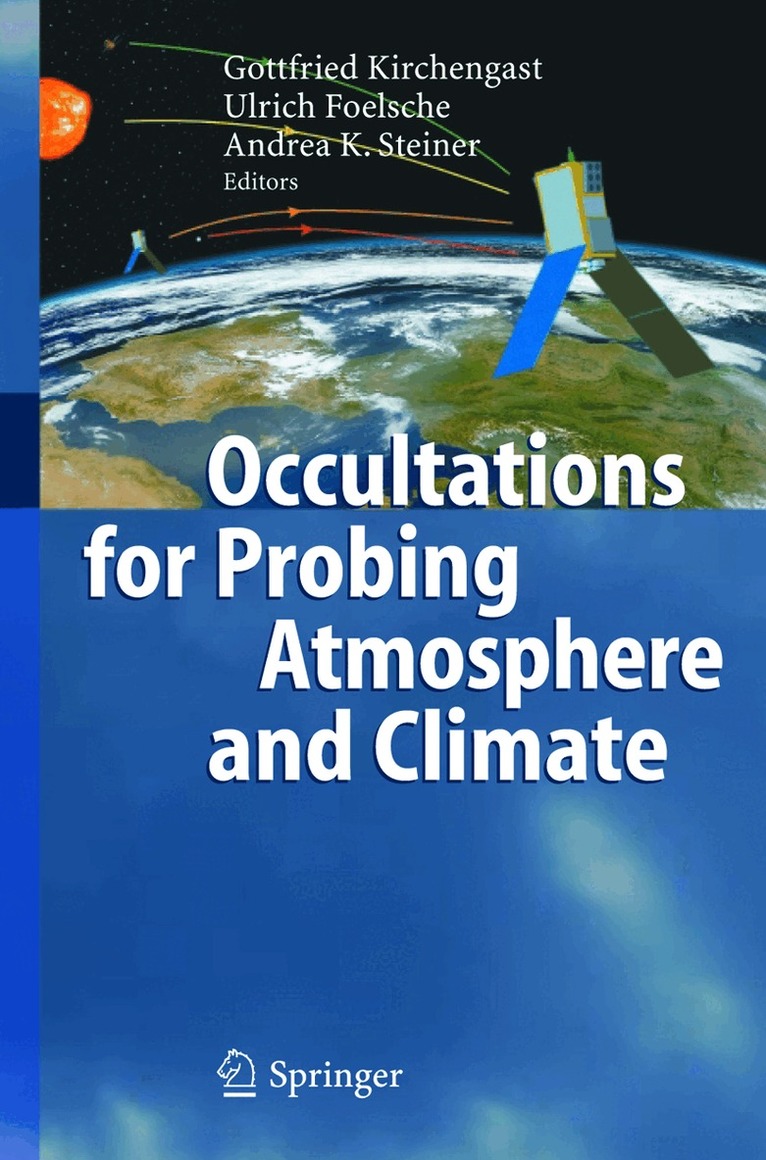
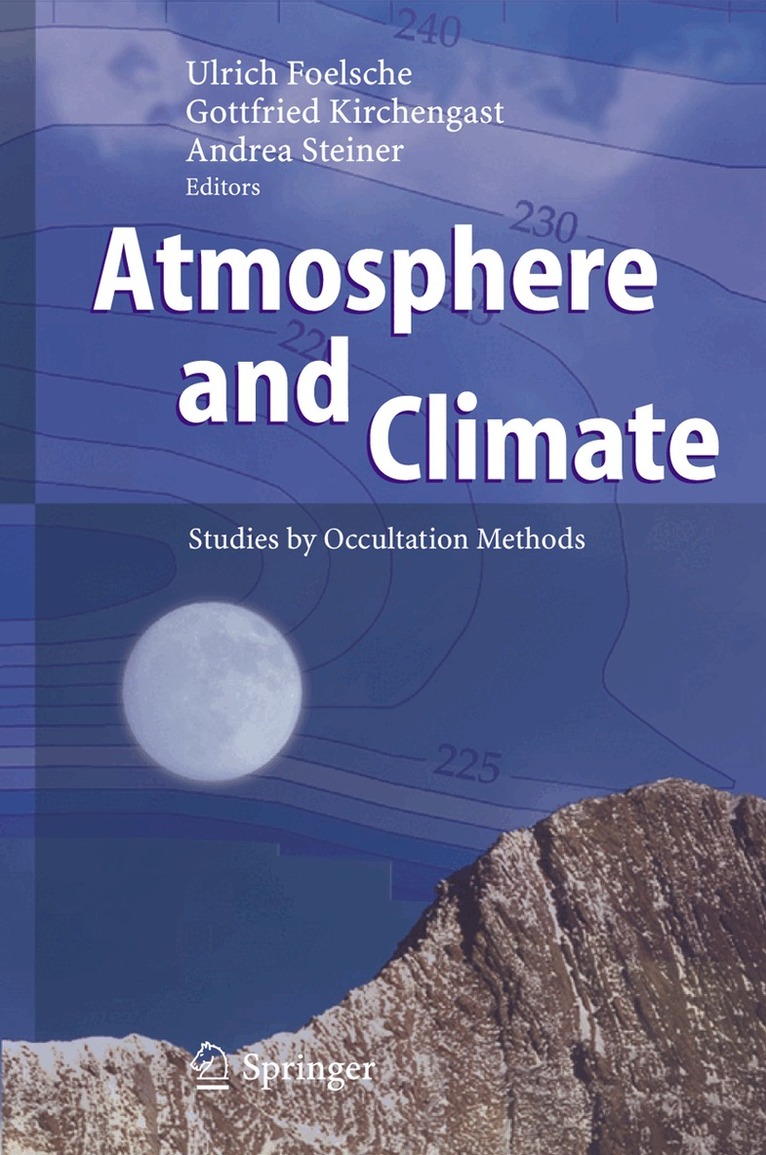
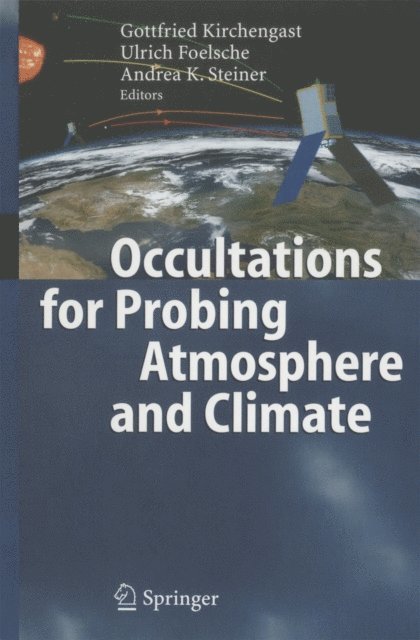
Use of occultation methodology for observing the Earth's atmosphere and climate has become so broad as to comprise solar, lunar, stellar, navigation and satellite crosslink occultation methods. The atmospheric parameters obtained extend from the fundamental variables temperature, density, pressure, water vapor, and ozone via a multitude of trace gas species to particulate species such as aerosols and cloud liquid water. Ionospheric electron density is sensed as well. The methods all share the key properties of self-calibration, high accuracy and vertical resolution, global coverage, and (if using radio signals) all-weather capability. Occultation data are thus of high value in a wide range of fields including climate monitoring and research, atmospheric physics and chemistry, operational meteorology, and other fields such as space weather and planetary science. This wide area of variants and uses of the occultation method has led to a diversi fication of the occultation-related scientific community into a range of different sub-communities, however. The 1st International Workshop on Occultations for Probing Atmosphere and Cli mate-OPAC-1- held September 16-20, 2002, in Graz, Austria, has set in ex actly at this point. OPAC-1 aimed at providing a casual forum and stimulating at mosphere fertilizing scientific discourse, co-operation initiatives, and mutual learning and support amongst members of all the different sub-communities. The workshop was attended by about 80 participants from 17 different countries who actively contributed to a scientific programme of high quality and to an excellent workshop atmosphere, which was judged by the participants to have fully met the aims expressed.
Inbunden, Engelska, 2006
2 173 kr
Skickas inom 10-15 vardagar
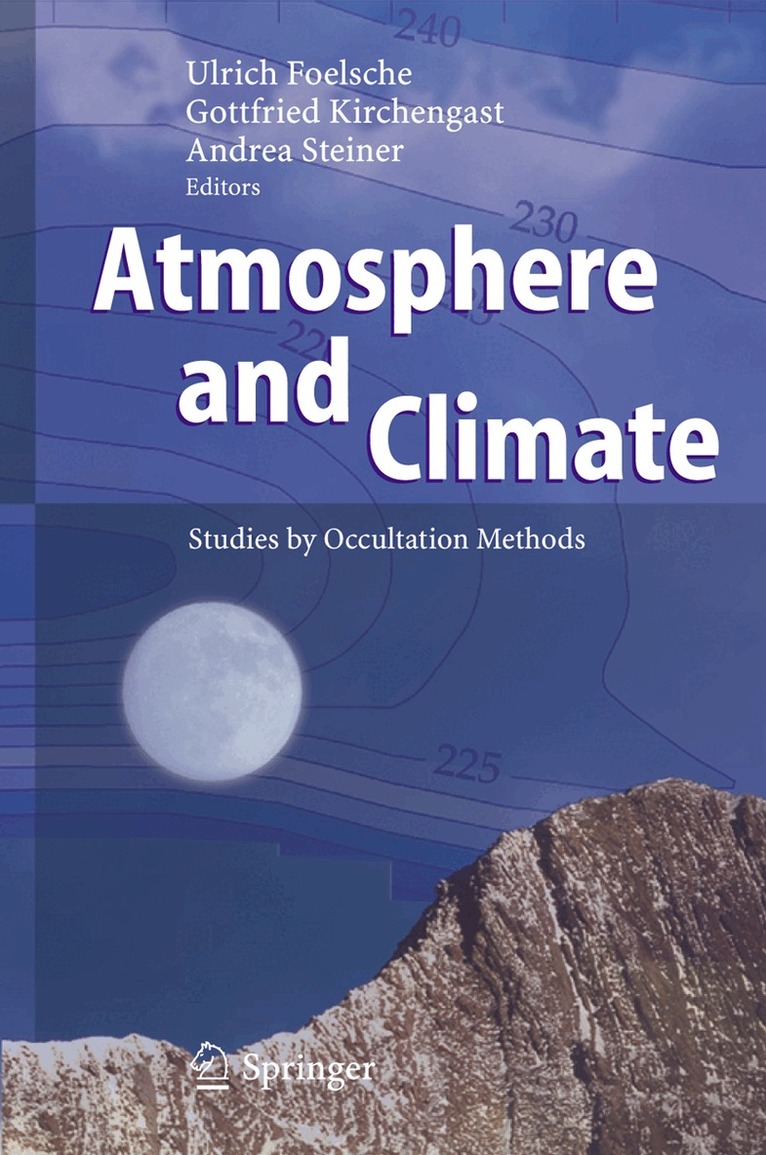
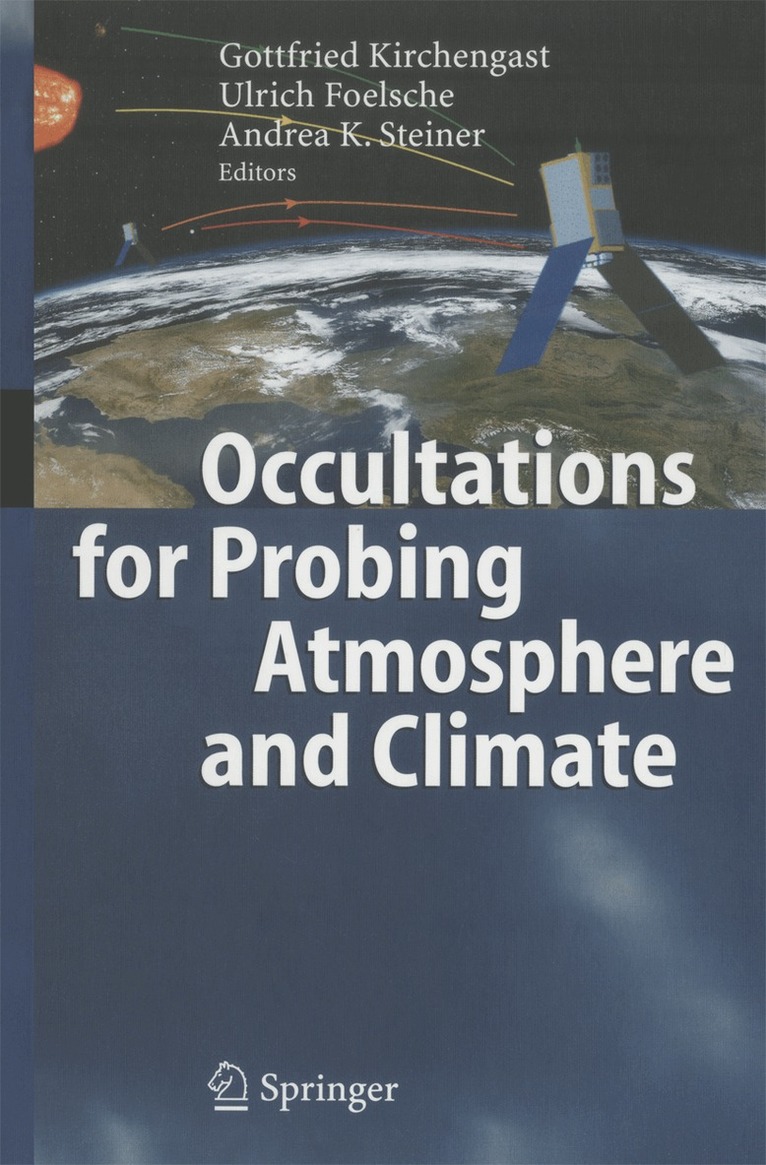
Since the early use of the occultation measurement principle for sounding pla- tary atmospheres and ionospheres, its exploitation in atmospheric remote sensing has seen tremendous advances. In this book we focus on sensors on Low Earth Orbit (LEO) satellites, which exploit solar, lunar, stellar, GNSS (Global Navi- tion Satellite Systems), and LEO-crosslink signals for observing the Earth's - mosphere and climate. The methods all share the key properties of self-calibration, high accuracy and vertical resolution, global coverage, and (if using radio signals) all-weather ca- bility. The atmospheric parameters obtained extend from the fundamental va- ables temperature, density, pressure and water vapor via trace gases, aerosols and cloud liquid water to ionospheric electron density. Occultation data are therefore of high value in a wide range of fields including climate monitoring and research, atmospheric physics and chemistry, operational meteorology, and ionospheric physics. nd The 2 International Workshop on Occultations for Probing Atmosphere and Climate – OPAC-2 – was held September 13–17, 2004, in Graz, Austria. OPAC-2 aimed at providing a casual forum and stimulating atmosphere fertilizing scientific discourse, co-operation initiatives, and mutual learning and support amongst members of all different occultation communities. The workshop was attended by 40 participants from 12 different countries who actively contributed to a scientific programme of high quality and to an excellent workshop atmosphere, which was judged by the participants to have fully met the aims expressed.
E-bok
PDF, Engelska, 20062 741 kr
Läs direkt efter köp
Since the early use of the occultation measurement principle for sounding pla- tary atmospheres and ionospheres, its exploitation in atmospheric remote sensing has seen tremendous advances. In this book we focus on sensors on Low Earth Orbit (LEO) satellites, which exploit solar, lunar, stellar, GNSS (Global Navi- tion Satellite Systems), and LEO-crosslink signals for observing the Earth''s - mosphere and climate. The methods all share the key properties of self-calibration, high accuracy and vertical resolution, global coverage, and (if using radio signals) all-weather ca- bility. The atmospheric parameters obtained extend from the fundamental va- ables temperature, density, pressure and water vapor via trace gases, aerosols and cloud liquid water to ionospheric electron density. Occultation data are therefore of high value in a wide range of fields including climate monitoring and research, atmospheric physics and chemistry, operational meteorology, and ionospheric physics. nd The 2 International Workshop on Occultations for Probing Atmosphere and Climate – OPAC-2 – was held September 13–17, 2004, in Graz, Austria. OPAC-2 aimed at providing a casual forum and stimulating atmosphere fertilizing scientific discourse, co-operation initiatives, and mutual learning and support amongst members of all different occultation communities. The workshop was attended by 40 participants from 12 different countries who actively contributed to a scientific programme of high quality and to an excellent workshop atmosphere, which was judged by the participants to have fully met the aims expressed.
Inbunden, Engelska, 2009
1 631 kr
Skickas inom 10-15 vardagar
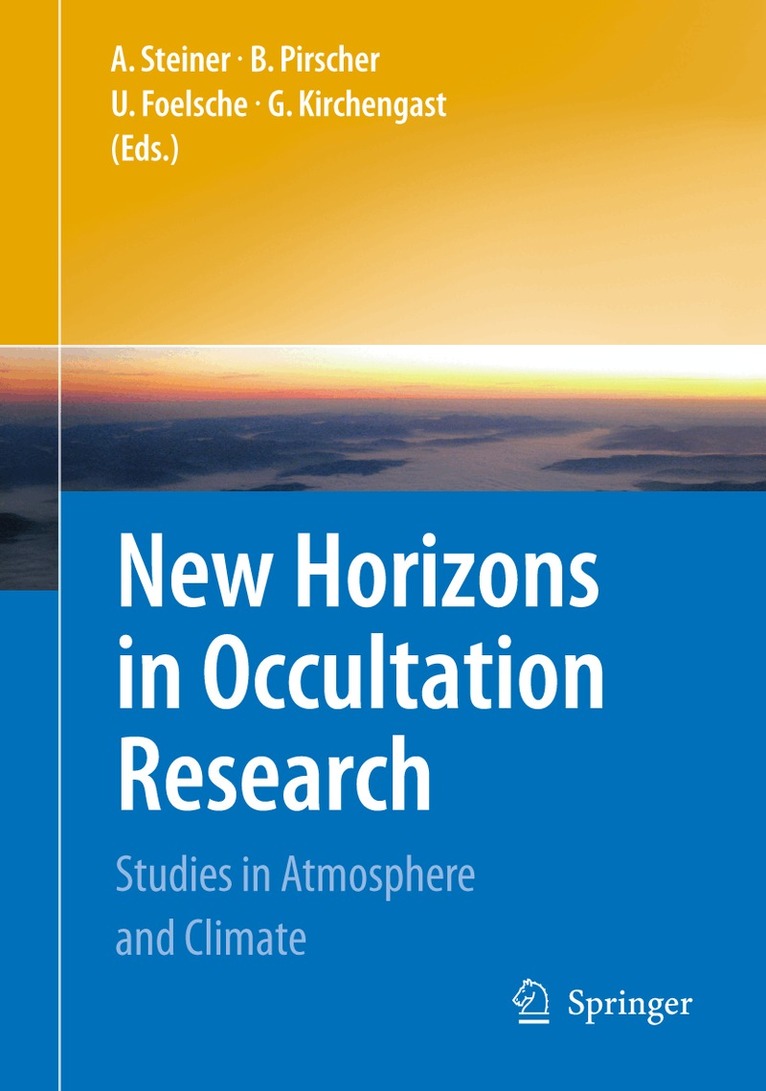
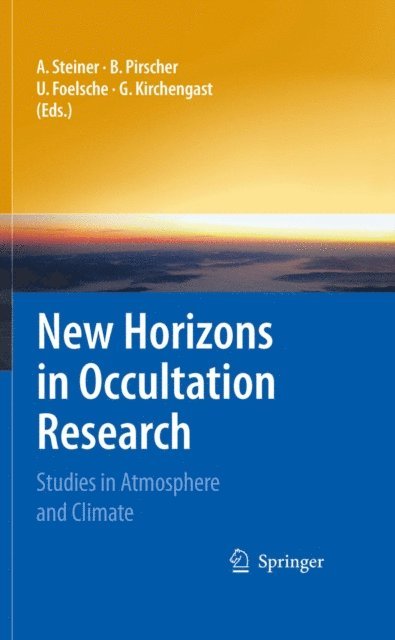
Building on its heritage in planetary science, remote sensing of the Earth's at- sphere and ionosphere with occultation methods has undergone remarkable dev- opments since the rst GPS/Met 'proof of concept' mission in 1995. Signals of Global Navigation Satellite Systems (GNSS) satellites are exploited by radio occ- tation while natural signal sources are used in solar, lunar, and stellar occultations. A range of atmospheric variables is provided reaching from fundamental atmospheric parameters such as density, pressure, and temperature to water vapor, ozone, and othertracegasspecies. Theutilityforatmosphereandclimatearisesfromtheunique properties of self-calibration, high accuracy and vertical resolution, global coverage, and (if using radio signals) all-weather capability. Occultations have become a va- able data source for atmospheric physics and chemistry, operational meteorology, climate research as well as for space weather and planetary science. The 3rd International Workshop on Occultations for Probing Atmosphere and Climate (OPAC-3) was held September 17-21, 2007, in Graz, Austria.OPAC-3 aimed at providing a casual forum and stimulating atmosphere for scienti c disc- sion, co-operation initiatives, and mutual learning and support amongst members of alldifferentoccultationcommunities. Theworkshopwasattendedby40participants from 14 different countries who actively contributed to a scienti c programme of high quality and to an excellent workshop atmosphere. The programme included 6 invited keynote presentations and 16 invited pres- tations, complemented by about 20 contributed ones including 8 posters.
E-bok
PDF, Engelska, 20091 977 kr
Läs direkt efter köp
Häftad, Engelska, 2010
2 173 kr
Skickas inom 10-15 vardagar
Use of occultation methodology for observing the Earth's atmosphere and climate has become so broad as to comprise solar, lunar, stellar, navigation and satellite crosslink occultation methods. The atmospheric parameters obtained extend from the fundamental variables temperature, density, pressure, water vapor, and ozone via a multitude of trace gas species to particulate species such as aerosols and cloud liquid water. Ionospheric electron density is sensed as well. The methods all share the key properties of self-calibration, high accuracy and vertical resolution, global coverage, and (if using radio signals) all-weather capability. Occultation data are thus of high value in a wide range of fields including climate monitoring and research, atmospheric physics and chemistry, operational meteorology, and other fields such as space weather and planetary science. This wide area of variants and uses of the occultation method has led to a diversi fication of the occultation-related scientific community into a range of different sub-communities, however. The 1st International Workshop on Occultations for Probing Atmosphere and Cli mate-OPAC-1- held September 16-20, 2002, in Graz, Austria, has set in ex actly at this point. OPAC-1 aimed at providing a casual forum and stimulating at mosphere fertilizing scientific discourse, co-operation initiatives, and mutual learning and support amongst members of all the different sub-communities. The workshop was attended by about 80 participants from 17 different countries who actively contributed to a scientific programme of high quality and to an excellent workshop atmosphere, which was judged by the participants to have fully met the aims expressed.
Häftad, Engelska, 2010
2 173 kr
Skickas inom 10-15 vardagar
Since the early use of the occultation measurement principle for sounding pla- tary atmospheres and ionospheres, its exploitation in atmospheric remote sensing has seen tremendous advances. In this book we focus on sensors on Low Earth Orbit (LEO) satellites, which exploit solar, lunar, stellar, GNSS (Global Navi- tion Satellite Systems), and LEO-crosslink signals for observing the Earth's - mosphere and climate. The methods all share the key properties of self-calibration, high accuracy and vertical resolution, global coverage, and (if using radio signals) all-weather ca- bility. The atmospheric parameters obtained extend from the fundamental va- ables temperature, density, pressure and water vapor via trace gases, aerosols and cloud liquid water to ionospheric electron density. Occultation data are therefore of high value in a wide range of fields including climate monitoring and research, atmospheric physics and chemistry, operational meteorology, and ionospheric physics. nd The 2 International Workshop on Occultations for Probing Atmosphere and Climate – OPAC-2 – was held September 13–17, 2004, in Graz, Austria. OPAC-2 aimed at providing a casual forum and stimulating atmosphere fertilizing scientific discourse, co-operation initiatives, and mutual learning and support amongst members of all different occultation communities. The workshop was attended by 40 participants from 12 different countries who actively contributed to a scientific programme of high quality and to an excellent workshop atmosphere, which was judged by the participants to have fully met the aims expressed.
Häftad, Engelska, 2014
1 631 kr
Skickas inom 10-15 vardagar
Building on its heritage in planetary science, remote sensing of the Earth's at- sphere and ionosphere with occultation methods has undergone remarkable dev- opments since the rst GPS/Met 'proof of concept' mission in 1995. Signals of Global Navigation Satellite Systems (GNSS) satellites are exploited by radio occ- tation while natural signal sources are used in solar, lunar, and stellar occultations. A range of atmospheric variables is provided reaching from fundamental atmospheric parameters such as density, pressure, and temperature to water vapor, ozone, and othertracegasspecies. Theutilityforatmosphereandclimatearisesfromtheunique properties of self-calibration, high accuracy and vertical resolution, global coverage, and (if using radio signals) all-weather capability. Occultations have become a va- able data source for atmospheric physics and chemistry, operational meteorology, climate research as well as for space weather and planetary science. The 3rd International Workshop on Occultations for Probing Atmosphere and Climate (OPAC-3) was held September 17-21, 2007, in Graz, Austria.OPAC-3 aimed at providing a casual forum and stimulating atmosphere for scienti c disc- sion, co-operation initiatives, and mutual learning and support amongst members of alldifferentoccultationcommunities. Theworkshopwasattendedby40participants from 14 different countries who actively contributed to a scienti c programme of high quality and to an excellent workshop atmosphere. The programme included 6 invited keynote presentations and 16 invited pres- tations, complemented by about 20 contributed ones including 8 posters.
E-bok
PDF, Engelska, 20132 741 kr
Läs direkt efter köp
Use of occultation methodology for observing the Earth''s atmosphere and climate has become so broad as to comprise solar, lunar, stellar, navigation and satellite crosslink occultation methods. The atmospheric parameters obtained extend from the fundamental variables temperature, density, pressure, water vapor, and ozone via a multitude of trace gas species to particulate species such as aerosols and cloud liquid water. Ionospheric electron density is sensed as well. The methods all share the key properties of self-calibration, high accuracy and vertical resolution, global coverage, and (if using radio signals) all-weather capability. Occultation data are thus of high value in a wide range of fields including climate monitoring and research, atmospheric physics and chemistry, operational meteorology, and other fields such as space weather and planetary science. This wide area of variants and uses of the occultation method has led to a diversi fication of the occultation-related scientific community into a range of different sub-communities, however. The 1st International Workshop on Occultations for Probing Atmosphere and Cli mate-OPAC-1- held September 16-20, 2002, in Graz, Austria, has set in ex actly at this point. OPAC-1 aimed at providing a casual forum and stimulating at mosphere fertilizing scientific discourse, co-operation initiatives, and mutual learning and support amongst members of all the different sub-communities. The workshop was attended by about 80 participants from 17 different countries who actively contributed to a scientific programme of high quality and to an excellent workshop atmosphere, which was judged by the participants to have fully met the aims expressed.