
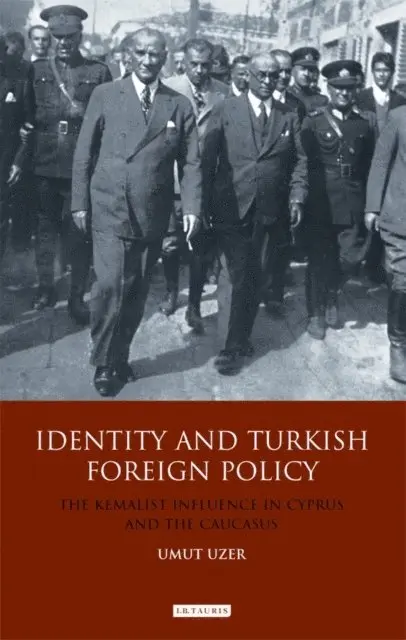
Most analysts agree that Turkey's foreign policy is essentially peaceful, using diplomacy and multilateralism in the resolution of its conflicts with other states. Here, Umut Uzer offers a necessary corrective to this standard analysis by revealing the Kemalist influence in Turkey's state ideology. This defined the identity of the state as Turkish, resulting in responsibilities towards Turks residing beyond its borders, and a more engaged foreign policy that ranged from declarations of support for ethnic kin outside Turkey to outright takeover of territory. Focusing on the annexation of Hatay from Syria in 1939, Turkey's involvement in Cyprus culminating in a military operation in 1974 and its policy toward the Karabagh dispute between Azerbaijan and Armenia in the 1990s, "Identity and Turkish Foreign Policy" is indispensable for all those interested in Middle East politics and international relations as well as Turkey more specifically.

Turkish nationalism erupted onto the world stage in the late nineteenth and early twentieth centuries, as first Greeks, then Armenians and other minority groups within the Ottoman Empire began to assert national identity and seek independence. Umut Uzer examines the ideological evolution and transformation of Turkish nationalism from its early precursors to its contemporary protagonists. Through a textual analysis of nationalist writings, this volume considers how political developments influenced Turkish nationalism. It tackles the question of how an ideology that began as a revolutionary, progressive, forward-looking ideal eventually transformed into one that is conservative, patriarchal, and nostalgic to the Ottoman and Islamic past. Between Islamic and Turkish Identity is the first book in any language to comprehensively analyze Turkish nationalism with such scope and engagement with primary sources, dissecting the phenomenon in all its manifestations.
Most analysts agree that Turkey's foreign policy is essentially peaceful, using diplomacy and multilateralism in the resolution of its conflicts with other states. Here, Umut Uzer offers a necessary corrective to this standard analysis by revealing the Kemalist influence in Turkey's state ideology. This defined the identity of the state as Turkish, resulting in responsibilities towards Turks residing beyond its borders, and a more engaged foreign policy that ranged from declarations of support for ethnic kin outside Turkey to outright takeover of territory. Focusing on the annexation of Hatay from Syria in 1939, Turkey's involvement in Cyprus culminating in a military operation in 1974 and its policy toward the Karabagh dispute between Azerbaijan and Armenia in the 1990s, "Identity and Turkish Foreign Policy" is indispensable for all those interested in Middle East politics and international relations as well as Turkey more specifically.
Turkish nationalism erupted onto the world stage in the late nineteenth and early twentieth centuries, as first Greeks, then Armenians and other minority groups within the Ottoman Empire began to assert national identity and seek independence. Umut Uzer examines the ideological evolution and transformation of Turkish nationalism from its early precursors to its contemporary protagonists. Through a textual analysis of nationalist writings, this volume considers how political developments influenced Turkish nationalism. It tackles the question of how an ideology that began as a revolutionary, progressive, forward-looking ideal eventually transformed into one that is conservative, patriarchal, and nostalgic to the Ottoman and Islamic past. Between Islamic and Turkish Identity is the first book in any language to comprehensively analyze Turkish nationalism with such scope and engagement with primary sources, dissecting the phenomenon in all its manifestations.