Uriel Abulof – författare
Visar alla böcker från författaren Uriel Abulof. Handla med fri frakt och snabb leverans.
10 produkter
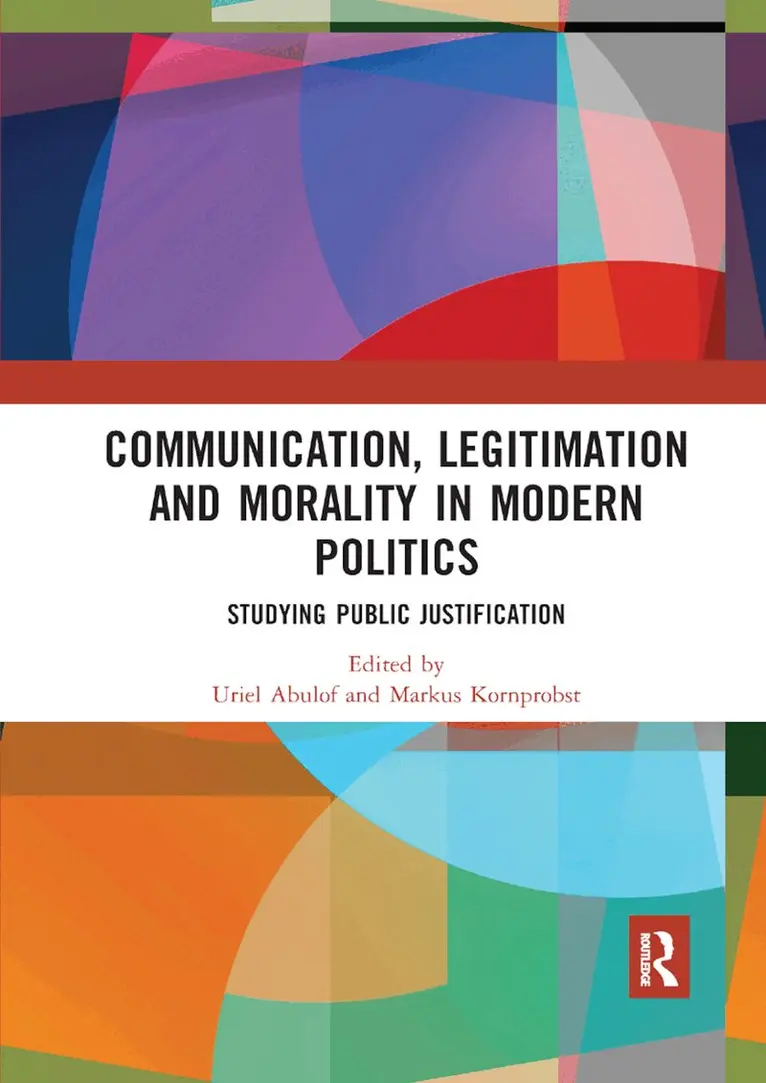
Communication, Legitimation and Morality in Modern Politics
Studying Public Justification
Av Uriel Abulof, Markus Kornprobst
Häftad, 2019
488 kr
Lägg i varukorg
Why? This question drives scientific inquiry, not least in the social sciences: why war, revolution, racism and inequality? Asking and debating about ‘why?’, however, is not the prerogative of scholars; social actors, endowed with thought, reflection and speech, do it too. While we all dance to the …
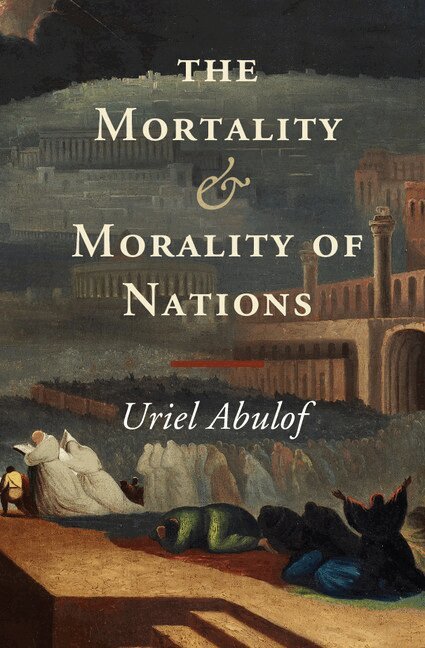
The Mortality and Morality of Nations
Av Uriel Abulof
Inbunden, 2015
1211 kr
Lägg i varukorg
Standing at the edge of life's abyss, we seek meaningful order. We commonly find this 'symbolic immortality' in religion, civilization, state and nation. What happens, however, when the nation itself appears mortal? The Mortality and Morality of Nations seeks to answer this question, theoretically …
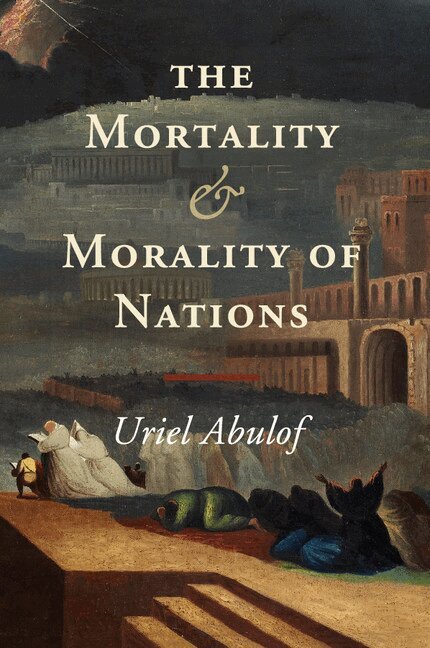
The Mortality and Morality of Nations
Av Uriel Abulof
Häftad, 2017
653 kr
Lägg i varukorg
Standing at the edge of life's abyss, we seek meaningful order. We commonly find this 'symbolic immortality' in religion, civilization, state and nation. What happens, however, when the nation itself appears mortal? The Mortality and Morality of Nations seeks to answer this question, theoretically …
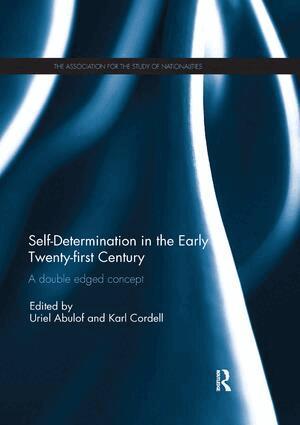
Self-Determination in the early 21st Century
A Double Edged Concept
Inbunden, 2016
2516 kr
Lägg i varukorg
In a world in which change is constant, the principle of self-determination is important. Through (collective) acts of self-determination, nations exercise the right to govern themselves. At present the nation-state system with which we are familiar faces several challenges. In Western Europe, …
Self-Determination in the early 21st Century
A Double Edged Concept
Häftad, 2018
795 kr
Lägg i varukorg
In a world in which change is constant, the principle of self-determination is important. Through (collective) acts of self-determination, nations exercise the right to govern themselves. At present the nation-state system with which we are familiar faces several challenges. In Western Europe, …
Communication, Legitimation and Morality in Modern Politics
Studying Public Justification
Av Uriel Abulof, Markus Kornprobst
Inbunden, 2017
1524 kr
Lägg i varukorg
Why? This question drives scientific inquiry, not least in the social sciences: why war, revolution, racism and inequality? Asking and debating about ‘why?’, however, is not the prerogative of scholars; social actors, endowed with thought, reflection and speech, do it too. While we all dance to the …
Self-Determination in the early 21st Century
A Double Edged Concept
E-bok, 2018
935 kr
Lägg i varukorg
In a world in which change is constant, the principle of self-determination is important. Through (collective) acts of self-determination, nations exercise the right to govern themselves. At present the nation-state system with which we are familiar faces several challenges. In Western Europe, …
Self-Determination in the early 21st Century
A Double Edged Concept
E-bok, 2018
935 kr
Lägg i varukorg
In a world in which change is constant, the principle of self-determination is important. Through (collective) acts of self-determination, nations exercise the right to govern themselves. At present the nation-state system with which we are familiar faces several challenges. In Western Europe, …
Communication, Legitimation and Morality in Modern Politics
Studying Public Justification
Av Markus Kornprobst, Uriel Abulof
E-bok, 2017
572 kr
Lägg i varukorg
Why? This question drives scientific inquiry, not least in the social sciences: why war, revolution, racism and inequality? Asking and debating about ‘why?’, however, is not the prerogative of scholars; social actors, endowed with thought, reflection and speech, do it too. While we all dance to …
Communication, Legitimation and Morality in Modern Politics
Studying Public Justification
Av Markus Kornprobst, Uriel Abulof
E-bok, 2017
559 kr
Lägg i varukorg
Why? This question drives scientific inquiry, not least in the social sciences: why war, revolution, racism and inequality? Asking and debating about ‘why?’, however, is not the prerogative of scholars; social actors, endowed with thought, reflection and speech, do it too. While we all dance to …