Ursula Geitner – författare
Visar alla böcker från författaren Ursula Geitner. Handla med fri frakt och snabb leverans.
4 produkter
4 produkter
E-bok
PDF, Tyska, 20111 544 kr
Läs direkt efter köp
Del 1 - Communicatio
Sprache der Verstellung
Inbunden, Tyska, 1992
1 688 kr
Skickas inom 5-8 vardagar
E-bok
PDF, Tyska, 2016935 kr
Läs direkt efter köp
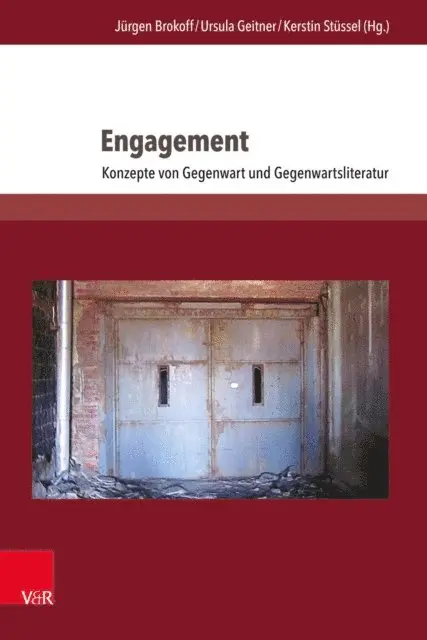
In his radio lecture "Commitment" Theodor W. Adorno showed that the question of commitment versus artistic autonomy is not a rigid antithesis. Literary texts that are intended to be purely partisan and (politically) committed fail to recognise the autonomous status of every artistic utterance. Conversely, a literature that claims to be autonomous is blind to its own relation to society and to the counterfactual objection that has always suggested itself by virtue of the mere existence of literary texts as literature.The volume examines, from a historic and systematic perspective, the antagonistic tension that emerges through the concept of commitment and the present-day relevance of literature. The topics range from concepts of "Zeitdichtung" in the 19thcentury to 20th-century literary models and aesthetic positioning of the present day.
E-bok
PDF, Tyska, 2022915 kr
Läs direkt efter köp
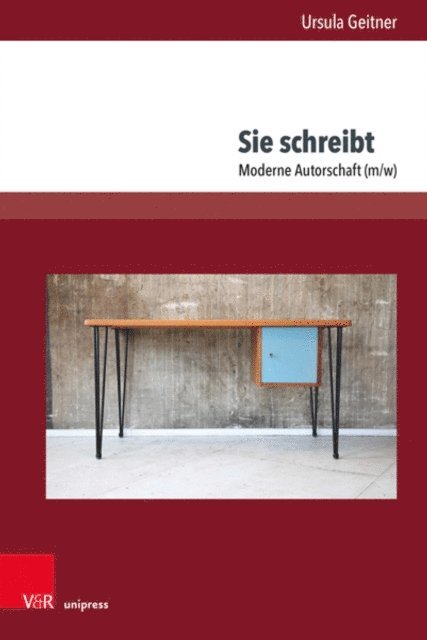
Was ist eine Autorin? Um 1900 etabliert sich mit dem Konzept namens Frauendichtung ein Aufschreibesystem, das die Frage weiblicher Autorschaft – und kontrastiv: männlicher Autorschaft – grundsätzlich aufwirft. Dieses an der Schwelle zur Moderne als überzeitliches Wissen behauptete Frauendichtungsparadigma ist von der Forschung bislang allenfalls kursorisch erfasst worden. Es steht im Zentrum der Untersuchung, die seine – und sei es als implizites Wissen – erstaunliche Persistenz bis in die Gegenwart nachweist. Die Studie schließt mit einer Analyse gegenwärtiger Verhandlungen geschlechtlich codierter Autorschaft und Kanonizität. Methodologisch rekurriert sie auf Verfahren der Diskurs- und Mythenanalyse, der Paratextualitätstheorie und der Praxeologie.What is a woman author? The early 20th century saw the emergence of a new concept, Frauendichtung (women''s writing), a mode of discourse that fundamentally reframed the question of female—and thus also, by contrast, of male—authorship. The paradigm of women''s writing as it emerged on the threshold to modernity, when it was associated with a kind of timeless knowledge, has been at best cursorily treated in extant scholarship. It is at the focus of the present study, which traces its astonishing longevity—if only at the level of implicit knowledge—up until the present day. The book concludes with an analysis of current debates on gender, authorship, and canonicity. Methodologically, it draws on techniques of discourse and myth analysis, paratext theory, and praxeology.