Uthayasankar Sivarajah - Böcker
Visar alla böcker från författaren Uthayasankar Sivarajah. Handla med fri frakt och snabb leverans.
5 produkter
5 produkter
479 kr
Kommande
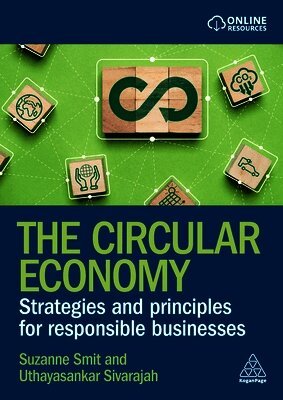
Understand how circular economy principles reshape business strategy and practice.The Circular Economy by Suzanne Smit and Uthayasankar Sivarajah is a practical and theory-informed textbook for postgraduate and final-year undergraduate students studying Circular Economy, Sustainable Business and related business and management courses. Aligned with contemporary module outcomes, it addresses why circular economy thinking is essential for modern business and how organizations can embed sustainability across core functions.The textbook examines how businesses can plan, implement and manage circular transitions by integrating circular economy principles, metrics and decision-making frameworks into everyday business activity. Structured around four interrelated stages, it explores strategic planning, resource organization, leadership and control mechanisms that enable organizations to move from linear to circular models. Real-world examples from Ikea, the Ellen MacArthur Foundation, The Guararapes Group and Flying Tiger demonstrate how circular strategies are applied in practice across industries and regions. This textbook includes:- A four-part framework covering planning, organizing, leading and controlling circular economy initiatives- Clear explanations of circular economy theories, strategies and performance metrics- Application of circular principles to finance, operations, supply chain management and business storytelling- Real-world examples illustrating how organizations manage circular transitions- Online resources including lecturer slides and a lecturer's manual Whether studying sustainable business or preparing for roles in strategy, operations or sustainability, this textbook equips students with the knowledge and practical insight needed to support and lead circular transformation in organizations.
1 323 kr
Kommande
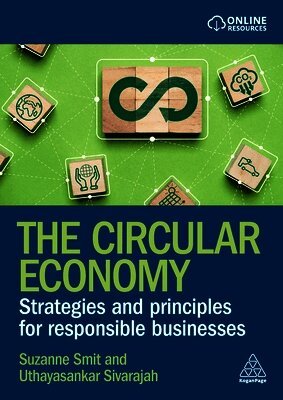
Understand how circular economy principles reshape business strategy and practice.The Circular Economy by Suzanne Smit and Uthayasankar Sivarajah is a practical and theory-informed textbook for postgraduate and final-year undergraduate students studying Circular Economy, Sustainable Business and related business and management courses. Aligned with contemporary module outcomes, it addresses why circular economy thinking is essential for modern business and how organizations can embed sustainability across core functions.The textbook examines how businesses can plan, implement and manage circular transitions by integrating circular economy principles, metrics and decision-making frameworks into everyday business activity. Structured around four interrelated stages, it explores strategic planning, resource organization, leadership and control mechanisms that enable organizations to move from linear to circular models. Real-world examples from Ikea, the Ellen MacArthur Foundation, The Guararapes Group and Flying Tiger demonstrate how circular strategies are applied in practice across industries and regions. This textbook includes:- A four-part framework covering planning, organizing, leading and controlling circular economy initiatives- Clear explanations of circular economy theories, strategies and performance metrics- Application of circular principles to finance, operations, supply chain management and business storytelling- Real-world examples illustrating how organizations manage circular transitions- Online resources including lecturer slides and a lecturer's manual Whether studying sustainable business or preparing for roles in strategy, operations or sustainability, this textbook equips students with the knowledge and practical insight needed to support and lead circular transformation in organizations.
Supply Chain Technologies
Creating Sustainable Value Through Innovation and Digital Transformation
Häftad, Engelska, 2027
680 kr
Kommande
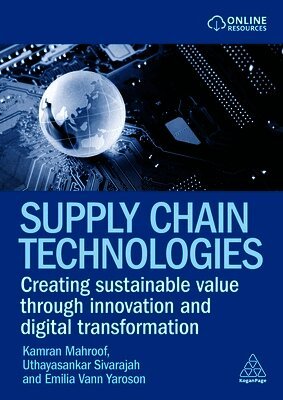
Explore how digital technologies are transforming sustainable supply chain performance.Supply Chain Technologies by Kamran Mahroof, Uthayasankar Sivarajah and Emilia Vann Yaroson is a structured and application-focused textbook for upper-level undergraduate and postgraduate students on Supply Chain Management courses. It supports modules in digital supply chain transformation, technology management and sustainable operations, providing a clear framework for understanding how emerging technologies reshape global supply networks.Explore how organizations respond to disruption, integrate digital tools and measure technological impact using appropriate performance metrics. The text develops both strategic and analytical understanding, enabling learners to evaluate innovation, resilience and long-term sustainability.Drawing on real-world examples from Patagonia, Walmart and Amazon, this book explores how digital innovation drives efficiency, transparency and responsible growth across sectors. By connecting theory with operational practice, the textbook equips students to critically assess technology investments and design adaptable, future-ready supply chains.This textbook includes:- Clear chapter learning objectives aligned to course outcomes- Integrated frameworks linking technology adoption to supply chain strategy- Analytical tools for evaluating performance, risk and resilience- Lecturer slide templates to support structured teachingWith its balanced integration of sustainability, digital innovation and strategic implementation, Supply Chain Technologies prepares students to lead technological transformation within complex global supply networks.
Supply Chain Technologies
Creating Sustainable Value Through Innovation and Digital Transformation
Inbunden, Engelska, 2027
1 299 kr
Kommande
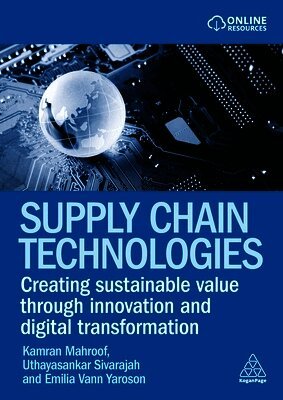
Explore how digital technologies are transforming sustainable supply chain performance.Supply Chain Technologies by Kamran Mahroof, Uthayasankar Sivarajah and Emilia Vann Yaroson is a structured and application-focused textbook for upper-level undergraduate and postgraduate students on Supply Chain Management courses. It supports modules in digital supply chain transformation, technology management and sustainable operations, providing a clear framework for understanding how emerging technologies reshape global supply networks.Explore how organizations respond to disruption, integrate digital tools and measure technological impact using appropriate performance metrics. The text develops both strategic and analytical understanding, enabling learners to evaluate innovation, resilience and long-term sustainability.Drawing on real-world examples from Patagonia, Walmart and Amazon, this book explores how digital innovation drives efficiency, transparency and responsible growth across sectors. By connecting theory with operational practice, the textbook equips students to critically assess technology investments and design adaptable, future-ready supply chains.This textbook includes:- Clear chapter learning objectives aligned to course outcomes- Integrated frameworks linking technology adoption to supply chain strategy- Analytical tools for evaluating performance, risk and resilience- Lecturer slide templates to support structured teachingWith its balanced integration of sustainability, digital innovation and strategic implementation, Supply Chain Technologies prepares students to lead technological transformation within complex global supply networks.
641 kr
Skickas inom 10-15 vardagar
This book aims to provide the reader with an understanding of the concept of the circular economy, in relation to food supply chains. The current food supply chain system, based upon the linear supply chain model, is unquestionably unsustainable: make, use, dispose. The circular supply chain model, on the other hand, aims to keep resources in use for as long as possible, while regenerating products/materials at the end of their service life. In short: reduce, reuse, recycle.This book puts forwards the circular economy as an alternative to the traditional supply chain management models. The circular economy aims to minimise material, energy and environmental damage without restricting economic growth and social and technological progress. It involves transition to renewable energy sources, and it builds on economic, natural and social capital. This shortform monograph will appeal to academics working in the fields of supply chain logistics, operation management, agricultural management, and sustainability more broadly.Dr. Stella Despoudi is Lecturer in Operations and Supply Chain Management at Aston University, UK and Adjunct Lecturer in Supply Chain Management at University of Western Macedonia, Greece.Prof. Uthayasankar Sivarajah is Head of School of Management and Professor of Technology Management and Circular Economy at the School of Management, University of Bradford, UK.Dr Manoj Dora is Director of Collaborative Projects and Outreach at Brunel Business School, UK. Manoj's areas of specialisation are Sustainable Value Chain and Quality Management, with a focus on Lean Six Sigma in the agro-food sector.