Uyilawa Usuanlele – författare
Visar alla böcker från författaren Uyilawa Usuanlele. Handla med fri frakt och snabb leverans.
5 produkter
5 produkter
Inbunden, Engelska, 2024
1 189 kr
Skickas inom 10-15 vardagar
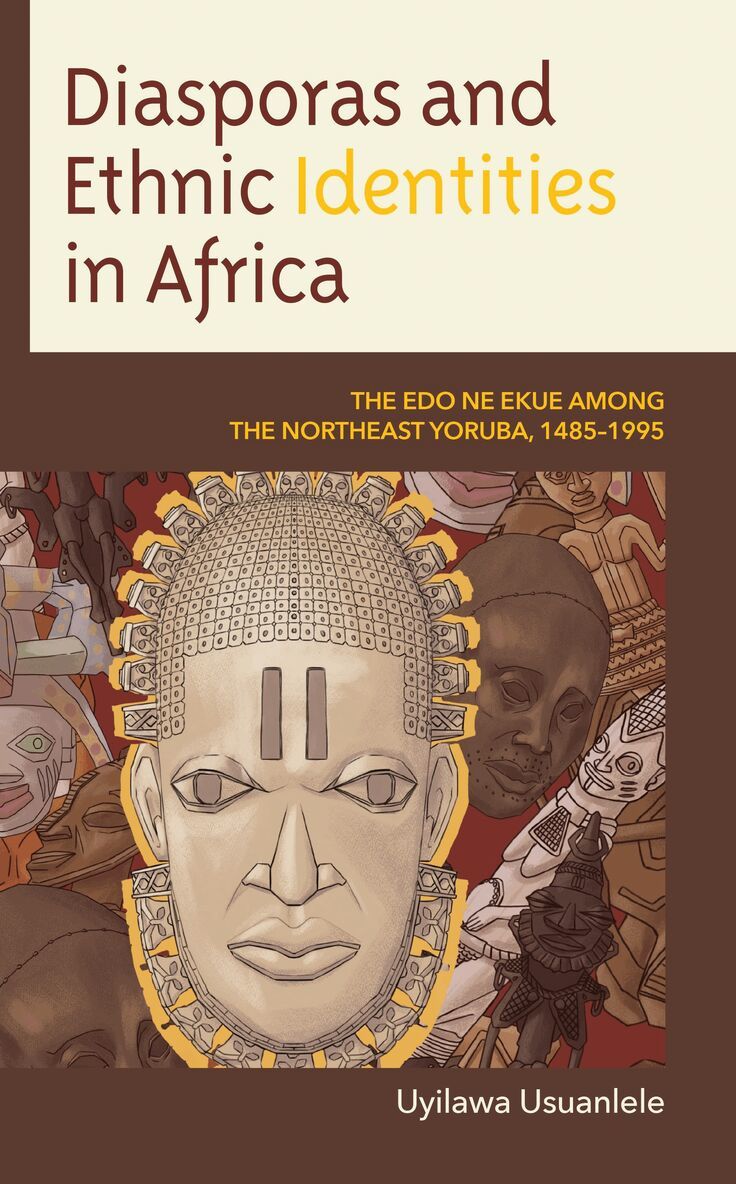
Despite the enormous work on diasporas relating to Africa, the majority of this work focuses on trade diasporas located in West African groups, only mentioning the pre-colonial period in passing. Therefore, there is a need to redirect research on diasporas from within Africa to include non-economic diasporas during this time period. Diasporas and Ethnic Identity in Africa: The Edo ne Ekue among the Northeast Yoruba, 1485–1995 fills a gap by discussing the existence of diasporas in pre-colonial Africa that have been neglected by African scholars. Using the Edo ne Ekue as a case study, Uyilawa Usuanlele examines Edo people by shedding light on their political institutions, trading networks, and associations as autonomous and distinct within the Benin Kingdom. This book also discusses how the Edo ne Ekue simultaneously linked their institutions with the royal court of the Benin Kingdom at the expense of the local rulers of their host communities. Throughout this study, Usuanlele provides a better understanding of ethnic identity, state by state relations and their members outside their territorial boundaries to discover the dynamics of political, economic, and social changes within and between communities during and after pre-colonial times.
Häftad, Engelska, 2027
495 kr
Kommande
Despite the enormous work on diasporas relating to Africa, the majority of this work focuses on trade diasporas located in West African groups, only mentioning the pre-colonial period in passing. Therefore, there is a need to redirect research on diasporas from within Africa to include non-economic diasporas during this time period. Diasporas and Ethnic Identity in Africa: The Edo ne Ekue among the Northeast Yoruba, 1485–1995 fills a gap by discussing the existence of diasporas in pre-colonial Africa that have been neglected by African scholars. Using the Edo ne Ekue as a case study, Uyilawa Usuanlele examines Edo people by shedding light on their political institutions, trading networks, and associations as autonomous and distinct within the Benin Kingdom. This book also discusses how the Edo ne Ekue simultaneously linked their institutions with the royal court of the Benin Kingdom at the expense of the local rulers of their host communities. Throughout this study, Usuanlele provides a better understanding of ethnic identity, state by state relations and their members outside their territorial boundaries to discover the dynamics of political, economic, and social changes within and between communities during and after pre-colonial times.
Inbunden, Engelska, 2017
1 227 kr
Skickas inom 10-15 vardagar
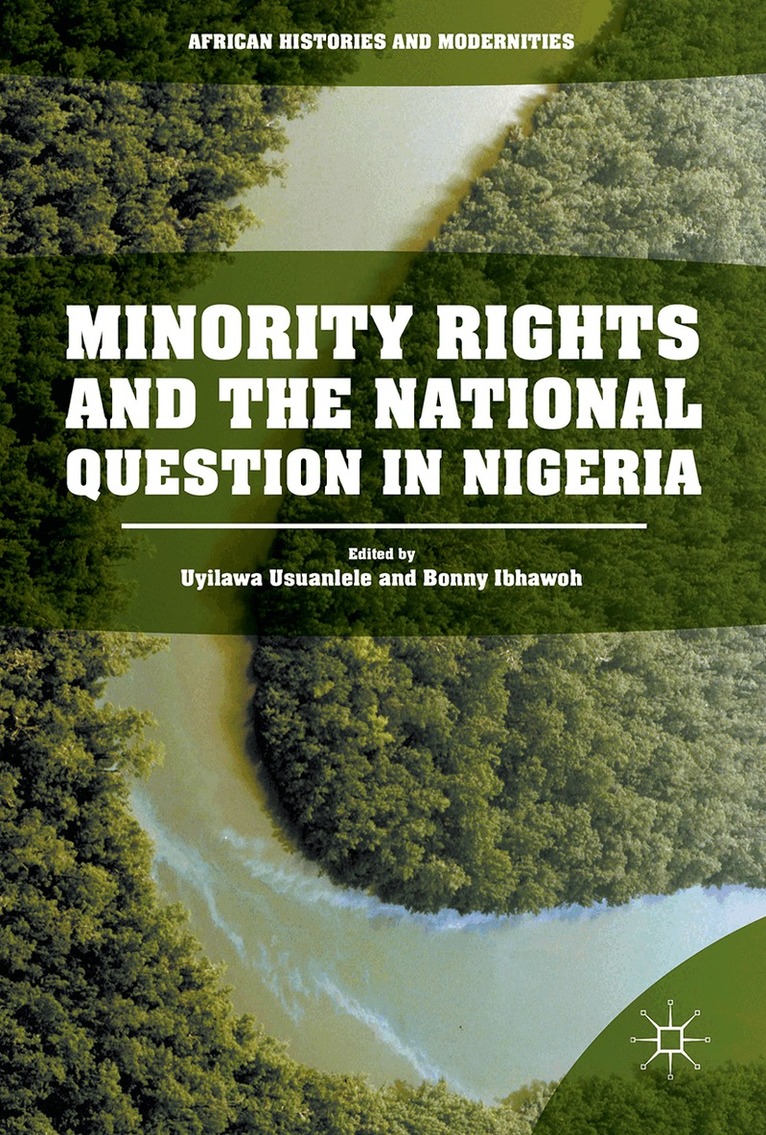
This book offers a thematic study of key debates in the history of the ethnic politics, democratic governance, and minority rights in Nigeria. Nigeria provides a framework for examining the central paradox in post-colonial nation building projects in Africa – the tension between majority rule and minority rights. The liberal democratic model on which most African states were founded at independence from colonial rule, and to which they continue to aspire, is founded on majority rule. It is also founded on the protection of the rights of minority groups to political participation, social inclusion and economic resources. Maintaining this tenuous balance between majority rule and minority rights has, in the decades since independence, become the key national question in many African countries, perhaps none more so than Nigeria. This volume explores these issues, focusing on four key themes as they relate to minority rights in Nigeria: ethnic and religious identities, nationalism and federalism, political crises and armed conflicts.
E-bok
Engelska, 20171 575 kr
Läs direkt efter köp
This book offers a thematic study of key debates in the history of the ethnic politics, democratic governance, and minority rights in Nigeria. Nigeria provides a framework for examining the central paradox in post-colonial nation building projects in Africa – the tension between majority rule and minority rights. The liberal democratic model on which most African states were founded at independence from colonial rule, and to which they continue to aspire, is founded on majority rule. It is also founded on the protection of the rights of minority groups to political participation, social inclusion and economic resources. Maintaining this tenuous balance between majority rule and minority rights has, in the decades since independence, become the key national question in many African countries, perhaps none more so than Nigeria. This volume explores these issues, focusing on four key themes as they relate to minority rights in Nigeria: ethnic and religious identities, nationalism and federalism, political crises and armed conflicts.
Häftad, Engelska, 2018
1 227 kr
Skickas inom 10-15 vardagar
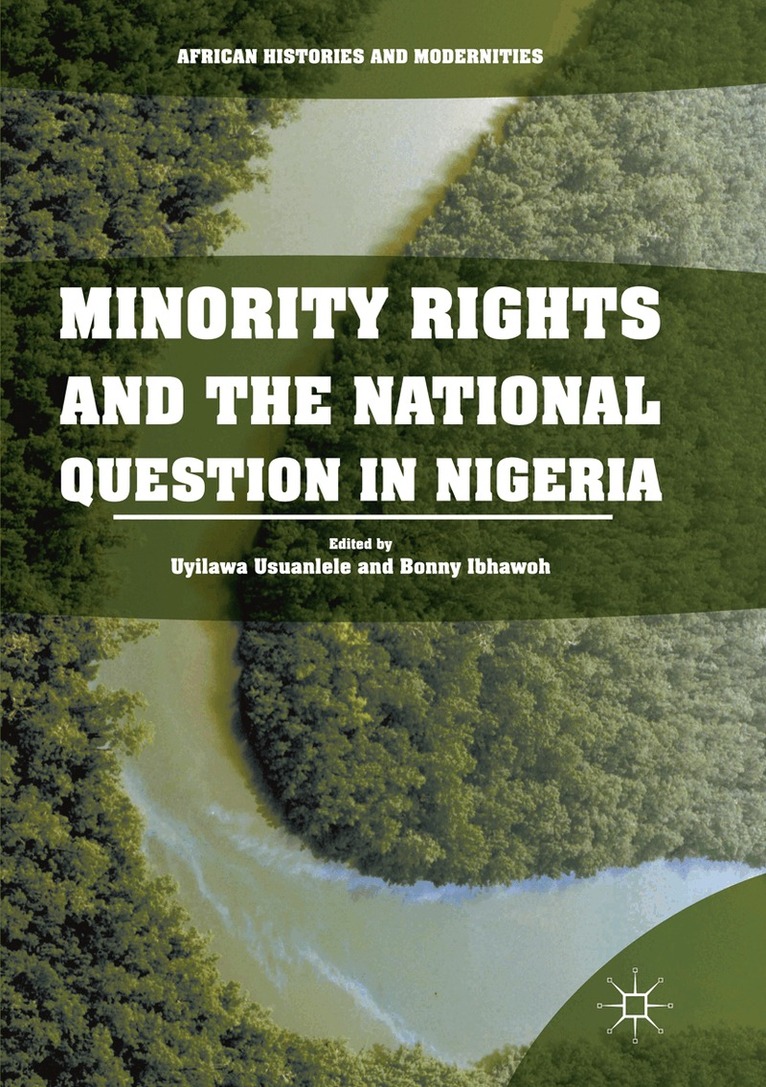
This book offers a thematic study of key debates in the history of the ethnic politics, democratic governance, and minority rights in Nigeria. Nigeria provides a framework for examining the central paradox in post-colonial nation building projects in Africa – the tension between majority rule and minority rights. The liberal democratic model on which most African states were founded at independence from colonial rule, and to which they continue to aspire, is founded on majority rule. It is also founded on the protection of the rights of minority groups to political participation, social inclusion and economic resources. Maintaining this tenuous balance between majority rule and minority rights has, in the decades since independence, become the key national question in many African countries, perhaps none more so than Nigeria. This volume explores these issues, focusing on four key themes as they relate to minority rights in Nigeria: ethnic and religious identities, nationalism and federalism, political crises and armed conflicts.