V Kishore Ayyadevara - Böcker
Visar alla böcker från författaren V Kishore Ayyadevara. Handla med fri frakt och snabb leverans.
5 produkter
5 produkter
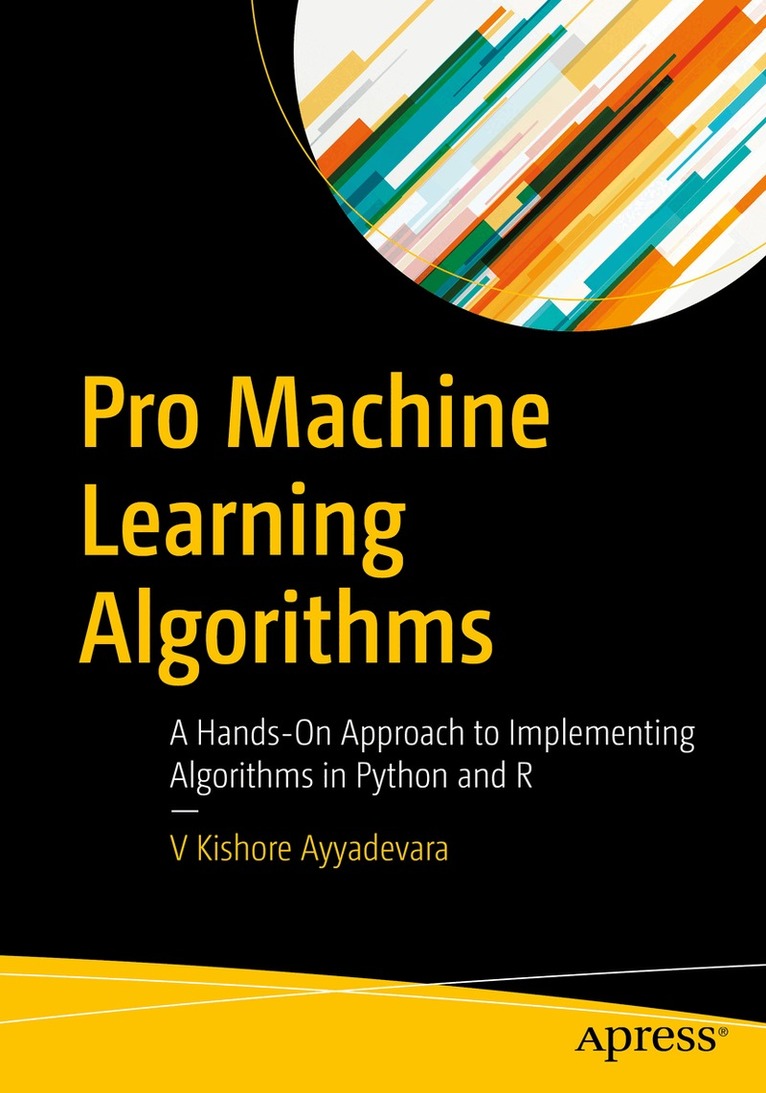
Pro Machine Learning Algorithms
A Hands-On Approach to Implementing Algorithms in Python and R
Häftad, Engelska, 2018
654 kr
Skickas inom 10-15 vardagar
Bridge the gap between a high-level understanding of how an algorithm works and knowing the nuts and bolts to tune your models better. This book will give you the confidence and skills when developing all the major machine learning models. In Pro Machine Learning Algorithms, you will first develop the algorithm in Excel so that you get a practical understanding of all the levers that can be tuned in a model, before implementing the models in Python/R.You will cover all the major algorithms: supervised and unsupervised learning, which include linear/logistic regression; k-means clustering; PCA; recommender system; decision tree; random forest; GBM; and neural networks. You will also be exposed to the latest in deep learning through CNNs, RNNs, and word2vec for text mining. You will be learning not only the algorithms, but also the concepts of feature engineering to maximize the performance of a model. You will see the theory along with case studies, such as sentiment classification, fraud detection, recommender systems, and image recognition, so that you get the best of both theory and practice for the vast majority of the machine learning algorithms used in industry. Along with learning the algorithms, you will also be exposed to running machine-learning models on all the major cloud service providers.You are expected to have minimal knowledge of statistics/software programming and by the end of this book you should be able to work on a machine learning project with confidence. What You Will LearnGet an in-depth understanding of all the major machine learning and deep learning algorithms Fully appreciate the pitfalls to avoid while building modelsImplement machine learning algorithms in the cloud Follow a hands-on approach through case studies for each algorithmGain the tricks of ensemble learning to build more accurate modelsDiscover the basics of programming in R/Python and the Keras framework for deep learningWho This Book Is ForBusiness analysts/ IT professionals who want to transition into data science roles. Data scientists who want to solidify their knowledge in machine learning.
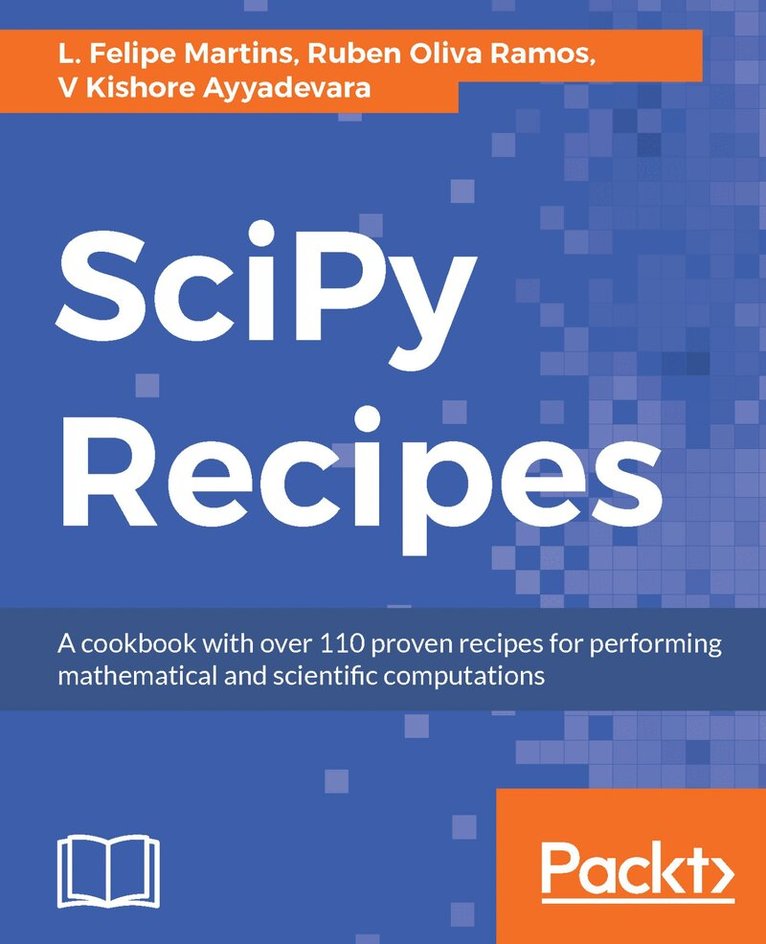
SciPy Recipes
A cookbook with over 110 proven recipes for performing mathematical and scientific computations
Häftad, Engelska, 2017
462 kr
Skickas inom 5-8 vardagar
Tackle the most sophisticated problems associated with scientific computing and data manipulation using SciPyKey Features Covers a wide range of data science tasks using SciPy, NumPy, pandas, and matplotlib Effective recipes on advanced scientific computations, statistics, data wrangling, data visualization, and more A must-have book if you're looking to solve your data-related problems using SciPy, on-the-go Book Description With the SciPy Stack, you get the power to effectively process, manipulate, and visualize your data using the popular Python language. Utilizing SciPy correctly can sometimes be a very tricky proposition. This book provides the right techniques so you can use SciPy to perform different data science tasks with ease. This book includes hands-on recipes for using the different components of the SciPy Stack such as NumPy, SciPy, matplotlib, and pandas, among others. You will use these libraries to solve real-world problems in linear algebra, numerical analysis, data visualization, and much more. The recipes included in the book will ensure you get a practical understanding not only of how a particular feature in SciPy Stack works, but also of its application to real-world problems. The independent nature of the recipes also ensure that you can pick up any one and learn about a particular feature of SciPy without reading through the other recipes, thus making the book a very handy and useful guide. What you will learn Get a solid foundation in scientific computing using Python Master common tasks related to SciPy and associated libraries such as NumPy, pandas, and matplotlib Perform mathematical operations such as linear algebra and work with the statistical and probability functions in SciPy Master advanced computing such as Discrete Fourier Transform and K-means with the SciPy Stack Implement data wrangling tasks efficiently using pandas Visualize your data through various graphs and charts using matplotlib Who this book is for Python developers, aspiring data scientists, and analysts who want to get started with scientific computing using Python will find this book an indispensable resource. If you want to learn how to manipulate and visualize your data using the SciPy Stack, this book will also help you. A basic understanding of Python programming is all you need to get started.
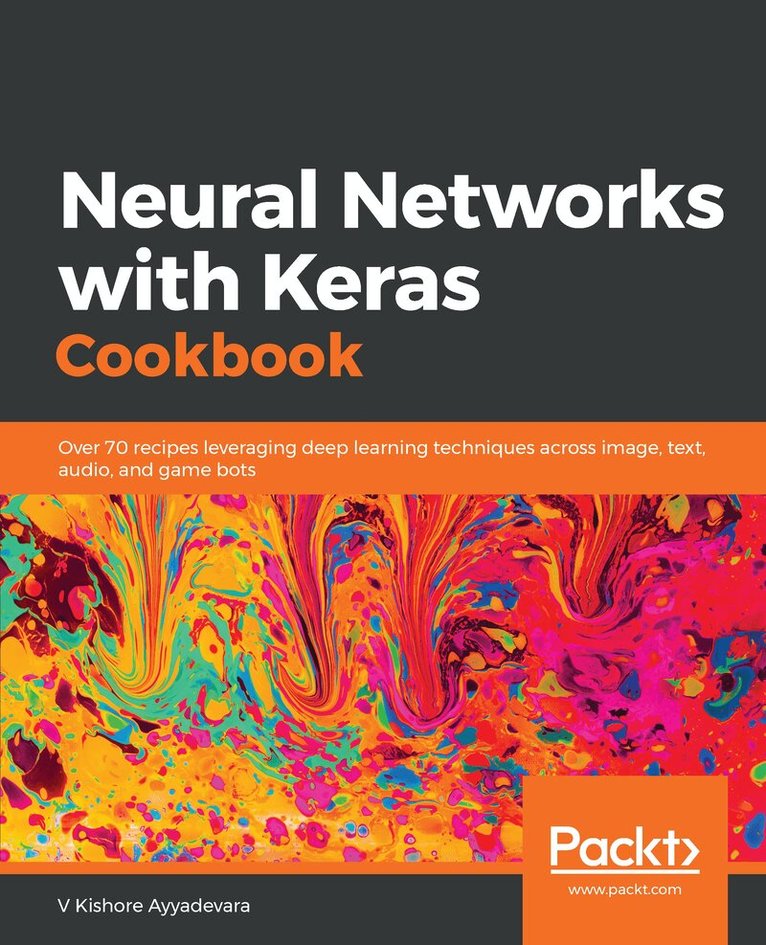
Neural Networks with Keras Cookbook
Over 70 recipes leveraging deep learning techniques across image, text, audio, and game bots
Häftad, Engelska, 2019
510 kr
Skickas inom 5-8 vardagar
Implement neural network architectures by building them from scratch for multiple real-world applications.Key FeaturesFrom scratch, build multiple neural network architectures such as CNN, RNN, LSTM in KerasDiscover tips and tricks for designing a robust neural network to solve real-world problemsGraduate from understanding the working details of neural networks and master the art of fine-tuning themBook DescriptionThis book will take you from the basics of neural networks to advanced implementations of architectures using a recipe-based approach.We will learn about how neural networks work and the impact of various hyper parameters on a network's accuracy along with leveraging neural networks for structured and unstructured data.Later, we will learn how to classify and detect objects in images. We will also learn to use transfer learning for multiple applications, including a self-driving car using Convolutional Neural Networks.We will generate images while leveraging GANs and also by performing image encoding. Additionally, we will perform text analysis using word vector based techniques. Later, we will use Recurrent Neural Networks and LSTM to implement chatbot and Machine Translation systems.Finally, you will learn about transcribing images, audio, and generating captions and also use Deep Q-learning to build an agent that plays Space Invaders game.By the end of this book, you will have developed the skills to choose and customize multiple neural network architectures for various deep learning problems you might encounter.What you will learnBuild multiple advanced neural network architectures from scratchExplore transfer learning to perform object detection and classificationBuild self-driving car applications using instance and semantic segmentationUnderstand data encoding for image, text and recommender systemsImplement text analysis using sequence-to-sequence learningLeverage a combination of CNN and RNN to perform end-to-end learningBuild agents to play games using deep Q-learningWho this book is forThis intermediate-level book targets beginners and intermediate-level machine learning practitioners and data scientists who have just started their journey with neural networks. This book is for those who are looking for resources to help them navigate through the various neural network architectures; you'll build multiple architectures, with concomitant case studies ordered by the complexity of the problem. A basic understanding of Python programming and a familiarity with basic machine learning are all you need to get started with this book.
Modern Computer Vision with PyTorch
A practical roadmap from deep learning fundamentals to advanced applications and Generative AI
Häftad, Engelska, 2024
749 kr
Skickas inom 5-8 vardagar
The definitive computer vision book is back, featuring the latest neural network architectures and an exploration of foundation and diffusion modelsPurchase of the print or Kindle book includes a free eBook in PDF formatKey FeaturesUnderstand the inner workings of various neural network architectures and their implementation, including image classification, object detection, segmentation, generative adversarial networks, transformers, and diffusion modelsBuild solutions for real-world computer vision problems using PyTorchAll the code files are available on GitHub and can be run on Google ColabBook DescriptionWhether you are a beginner or are looking to progress in your computer vision career, this book guides you through the fundamentals of neural networks (NNs) and PyTorch and how to implement state-of-the-art architectures for real-world tasks.The second edition of Modern Computer Vision with PyTorch is fully updated to explain and provide practical examples of the latest multimodal models, CLIP, and Stable Diffusion.You’ll discover best practices for working with images, tweaking hyperparameters, and moving models into production. As you progress, you'll implement various use cases for facial keypoint recognition, multi-object detection, segmentation, and human pose detection. This book provides a solid foundation in image generation as you explore different GAN architectures. You’ll leverage transformer-based architectures like ViT, TrOCR, BLIP2, and LayoutLM to perform various real-world tasks and build a diffusion model from scratch. Additionally, you’ll utilize foundation models' capabilities to perform zero-shot object detection and image segmentation. Finally, you’ll learn best practices for deploying a model to production.By the end of this deep learning book, you'll confidently leverage modern NN architectures to solve real-world computer vision problems.What you will learnGet to grips with various transformer-based architectures for computer vision, CLIP, Segment-Anything, and Stable Diffusion, and test their applications, such as in-painting and pose transferCombine CV with NLP to perform OCR, key-value extraction from document images, visual question-answering, and generative AI tasksImplement multi-object detection and segmentationLeverage foundation models to perform object detection and segmentation without any training data pointsLearn best practices for moving a model to productionWho this book is forThis book is for beginners to PyTorch and intermediate-level machine learning practitioners who want to learn computer vision techniques using deep learning and PyTorch. It's useful for those just getting started with neural networks, as it will enable readers to learn from real-world use cases accompanied by notebooks on GitHub. Basic knowledge of the Python programming language and ML is all you need to get started with this book. For more experienced computer vision scientists, this book takes you through more advanced models in the latter part of the book.
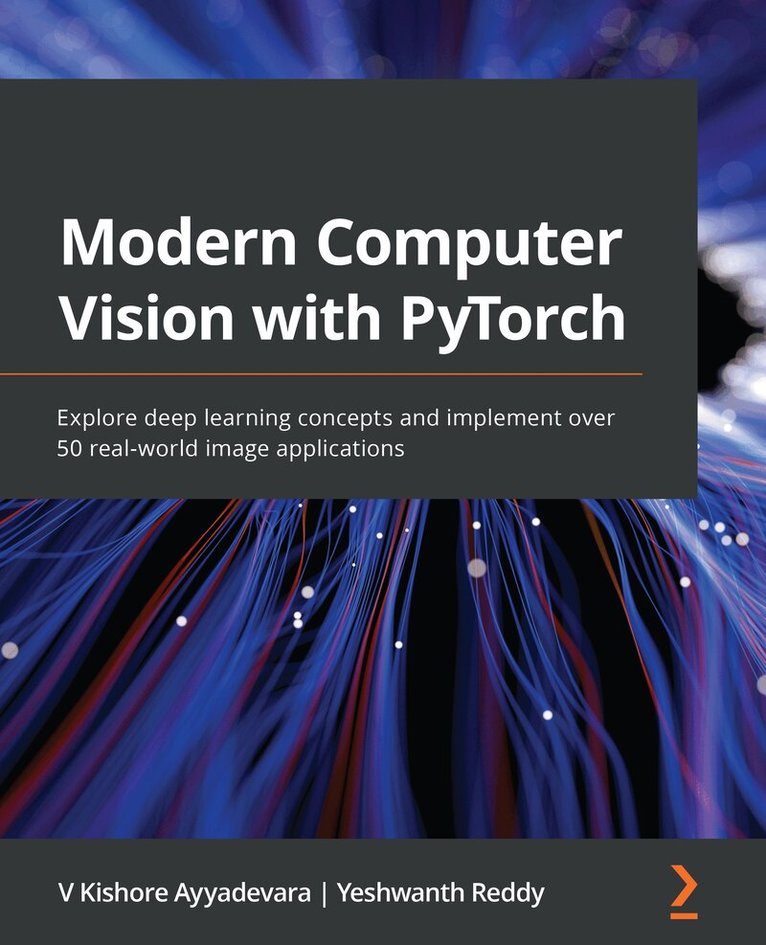
Modern Computer Vision with PyTorch
Explore deep learning concepts and implement over 50 real-world image applications
Häftad, Engelska, 2020
765 kr
Skickas inom 5-8 vardagar
Get to grips with deep learning techniques for building image processing applications using PyTorch with the help of code notebooks and test questionsKey FeaturesImplement solutions to 50 real-world computer vision applications using PyTorchUnderstand the theory and working mechanisms of neural network architectures and their implementationDiscover best practices using a custom library created especially for this bookBook DescriptionDeep learning is the driving force behind many recent advances in various computer vision (CV) applications. This book takes a hands-on approach to help you to solve over 50 CV problems using PyTorch1.x on real-world datasets.You’ll start by building a neural network (NN) from scratch using NumPy and PyTorch and discover best practices for tweaking its hyperparameters. You’ll then perform image classification using convolutional neural networks and transfer learning and understand how they work. As you progress, you’ll implement multiple use cases of 2D and 3D multi-object detection, segmentation, human-pose-estimation by learning about the R-CNN family, SSD, YOLO, U-Net architectures, and the Detectron2 platform. The book will also guide you in performing facial expression swapping, generating new faces, and manipulating facial expressions as you explore autoencoders and modern generative adversarial networks. You’ll learn how to combine CV with NLP techniques, such as LSTM and transformer, and RL techniques, such as Deep Q-learning, to implement OCR, image captioning, object detection, and a self-driving car agent. Finally, you'll move your NN model to production on the AWS Cloud.By the end of this book, you’ll be able to leverage modern NN architectures to solve over 50 real-world CV problems confidently.What you will learnTrain a NN from scratch with NumPy and PyTorchImplement 2D and 3D multi-object detection and segmentationGenerate digits and DeepFakes with autoencoders and advanced GANsManipulate images using CycleGAN, Pix2PixGAN, StyleGAN2, and SRGANCombine CV with NLP to perform OCR, image captioning, and object detectionCombine CV with reinforcement learning to build agents that play pong and self-drive a carDeploy a deep learning model on the AWS server using FastAPI and DockerImplement over 35 NN architectures and common OpenCV utilitiesWho this book is forThis book is for beginners to PyTorch and intermediate-level machine learning practitioners who are looking to get well-versed with computer vision techniques using deep learning and PyTorch. If you are just getting started with neural networks, you’ll find the use cases accompanied by notebooks in GitHub present in this book useful. Basic knowledge of the Python programming language and machine learning is all you need to get started with this book.