V ronique Cheynier – författare
2 671 kr
Läs direkt efter köp
Plant polyphenols are secondary metabolites that constitute one of the most common and widespread groups of natural products. They express a large and diverse panel of biological activities including beneficial effects on both plants and humans. Many polyphenols, from their structurally simplest representatives to their oligo/polymeric versions (also referred to as vegetable tannins) are notably known as phytoestrogens, plant pigments, potent antioxidants, and protein interacting agents.
Sponsored by Groupe Polyphénols, this publication, which is the third volume in this highly regarded Recent Advances in Polyphenol Research series, is edited by Véronique Cheynier, Pascale Sarni-Manchado, and Stéphane Quideau (the current President of Groupe Polyphénols). Like their predecessors, they have once again put together an impressive collection of cutting-edge chapters written by expert scientists internationally respected in their respective field of polyphenol sciences. This Volume 3 provides the latest information and opinion on the following major research topics about polyphenols:
Organic chemistry and physical chemistry Biosynthesis, genetics and metabolic engineering The role of polyphenols in plants and ecosystems Health and nutrition Analysis and metabolomicsChemists, biochemists, plant scientists, pharmacognosists and pharmacologists, biologists, ecologists, food scientists and nutritionists will all find this book an invaluable resource. Libraries in all universities and research institutions where these disciplines are studied and taught should have copies on their bookshelves.

2 671 kr
Läs direkt efter köp
Plant polyphenols are secondary metabolites that constitute one of the most common and widespread groups of natural products. They express a large and diverse panel of biological activities including beneficial effects on both plants and humans. Many polyphenols, from their structurally simplest representatives to their oligo/polymeric versions (also referred to as vegetable tannins) are notably known as phytoestrogens, plant pigments, potent antioxidants, and protein interacting agents.
Sponsored by Groupe Polyphénols, this publication, which is the third volume in this highly regarded Recent Advances in Polyphenol Research series, is edited by Véronique Cheynier, Pascale Sarni-Manchado, and Stéphane Quideau (the current President of Groupe Polyphénols). Like their predecessors, they have once again put together an impressive collection of cutting-edge chapters written by expert scientists internationally respected in their respective field of polyphenol sciences. This Volume 3 provides the latest information and opinion on the following major research topics about polyphenols:
Organic chemistry and physical chemistry Biosynthesis, genetics and metabolic engineering The role of polyphenols in plants and ecosystems Health and nutrition Analysis and metabolomicsChemists, biochemists, plant scientists, pharmacognosists and pharmacologists, biologists, ecologists, food scientists and nutritionists will all find this book an invaluable resource. Libraries in all universities and research institutions where these disciplines are studied and taught should have copies on their bookshelves.

2 702 kr
Läs direkt efter köp
2 702 kr
Läs direkt efter köp
2 885 kr
Läs direkt efter köp
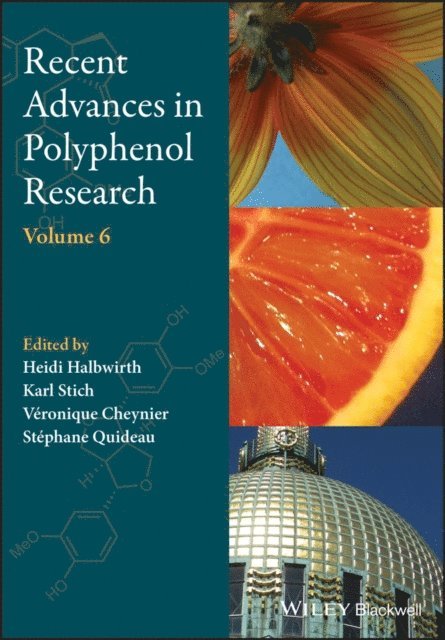
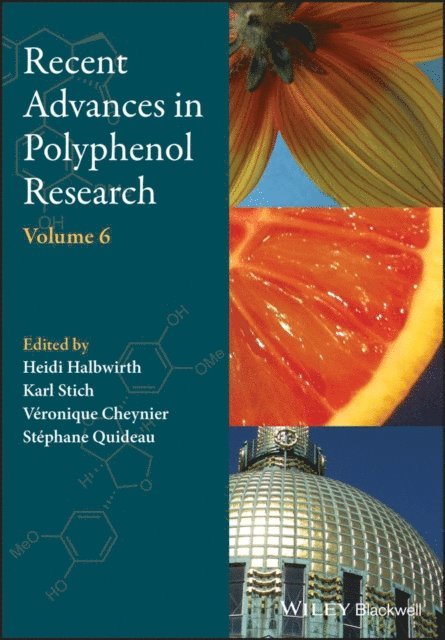
Plant polyphenols are secondary metabolites that constitute one of the most common and widespread groups of natural products. They are crucial constituents of a large and diverse range of biological functions and processes, and provide many benefits to both plants and humans. Many polyphenols, from their structurally simplest representatives to their oligo/polymeric versions, are notably known as phytoestrogens, plant pigments, potent antioxidants, and protein interacting agents.
This sixth volume of the highly regarded Recent Advances in Polyphenol Research series is edited by Heidi Halbwirth, Karl Stich, Véronique Cheynier and Stéphane Quideau, and is a continuance of the series’ tradition of compiling a cornucopia of cutting-edge chapters, written by some of the leading experts in their respective fields of polyphenol sciences. Highlighted herein are some of the most recent and pertinent developments in polyphenol research, covering such major areas as:
Chemistry and physicochemistry Biosynthesis, genetics & metabolic engineering Roles in plants and ecosystems Food, nutrition & health Applied polyphenolsThis book is a distillation of the most current information, and as such, will surely prove an invaluable source for chemists, biochemists, plant scientists, pharmacognosists and pharmacologists, biologists, ecologists, food scientists and nutritionists.
2 911 kr
Läs direkt efter köp
Plant polyphenols are secondary metabolites that constitute one of the most common and widespread groups of natural products. They are crucial constituents of a large and diverse range of biological functions and processes, and provide many benefits to both plants and humans. Many polyphenols, from their structurally simplest representatives to their oligo/polymeric versions, are notably known as phytoestrogens, plant pigments, potent antioxidants, and protein interacting agents.
This sixth volume of the highly regarded Recent Advances in Polyphenol Research series is edited by Heidi Halbwirth, Karl Stich, Véronique Cheynier and Stéphane Quideau, and is a continuance of the series’ tradition of compiling a cornucopia of cutting-edge chapters, written by some of the leading experts in their respective fields of polyphenol sciences. Highlighted herein are some of the most recent and pertinent developments in polyphenol research, covering such major areas as:
Chemistry and physicochemistry Biosynthesis, genetics & metabolic engineering Roles in plants and ecosystems Food, nutrition & health Applied polyphenolsThis book is a distillation of the most current information, and as such, will surely prove an invaluable source for chemists, biochemists, plant scientists, pharmacognosists and pharmacologists, biologists, ecologists, food scientists and nutritionists.