V. Sklenicka – författare
Visar alla böcker från författaren V. Sklenicka. Handla med fri frakt och snabb leverans.
3 produkter
3 produkter
Inbunden, Engelska, 1996
3 258 kr
Skickas inom 10-15 vardagar
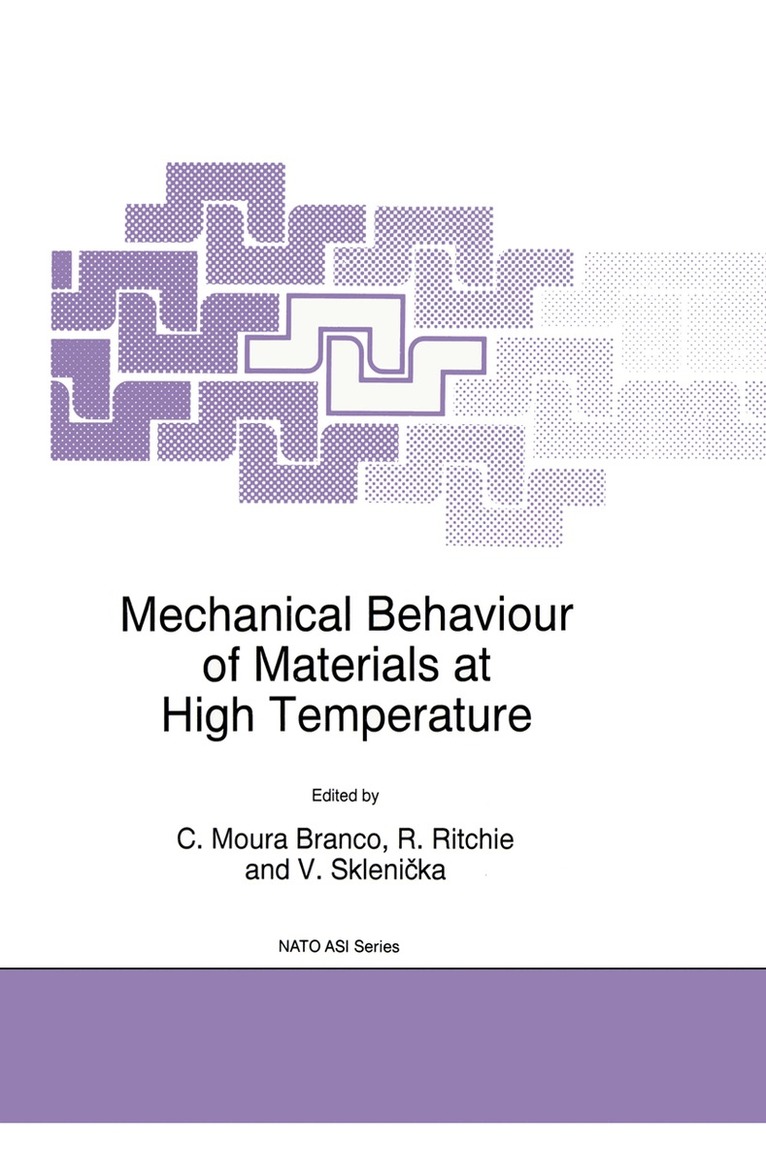
This volume contains the edited version of lectures and selected research contributions presented at the NATO ADVANCED STUDY INSTITUTE on MECHANICAL BEHA VI OUR OF MATERIALS AT HIGH TEMPERATURE, held in Sesimbra, Portugal, 12th-22nd September 1995, and organized by 1ST-Lisbon Institute of Technology, PortugaL The Institute was attended by 88 participants, including 15 lecturers from 17 countries including five CP countries. The lecturers were leading scientists and technologists from universities, research institutions and industry. The students were mainly young PhD students and junior academic or research staff with postgraduate qualifications (MSc or PhD). Fourteen students were from the five CP countries. The students presented research papers or posters during the Institute reporting the current progress of their research projects. A total of thirty three lectures, ten research papers and fifty posters were presented. This book does not contain the poster presentations and seven research papers were selected for publication. All the sessions were very active and quite extensive discussions on scientific aspects took place during the Institute. The Advanced Study Institute provided a forum for interaction among scientists and engineers from different areas of research, and young researchers.
E-bok
PDF, Engelska, 2016756 kr
Läs direkt efter köp
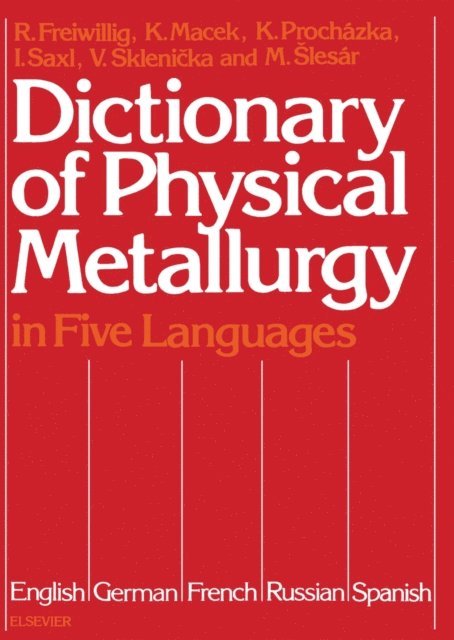
This dictionary reflects developments in physical metallurgy, namely the growth of strong ties to the physics of metals. Thus the terms relating to lattice defects and their properties and to laboratory tests revealing their effects on macroscopic behaviour of metallic materials, are extensively covered. Theory of dislocations and work hardening, high temperature deformation, fatigue and fracture, metallography and phase changes are all broadly covered, whilst terms related to technical operations such as heat and mechanical treatment as well as the corresponding equipment have been incorporated to a lesser extent.The work is based on the Dictionary of Scientific Terms from Physical Metallurgy published in parts during the years 1968-1976 in the Czechoslovak journal Metallic Materials and on its revised and extended version published in 1981 by Veda, the publishing house of the Slovak Academy of Sciences. The Czech and Slovak languages of the two preceding versions have been omitted, and Spanish has been included; the Russian part has been substantially complemented by synonyms.The dictionary provides university students, research workers and engineers with the vocabulary of basic terms used in this branch of science. It is also a useful tool for translators.
Häftad, Engelska, 2011
3 586 kr
Skickas inom 10-15 vardagar
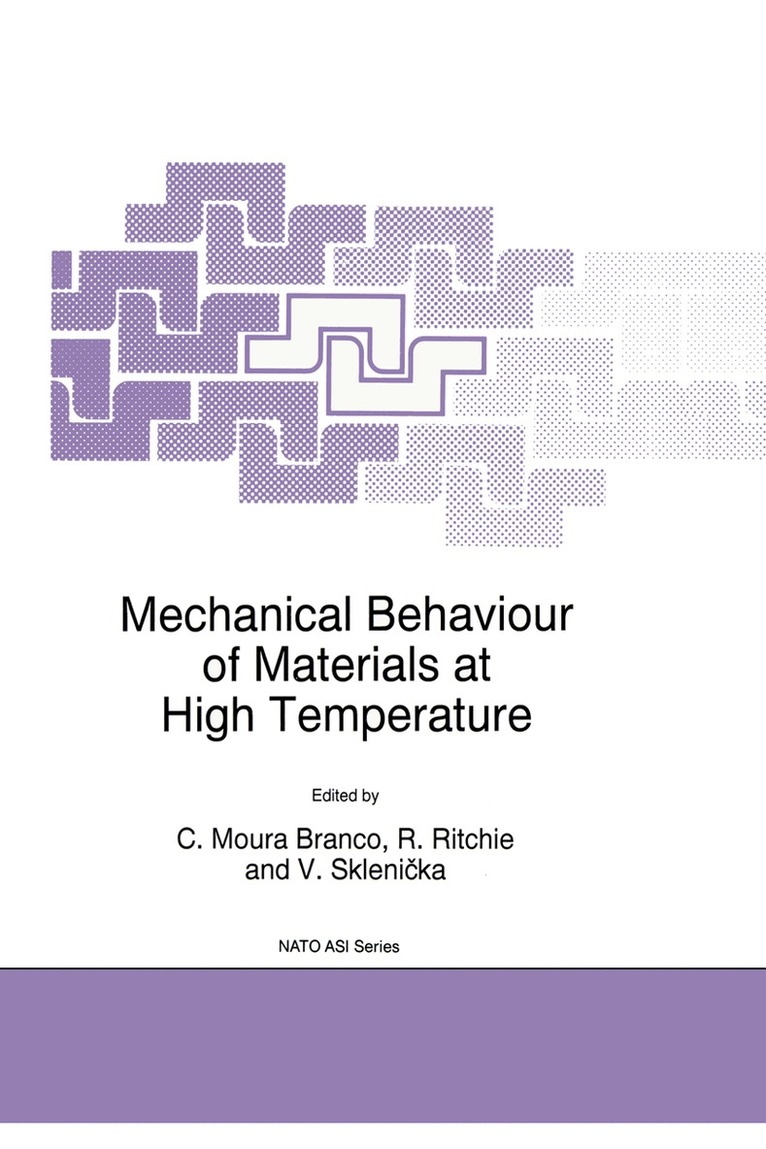
This volume contains the edited version of lectures and selected research contributions presented at the NATO ADVANCED STUDY INSTITUTE on MECHANICAL BEHA VI OUR OF MATERIALS AT HIGH TEMPERATURE, held in Sesimbra, Portugal, 12th-22nd September 1995, and organized by 1ST-Lisbon Institute of Technology, PortugaL The Institute was attended by 88 participants, including 15 lecturers from 17 countries including five CP countries. The lecturers were leading scientists and technologists from universities, research institutions and industry. The students were mainly young PhD students and junior academic or research staff with postgraduate qualifications (MSc or PhD). Fourteen students were from the five CP countries. The students presented research papers or posters during the Institute reporting the current progress of their research projects. A total of thirty three lectures, ten research papers and fifty posters were presented. This book does not contain the poster presentations and seven research papers were selected for publication. All the sessions were very active and quite extensive discussions on scientific aspects took place during the Institute. The Advanced Study Institute provided a forum for interaction among scientists and engineers from different areas of research, and young researchers.