Valdis O. Lumans – författare
Visar alla böcker från författaren Valdis O. Lumans. Handla med fri frakt och snabb leverans.
4 produkter
Himmler's Auxiliaries
The Volksdeutsche Mittelstelle and the German National Minorities of Europe, 1933-1945
E-bok, 2000
402 kr
Lägg i varukorg
Lumans studies the relations between Nazi Germany and the German minority populations of other European countries, examining these ties within the context of Hitler''s foreign policy and the racial policies of SS Chief Heinrich Himmler. He shows how the Reich''s racial and political interests in …
Himmler's Auxiliaries
The Volksdeutsche Mittelstelle and the German National Minorities of Europe, 1933-1945
Häftad, 2010
704 kr
Lägg i varukorg
Lumans studies the relations between Nazi Germany and the German minority populations of other European countries, examining these ties within the context of Hitler's foreign policy and the racial policies of SS Chief Heinrich Himmler. He shows how the Reich's racial and political interests in …
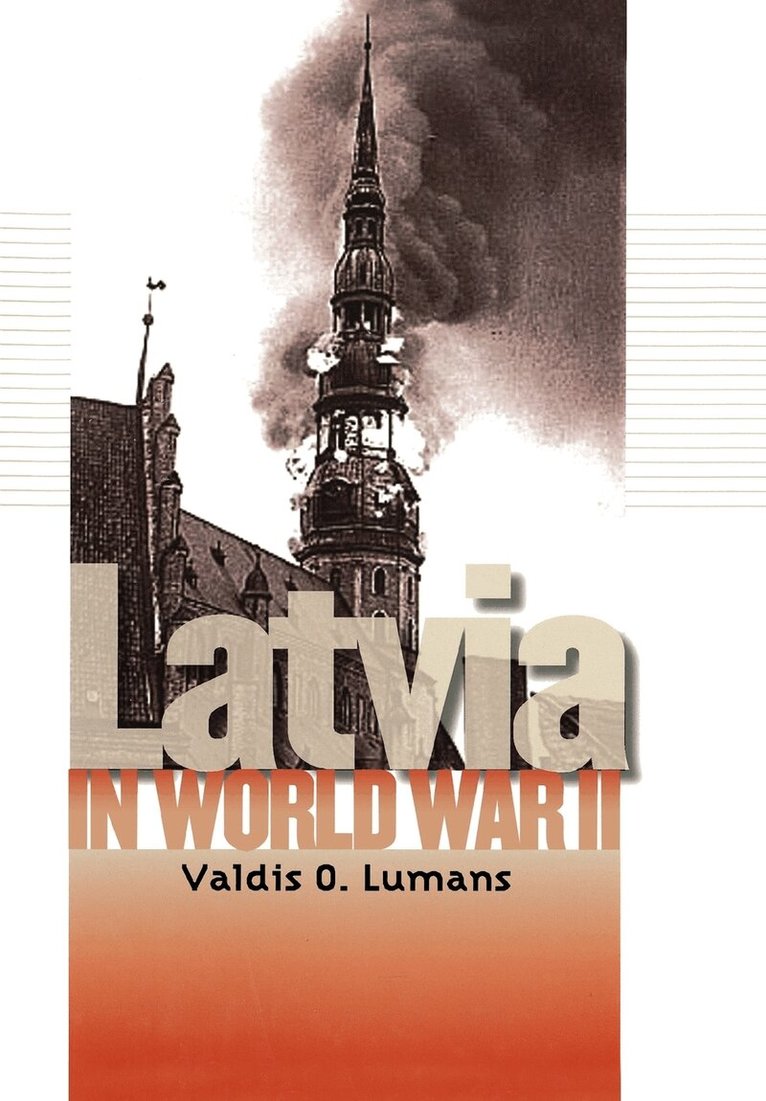
Latvia in World War II
Inbunden, 2006
1144 kr
Lägg i varukorg
Valdis Lumans provides an authoritative, balanced, and comprehensive account of one of the most complex, and conflicted, arenas of the Second World War. Struggling against both Germany and the Soviet Union, Latvia emerged as an independent nation state after the First World War. In 1940, the …
Himmler's Auxiliaries
The Volksdeutsche Mittelstelle and the German National Minorities of Europe, 1933-1945
E-bok, 2000
410 kr
Lägg i varukorg
Lumans studies the relations between Nazi Germany and the German minority populations of other European countries, examining these ties within the context of Hitler''s foreign policy and the racial policies of SS Chief Heinrich Himmler. He shows how the Reich''s racial and political interests in …