Valery L. Feigin - Böcker
Visar alla böcker från författaren Valery L. Feigin. Handla med fri frakt och snabb leverans.
3 produkter
3 produkter
2 161 kr
Skickas inom 5-8 vardagar
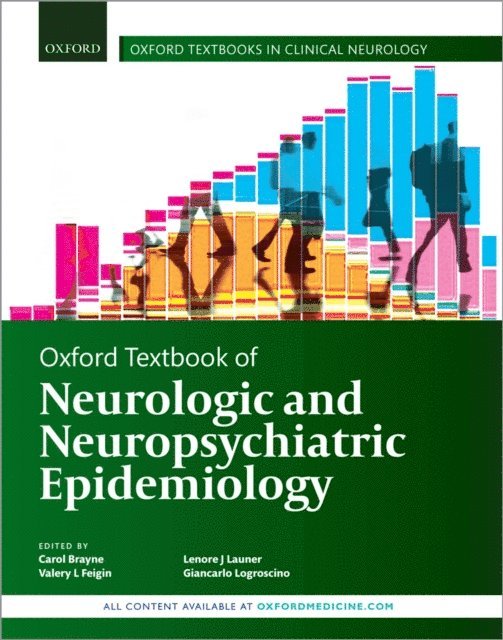
Neurologic and neuropsychiatric disorders are of great importance to societies and they also raise special considerations in epidemiological research methodology. Not only do neurologic and neuropsychiatric disorders form a major group of disorders associated with ageing populations, but those disorders that occur in earlier life can be associated with severe individual, family, and societal distress and burden. The inter-relationship of syndromes and disorders is a topic of major interest and growing biological insights across psychiatry and neurology. This includes not only overlaps in neurodegenerative syndromes but also those related to other systems such as metabolic, inflammatory, immune and vascular disorders. Part of the Oxford Textbooks in Clinical Neurology series, the Oxford Textbook of Neurologic and Neuropsychiatric Epidemiology is designed to focus on the overlaps and inter-relationships between neuro-epidemiological disorders, as well as on ways to harmonise large cohort studies to maximise opportunities for determining causes related to rarer disorders. Divided into three main parts, the book covers 1) the principles of neurologic and neuropsychiatric epidemiology; 2) specific neuropsychiatric disorders and their inter-relationships and 3) the implications of neuro-epidemiologic research for patient populations and current medical practice. This comprehensive work serves as an invaluable reference to current neuro-epidemiological methods for neurologists, psychiatrists, and senior trainees in those disciplines, as well as public health practitioners and students with an interest in neurology and neuropsychiatry.
845 kr
Skickas
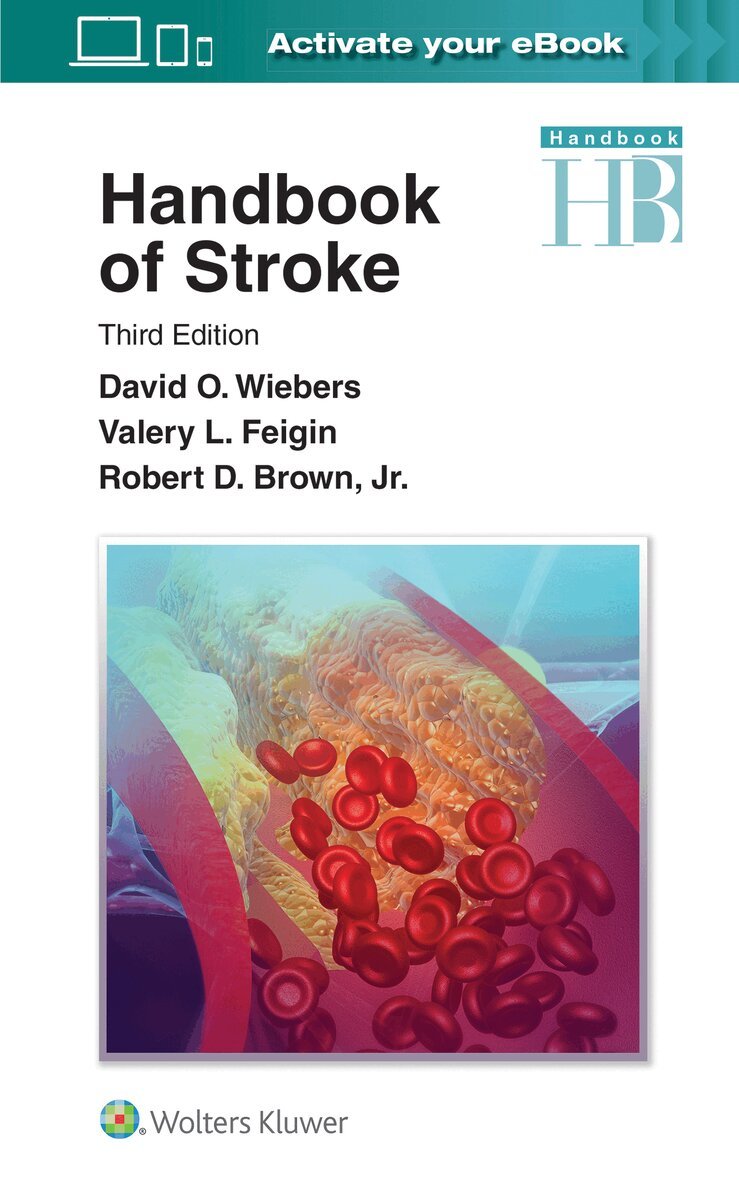
Written by leaders in the field of stroke medicine,Handbook of Stroke, Third Edition, is a concise, one-stop guide covering all aspects of clinical management of patients with cerebrovascular disorders. This user-friendly handbook brings you up to date with the most recent advances and knowledge in the field, providing practice-oriented overviews and recommendations that save lives and reduce impairment of function. It addresses specific situations you’re likely to encounter, offering clinical guidance based on available evidence and practical experience. Covers everything from clinical and laboratory assessment, differential diagnosis, and initial management to medical and surgical treatment, prognosis, rehabilitation, and stroke prevention.Includes new chapters on the global burden of stroke and restorative therapies following stroke. Provides expert state-of-the-art guidance on acute stroke treatment, cerebrovascular disease genetics, primary stroke prevention, management of unruptured intracranial aneurysms, and current therapies for stroke-related symptoms and disorders.Guides your decision making with clear presentations of the thought processes that experienced neurovascular clinicians typically use, including what can be learned from the history, clinical management algorithms, when patients with stroke should be hospitalized vs. evaluated as outpatients, and more.Enrich Your eBook Reading ExperienceRead directly on your preferred device(s), such as computer, tablet, or smartphone.Easily convert to audiobook, powering your content with natural language text-to-speech.
785 kr
Skickas inom 7-10 vardagar
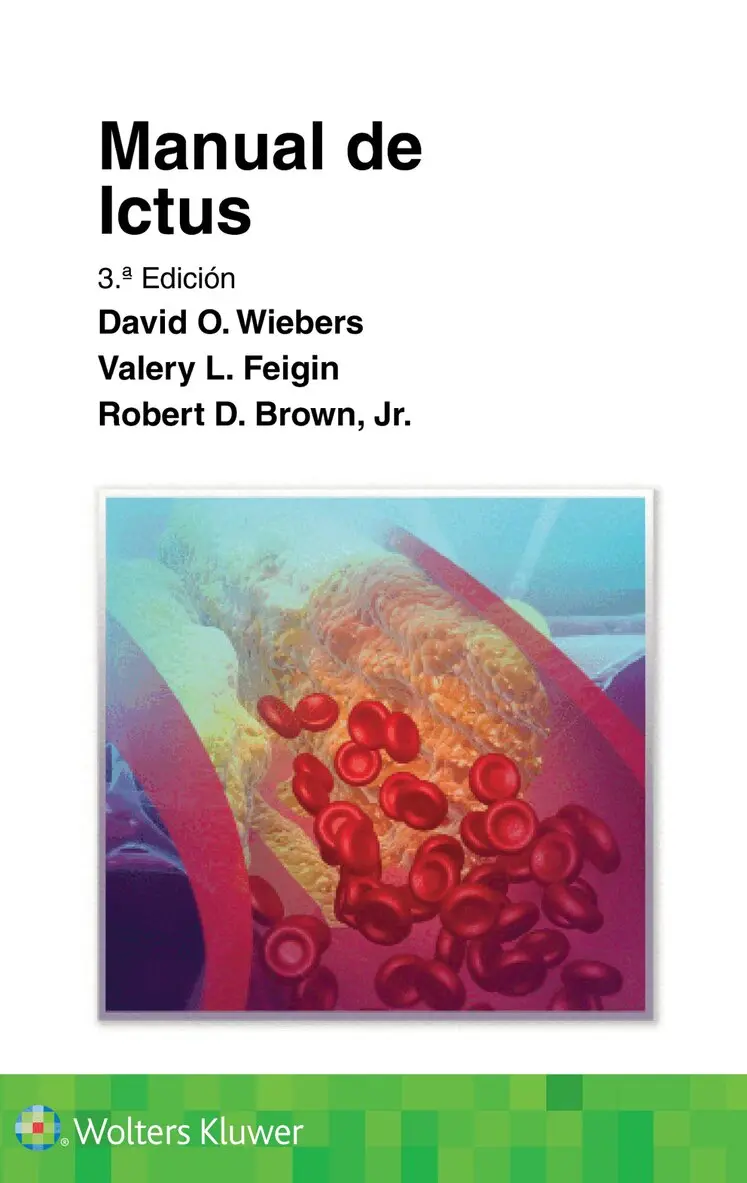
A principios del siglo xx, el término nosológico para el ictus en las estadísticas de mortalidad era apoplejía, del griego golpear; de ahí la oscura derivación del término clínico genérico accidente cerebrovascular. Este término contribuyó a promover la idea de que los pacientes con ictus eran víctimas y que, de alguna manera, el trastorno era providencial; por lo tanto, no era algo que estuviera sujeto a intervención de médicos o científicos. Ahora, los clínicos reconocen la importancia de diferenciar los tipos de ictus y sus características gracias a los estudios de imagen, cada vez más sofisticados, que han mejorado mucho la capacidad del neurólogo y de otros profesionales de la salud.Manual de ictus ha sido creado por líderes en el campo de la medicina del ictus como una guía concisa y completa que abarca todos los aspectos del tratamiento clínico de los pacientes con trastornos cerebrovasculares. Este manual, de fácil manejo, cuenta con la información y los avances más recientes en este campo, y ofrece una visión general orientada a la práctica y recomendaciones para salvar vidas y reducir sus repercusiones. Esta 3.ª edición aborda situaciones específicas y comunes, y ofrece orientación clínica basada en la evidencia y la práctica.