Valery Rees – författare
Visar alla böcker från författaren Valery Rees. Handla med fri frakt och snabb leverans.
4 produkter
4 produkter
358 kr
Tillfälligt slut
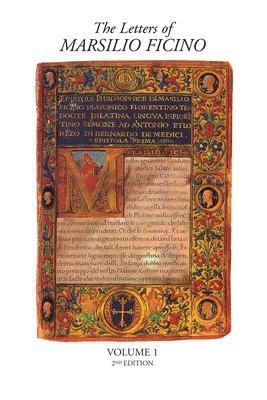
MARSILIO FICINO of Florence (1433-99) was one of the most influential thinkers of the Renaissance. He put before society a new ideal of human nature, emphasising its divine potential. As teacher and guide to a remarkable circle of men, he made a vital contribution to changes that were taking place in European thought. For Ficino, the writings of Plato provided the key to the most important knowledge for mankind, knowledge of God and the soul. It was the absorption of this knowledge that proved so important to Ficino, to his circle, and to later writers and artists. As a young man, Ficino had been directed by Cosimo de' Medici towards the study of Plato in the original Greek. Later he formed a close connection with Cosimo's grandson, Lorenzo de' Medici, under whom Florence achieved its age of brilliance. Gathered round Ficino and Lorenzo were such men as Landino, Bembo, Poliziano and Pico della Mirandola. The ideas they discussed became central to the work of Spenser, Shakespeare, Donne, Botticelli, Michelangelo, Raphael, Durer, and many other writers and artists. The first letter in this volume is from Cosimo to Ficino, inviting him to visit him on his estate at Careggii and to bring with him `Plato's book on The Highest Good' (the Philebus) which Cosimo had asked him to translate in 1463. Though there is some uncertainty about the precise nature of Ficino's Platonic Academy, in another letter he replies to a correspondent's request for `that maxim of mine that is inscribed around the walls of the Academy'. This revised edition has corrected errors made in the original translation more than four decades ago, and the notes to the letters and the biographical notes have incorporated much new material from scholarship on the period which has grown enormously in the intervening years and continues to flourish.
328 kr
Skickas inom 10-15 vardagar
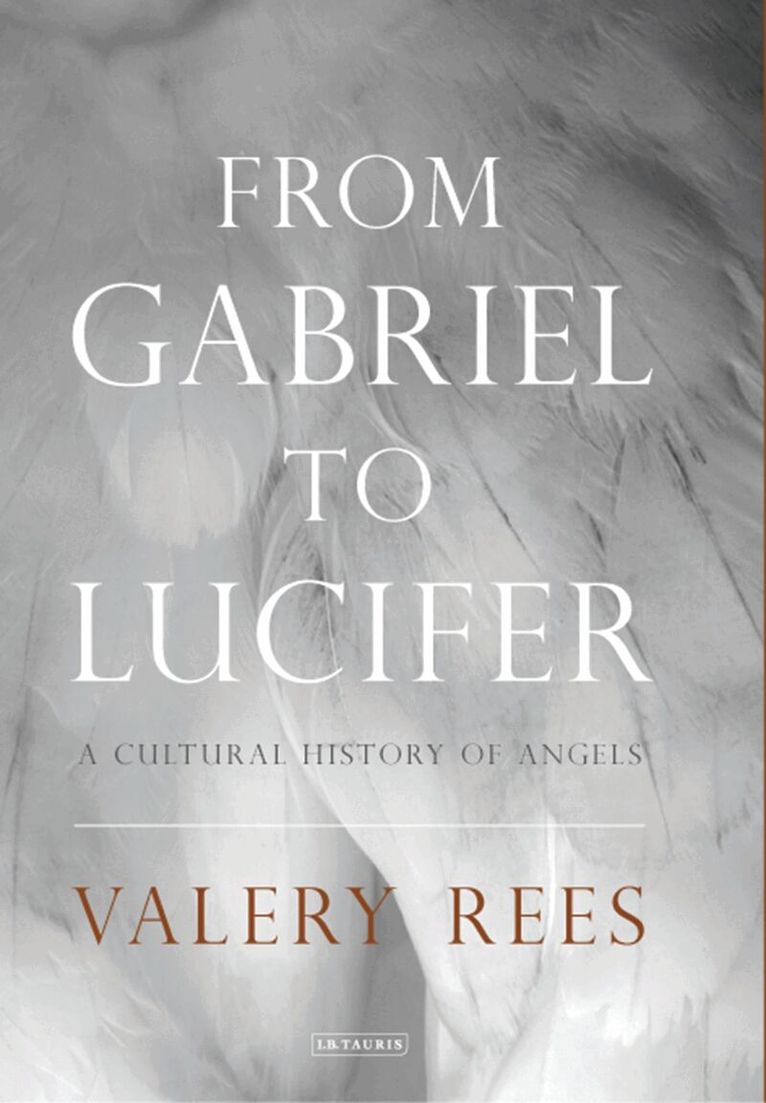
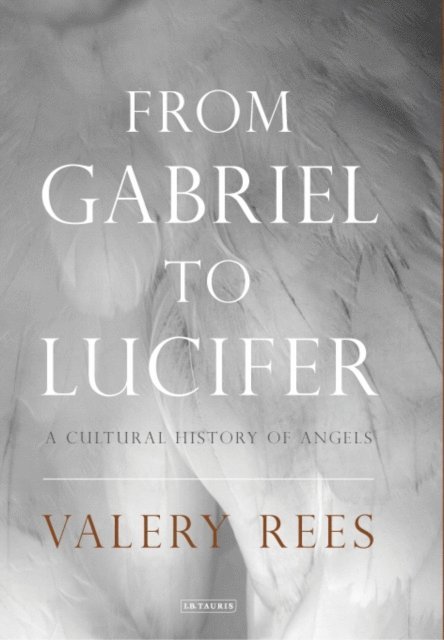
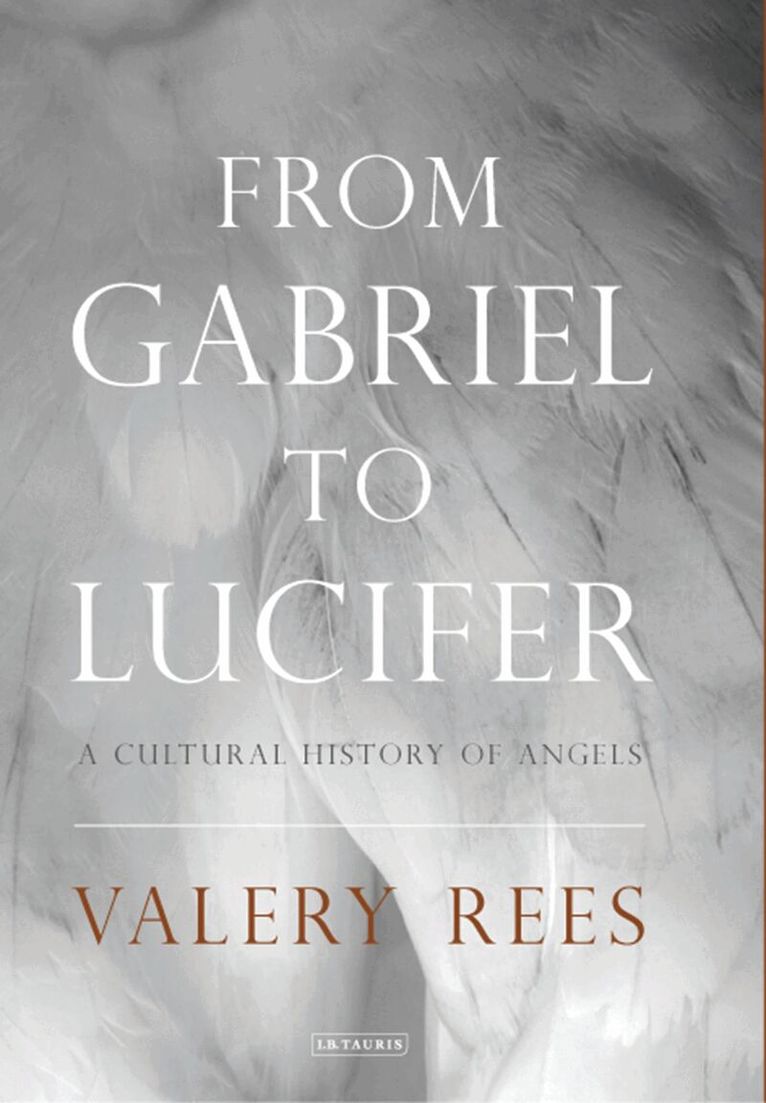
For sceptics, angels may be no more than metaphors: poetic devices to convey, at least for those with a religious sensibility, an active divine interest in creation. But for others, angels are absolutely real creatures: manifestations of cosmic power with the capacity either to enlighten or annihilate those whose awestruck paths they cross. Valery Rees offers the first comprehensive history of these beautiful, enigmatic and sometimes dangerous beings, whose existence and actions have been charted across the eons of time and civilization.Whether exploring the fevered visions of Ezekiel and biblical cherubim; Persian genii; Arab djinn; Islamic archangels; the austere and haunting icons of Andrei Rublev; or Wim Wenders' Wings of Desire and the more benign idea of the watchful guardian angel, the author shows that the ubiquity of these celestial messengers reveals something profound, if not about God or the devil, then about ourselves: our perennial preoccupation with the transcendent.
623 kr
Skickas inom 10-15 vardagar
'Fiery the angels fell; slow thunder rolled around their shores, burning with the fires of Orc.' Whether in recent popular culture, or back across countless centuries, angels have perpetually enthralled and even terrified us. 'Every single angel is terrible,' wrote the German Romantic poet Rilke: 'and so I hold myself back from the dark bird-cry of my anguished sobbing.' For sceptics, angels may be no more than metaphors: poetic devices to convey, at least for those with a religious sensibility, an active divine interest in creation. But for others, angels are absolutely real creatures: manifestations of cosmic power with the capacity either to enlighten or annihilate those whose awestruck paths they cross. Valery Rees offers the first comprehensive history of these beautiful, enigmatic and sometimes dangerous beings, whose existence and actions have been charted across the eons of time and civilization.Whether exploring the fevered visions of Ezekiel and biblical cherubim; Persian genii; Arab djinn; Islamic archangels; the austere and haunting icons of Andrei Rublev; or Wim Wenders' Wings of Desire and the more benign idea of the watchful guardian angel, the author shows that the ubiquity of these celestial messengers reveals something profound, if not about God or the devil, then about ourselves: our perennial preoccupation with the transcendent.
Del 108 - Brill's Studies in Intellectual History
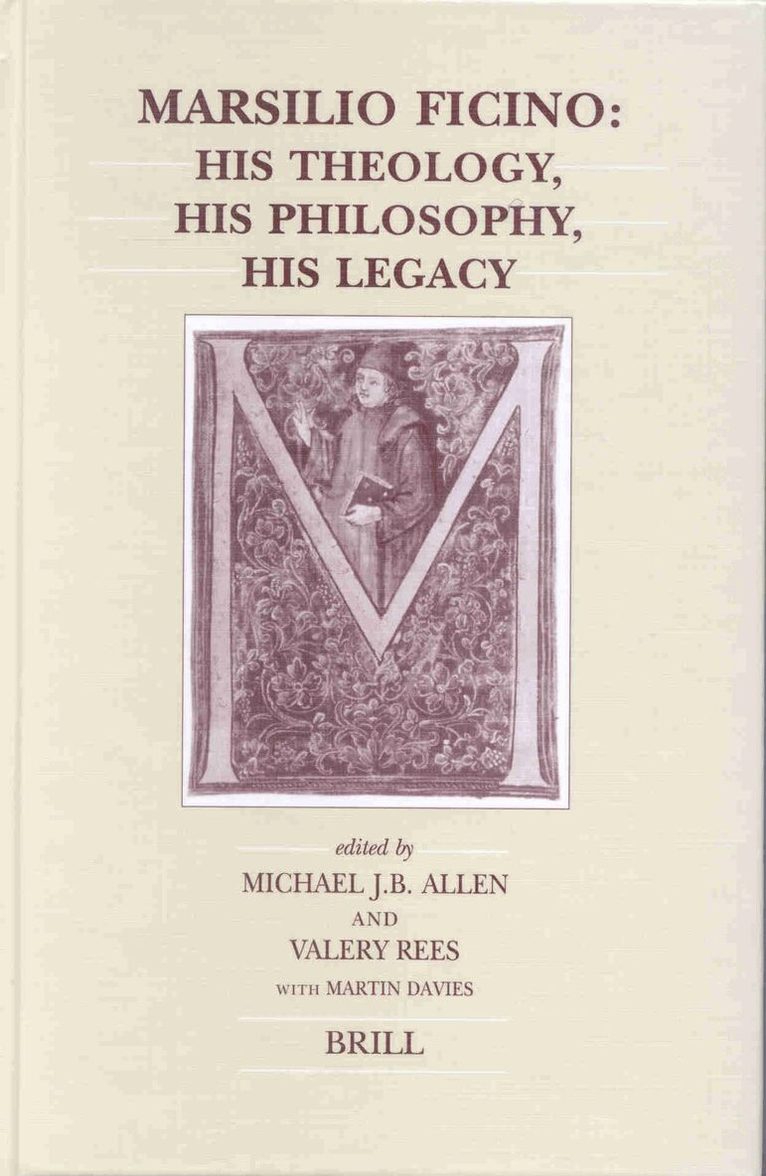
Marsilio Ficino
His Theology, his Philosophy, his Legacy
Inbunden, Engelska, 2002
2 436 kr
Skickas inom 3-6 vardagar
This volume consists of 21 essays on Marsilio Ficino (1433-99), the great Florentine scholar, philosopher and priest who was the architect of Renaissance Platonism and whose long-lasting influence on philosophy, love and music theory, medicine and magic extended across Europe. Grouped into three sections, they cover such topics as priesthood, the influence of Hermetic monism, Plotinus and Augustine, Jewish transmission of the prisca theologia, the 15th c. Plato-Aristotle controversy, the soul and its afterlife, the primacy of the will, theriac and musical therapy, the notions of matter, seeds, mirrors and clocks, and other fascinating philosophical and theological issues. Also considered are Ficino’s critics, his relationship to the Camaldolese Order, his letters to princes, his influence on art, on Copernicus, on Chapman, and the nature of the Platonic Academy.Contributors include: Tamara Albertini, Michael J. B. Allen, Francis Ames-Lewis, Donald Beecher, Christopher S. Celenza, Stephen Clucas, Arthur Field, Hiroshi Hirai, Moshe Idel, Dilwyn Knox, Sergius Kodera, Jill Kraye, Dennis F. Lackner, Jörg Lauster, Anthony Levi, John Monfasani, Valery Rees, Clement Salaman, Peter Serracino-Inglott, M. Stéphane Toussaint, and Angela Voss.