Valeska Huber – författare
Visar alla böcker från författaren Valeska Huber. Handla med fri frakt och snabb leverans.
3 produkter
3 produkter
Inbunden, Engelska, 2020
2 725 kr
Skickas inom 3-6 vardagar
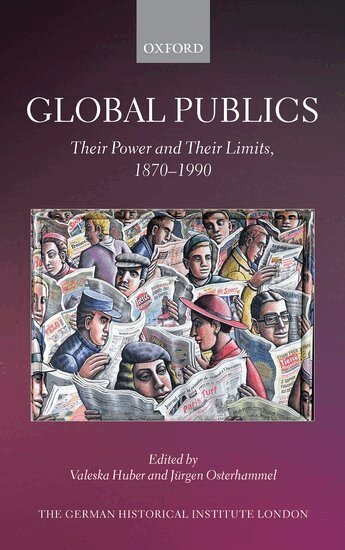
This volume combines a present-day and historical concern on the topic of global publics between the communication revolution of the 1870s and the digital age. Building on earlier theories of public spheres, Valeska Huber and Jürgen Osterhammel expand the notion of global publics not only geographically but also by charting new thematic territory, describing global publics as courts of global opinion, as market places, or as arenas for competition. As the first historical volume ever to combine different facets of global publics ranging from infrastructures, the press, film and theatre to human rights politics, it brings together established and emerging authors in the field of history and from related disciplines such as geography, sociology, and literature who explore how global publics were configured, imagined, and fragmented. In this way, Global Publics: Their Power and Their Limits not only provides a new conceptual framework and important case studies but also shows how histories of global communication might be studied in the future.
Inbunden, Engelska, 2013
1 046 kr
Skickas inom 7-10 vardagar
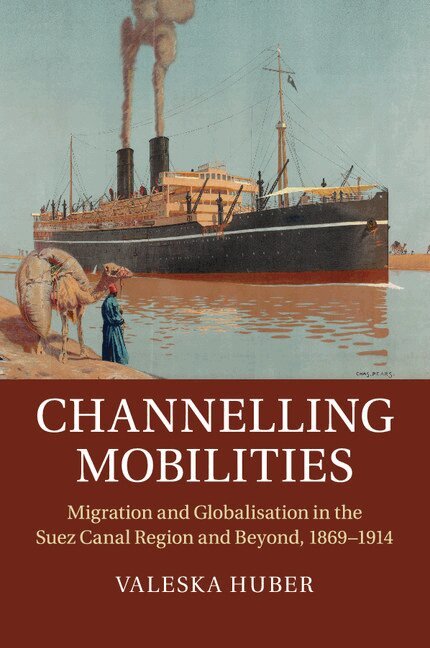
The history of globalisation is usually told as a history of shortening distances and acceleration of the flows of people, goods and ideas. Channelling Mobilities refines this picture by looking at a wide variety of mobile people passing through the region of the Suez Canal, a global shortcut opened in 1869. As an empirical contribution to global history, the book asks how the passage between Europe and Asia and Africa was perceived, staged and controlled from the opening of the Canal to the First World War, arguing that this period was neither an era of unhampered acceleration, nor one of hardening borders and increasing controls. Instead, it was characterised by the channelling of mobilities through the differentiation, regulation and bureaucratisation of movement. Telling the stories of tourists, troops, workers, pilgrims, stowaways, caravans, dhow skippers and others, the book reveals the complicated entanglements of empires, internationalist initiatives and private companies.
Häftad, Engelska, 2015
542 kr
Skickas inom 7-10 vardagar
The history of globalisation is usually told as a history of shortening distances and acceleration of the flows of people, goods and ideas. Channelling Mobilities refines this picture by looking at a wide variety of mobile people passing through the region of the Suez Canal, a global shortcut opened in 1869. As an empirical contribution to global history, the book asks how the passage between Europe and Asia and Africa was perceived, staged and controlled from the opening of the Canal to the First World War, arguing that this period was neither an era of unhampered acceleration, nor one of hardening borders and increasing controls. Instead, it was characterised by the channelling of mobilities through the differentiation, regulation and bureaucratisation of movement. Telling the stories of tourists, troops, workers, pilgrims, stowaways, caravans, dhow skippers and others, the book reveals the complicated entanglements of empires, internationalist initiatives and private companies.