van Doorslaer Luc van Doorslaer – författare
Visar alla böcker från författaren van Doorslaer Luc van Doorslaer. Handla med fri frakt och snabb leverans.
10 produkter
10 produkter
E-bok
Engelska, 20211 171 kr
Läs direkt efter köp
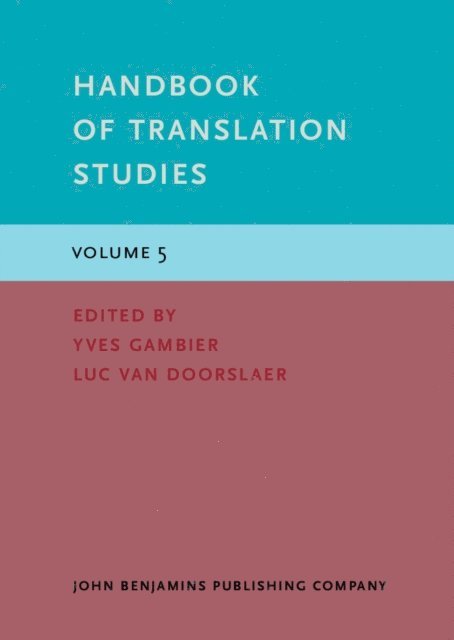
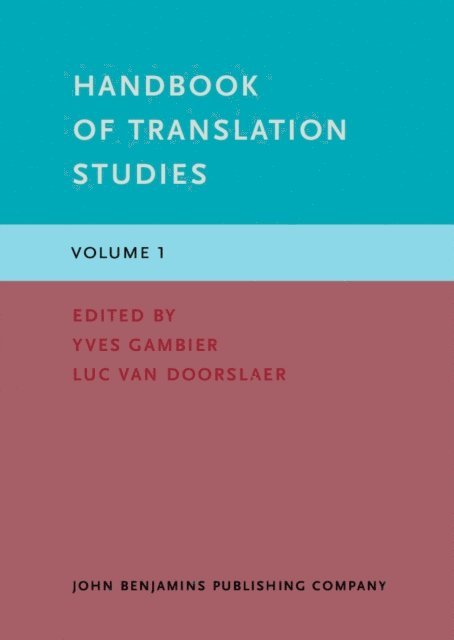
Up to now, the Handbook of Translation Studies (HTS) consisted of four volumes, all published between 2010 and 2013. Since research in TS continues to grow and expand, this fifth volume was added in 2021. The HTS aims at disseminating knowledge about translation, interpreting, localization, adaptation, etc. and providing easy access to a large range of topics, traditions, and methods to a relatively broad audience: not only students who prefer such user-friendliness, but also researchers and lecturers in Translation Studies, Translation & Interpreting professionals, as well as scholars and experts from other adjacent disciplines. All articles in HTS are written by specialists in the different subfields and are peer-reviewed.
E-bok
PDF, Engelska, 20161 258 kr
Läs direkt efter köp
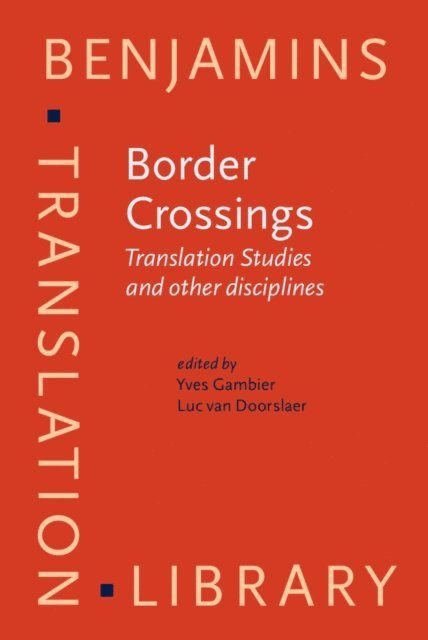
For decades, Translation Studies has been perceived not merely as a discipline but rather as an interdiscipline, a trans-disciplinary field operating across a number of boundaries. This has implied and still implies a considerable amount of interaction with other disciplines. There is often much more awareness of and attention to translation and Translation Studies than many translation scholars are aware of. This volume crosses the boundaries to other disciplines and explicitly sets up dialogic formats: every chapter is co-authored both by a specialist from Translation Studies and a scholar from another discipline with a special interest in translation. Sixteen disciplinary dialogues about and around translation are the result, sometimes with expected partners, such as scholars from Computational Linguistics, History and Comparative Literature, but sometimes also with less expected interlocutors, such as scholars from Biosemiotics, Game Localization Research and Gender Studies. The volume not only challenges the boundaries of Translation Studies but also raises issues such as the institutional division of disciplines, the cross-fertilization of a given field, the trends and turns within an interdiscipline.
E-bok
Engelska, 20161 195 kr
Läs direkt efter köp
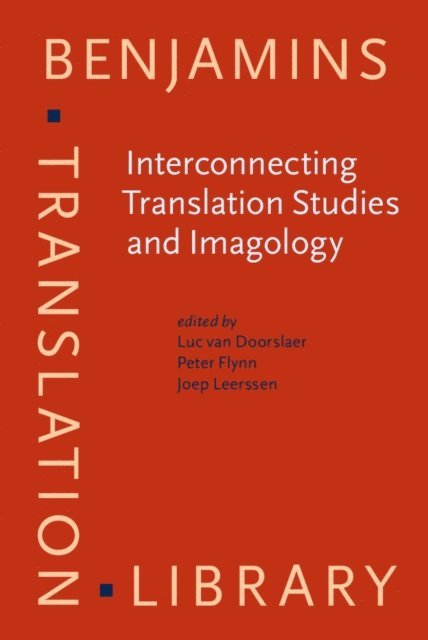
Isn’t translation all about saying exactly the same thing in another language? Aren’t national images totally outdated in this era of globalization? Most people might agree but this book amply illustrates how persistent and multifaceted clichés on translation and nation can be. Time and again, translating involves making transfer choices and these choices are never neutral. Though globalization has seemingly all but erased national ideologies and cultural borders, such ideologies and borders continue to play a determining role in conflicts, identity politics and cultural profiles.The place where transfer choices and forms of national and cultural representation come together is also the place where Translation Studies and Imagology meet. This book offers a wealth of chapters showing how decisive selection and transfer processes can be in representing national images, both self-images and images of the other(s). It shows also how intensely the two disciplines can work together and mutually benefit from shared data and methodologies.
E-bok
PDF, Engelska, 20141 117 kr
Läs direkt efter köp
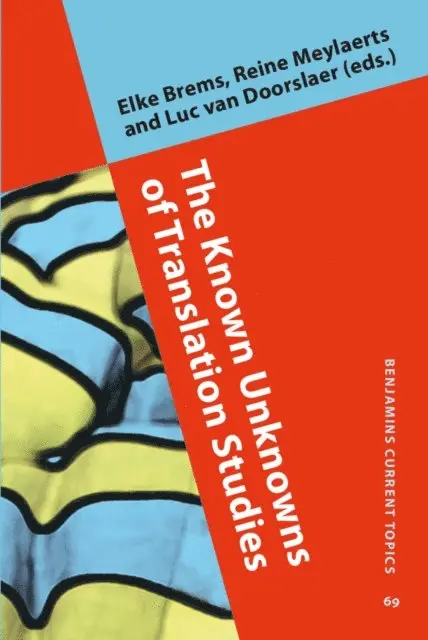
After several paradigm changes and even more turns, after fights about scholarly territories and methodological renewal, after intra- and interdisciplinary discussions, Translation Studies continues to produce a large number of publications dealing with the challenge of defining itself and its object, with the borderlines of both the discipline and the object, with ways of interacting with related (sub)disciplines. This publication gathers contributions from established TS scholars (all former CETRA Chair professors) about the topics that will very probably dominate the near future of the discipline.This is an extended and updated version of a Target special issue with the same title that was published in 2012 (24:1).
E-bok
PDF, Engelska, 20131 195 kr
Läs direkt efter köp
As a meaningful manifestation of how institutionalized the discipline has become, the new Handbook of Translation Studies is most welcome. It joins the other signs of maturation such as Summer Schools, the development of academic curricula, historical surveys, journals, book series, textbooks, terminologies, bibliographies and encyclopedias.The HTS aims at disseminating knowledge about translation and interpreting and providing easy access to a large range of topics, traditions, and methods to a relatively broad audience: not only students who often adamantly prefer such user-friendliness, researchers and lecturers in Translation Studies, Translation & Interpreting professionals; but also scholars and experts from other disciplines (among which linguistics, sociology, history, psychology). In addition the HTS addresses any of those with a professional or personal interest in the problems of translation, interpreting, localization, editing, etc., such as communication specialists, journalists, literary critics, editors, public servants, business managers, (intercultural) organization specialists, media specialists, marketing professionals.The usability, accessibility and flexibility of the HTS depend on the commitment of people who agree that Translation Studies does matter. All users are therefore invited to share their feedback. Any questions, remarks and suggestions for improvement can be sent to the editorial team at hts@kuleuven.be.Next to the book edition (in printed and electronic, PDF, format), HTS is also available as an online resource, connected with the Translation Studies Bibliography. For access to the Handbook of Translation Studies Online, please visit http://www.benjamins.com/online/hts/
E-bok
PDF, Engelska, 20131 054 kr
Läs direkt efter köp
In the wake of post-colonial and post-modernist thinking, ‘Eurocentrism’ has been criticized in a number of academic disciplines, including Translation Studies. First published as a special issue of Translation and Interpreting Studies 6:2 (2011), this volume re-examines and problematizes some of the arguments used in such criticism. It is argued here that one should be wary in putting forward such arguments in order not to replace Eurocentrism by a confrontational geographical model characterized precisely by a continentalization of discourse, thereby merely reinstituting under another guise. The work also questions the relevance of continent-based theories of translation as such along with their underlying beliefs and convictions. But since the volume prefers to keep the debate open, its concluding interview article also provides the opportunity to those criticized to respond and provide well-balanced comments on such points of criticism.
E-bok
PDF, Engelska, 20121 195 kr
Läs direkt efter köp
As a meaningful manifestation of how institutionalized the discipline has become, the new Handbook of Translation Studies is most welcome. It joins the other signs of maturation such as Summer Schools, the development of academic curricula, historical surveys, journals, book series, textbooks, terminologies, bibliographies and encyclopedias.The HTS aims at disseminating knowledge about translation and interpreting and providing easy access to a large range of topics, traditions, and methods to a relatively broad audience: not only students who often adamantly prefer such user-friendliness, researchers and lecturers in Translation Studies, Translation & Interpreting professionals; but also scholars and experts from other disciplines (among which linguistics, sociology, history, psychology). In addition the HTS addresses any of those with a professional or personal interest in the problems of translation, interpreting, localization, editing, etc., such as communication specialists, journalists, literary critics, editors, public servants, business managers, (intercultural) organization specialists, media specialists, marketing professionals.The usability, accessibility and flexibility of the HTS depend on the commitment of people who agree that Translation Studies does matter. All users are therefore invited to share their feedback. Any questions, remarks and suggestions for improvement can be sent to the editorial team at hts@kuleuven.be.Next to the book edition (in printed and electronic, PDF, format), HTS is also available as an online resource, connected with the Translation Studies Bibliography. For access to the Handbook of Translation Studies Online, please visit http://www.benjamins.com/online/hts/
E-bok
PDF, Engelska, 20111 195 kr
Läs direkt efter köp
As a meaningful manifestation of how institutionalized the discipline has become, the new Handbook of Translation Studies is most welcome. It joins the other signs of maturation such as Summer Schools, the development of academic curricula, historical surveys, journals, book series, textbooks, terminologies, bibliographies and encyclopedias.The HTS aims at disseminating knowledge about translation and interpreting and providing easy access to a large range of topics, traditions, and methods to a relatively broad audience: not only students who often adamantly prefer such user-friendliness, researchers and lecturers in Translation Studies, Translation & Interpreting professionals; but also scholars and experts from other disciplines (among which linguistics, sociology, history, psychology). In addition the HTS addresses any of those with a professional or personal interest in the problems of translation, interpreting, localization, editing, etc., such as communication specialists, journalists, literary critics, editors, public servants, business managers, (intercultural) organization specialists, media specialists, marketing professionals.The usability, accessibility and flexibility of the HTS depend on the commitment of people who agree that Translation Studies does matter. All users are therefore invited to share their feedback. Any questions, remarks and suggestions for improvement can be sent to the editorial team at hts@kuleuven.be.Next to the book edition (in printed and electronic, PDF, format), HTS is also available as an online resource, connected with the Translation Studies Bibliography. For access to the Handbook of Translation Studies Online, please visit http://www.benjamins.com/online/hts/
E-bok
PDF, Engelska, 20101 384 kr
Läs direkt efter köp
As a meaningful manifestation of how institutionalized the discipline has become, the new Handbook of Translation Studies is most welcome. It joins the other signs of maturation such as Summer Schools, the development of academic curricula, historical surveys, journals, book series, textbooks, terminologies, bibliographies and encyclopedias.The HTS aims at disseminating knowledge about translation and interpreting and providing easy access to a large range of topics, traditions, and methods to a relatively broad audience: not only students who often adamantly prefer such user-friendliness, researchers and lecturers in Translation Studies, Translation & Interpreting professionals; but also scholars and experts from other disciplines (among which linguistics, sociology, history, psychology). In addition the HTS addresses any of those with a professional or personal interest in the problems of translation, interpreting, localization, editing, etc., such as communication specialists, journalists, literary critics, editors, public servants, business managers, (intercultural) organization specialists, media specialists, marketing professionals.The usability, accessibility and flexibility of the HTS depend on the commitment of people who agree that Translation Studies does matter. All users are therefore invited to share their feedback. Any questions, remarks and suggestions for improvement can be sent to the editorial team at hts@kuleuven.be.Next to the book edition (in printed and electronic, PDF, format), HTS is also available as an online resource, connected with the Translation Studies Bibliography. For access to the Handbook of Translation Studies Online, please visit http://www.benjamins.com/online/hts/ .
E-bok
PDF, Engelska, 20091 117 kr
Läs direkt efter köp
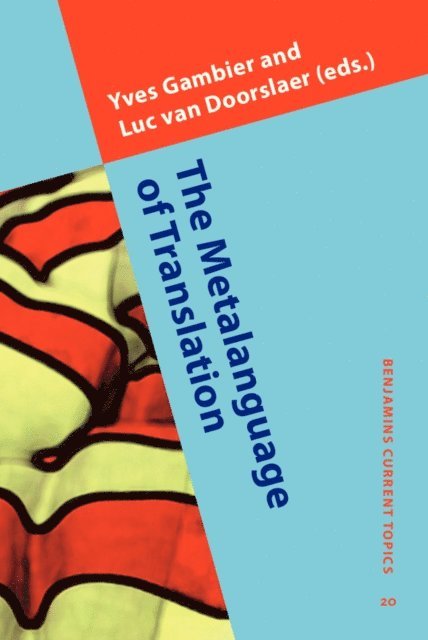
“Let the meta-discussion begin,” James Holmes urged in 1972. Coming almost forty years later – years filled with fascinating and often unexpected developments in the interdiscipline of Translation Studies – this volume offers the reader a multiplicity of meta-perspectives, while also moving the discussion forward. Indeed, the (re)production and (re)use of metalinguistic metaphors frame and partly determine our views on research, so such a discussion is vital as it is in any scholarly discipline. Among other questions, the eleven contributors draw the reader’s attention to the often puzzling variations of usage and conceptualization in both the theory and the practice of translation.First published as a special issue of Target 19:2 (2007), the volume runs the gamut of metalinguistic topics, ranging from terminology, localization and epistemological questions, through the Chinese perspective, to the conceptual mapping of the online Translation Studies Bibliography.