Vanda Felbab Brown – författare
Visar alla böcker från författaren Vanda Felbab Brown. Handla med fri frakt och snabb leverans.
10 produkter
10 produkter
E-bok
PDF, Engelska, 2017194 kr
Läs direkt efter köp
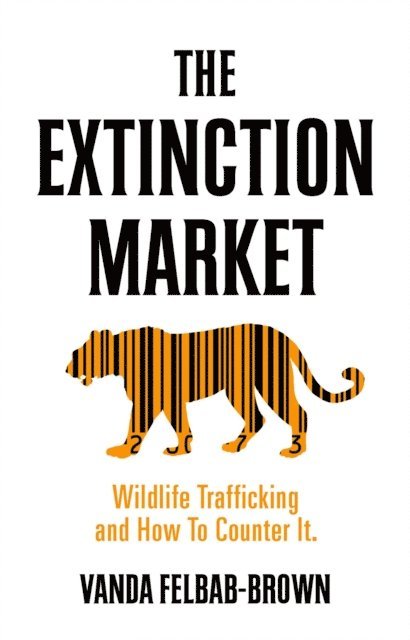
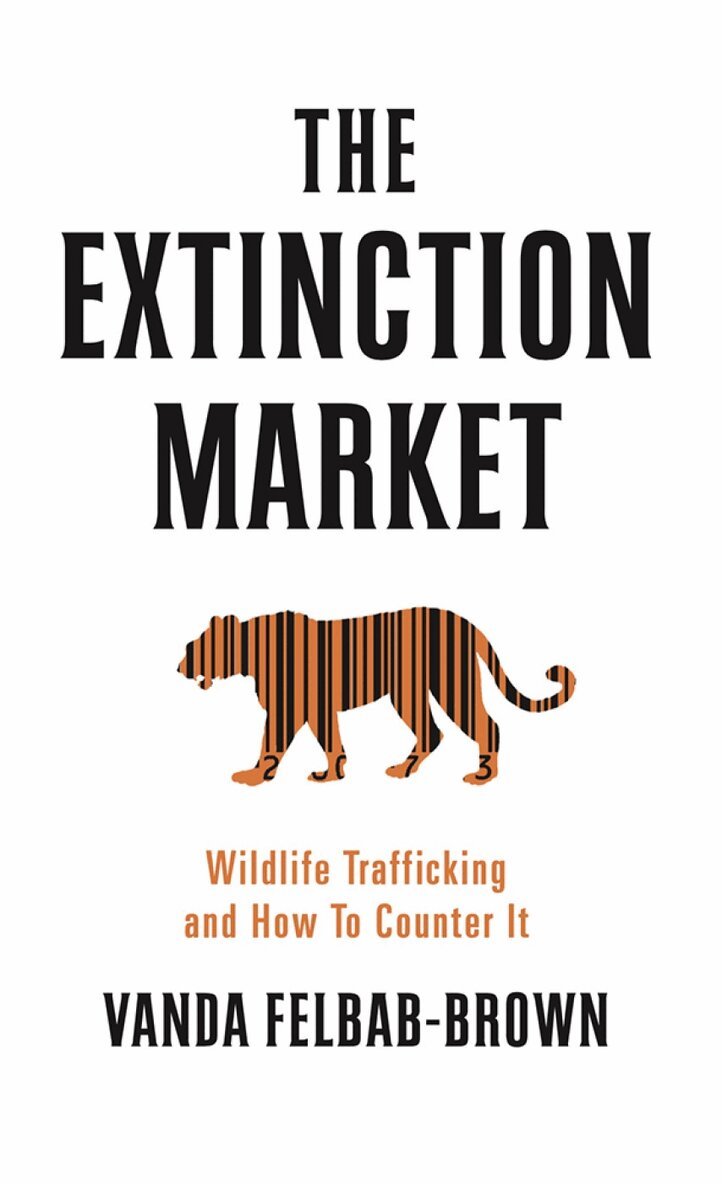
The planet is currently experiencing alarming levels of species loss caused in large part by intensified poaching and wildlife trafficking driven by expanding demand, for medicines, for food, and for trophies. Affecting many more species than just the iconic elephants, rhinos, and tigers, the rate of extinction is now as much as 1000 times the historical average and the worst since the dinosaurs died out 65 million years ago. In addition to causing irretrievable biodiversity loss, wildlife trafficking also poses serious threats to public health, potentially triggering a global pandemic. The Extinction Market explores the causes, means, and consequences of poaching and wildlife trafficking, with a view to finding ways of suppressing them. Vanda Felbab-Brown travelled to the markets of Latin America, South and South East Asia, and eastern and southern Africa, to evaluate the effectiveness of various tools, including bans on legal trade, law enforcement, and interdiction; allowing legal supply from hunting or farming; alternative livelihoods; anti- money-laundering efforts; and demand reduction strategies. This is an urgent book offering meaningful solutions to one of the world''s most pressing crises.
E-bok
Engelska, 2017194 kr
Läs direkt efter köp
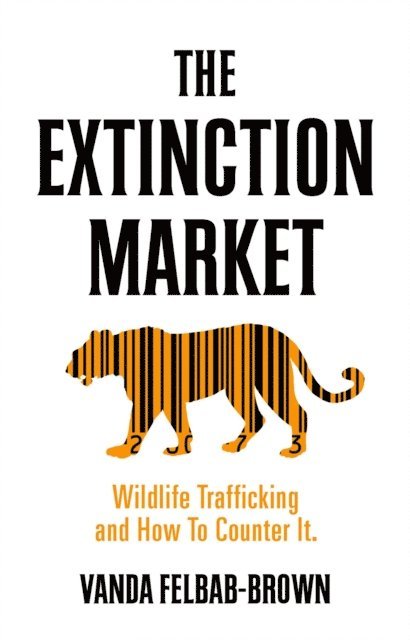
The planet is currently experiencing alarming levels of species loss caused in large part by intensified poaching and wildlife trafficking driven by expanding demand, for medicines, for food, and for trophies. Affecting many more species than just the iconic elephants, rhinos, and tigers, the rate of extinction is now as much as 1000 times the historical average and the worst since the dinosaurs died out 65 million years ago. In addition to causing irretrievable biodiversity loss, wildlife trafficking also poses serious threats to public health, potentially triggering a global pandemic. The Extinction Market explores the causes, means, and consequences of poaching and wildlife trafficking, with a view to finding ways of suppressing them. Vanda Felbab-Brown travelled to the markets of Latin America, South and South East Asia, and eastern and southern Africa, to evaluate the effectiveness of various tools, including bans on legal trade, law enforcement, and interdiction; allowing legal supply from hunting or farming; alternative livelihoods; anti- money-laundering efforts; and demand reduction strategies. This is an urgent book offering meaningful solutions to one of the world''s most pressing crises.
E-bok
PDF, Engelska, 2009333 kr
Läs direkt efter köp
Most policymakers see counterinsurgency and counternarcotics policy as two sides of the same coin. Stop the flow of drug money, the logic goes, and the insurgency will wither away. But the conventional wisdom is dangerously wrongheaded, as Vanda Felbab-Brown argues in Shooting Up.Counternarcotics campaigns, particularly those focused on eradication, typically fail to bankrupt belligerent groups that rely on the drug trade for financing. Worse, they actually strengthen insurgents by increasing their legitimacy and popular support.Felbab-Brown, a leading expert on drug interdiction efforts and counterinsurgency, draws on interviews and fieldwork in some of the world's most dangerous regions to explain how belligerent groups have become involved in drug trafficking and related activities, including kidnapping, extortion, and smuggling. Shooting Up shows vividly how powerful guerrilla and terrorist organizations including Peru's Shining Path, the FARC and the paramilitaries in Colombia, and the Taliban in Afghanistan have learned to exploit illicit markets. In addition, the author explores the interaction between insurgent groups and illicit economies in frequently overlooked settings, such as Northern Ireland, Turkey, and Burma.While aggressive efforts to suppress the drug trade typically backfire, Shooting Up shows that a laissez-faire policy toward illicit crop cultivation can reduce support for the belligerents and, critically, increase cooperation with government intelligence gathering. When combined with interdiction targeting major traffickers, this strategy gives policymakers a better chance of winning both the war against the insurgents and the war on drugs.
E-bok
Engelska, 2012438 kr
Läs direkt efter köp
After more than a decade of great effort and sacrifice by America and its allies, the Taliban still has not been defeated, and many Afghans believe that a civil war is coming. Aspiration and Ambivalence analyzes the U.S. and international efforts in Afghanistan and offers detailed recommendations for dealing with the precarious situation leading up to the 2014 transition to Afghan control and beyond. Vanda Felbab-Brown argues that allied efforts in Afghanistan have put far too little emphasis on good governance, concentrating too much on short-term military goals to the detriment of long-term peace and stability. The Western tendency to ally with bullies, warlords, smugglers, and other shady characters in pursuit of short-term military advantage actually empowers the forces working against good governance and long-term political stability. Rampant corruption and mafia rule thus persist, making it impossible for Afghans to believe in the institutional reforms and rule of law that are clearly necessary. This must change otherwise, the chances of building responsive and sustainable governmental structures are slim, indeed.Felbab-Brown combines thorough research and analysis with vivid personal accounts of her time spent in the war-torn nationpowerful vignettes illustrating the Afghan aspirations for peace, stability, and sovereignty and the stubborn obstacles to securing them."The year 2014 will mark a critical juncture in Afghanistan's odyssey. After more than a decade of arduous fighting and political involvement, the U.S. and international presence there will be significantly reduced and circumscribed. Although the international community has committed itself not to abandon Afghanistan as it did in the 1990s, the onus will be on the Afghan government to provide for the security of the country, its economic development, and governance that attempts to meet the needs of the Afghan people. Difficult challenges, major unresolved questions, and worrisome trends surround all three sets of processes. The biggest hole in the U.S. strategy and international efforts to stabilize the country is the failure to adequately address the country's fractured and brittle political system and very poor governance."from Aspiration and Ambivalence
E-bok
Engelska, 2017481 kr
Läs direkt efter köp
Conventional political theory holds that the sovereign state is the legitimate source of order and provider of public services in any society, whether democratic or not. But Hezbollah and ISIS in the Middle East, pirate clans in Africa, criminal gangs in South America, and militias in Southeast Asia are examples of nonstate actors that control local territory and render public services that the nation-state cannot or will not provide.This fascinating book takes the reader around the world to areas where national governance has broken down-or never really existed. In these places, the vacuum has been filled by local gangs, militias, and warlords, some with ideological or political agendas and others focused primarily on economic gain. Many of these actors have substantial popularity and support among local populations and have developed their own enduring institutions, often undermining the legitimacy of the national state.The authors show that the rest of the world has more than a passing interest in these situations, in part because transborder crime and terrorism often emerge but also because failed states threaten international interests from trade to security. This book also poses, and offers answers for, the question: How should the international community respond to local orders dominated by armed nonstate actors? In many cases outsiders have taken the short-term route-accepting unsavory local actors out of expediency-but at the price of long-term instability or damage to human rights and other considerations.From Africa and the Middle East to Asia and Latin America, the local situations highlighted in this book are, and will remain, high on today''s international agenda. The book makes a unique contribution to global understanding of how those situations developed and what can be done about them.This title is part of the Geopolitics in the 21st Century series.
Inbunden, Engelska, 2025
319 kr
Skickas inom 5-8 vardagar
Häftad, Engelska, 2025
166 kr
Skickas inom 5-8 vardagar
Häftad, Engelska, 2012
305 kr
Skickas inom 3-6 vardagar
Häftad, Engelska, 2017
329 kr
Skickas inom 7-10 vardagar
The planet is currently experiencing alarming levels of species loss caused in large part by intensified poaching and wildlife trafficking driven by expanding demand, for medicines, for food, and for trophies. Affecting many more species than just the iconic elephants, rhinos, and tigers, the rate of extinction is now as much as 1000 times the historical average and the worst since the dinosaurs died out 65 million years ago. In addition to causing irretrievable biodiversity loss, wildlife trafficking also poses serious threats to public health, potentially triggering a global pandemic. The Extinction Market explores the causes, means, and consequences of poaching and wildlife trafficking, with a view to finding ways of suppressing them. Vanda Felbab-Brown travelled to the markets of Latin America, South and South East Asia, and eastern and southern Africa, to evaluate the effectiveness of various tools, including bans on legal trade, law enforcement, and interdiction; allowing legal supply from hunting or farming; alternative livelihoods; anti- money-laundering efforts; and demand reduction strategies. This is an urgent book offering meaningful solutions to one of the world's most pressing crises.
Häftad, Engelska, 2013
172 kr
Tillfälligt slut