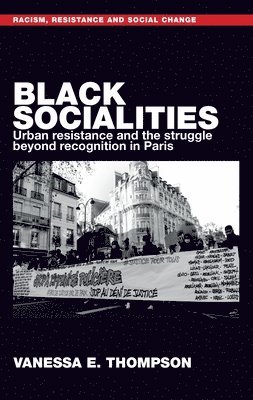
This book shows how black urban movements from the racialized working-class districts of Paris develop collective place-making strategies in their anti-racist mobilizations, beyond calls for recognition or collective identity formation. These modalities of collective action - from the disruption of racist and carceral geographies through the appropriation of public and semi-public space, the creation of self-made infrastructures for evicted families, to the organization of multi-racial resistance to policing - unfold as socialities that shape anti-racist organizing against state racism, policing, and structural abandonment. They open the horizon for new formations of political blackness and abolitionist politics, beyond Paris and beyond Europe.