Venugopal Maddipati - Böcker
Visar alla böcker från författaren Venugopal Maddipati. Handla med fri frakt och snabb leverans.
4 produkter
4 produkter
2 150 kr
Skickas inom 10-15 vardagar
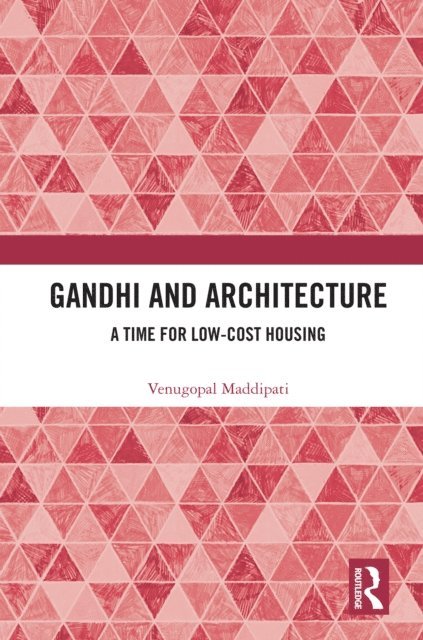
Gandhi and Architecture: A Time for Low-Cost Housing chronicles the emergence of a low-cost, low-rise housing architecture that conforms to M.K. Gandhi’s religious need to establish finite boundaries for everyday actions; finitude in turn defines Gandhi’s conservative and exclusionary conception of religion. Drawing from rich archival and field materials, the book begins with an exploration of Gandhi’s religiosity of relinquishment and the British Spiritualist, Madeline Slade’s creation of his low-cost hut, Adi Niwas, in the village of Segaon in the 1930s. Adi Niwas inaugurates a low-cost housing architecture of finitude founded on the near-simultaneous but heterogeneous, conservative Gandhian ideals of pursuing self-sacrifice and rendering the pursuit of self-sacrifice legible as the practice of an exclusionary varnashramadharma.At a considerable remove from Gandhi’s religious conservatism, successive generations in post-colonial India have reimagined a secular necessity for this Gandhian low-cost housing architecture of finitude. In the early 1950s era of mass housing for post-partition refugees from Pakistan, the making of a low-cost housing architecture was premised on the necessity of responding to economic concerns and to an emerging demographic mandate. In the 1970s, during the Organization of Petroleum Exporting Countries crisis, it was premised on the rise of urban and climatological necessities. More recently, in the late 1990s and early 2000s, its reception has been premised on the emergence of language-based identitarianism in Wardha, Maharashtra. Each of these moments of necessity reveals the enduring present of a Gandhian low-cost housing architecture of finitude and also the need to emancipate Gandhian finitude from Gandhi’s own exclusions.This volume is a critical intervention in the philosophy of architectural history. Drawing eclectically from science and technology studies, political science, housing studies, urban studies, religious studies, and anthropology, this richly illustrated volume will be of great interest to students and researchers of architecture and design, housing, history, sociology, economics, Gandhian studies, urban studies and development studies.
635 kr
Skickas inom 10-15 vardagar
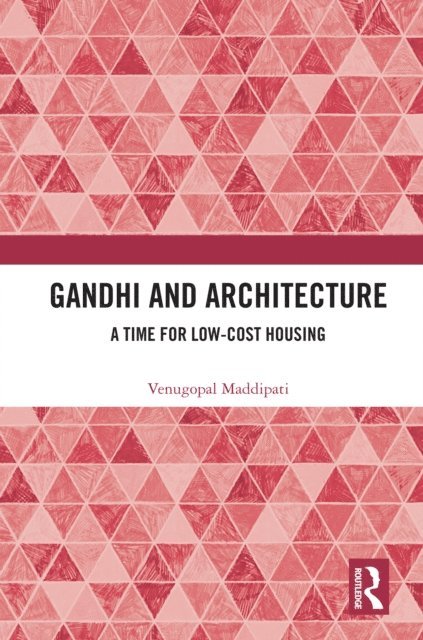
Gandhi and Architecture: A Time for Low-Cost Housing chronicles the emergence of a low-cost, low-rise housing architecture that conforms to M.K. Gandhi’s religious need to establish finite boundaries for everyday actions; finitude in turn defines Gandhi’s conservative and exclusionary conception of religion. Drawing from rich archival and field materials, the book begins with an exploration of Gandhi’s religiosity of relinquishment and the British Spiritualist, Madeline Slade’s creation of his low-cost hut, Adi Niwas, in the village of Segaon in the 1930s. Adi Niwas inaugurates a low-cost housing architecture of finitude founded on the near-simultaneous but heterogeneous, conservative Gandhian ideals of pursuing self-sacrifice and rendering the pursuit of self-sacrifice legible as the practice of an exclusionary varnashramadharma.At a considerable remove from Gandhi’s religious conservatism, successive generations in post-colonial India have reimagined a secular necessity for this Gandhian low-cost housing architecture of finitude. In the early 1950s era of mass housing for post-partition refugees from Pakistan, the making of a low-cost housing architecture was premised on the necessity of responding to economic concerns and to an emerging demographic mandate. In the 1970s, during the Organization of Petroleum Exporting Countries crisis, it was premised on the rise of urban and climatological necessities. More recently, in the late 1990s and early 2000s, its reception has been premised on the emergence of language-based identitarianism in Wardha, Maharashtra. Each of these moments of necessity reveals the enduring present of a Gandhian low-cost housing architecture of finitude and also the need to emancipate Gandhian finitude from Gandhi’s own exclusions.This volume is a critical intervention in the philosophy of architectural history. Drawing eclectically from science and technology studies, political science, housing studies, urban studies, religious studies, and anthropology, this richly illustrated volume will be of great interest to students and researchers of architecture and design, housing, history, sociology, economics, Gandhian studies, urban studies and development studies.
635 kr
Skickas inom 10-15 vardagar
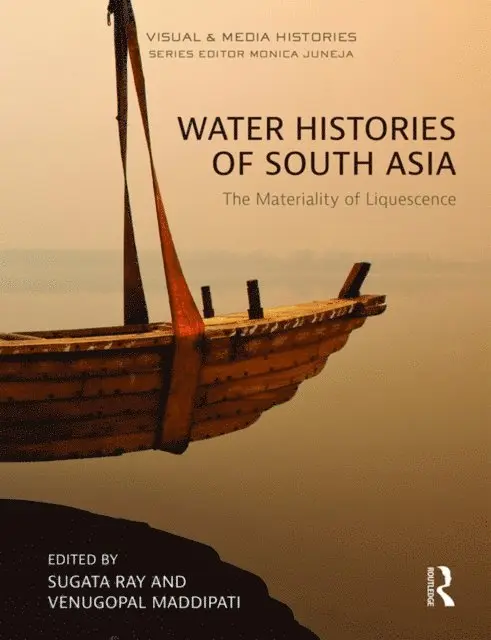
This book surveys the intersections between water systems and the phenomenology of visual cultures in early modern, colonial and contemporary South Asia. Bringing together contributions by eminent artists, architects, curators and scholars who explore the connections between the environmental and the cultural, the volume situates water in an expansive relational domain. It covers disciplines as diverse as literary studies, environmental humanities, sustainable design, urban planning and media studies. The chapters explore the ways in which material cultures of water generate technological and aesthetic acts of envisioning geographies, and make an intervention within political, social and cultural discourses. A critical interjection in the sociologies of water in the subcontinent, the book brings art history into conversation with current debates on climate change by examining water’s artistic, architectural, engineering, religious, scientific and environmental facets from the 16th century to the present.This is one of the first books on South Asia’s art, architecture and visual history to interweave the ecological with the aesthetic under the emerging field of eco art history. The volume will be of interest to scholars and general readers of art history, Islamic studies, South Asian studies, urban studies, architecture, geography, history and environmental studies. It will also appeal to activists, curators, art critics and those interested in water management.
2 634 kr
Skickas inom 10-15 vardagar
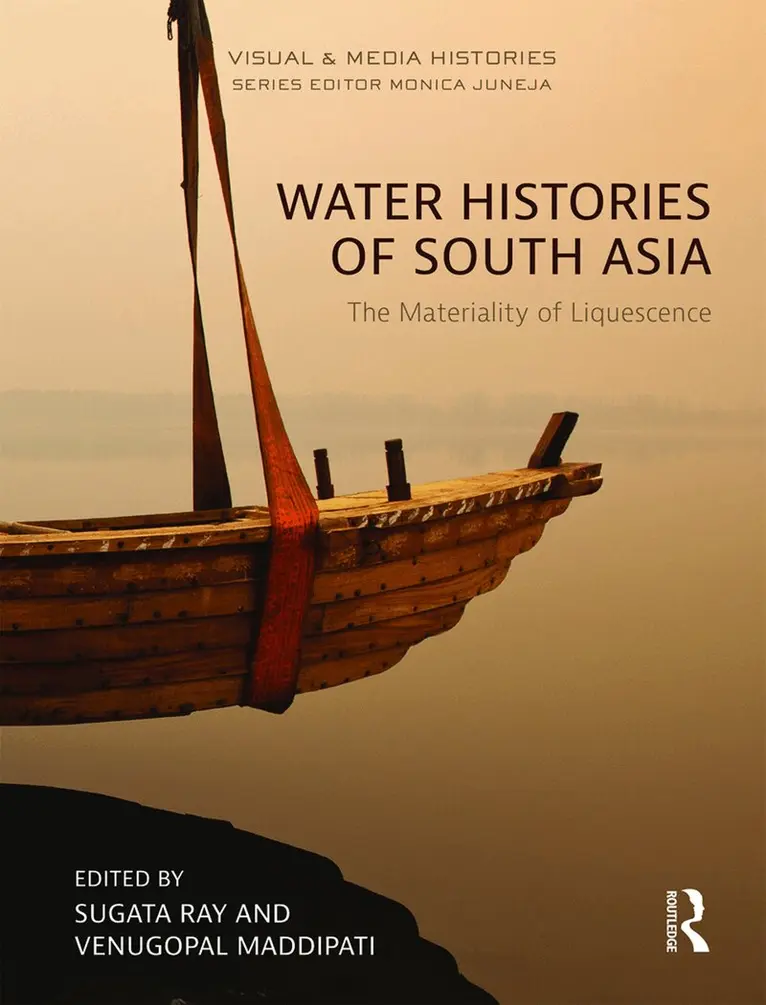
This book surveys the intersections between water systems and the phenomenology of visual cultures in early modern, colonial and contemporary South Asia. Bringing together contributions by eminent artists, architects, curators and scholars who explore the connections between the environmental and the cultural, the volume situates water in an expansive relational domain. It covers disciplines as diverse as literary studies, environmental humanities, sustainable design, urban planning and media studies. The chapters explore the ways in which material cultures of water generate technological and aesthetic acts of envisioning geographies, and make an intervention within political, social and cultural discourses. A critical interjection in the sociologies of water in the subcontinent, the book brings art history into conversation with current debates on climate change by examining water’s artistic, architectural, engineering, religious, scientific and environmental facets from the 16th century to the present.This is one of the first books on South Asia’s art, architecture and visual history to interweave the ecological with the aesthetic under the emerging field of eco art history. The volume will be of interest to scholars and general readers of art history, Islamic studies, South Asian studies, urban studies, architecture, geography, history and environmental studies. It will also appeal to activists, curators, art critics and those interested in water management.