Vera Keller - Böcker
Visar alla böcker från författaren Vera Keller. Handla med fri frakt och snabb leverans.
6 produkter
6 produkter
1 324 kr
Skickas inom 7-10 vardagar
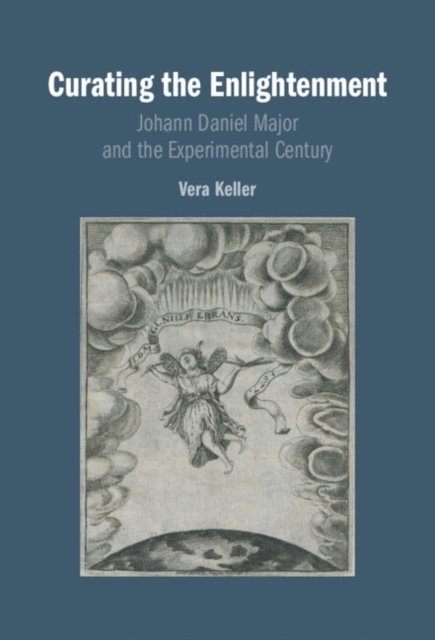
How did the research universities of the Enlightenment come into being? And what debt do they owe to scholars of the previous era? Focusing on the career of German polymath Johann Daniel Major (1634–93), Curating the Enlightenment uncovers how late seventeenth-century scholars crafted the research university as a haven for critical inquiry in defiance of political and economic pressures. Abandoning the surety of established intellectual practice, this 'experimental century' saw Major and his peers reshaping fragments of knowledge into new perspectives. Across new disciplines, from experimental philosophy to archaeology and museology, they reexamined what knowledge was, who it was for, and how it was to be stored, managed, accessed, judged, and transformed. Although later typecast as Baroque obstacles to be overcome by the Enlightenment, these academics arranged knowledge in dynamic infrastructures that encouraged its further advancement in later generations, including our own. This study examines these seventeenth-century practices as part of a continuous intellectual tradition and reconceptualizes our understanding of the Enlightenment.
1 228 kr
Skickas inom 7-10 vardagar
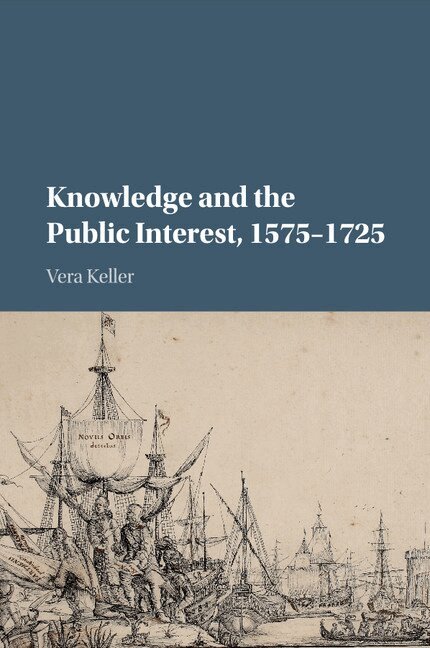
Many studies relate modern science to modern political and economic thought. Using one shift in order to explain the other, however, has begged the question of modernity's origins. New scientific and political reasoning emerged simultaneously as controversial forms of probabilistic reasoning. Neither could ground the other. They both rejected logical systems in favor of shifting, incomplete, and human-oriented forms of knowledge which did not meet accepted standards of speculative science. This study follows their shared development by tracing one key political stratagem for linking human desires to the advancement of knowledge: the collaborative wish list. Highly controversial at the beginning of the seventeenth century, charismatic desiderata lists spread across Europe, often deployed against traditional sciences. They did not enter the academy for a century but eventually so shaped the deep structures of research that today this once controversial genre appears to be a musty and even pedantic term of art.
499 kr
Skickas inom 7-10 vardagar
Many studies relate modern science to modern political and economic thought. Using one shift in order to explain the other, however, has begged the question of modernity's origins. New scientific and political reasoning emerged simultaneously as controversial forms of probabilistic reasoning. Neither could ground the other. They both rejected logical systems in favor of shifting, incomplete, and human-oriented forms of knowledge which did not meet accepted standards of speculative science. This study follows their shared development by tracing one key political stratagem for linking human desires to the advancement of knowledge: the collaborative wish list. Highly controversial at the beginning of the seventeenth century, charismatic desiderata lists spread across Europe, often deployed against traditional sciences. They did not enter the academy for a century but eventually so shaped the deep structures of research that today this once controversial genre appears to be a musty and even pedantic term of art.
676 kr
Skickas inom 7-10 vardagar
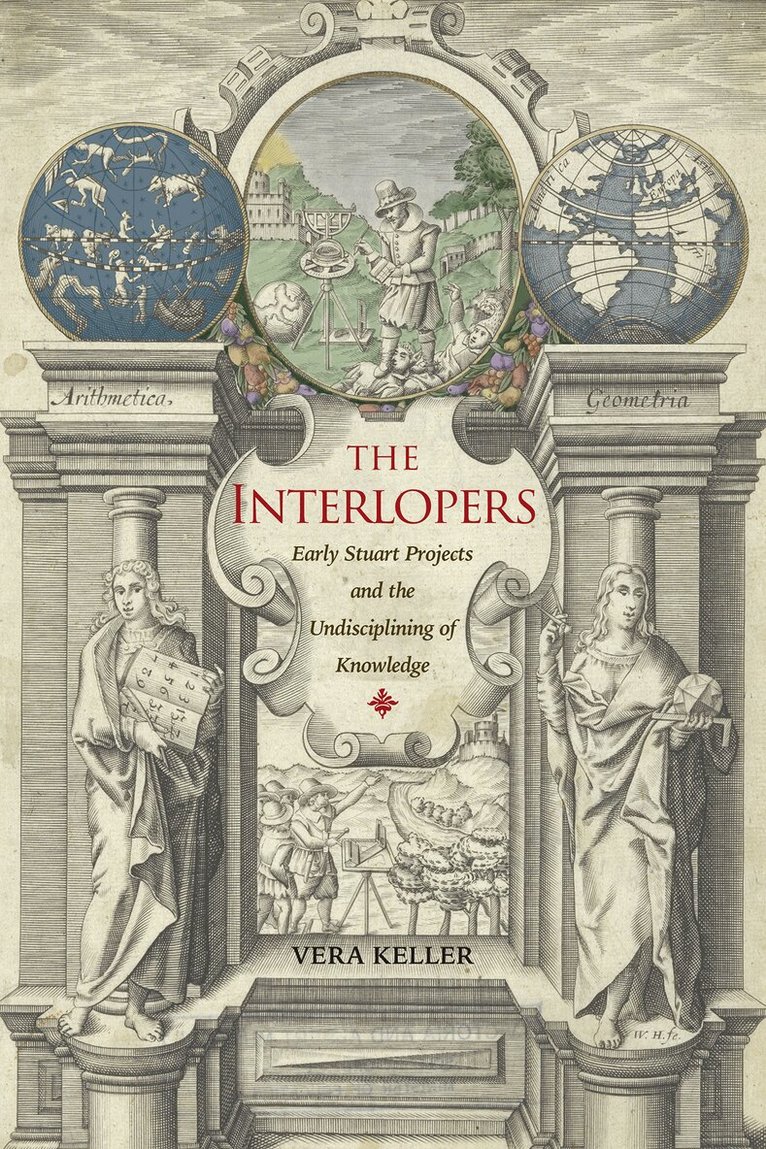
A reframing of how scientific knowledge was produced in the early modern world.Winner of the Phyllis Goodhart Gordan Book Prize by the Renaissance Society of America, and the Leo Gershoy Prize by the American Historical Association, Shortlisted for the Jon Ben Snow Prize by the North American Conference of British StudiesMany accounts of the scientific revolution portray it as a time when scientists disciplined knowledge by first disciplining their own behavior. According to these views, scientists such as Francis Bacon produced certain knowledge by pacifying their emotions and concentrating on method. In The Interlopers, Vera Keller rejects this emphasis on discipline and instead argues that what distinguished early modernity was a navigation away from restraint and toward the violent blending of knowledge from across society and around the globe.Keller follows early seventeenth-century English "projectors" as they traversed the world, pursuing outrageous entrepreneurial schemes along the way. These interlopers were developing a different culture of knowledge, one that aimed to take advantage of the disorder created by the rise of science and technological advances. They sought to deploy the first submarine in the Indian Ocean, raise silkworms in Virginia, and establish the English slave trade. These projectors developed a culture of extreme risk-taking, uniting global capitalism with martial values of violent conquest. They saw the world as a riskscape of empty spaces, disposable people, and unlimited resources.By analyzing the disasters—as well as a few successes—of the interlopers she studies, Keller offers a new interpretation of the nature of early modern knowledge itself. While many influential accounts of the period characterize European modernity as a disciplining or civilizing process, The Interlopers argues that early modernity instead entailed a great undisciplining that entangled capitalism, colonialism, and science.
1 302 kr
Skickas inom 5-8 vardagar
Del 23 - Scientific and Learned Cultures and Their Institutions
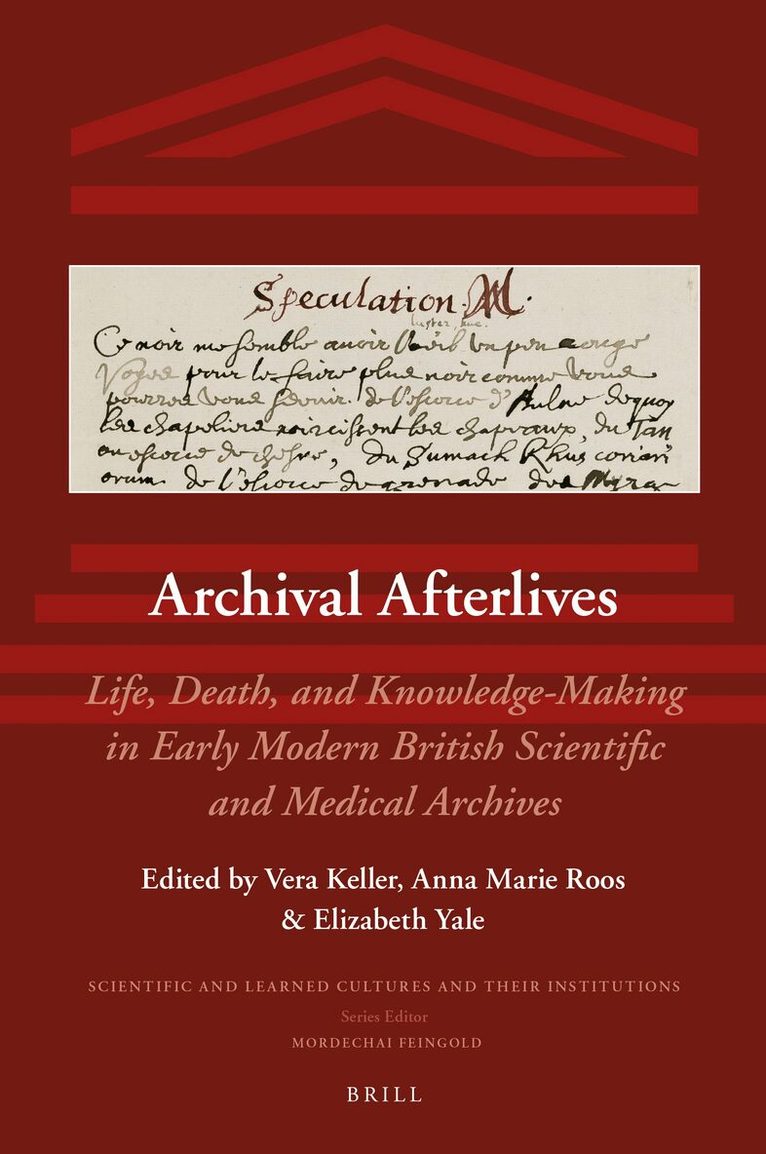
Archival Afterlives
Life, Death, and Knowledge-Making in Early Modern British Scientific and Medical Archives
Inbunden, Engelska, 2018
2 109 kr
Skickas inom 5-8 vardagar
Archival Afterlives explores the posthumous fortunes of scientific and medical archives in early modern Britain. If early modern natural philosophers claimed all knowledge as their province, theirs was a paper empire. But how and why did naturalists engage with archives, and in particular, with the papers of their dead predecessors? This volume makes a firm case for expanding what counts as scientific labour, integrating scribes, archivist, library keepers, editors, and friends and family of deceased naturalists into the history of science. It shows how early modern natural philosophers pursued new natural knowledge in dialogue with their recent material past. Finally, it demonstrates the sustaining importance of archival institutions in the growth and development of the “New Sciences.” Contributors are: Arnold Hunt, Michael Hunter, Vera Keller, Carol Pal, Anna Marie Roos, Richard Serjeantson, Victoria Sloyan, Alison Walker, and Elizabeth Yale.