Vernon Heywood – författare
Visar alla böcker från författaren . Handla med fri frakt och snabb leverans.
5 produkter
5 produkter
Häftad, Engelska, 2009
755 kr
Skickas inom 7-10 vardagar
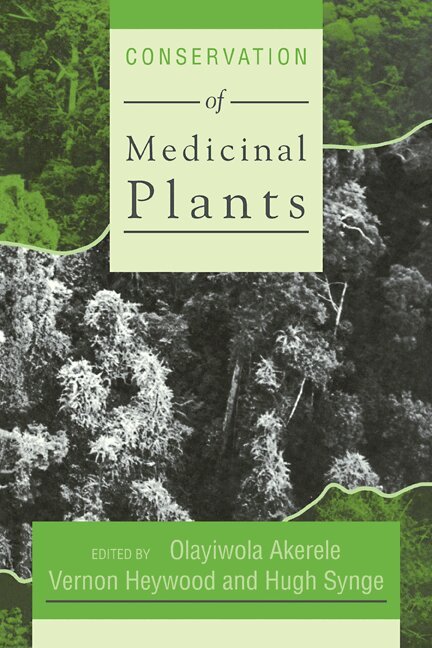
Nearly all cultures, from ancient times to today, have used plants as a source of medicine. In many developing countries, traditional medicine is still the mainstay of health care and most of the drugs and cures used come from plants. In developed countries many people are turning to herbal remedies. With this widespread use has come the assumption that plants identified as having medicinal qualities will be available on a continuing basis. However no concerted effort has been made to ensure this and in the face of the threats of increasing demand, a vastly increasing human population and extensive forest destruction, there can be no guarantee that we will continue to benefit indefinitely from this valuable resource. In light of this situation the World Health Organisation held a meeting in 1988. This book is the outcome of that meeting, detailing in a series of papers by leading experts the problems of which need to be addressed, the existing experiences from a range of countries and the future direction which must be taken to ensure the conservation of the world's medicinal plants.
E-bok
Engelska, 2012908 kr
Läs direkt efter köp
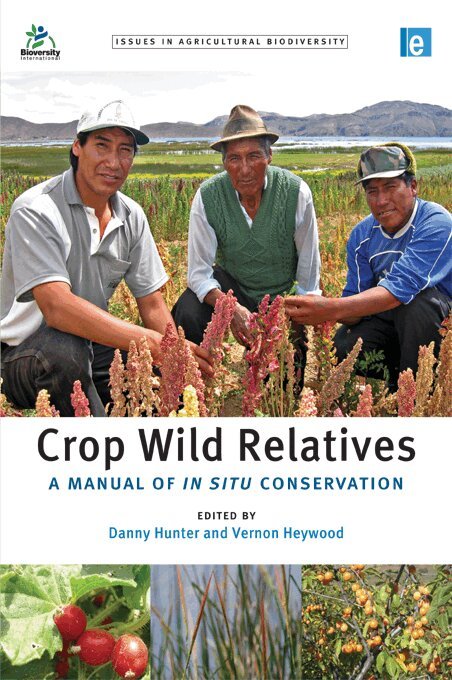
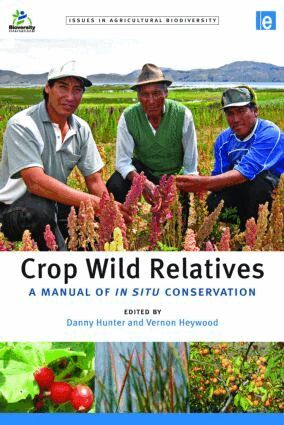
Crop wild relatives (CWR) are plant species which are more or less closely related to crops. They are a vital resource by providing a pool of genetic variation that can be used in breeding new and better adapted varieties of crops that are resistant to stress, disease, drought and other factors. They will be increasingly important in allowing crops to adapt to the impacts of climate, thus safeguarding future agricultural production. Until recently, the main conservation strategy adopted for CWR has been ex situ - through the maintenance of samples as seed or vegetative material in various kinds of genebank or other facilities. Now the need to conserve CWR in their natural surroundings (in situ) is increasingly recognized. Recent research co-ordinated by Bioversity International has produced a wealth of information on good practices and lessons learned for their effective conservation. This book captures the important practical experiences of countries participating in this work and describes them for the wider conservation community. It includes case studies and examples from Armenia, Bolivia, Madagascar, Sri Lanka and Uzbekistan, which are important centres of diversity for crop wild relatives, and covers four geographical regions - the Caucasus, South America, Africa and the Asia-Pacific Region. It provides practical, relevant information and guidance for the scaling-up of actions targeting CWR conservation around the world.
E-bok
PDF, Engelska, 2012908 kr
Läs direkt efter köp
Crop wild relatives (CWR) are plant species which are more or less closely related to crops. They are a vital resource by providing a pool of genetic variation that can be used in breeding new and better adapted varieties of crops that are resistant to stress, disease, drought and other factors. They will be increasingly important in allowing crops to adapt to the impacts of climate, thus safeguarding future agricultural production. Until recently, the main conservation strategy adopted for CWR has been ex situ - through the maintenance of samples as seed or vegetative material in various kinds of genebank or other facilities. Now the need to conserve CWR in their natural surroundings (in situ) is increasingly recognized. Recent research co-ordinated by Bioversity International has produced a wealth of information on good practices and lessons learned for their effective conservation. This book captures the important practical experiences of countries participating in this work and describes them for the wider conservation community. It includes case studies and examples from Armenia, Bolivia, Madagascar, Sri Lanka and Uzbekistan, which are important centres of diversity for crop wild relatives, and covers four geographical regions - the Caucasus, South America, Africa and the Asia-Pacific Region. It provides practical, relevant information and guidance for the scaling-up of actions targeting CWR conservation around the world.
Inbunden, Engelska, 2010
3 055 kr
Skickas inom 3-6 vardagar
Crop wild relatives (CWR) are plant species which are more or less closely related to crops. They are a vital resource by providing a pool of genetic variation that can be used in breeding new and better adapted varieties of crops that are resistant to stress, disease, drought and other factors. They will be increasingly important in allowing crops to adapt to the impacts of climate, thus safeguarding future agricultural production. Until recently, the main conservation strategy adopted for CWR has been ex situ - through the maintenance of samples as seed or vegetative material in various kinds of genebank or other facilities. Now the need to conserve CWR in their natural surroundings (in situ) is increasingly recognized. Recent research co-ordinated by Bioversity International has produced a wealth of information on good practices and lessons learned for their effective conservation. This book captures the important practical experiences of countries participating in this work and describes them for the wider conservation community. It includes case studies and examples from Armenia, Bolivia, Madagascar, Sri Lanka and Uzbekistan, which are important centres of diversity for crop wild relatives, and covers four geographical regions - the Caucasus, South America, Africa and the Asia-Pacific Region. It provides practical, relevant information and guidance for the scaling-up of actions targeting CWR conservation around the world.
Häftad, Engelska, 2010
508 kr
Tillfälligt slut
Crop wild relatives (CWR) are plant species which are more or less closely related to crops. They are a vital resource by providing a pool of genetic variation that can be used in breeding new and better adapted varieties of crops that are resistant to stress, disease, drought and other factors. They will be increasingly important in allowing crops to adapt to the impacts of climate, thus safeguarding future agricultural production. Until recently, the main conservation strategy adopted for CWR has been ex situ - through the maintenance of samples as seed or vegetative material in various kinds of genebank or other facilities. Now the need to conserve CWR in their natural surroundings (in situ) is increasingly recognized. Recent research co-ordinated by Bioversity International has produced a wealth of information on good practices and lessons learned for their effective conservation. This book captures the important practical experiences of countries participating in this work and describes them for the wider conservation community. It includes case studies and examples from Armenia, Bolivia, Madagascar, Sri Lanka and Uzbekistan, which are important centres of diversity for crop wild relatives, and covers four geographical regions - the Caucasus, South America, Africa and the Asia-Pacific Region. It provides practical, relevant information and guidance for the scaling-up of actions targeting CWR conservation around the world.