Veronica Pecile – författare
2 235 kr
Skickas inom 10-15 vardagar
628 kr
Skickas inom 10-15 vardagar
743 kr
Läs direkt efter köp
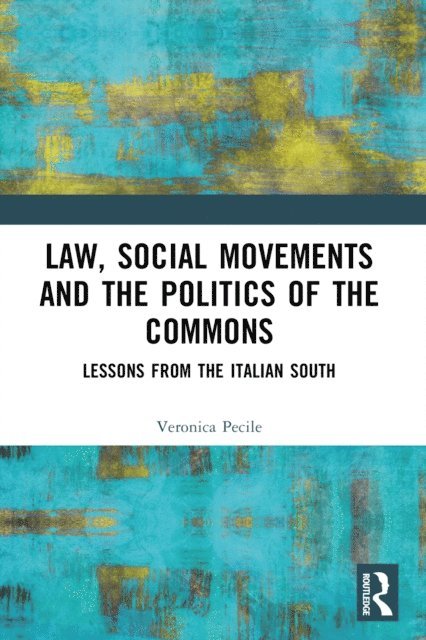
This book reinterprets the notion of the commons by tracing how it has been mobilised in the aftermath of economic crisis.
In a period of widespread activism against the privatisation of resources and services implemented through austerity policies, the reconceptualisation of property as a non-absolute and non-individualistic institution has attracted a great deal of attention. Drawing on the case of the Italian South, and in the wake of economic crisis, this book offers a critical analysis of the struggle for the commons. More specifically, as it details how discourses, legal tools and policies based on disciplinary ideas of the commons are deployed in the neoliberal restructuring of societies, the book considers how conflicting ideas of the commons express different, and often clashing visions, of urban space. In this regard, moreover, it shows how law plays a central, albeit ambivalent, role in the struggle for the commons: as both a governmental technique to regulate urban space and its residents and as an emancipatory tactic to advance non-proprietary visions of ownership.
This book will be of interest to scholars in socio-legal studies, property law, legal sociology and politics, as well as others with more general interests in the critical potential of contemporary social movements.
743 kr
Läs direkt efter köp
This book reinterprets the notion of the commons by tracing how it has been mobilised in the aftermath of economic crisis.
In a period of widespread activism against the privatisation of resources and services implemented through austerity policies, the reconceptualisation of property as a non-absolute and non-individualistic institution has attracted a great deal of attention. Drawing on the case of the Italian South, and in the wake of economic crisis, this book offers a critical analysis of the struggle for the commons. More specifically, as it details how discourses, legal tools and policies based on disciplinary ideas of the commons are deployed in the neoliberal restructuring of societies, the book considers how conflicting ideas of the commons express different, and often clashing visions, of urban space. In this regard, moreover, it shows how law plays a central, albeit ambivalent, role in the struggle for the commons: as both a governmental technique to regulate urban space and its residents and as an emancipatory tactic to advance non-proprietary visions of ownership.
This book will be of interest to scholars in socio-legal studies, property law, legal sociology and politics, as well as others with more general interests in the critical potential of contemporary social movements.
309 kr
Skickas
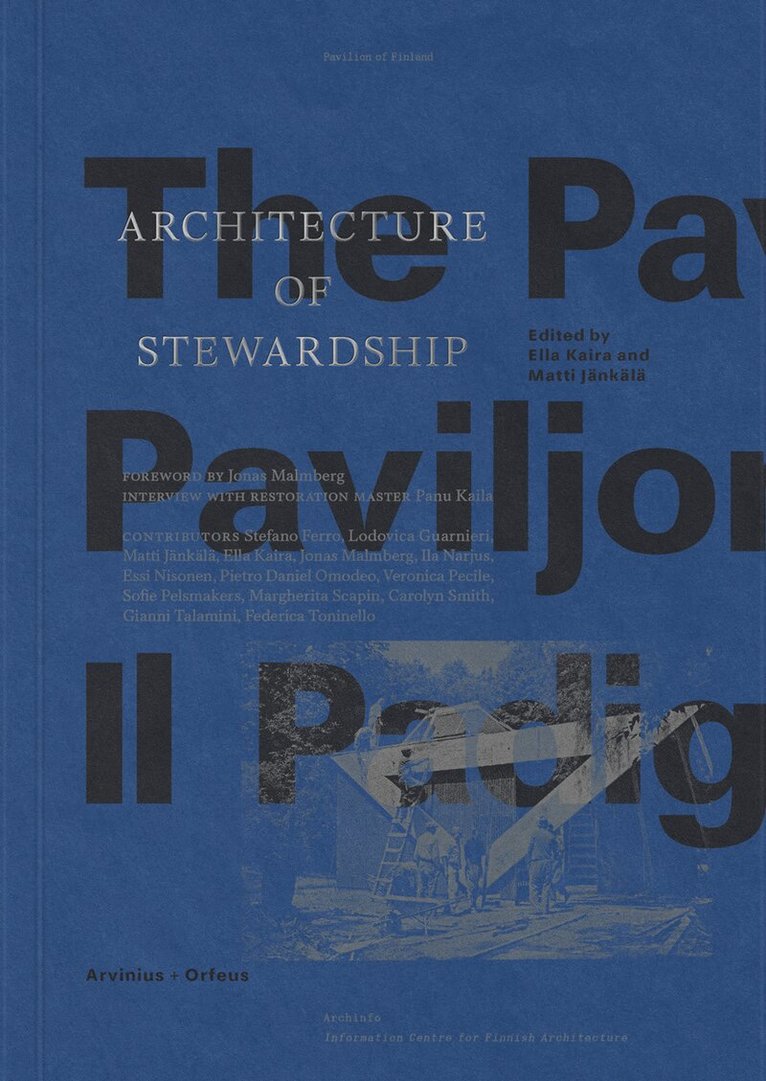
Architecture is often seen as the creation of the architect alone. However, architecture is a collaborative endeavour involving diverse professionals, from urban planners, building designers and construction labourers to restoration architects, repair workers and maintenance staff.
Preserving built heritage depends on stewardship a shared responsibility that involves caring for and steering the future of common goods. In the built environment, stewardship goes beyond maintaining structures to include decisions about access, future use, and redistribution.
The Pavilion of Finland in Venices Giardini della Biennale Park stands as a testament to this. Originally designed as a temporary structure by Alvar Aalto and his office for the 1956 International Art Exhibition of La Biennale di Venezia, the delicate wooden building has become a permanent monument. This wouldnt be possible without continuous maintenance and repair.
By recounting the Pavilions history, this book illustrates that buildings are not static objects but dynamic processes influenced by human actions, global politics and non-human forces. The title, Architecture of Stewardship, proposes that adopting practices of stewardship enables the architectural profession to respond to the urgent need for change in our built environment with accountability to communities, future generations, the planet, and other species that inhabit it.
The collection of essays offers perspectives on stewardship from a range of Finnish and Italian contributors in academia, practice, and activism. The texts explore how people have stewarded land, resources, and communities throughout the Pavilions history and its Venetian context, and how these insights might inspire a different way to approach our built environment. The book is published in conjunction with the Pavilion of Finlands exhibition at the 19th International Architecture Exhibition of La Biennale di Venezia, running from 10 May to 23 November 2025. The editors of the book, architects Ella Kaira and Matti Jänkälä, curated the exhibition, The Pavilion Architecture of Stewardship, commissioned and produced by Archinfo Information Centre for Finnish Architecture.