Veronique Dudouet - Böcker
Visar alla böcker från författaren Veronique Dudouet. Handla med fri frakt och snabb leverans.
10 produkter
10 produkter
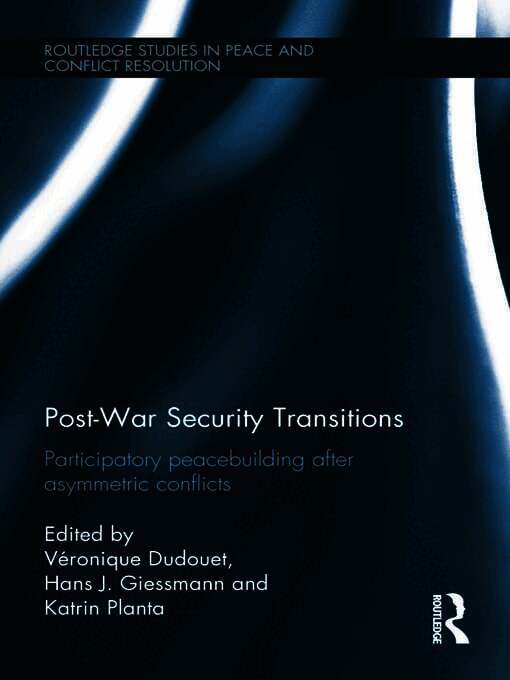
Post-War Security Transitions
Participatory Peacebuilding after Asymmetric Conflicts
Inbunden, Engelska, 2012
2 155 kr
Skickas inom 10-15 vardagar
This book explores the conditions under which non-state armed groups (NSAGs) participate in post-war security and political governance. The text offers a comprehensive approach to post-war security transition processes based on five years of participatory research with local experts and representatives of former non-state armed groups. It analyses the successes and limits of peace negotiations, demobilisation, arms management, political or security sector integration, socio-economic reintegration and state reform from the direct point of view of conflict stakeholders who have been central participants in ongoing and past peacebuilding processes.Challenging common perceptions of ex-combatants as "spoilers" or "passive recipients of aid", the various contributors examine the post-war transitions of these individuals from state challengers to peacebuilding agents. The book concludes on a cross-country comparative analysis of the main research findings and the ways in which they may facilitate a participatory, inclusive and gender-sensitive peacebuilding strategy.Post-War Security Transitions will be of much interest to students of peacebuilding, security governance, war and conflict studies, political violence and IR in general.
2 088 kr
Skickas inom 10-15 vardagar
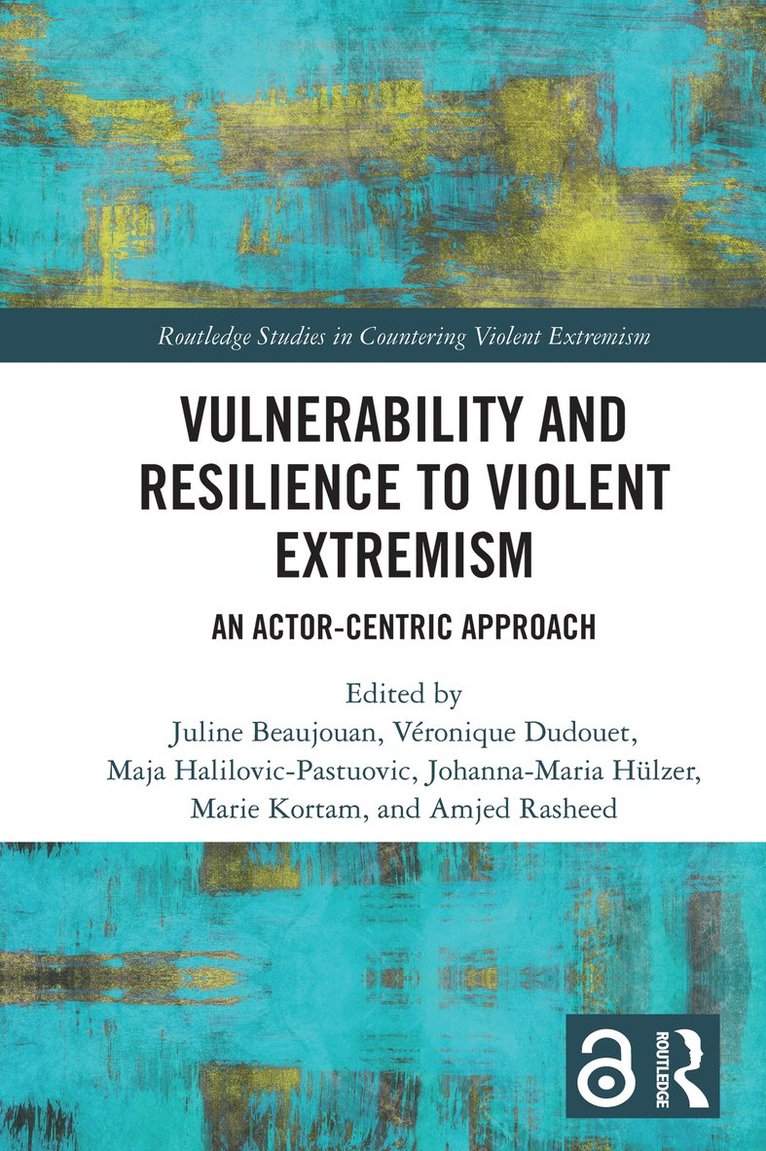
This book examines the actors that shape societal dynamics leading to, or preventing, violent extremism from taking roots in their communities, including state representatives, religious institutions, and civil society actors.The volume contributes to an emerging stream of research focusing on intra- and inter-group dynamics to explain the emergence and persistence of, or resilience against, violent extremism. It utilises an actor-centric approach, uncovering the landscape of actors that play relevant roles in shaping societal dynamics leading to, or preventing, violent extremism affecting their communities. The analysis builds on new empirical evidence collected in Bosnia and Herzegovina, Kosovo, North Macedonia, Serbia, Iraq, Lebanon, and Tunisia. This allows for an innovative comparative perspective on two regions in the European neighbourhood that are rarely studied together, even though they seem to share common patterns of (de-)radicalisation and violent extremism despite their distinct historical, political, and cultural trajectories and relations with the EU. In both regions, the book analyses the roles of and interactions between state, political, religious, and civil society actors in shaping community vulnerability to and/or resilience against violent extremism. Different types of community leaders are equipped with varying levels of authority, trust, legitimacy, and influence over community members. As such, the categories of actors analysed can play either detrimental or beneficial roles, which makes vulnerability and resilience to violent extremism two sides of the same coin.This volume will be of much interest to students of countering violent extremism, terrorism, political violence, security studies, and International Relations generally.The Open Access version of this book, available at www.taylorfrancis.com, has been made available under a Creative Commons Attribution (CC-BY) 4.0 International license.
576 kr
Skickas inom 10-15 vardagar
This book examines the actors that shape societal dynamics leading to, or preventing, violent extremism from taking roots in their communities, including state representatives, religious institutions, and civil society actors.The volume contributes to an emerging stream of research focusing on intra- and inter-group dynamics to explain the emergence and persistence of, or resilience against, violent extremism. It utilises an actor-centric approach, uncovering the landscape of actors that play relevant roles in shaping societal dynamics leading to, or preventing, violent extremism affecting their communities. The analysis builds on new empirical evidence collected in Bosnia and Herzegovina, Kosovo, North Macedonia, Serbia, Iraq, Lebanon, and Tunisia. This allows for an innovative comparative perspective on two regions in the European neighbourhood that are rarely studied together, even though they seem to share common patterns of (de-)radicalisation and violent extremism despite their distinct historical, political, and cultural trajectories and relations with the EU. In both regions, the book analyses the roles of and interactions between state, political, religious, and civil society actors in shaping community vulnerability to and/or resilience against violent extremism. Different types of community leaders are equipped with varying levels of authority, trust, legitimacy, and influence over community members. As such, the categories of actors analysed can play either detrimental or beneficial roles, which makes vulnerability and resilience to violent extremism two sides of the same coin.This volume will be of much interest to students of countering violent extremism, terrorism, political violence, security studies, and International Relations generally.The Open Access version of this book, available at www.taylorfrancis.com, has been made available under a Creative Commons Attribution (CC-BY) 4.0 International license.
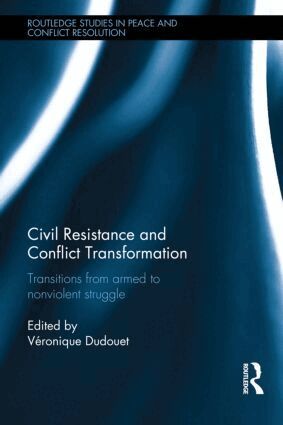
Civil Resistance and Conflict Transformation
Transitions from armed to nonviolent struggle
Inbunden, Engelska, 2014
2 155 kr
Skickas inom 10-15 vardagar
This book investigates the decision-making process, rationale and determining factors which underlie the strategic shifts of armed movements from violent to nonviolent resistance. The revival of global interest in the phenomenon of nonviolent struggle since the 2011 Arab Spring offers a welcome opportunity to revisit the potential of unarmed resistance as an alternative pathway out of armed conflicts, in cases where neither military (or counter-insurgency) nor negotiated solutions have succeeded. This volume brings together academics from various disciplinary traditions and offers a wide range of case studies – including South Africa, Palestine and Egypt – through which to view the changes from violence to nonviolence within self-determination, revolutionary or pro-democracy struggles.While current historiography focuses on armed conflicts and their termination through military means or negotiated settlements, this book is a first attempt to investigate the nature and the drivers of transitions from armed strategies to unarmed methods of contentious collective action on the part of non-state conflict actors. The text concentrates in particular on the internal and relational factors which underpin the decision-making process, from a change of leadership and a pragmatic re-evaluation of the goals and means of insurgency in the light of evolving inter-party power dynamics, to the search for new local or international allies and the cross-border emulation or diffusion of new repertoires of action. This book will be of interest to students of security studies, peace and conflict studies, political sociology and IR in general.
Civil Resistance and Conflict Transformation
Transitions from armed to nonviolent struggle
Häftad, Engelska, 2015
644 kr
Skickas inom 10-15 vardagar
This book investigates the decision-making process, rationale and determining factors which underlie the strategic shifts of armed movements from violent to nonviolent resistance. The revival of global interest in the phenomenon of nonviolent struggle since the 2011 Arab Spring offers a welcome opportunity to revisit the potential of unarmed resistance as an alternative pathway out of armed conflicts, in cases where neither military (or counter-insurgency) nor negotiated solutions have succeeded. This volume brings together academics from various disciplinary traditions and offers a wide range of case studies – including South Africa, Palestine and Egypt – through which to view the changes from violence to nonviolence within self-determination, revolutionary or pro-democracy struggles.While current historiography focuses on armed conflicts and their termination through military means or negotiated settlements, this book is a first attempt to investigate the nature and the drivers of transitions from armed strategies to unarmed methods of contentious collective action on the part of non-state conflict actors. The text concentrates in particular on the internal and relational factors which underpin the decision-making process, from a change of leadership and a pragmatic re-evaluation of the goals and means of insurgency in the light of evolving inter-party power dynamics, to the search for new local or international allies and the cross-border emulation or diffusion of new repertoires of action. This book will be of interest to students of security studies, peace and conflict studies, political sociology and IR in general.
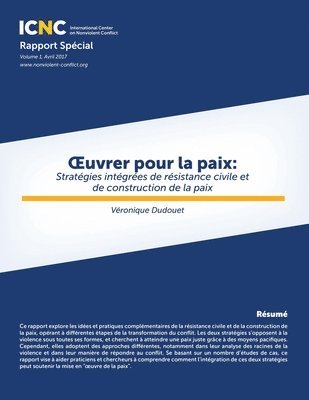
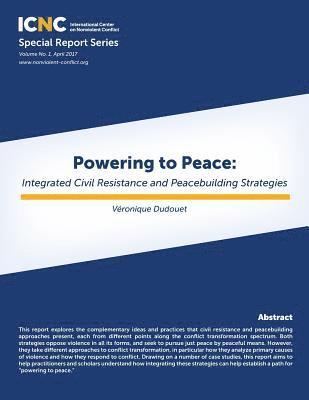
OEuvrer pour la paix
Stratégies intégrées de résistance civile et de construction de la paix
Häftad, Franska, 2020
92 kr
Skickas inom 5-8 vardagar
92 kr
Skickas inom 5-8 vardagar
853 kr
Skickas inom 10-15 vardagar
This book argues that democracies emerging from peaceful protest last longer, achieve higher levels of democratic quality, and are more likely to see at least two peaceful handovers of power than democracies that emerged out of violent resistance or top-down liberalization.
853 kr
Skickas inom 10-15 vardagar
This book argues that democracies emerging from peaceful protest last longer, achieve higher levels of democratic quality, and are more likely to see at least two peaceful handovers of power than democracies that emerged out of violent resistance or top-down liberalization.
550 kr
Skickas inom 10-15 vardagar
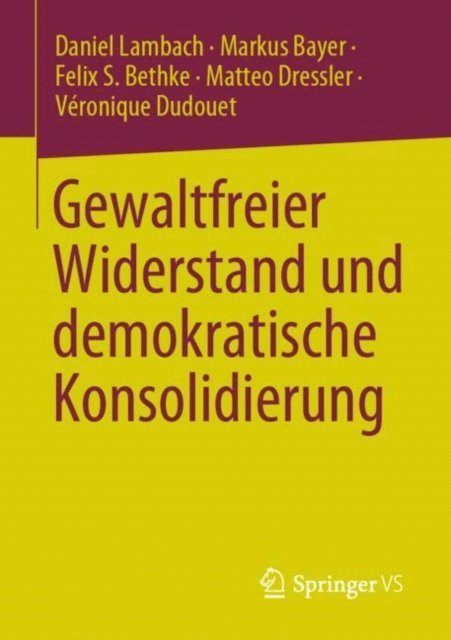
In diesem Buch wird argumentiert, dass Demokratien, die aus friedlichen Protesten hervorgegangen sind, länger bestehen, ein höheres Maß an demokratischer Qualität erreichen und mit größerer Wahrscheinlichkeit mindestens zwei friedliche Machtwechsel erleben als Demokratien, die aus gewaltsamem Widerstand oder einer Liberalisierung von oben hervorgegangen sind. Anhand von Fallstudien zur demokratischen Konsolidierung in Afrika und Lateinamerika kommt das Buch zu dem Ergebnis, dass gewaltfreier Widerstand einen integrativeren Übergangsprozess schafft, der langfristig widerstandsfähiger gegen den Zusammenbruch der Demokratie ist.