Victor Cunrui Xiong - Böcker
Visar alla böcker från författaren Victor Cunrui Xiong. Handla med fri frakt och snabb leverans.
7 produkter
7 produkter
690 kr
Skickas inom 10-15 vardagar
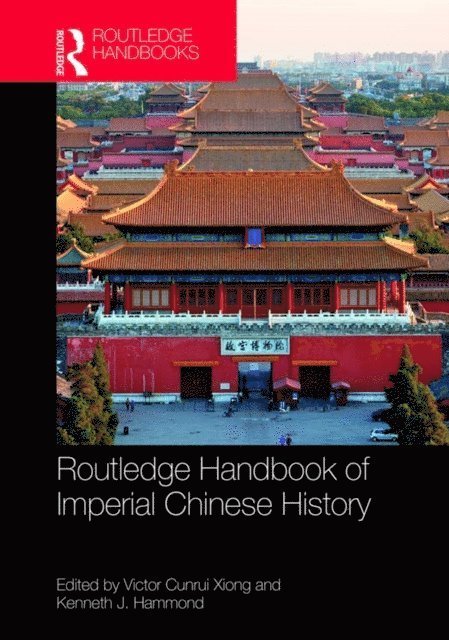
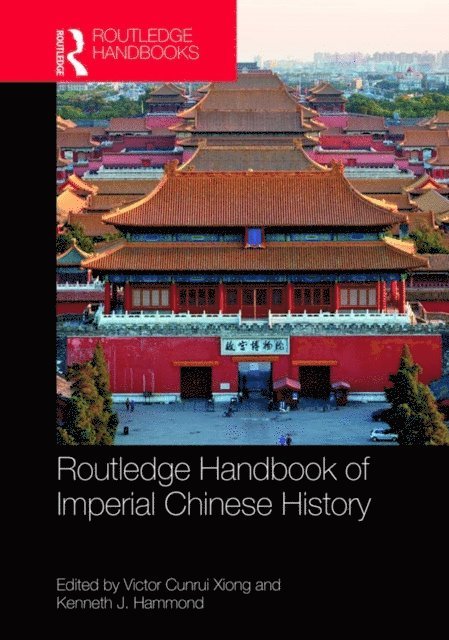
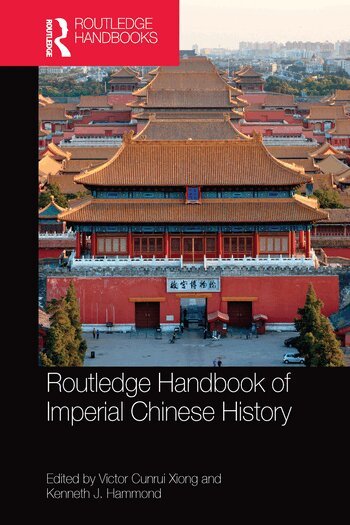
The resurgence of modern China has generated much interest, not only in the country’s present day activities, but also in its long history. As the only uninterrupted ancient civilization still alive today, the study of China’s past promises to offer invaluable insights into understanding contemporary China. Providing coverage of the entire Imperial Era (221 BCE–1912 CE), this handbook takes a chronological approach. It includes comprehensive analysis of all major periods, from the powerful Han empire which rivalled Rome, and the crucial transformative period of the Five Dynasties, to the prosperous Ming era and the later dominance of the non-Han peoples. With contributions from a team of international authors, key themes include: Political events and leadership Religion and philosophy Cultural and literary achievements Legal, economic, and military institutions This book transcends the traditional boundaries of historiography, giving special attention to the role of archaeology. As such, the Routledge Handbook of Imperial Chinese History is an indispensable reference work for students and scholars of Chinese, Asian, and World History.
1 468 kr
Skickas inom 3-6 vardagar
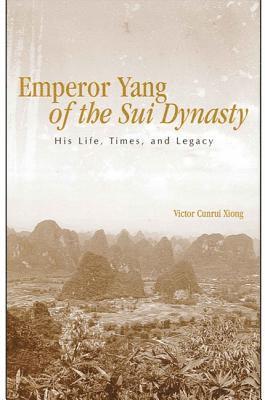
A reappraisal of Emperor Yang of the Sui dynasty, finding that his legacy provided the foundation for the celebrated civilization of the Tang dynasty.Looking at the life and legacy of Emperor Yang (569–618) of the brief Sui dynasty in a new light, this book presents a compelling case for his importance to Chinese history. Author Victor Cunrui Xiong utilizes traditional scholarship and secondary literature from China, Japan, and the West to go beyond the common perception of Emperor Yang as merely a profligate tyrant. Xiong accepts neither the traditional verdict against Emperor Yang nor the apologist effort to revise it, and instead offers a reassessment of Emperor Yang by exploring the larger political, economic, military, religious, and diplomatic contexts of Sui society. This reconstruction of the life of Emperor Yang reveals an astute visionary with literary, administrative, and reformist accomplishments. While a series of strategic blunders resulting from the darker side of his personality led to the collapse of the socioeconomic order and to his own death, the Sui legacy that Emperor Yang left behind lived on to provide the foundation for the rise of the Tang dynasty, the pinnacle of medieval Chinese civilization.
414 kr
Tillfälligt slut
A reappraisal of Emperor Yang of the Sui dynasty, finding that his legacy provided the foundation for the celebrated civilization of the Tang dynasty.Looking at the life and legacy of Emperor Yang (569–618) of the brief Sui dynasty in a new light, this book presents a compelling case for his importance to Chinese history. Author Victor Cunrui Xiong utilizes traditional scholarship and secondary literature from China, Japan, and the West to go beyond the common perception of Emperor Yang as merely a profligate tyrant. Xiong accepts neither the traditional verdict against Emperor Yang nor the apologist effort to revise it, and instead offers a reassessment of Emperor Yang by exploring the larger political, economic, military, religious, and diplomatic contexts of Sui society. This reconstruction of the life of Emperor Yang reveals an astute visionary with literary, administrative, and reformist accomplishments. While a series of strategic blunders resulting from the darker side of his personality led to the collapse of the socioeconomic order and to his own death, the Sui legacy that Emperor Yang left behind lived on to provide the foundation for the rise of the Tang dynasty, the pinnacle of medieval Chinese civilization.
695 kr
Skickas inom 10-15 vardagar
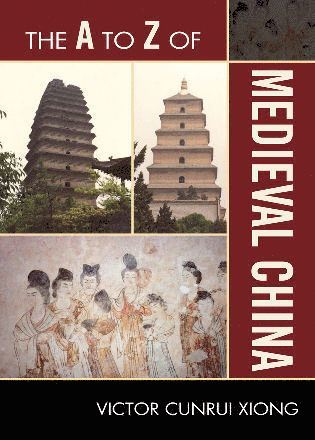
The crucial period of Chinese history, 220-960, falls naturally into contrasting phases. The first phase, also known as that of "early medieval China," is an age of political decentralization. Following the breakup of the Han empire, China was plunged into civil war and fragmentation and stayed divided for nearly four centuries. The second phase started in 589, during the Sui dynasty, when China was once again brought under a single government. Under the Sui, the bureaucracy was revitalized, the military strengthened, and the taxation system reformed. The fall of the Sui in 618 gave way to the even stronger Tang dynasty, which represents an apogee of traditional Chinese civilization. Inheriting all the great institutions developed under the Sui, the Tang made great achievements in poetry, painting, music, and architecture. The An Lushan rebellion, which also took place during Tang rule, brought about far-reaching changes in the socioeconomic, political, and military arenas. What transpired in the second half of the Tang and the ensuing Five Dynasties provided the foundation for the next age of late imperial China.The A to Z of Medieval China fills an urgent need for a standard reference tailored to the interest of Western academics and readers. The history of medieval China is related through the book's introductory essay, maps, a table of Dynastic Periods, a bibliography, and hundreds of cross-referenced dictionary entries on key people, historical geography, arts, institutions, events, and other important terms.
3 274 kr
Skickas inom 10-15 vardagar
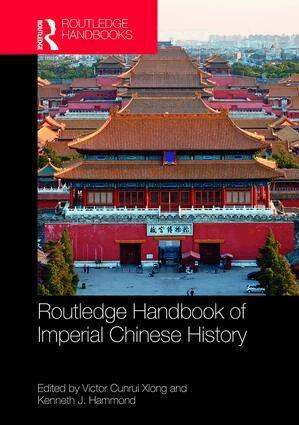
The resurgence of modern China has generated much interest, not only in the country’s present day activities, but also in its long history. As the only uninterrupted ancient civilization still alive today, the study of China’s past promises to offer invaluable insights into understanding contemporary China. Providing coverage of the entire Imperial Era (221 BCE–1912 CE), this handbook takes a chronological approach. It includes comprehensive analysis of all major periods, from the powerful Han empire which rivalled Rome, and the crucial transformative period of the Five Dynasties, to the prosperous Ming era and the later dominance of the non-Han peoples. With contributions from a team of international authors, key themes include: Political events and leadership Religion and philosophy Cultural and literary achievements Legal, economic, and military institutionsThis book transcends the traditional boundaries of historiography, giving special attention to the role of archaeology. As such, the Routledge Handbook of Imperial Chinese History is an indispensable reference work for students and scholars of Chinese, Asian, and World History.
2 570 kr
Skickas inom 7-10 vardagar
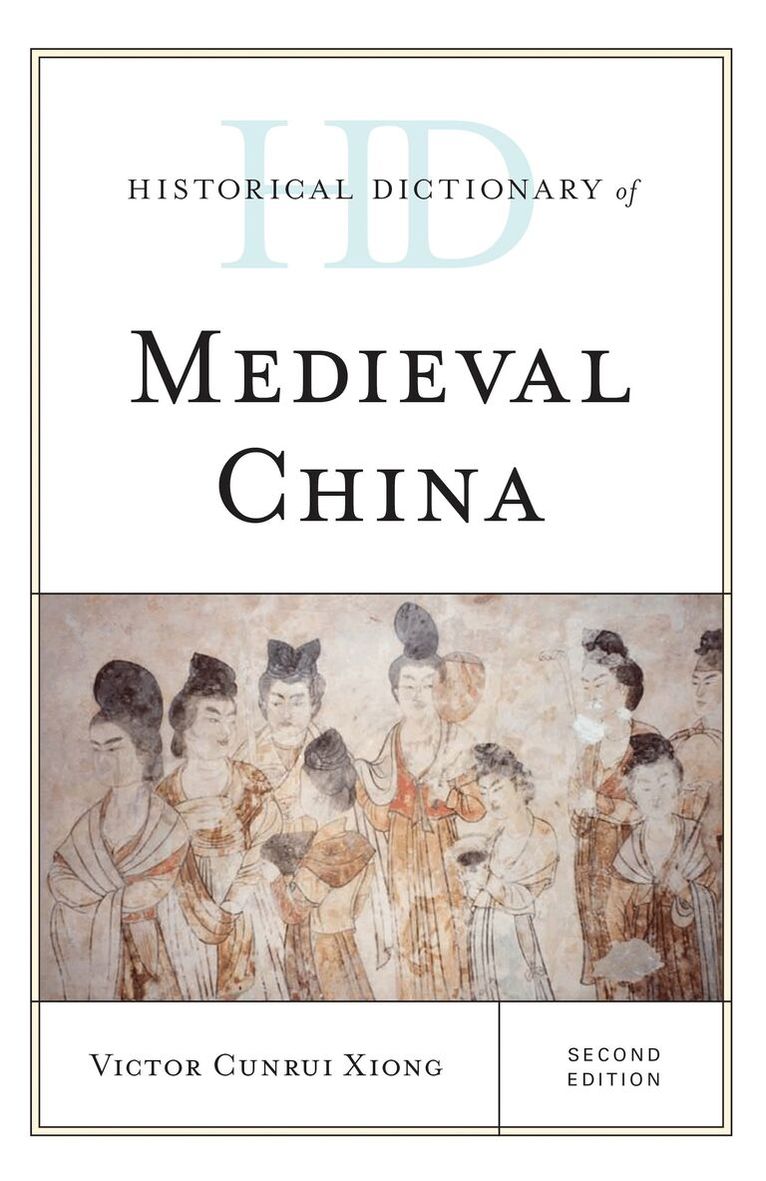
The crucial period of Chinese history, 168-979, falls naturally into contrasting phases. The first phase, also known as that of 'early medieval China,' is an age of political decentralization. Following the breakup of the Han empire, China was plunged into civil war and fragmentation and stayed divided for nearly four centuries. The second phase started in 589, during the Sui dynasty, when China was once again brought under a single government. Under the Sui, the bureaucracy was revitalized, the military strengthened, and the taxation system reformed. The fall of the Sui in 618 gave way to the even stronger Tang dynasty, which represents an apogee of traditional Chinese civilization. Inheriting all the great institutions developed under the Sui, the Tang made great achievements in poetry, painting, music, and architecture. The An Lushan rebellion, which also took place during Tang rule, brought about far-reaching changes in the socioeconomic, political, and military arenas. What transpired in the second half of the Tang and the ensuing Five Dynasties provided the foundation for the next age of late imperial China.This second edition of Historical Dictionary of Medieval China contains a chronology, an introduction, and an extensive bibliography. The dictionary section has over 1000 cross-referenced entries on historical figure. It expands on existing thematic entries, and adds a number of new ones with substantial content, including those on nobility, art, architecture, archaeology, economy, agriculture, money, population, cities, literature, historiography, military, religion, Persia, India, Japan, Korea, Arabs, and Byzantium, among others. This book is an excellent access point for students, researchers, and anyone wanting to know more about medieval China.
248 kr
Skickas inom 3-6 vardagar