Victor de Munck - Böcker
Visar alla böcker från författaren Victor de Munck. Handla med fri frakt och snabb leverans.
6 produkter
6 produkter
844 kr
Skickas inom 5-8 vardagar
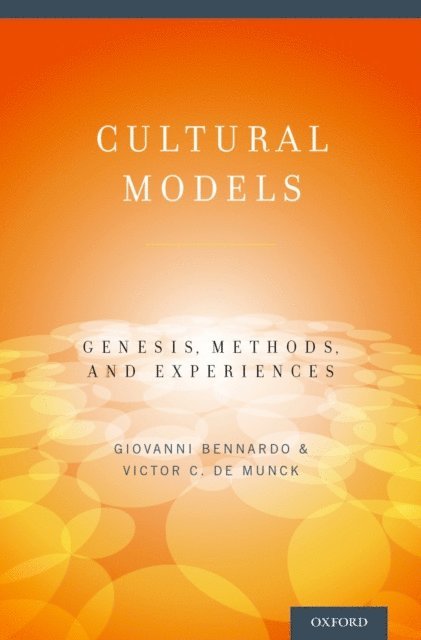
This book is about cultural models. Cultural models are defined as molar organizations of knowledge. Their internal structure consists of a 'core' component and 'peripheral' nodes that are filled by default values. These values are instantiated, i.e., changed to specific values or left at their default values, when the individual experiences 'events' of any type. Thus, the possibility arises for recognizing and categorizing events as representative of the same cultural model even if they slightly differ in each of their specific occurrences. Cultural models play an important role in the generation of one's behavior. They correlate well with those of others and the behaviors they help shape are usually interpreted by others as intended. A proposal is then advanced to consider cultural models as fundamental units of analysis for an approach to culture that goes beyond the dichotomy between the individual (culture only in mind) and the collective (culture only in the social realm). The genesis of the concept of cultural model is traced from Kant to contemporary scholars. The concept underwent a number of transformations (including label) while it crossed and received further and unique elaborations within disciplines like philosophy, psychology, anthropology, sociology, artificial intelligence, and cognitive science. A methodological trajectory is outlined that blends qualitative and quantitative techniques that cross-feed each other in the gargantuan effort to discover cultural models. A survey follows of the extensive research about cultural models carried out with populations of North Americans, Europeans, Latino- and Native-Americans , Asians (including South Asians and South-East Asians), Pacific Islanders, and Africans. The results of the survey generated the opportunity to propose an empirically motivated typology of cultural models rooted in the primary difference between foundational and molar types. The book closes with a suggestion of a number of avenues that the authors recognize the research on cultural models could be traversing in the near future.
1 476 kr
Skickas inom 10-15 vardagar
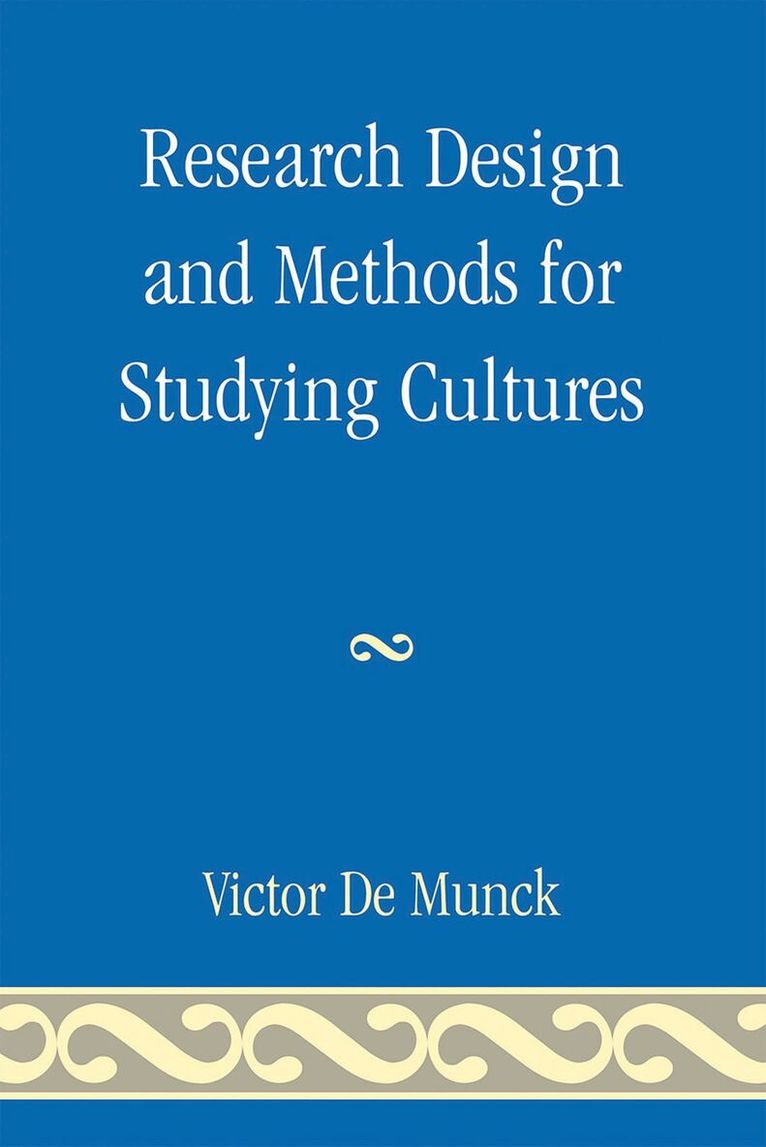
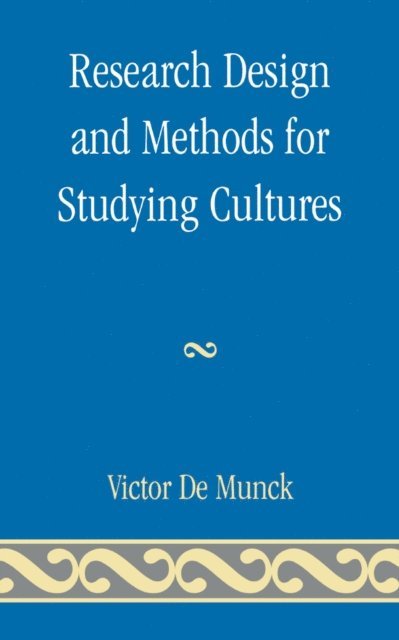
This is a practical guidebook for conducting field research on cultural issues. The first third of the book describes how one constructs a research design. The rest of the book describes different methods that the author used during his own NSF sponsored cross-cultural research on romantic love in Russia, Lithuania, and the U.S. The methods described are: freelists, pile or Q sorts questionnaires, consensus analysis, interviews, process analysis, and participant observation. Participant observation is intentionally left to the end, to emphasize that it is the most difficult of all methods and also to show that participant observations is a more powerful tool when preceded by more structured and systematic methods of data collection. The strengths and weaknesses of these methods are discussed as are the 'pitfalls' that occur when a research design is implemented in the field. The book is useful for anyone who is preparing to conduct fieldwork on socio- cultural issues.
875 kr
Skickas inom 10-15 vardagar
This is a practical guidebook for conducting field research on cultural issues. The first third of the book describes how one constructs a research design. The rest of the book describes different methods that the author used during his own NSF sponsored cross-cultural research on romantic love in Russia, Lithuania, and the U.S. The methods described are: freelists, pile or Q sorts questionnaires, consensus analysis, interviews, process analysis, and participant observation. Participant observation is intentionally left to the end, to emphasize that it is the most difficult of all methods and also to show that participant observations is a more powerful tool when preceded by more structured and systematic methods of data collection. The strengths and weaknesses of these methods are discussed as are the 'pitfalls' that occur when a research design is implemented in the field. The book is useful for anyone who is preparing to conduct fieldwork on socio- cultural issues.
Anthropology of Power, Agency, and Morality
The Enduring Legacy of F. G. Bailey
Inbunden, Engelska, 2022
791 kr
Skickas
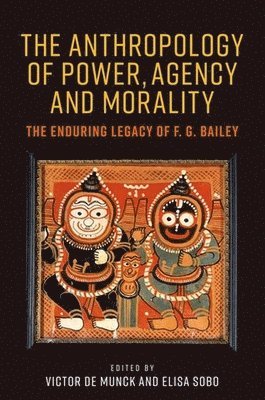
The works of F. G. Bailey (1924–2020) provide a seminal template for good ethnography. Central to this is Bailey’s ability to conceptually connect the well-described micro-contexts of individual interactions to the macro-context of culture. Bailey’s core concerns – the tension between individual and collective interests, the will to power, and the dialectics of social forces which foster both collective solidarity as well as divisiveness and discontent – are themes of universal interest; the beauty of his work lies in his analyses of how these play out in local arenas between real people. His models provide nuanced, yet explicit road maps to analysing the different leadership styles of everyday people and contemporary leaders.This volume seeks to inspire new generations of anthropologists to revisit Bailey’s seminal texts, to help them navigate their way through the ethnographic thicket of their own research.
435 kr
Kommande
Marriage and fertility rates are falling around the world, upending social security planning and threatening economic growth. In Love Apocalypse, anthropologists present their insights into this society-altering demographic shift, drawing on their research into the ways love, romantic relationships, and family are being transformed by cultural, social, and economic forces. Each case study in this volume examines a unique cultural context from either Asia (China, South Korea, Japan, India), Europe (Germany, Lithuania), or Latin America (Cuba, Peru), grounded in years of ethnographic research into how communities' experiences and perceptions of love, marriage, and family are changing in response to economic precarity, shifting gender relations, status competition, and diversifying cultural norms. It is increasingly clear that marriage and two-parent nuclear families will not be the universal norm of the twenty-first century even if this arrangement was largely idealized a mere generation ago. However, this does not mean the end of love, intimacy, or family but rather its transformation and the emergence of new intimate relationships and adaptations to the challenges and opportunities of life in the twenty-first century.
1 271 kr
Kommande
Marriage and fertility rates are falling around the world, upending social security planning and threatening economic growth. In Love Apocalypse, anthropologists present their insights into this society-altering demographic shift, drawing on their research into the ways love, romantic relationships, and family are being transformed by cultural, social, and economic forces. Each case study in this volume examines a unique cultural context from either Asia (China, South Korea, Japan, India), Europe (Germany, Lithuania), or Latin America (Cuba, Peru), grounded in years of ethnographic research into how communities' experiences and perceptions of love, marriage, and family are changing in response to economic precarity, shifting gender relations, status competition, and diversifying cultural norms. It is increasingly clear that marriage and two-parent nuclear families will not be the universal norm of the twenty-first century even if this arrangement was largely idealized a mere generation ago. However, this does not mean the end of love, intimacy, or family but rather its transformation and the emergence of new intimate relationships and adaptations to the challenges and opportunities of life in the twenty-first century.