
Victor J. Stenger – författare
Visar alla böcker från författaren Victor J. Stenger. Handla med fri frakt och snabb leverans.
14 produkter
14 produkter
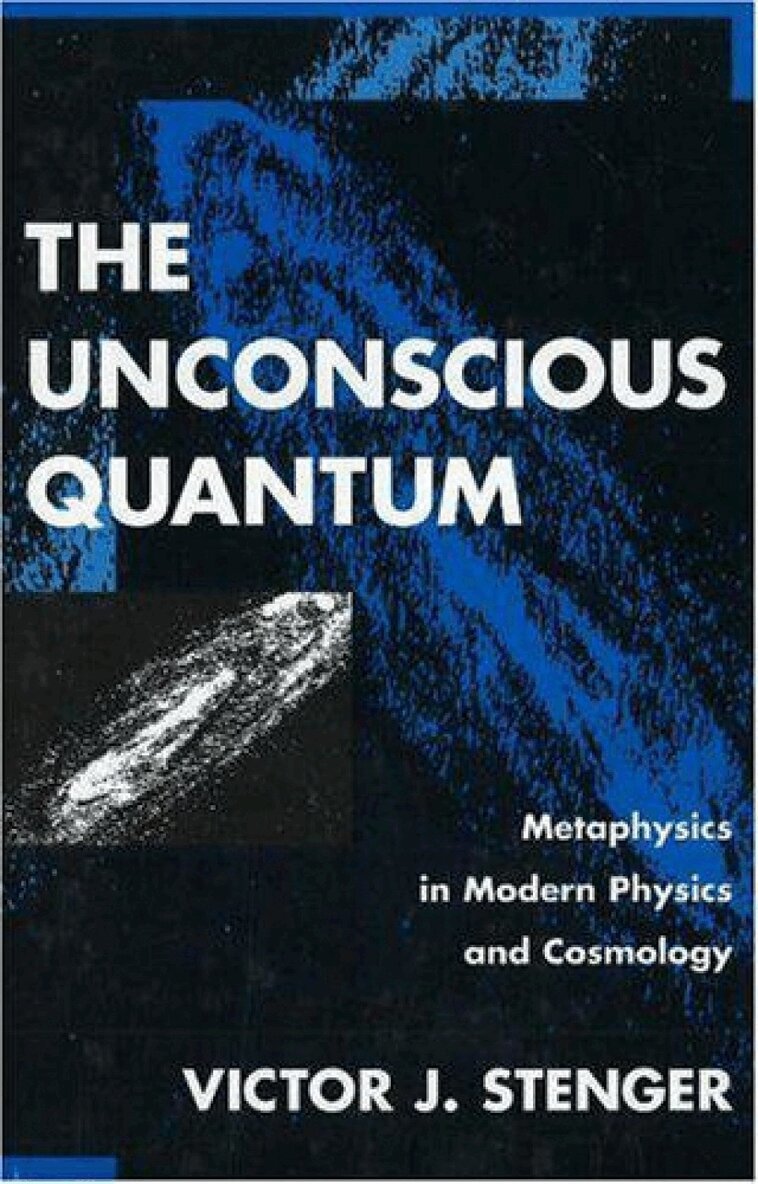
Inbunden, Engelska, 1996
445 kr
Skickas inom 3-6 vardagar
In this fascinating and accessible book, physicist Victor J. Stenger guides the lay reader through the key developments of quantum mechanics and the debate over its apparent paradoxes. In the process, he critically appraises recent metaphysical fads. Dr. Stenger's knack for elucidating scientific ideas and controversies in language that the nonspecialist can comprehend opens up to the widest possible audience a wealth of information on the most important findings of contemporary physics.
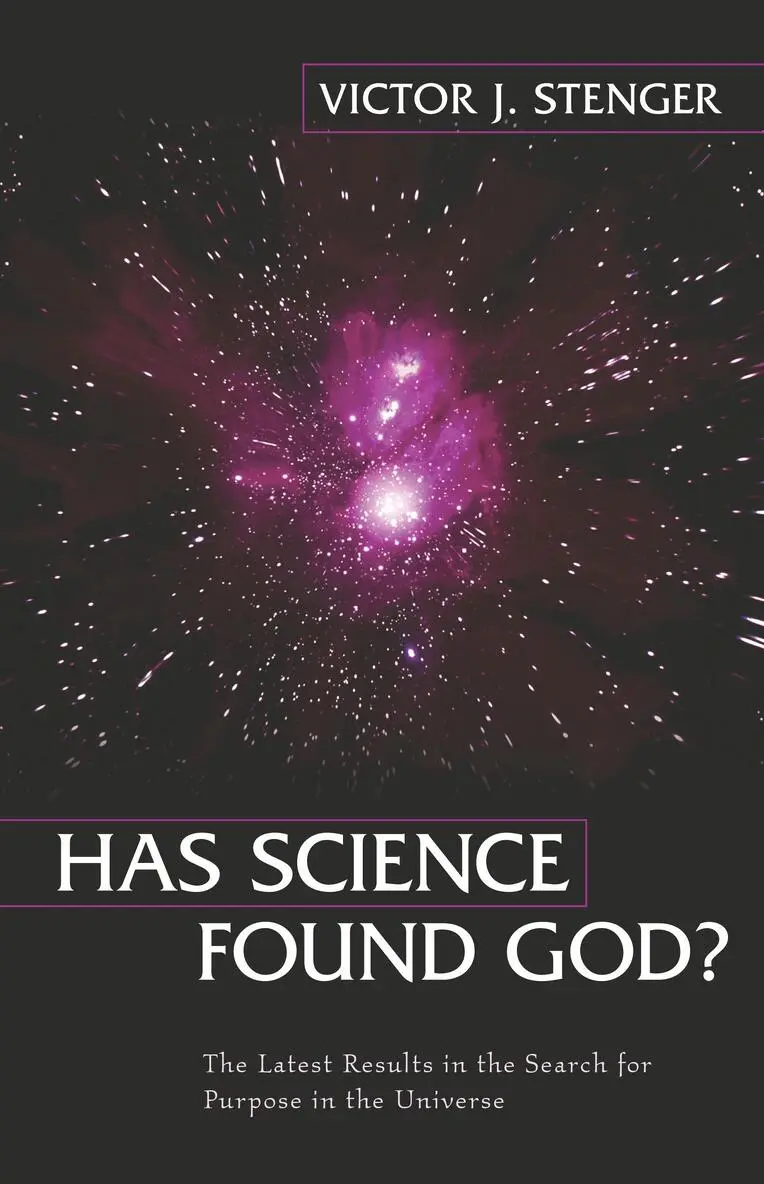
Inbunden, Engelska, 2003
381 kr
Skickas inom 3-6 vardagar
In the past few years, a number of scientists have claimed that there is credible scientific evidence for the existence of God. In 1998, "Newsweek" went so far as to proclaim on its cover, "Science Finds God." Is this true? Are scientists close to solving the greatest of all mysteries? Physicist Victor J. Stenger delves into this fascinating question from a sceptical point of view in this lucid and engrossing presentation of the key scientific facts. This thorough and careful consideration of scientific evidence covers much ground yet remains accessible and highly informative to the educated lay reader.
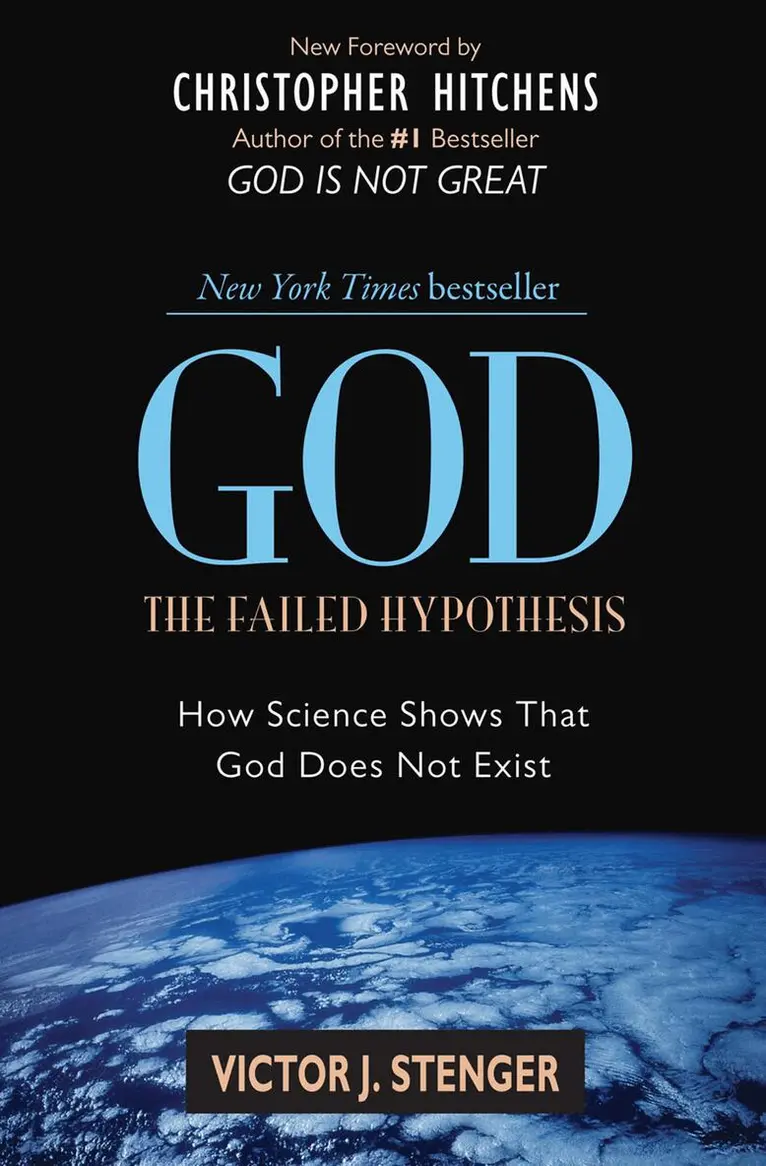
Häftad, Engelska, 2008
244 kr
Skickas inom 5-8 vardagar
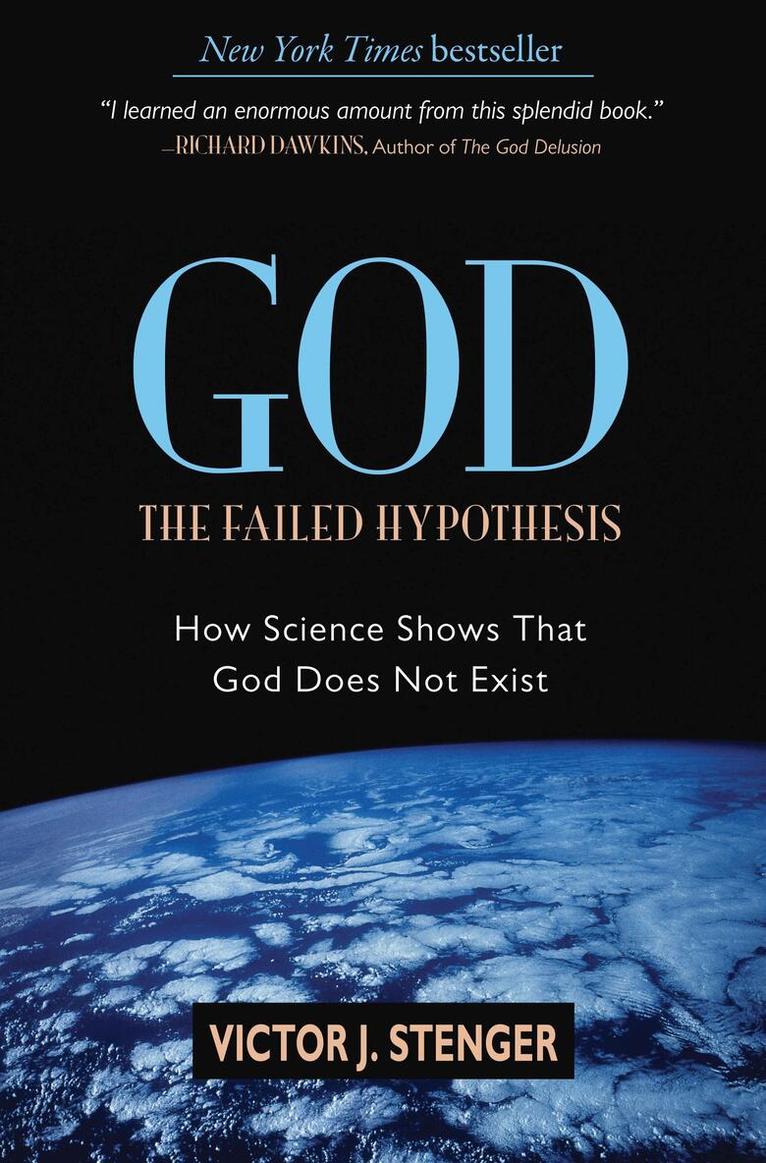
Throughout history, arguments for and against the existence of God have been largely confined to philosophy and theology, while science has sat on the sidelines. Despite the fact that science has revolutionized every aspect of human life and greatly clarified our understanding of the world, somehow the notion has arisen that it has nothing to say about the possibility of a supreme being, which much of humanity worships as the source of all reality. This book contends that, if God exists, some evidence for this existence should be detectable by scientific means, especially considering the central role that God is alleged to play in the operation of the universe and the lives of humans. Treating the traditional God concept, as conventionally presented in the Judeo-Christian and Islamic traditions, like any other scientific hypothesis, physicist Stenger examines all of the claims made for God's existence. He considers the latest Intelligent Design arguments as evidence of God's influence in biology. He looks at human behavior for evidence of immaterial souls and the possible effects of prayer. He discusses the findings of physics and astronomy in weighing the suggestions that the universe is the work of a creator and that humans are God's special creation. After evaluating all the scientific evidence, Stenger concludes that beyond a reasonable doubt the universe and life appear exactly as we might expect if there were no God. This paperback edition of the New York Times bestselling hardcover edition contains a new foreword by Christopher Hitchens and a postscript by the author in which he responds to reviewers' criticisms of the original edition.
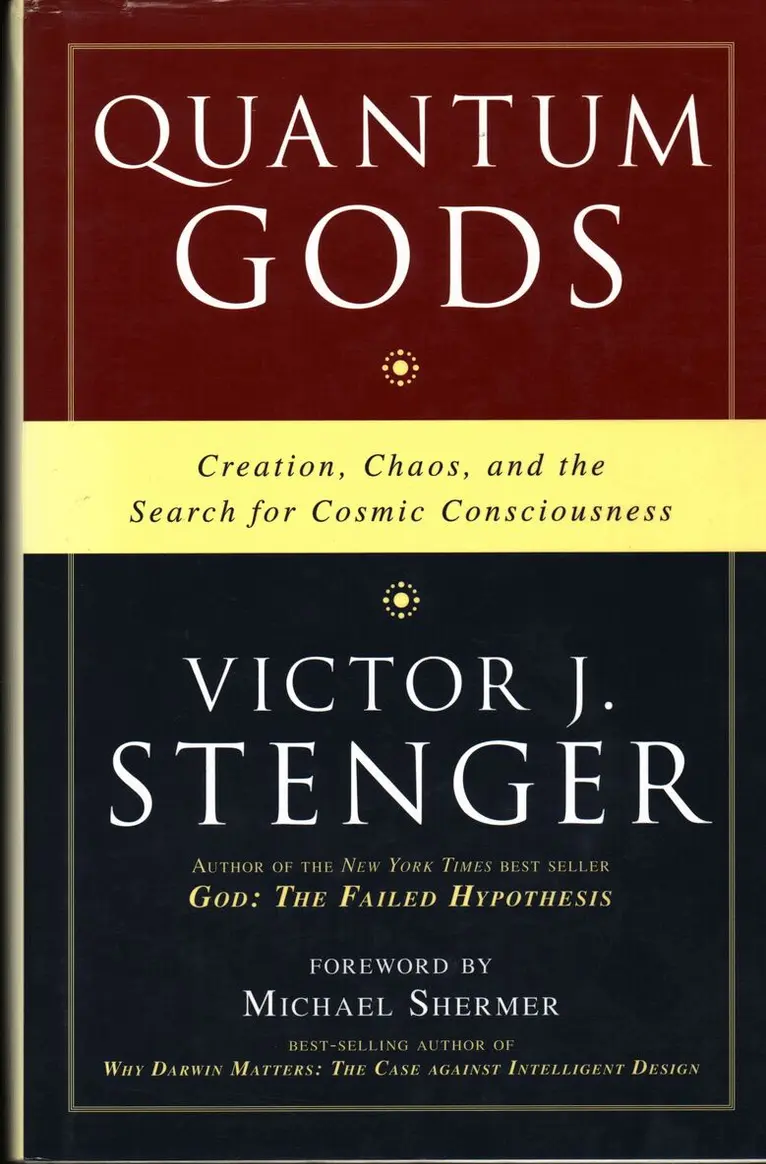
Inbunden, Engelska, 2009
323 kr
Skickas inom 5-8 vardagar
Does quantum mechanics show a connection between the human mind and the cosmos? Are our brains tuned into a "cosmic consciousness" that pervades the universe enabling us to make our own reality? Do quantum mechanics and chaos theory provide a place for God to act in the world without violating natural laws?Many popular books make such claims and argue that key developments in twentieth-century physics, such as the uncertainty principle and the butterfly effect, support the notion that God or a universal mind acts upon material reality.Physicist Victor J. Stenger examines these contentions in this carefully reasoned and incisive analysis of popular theories that seek to link spirituality to physics. Throughout the book Stenger alternates his discussions of popular spirituality with a survey of what the findings of twentieth-century physics actually mean. Thus he offers the reader a useful synopsis of contemporary religious ideas as well as basic but sophisticated physics presented in layperson's terms (without equations).Of particular interest in this book is Stenger's discussion of a new kind of deism, which proposes a God who creates a universe with many possible pathways determined by chance, but otherwise does not interfere with the physical world or the lives of humans. Although it is possible, says Stenger, to conceive of such a God who "plays dice with the universe" and leaves no trace of his role as prime mover, such a God is a far cry from traditional religious ideas of God and, in effect, may as well not exist.Like his bestselling book, God, The Failed Hypothesis, this new work presents a rigorously argued challenge to many popular notions of God and spirituality.
Häftad, Engelska, 2009
244 kr
Skickas inom 5-8 vardagar
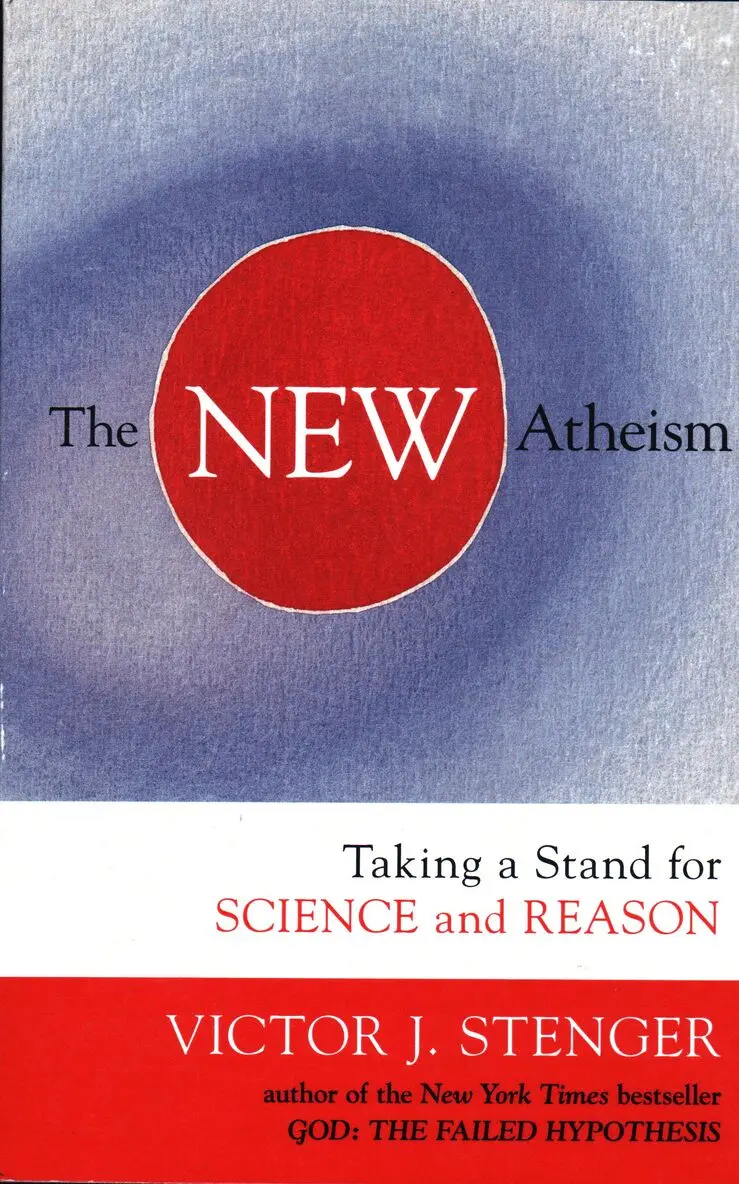
In recent years a number of bestselling books have forcefully argued that belief in God can no longer be defended on rational or empirical grounds, and that the scientific worldview has rendered obsolete the traditional beliefs held by Christianity, Judaism, and Islam. The authors of these books—Richard Dawkins, Daniel Dennett, Sam Harris, Christopher Hitchens, and Victor J. Stenger—have come to be known as the "New Atheists." Predictably, their works have been controversial and attracted a good deal of critical reaction.In this new book, Victor J. Stenger, whose God: The Failed Hypothesis was on the New York Times bestseller list in 2007, reviews and expands upon the principles of New Atheism and answers many of its critics. He demonstrates in detail that naturalism—the view that all of reality is reducible to matter and nothing else—is sufficient to explain everything we observe in the universe, from the most distant galaxies to the inner workings of the brain that result in the phenomenon of mind. Stenger disputes the claim of many critics that the question of whether God exists is beyond the ken of science. On the contrary, he argues that absence of evidence for God is, indeed, evidence of absence when the evidence should be there and is not.Turning from scientific to historical evidence, Stenger then points out the many examples of evil perpetrated in the name of religion. He also notes that the Bible, which is still taken to be divine revelation by millions, fails as a basis for morality and is unable to account for the problem of unnecessary suffering throughout the world.Finally, he discusses the teachings of ancient nontheist sages such as Buddha, Lao Tzu, and Confucius, whose guidelines for coping with the problems of life and death did not depend upon a supernatural metaphysics. Stenger argues that this "way of nature" is far superior to the traditional supernatural monotheisms, which history shows can lead to a host of evils.The New Atheism is a well-argued defense of the atheist position and a strong rebuttal of its critics.
Inbunden, Engelska, 2011
255 kr
Skickas inom 7-10 vardagar
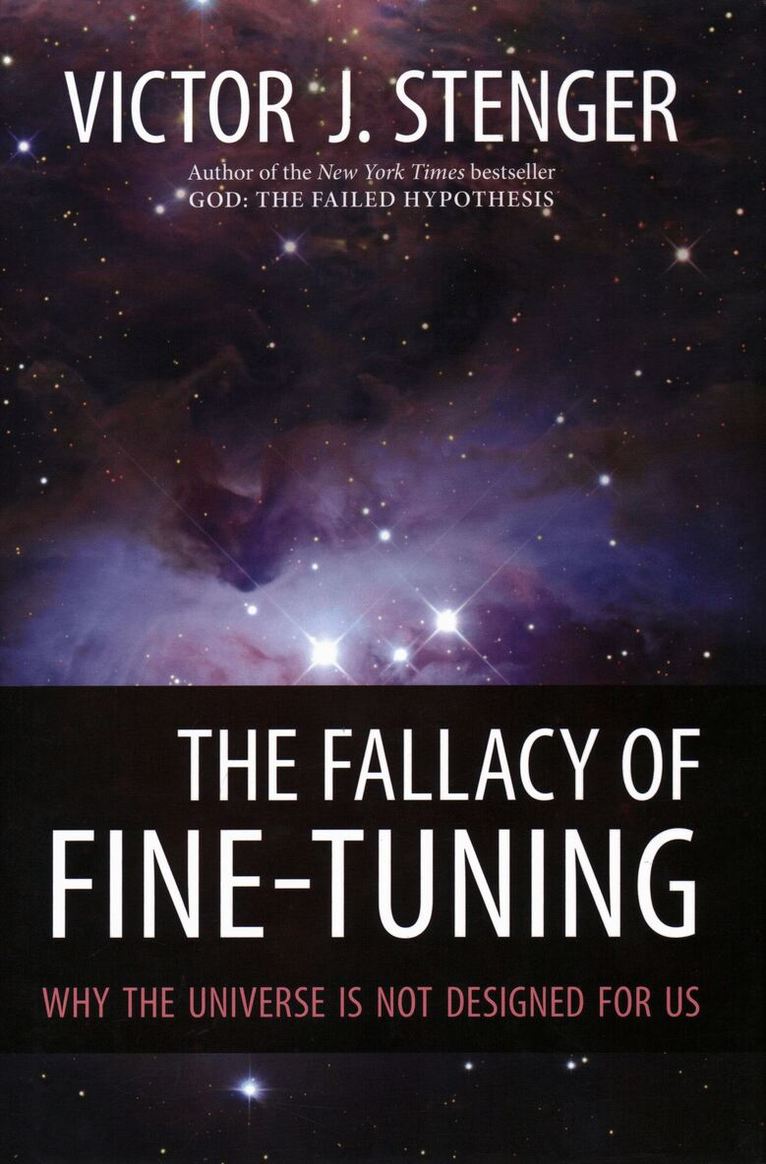
A number of authors have noted that if some physical parameters were slightly changed, the universe could no longer support life, as we know it. This implies that life depends sensitively on the physics of our universe. Does this "fine-tuning" of the universe suggest that a creator god intentionally calibrated the initial conditions of the universe such that life on earth and the evolution of humanity would eventually emerge? In his in-depth and highly accessible discussion of this fascinating and controversial topic, the author looks at the evidence and comes to the opposite conclusion. He finds that the observations of science and our naked senses not only show no evidence for God, they provide evidence beyond a reasonable doubt that God does not exist.
Inbunden, Engelska, 2013
305 kr
Skickas inom 5-8 vardagar
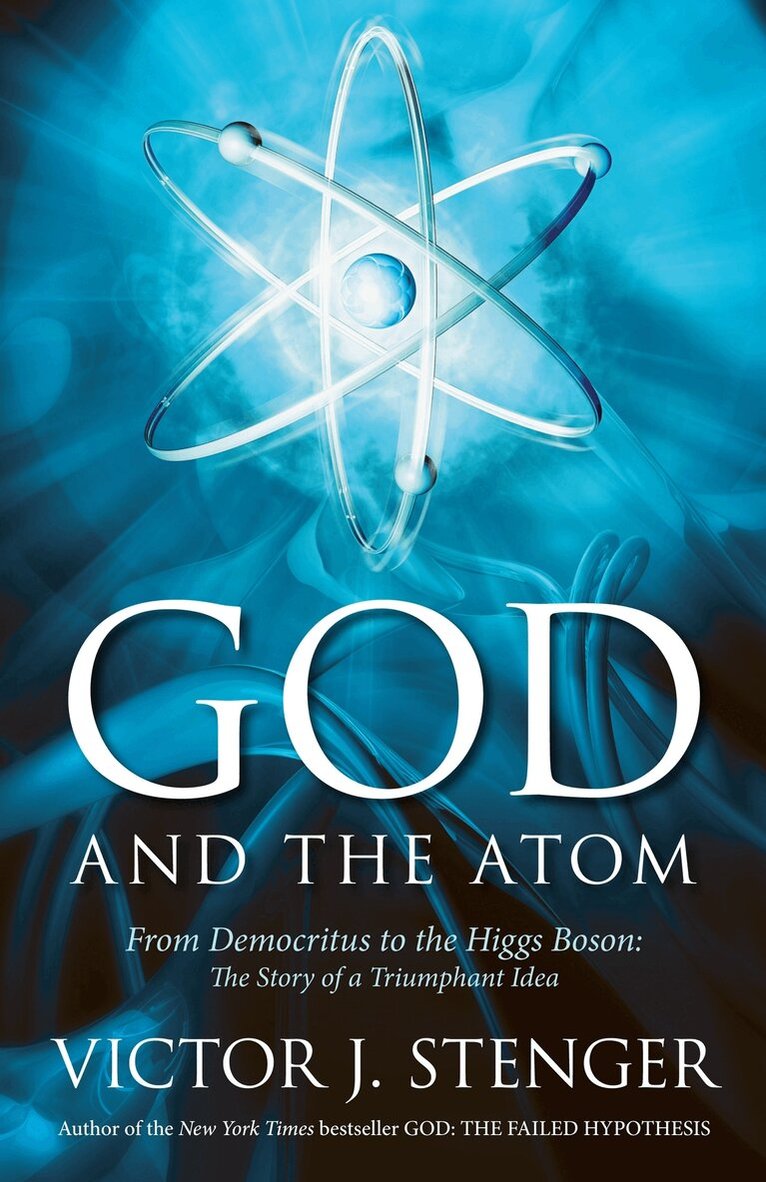
This history of atomism, from Democritus to the recent discovery of the Higgs boson, chronicles one of the most successful scientific hypotheses ever devised.Originating separately in both ancient Greece and India, the concept of the atom persisted for centuries, despite often running afoul of conventional thinking. Until the twentieth century, no direct evidence for atoms existed. Today it is possible to actually observe atoms using a scanning tunneling microscope. In this book, physicist Victor J. Stenger makes the case that, in the final analysis, atoms and the void are all that exists.The book begins with the story of the earliest atomists - the ancient Greek philosophers Leucippus, Democritus, and Epicurus, and the Latin poet Lucretius. As the author notes, the idea of elementary particles as the foundation of reality had many opponents throughout history - from Aristotle to Christian theologians and even some nineteenth-century chemists and philosophers. While theists today accept that the evidence for the atomic theory of matter is overwhelming, they reject the atheistic implications of that theory.In conclusion, the author underscores the main point made throughout this work: the total absence of empirical facts and theoretical arguments to support the existence of any component to reality other than atoms and the void can be taken as proof beyond a reasonable doubt that such a component is nowhere to be found.
Inbunden, Engelska, 2014
318 kr
Skickas inom 3-6 vardagar
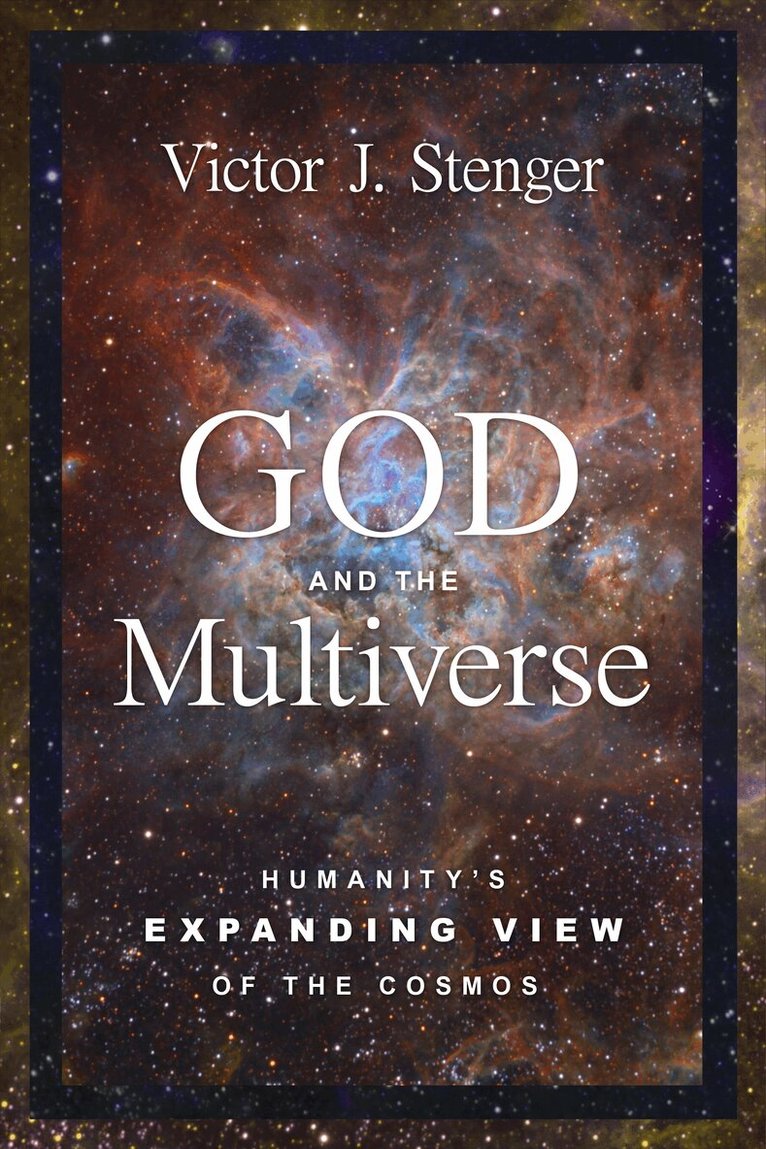
Cosmologists have reasons to believe that the vast universe in which we live is just one of an endless number of other universes within a multiverse-a mind-boggling array that may extend indefinitely in space and endlessly in both the past and the future. Victor Stenger reviews the key developments in the history of science that led to the current consensus view of astrophysicists, taking pains to explain essential concepts and discoveries in accessible terminology. The author shows that science's emerging understanding of the multiverse-consisting of trillions upon trillions of galaxies-is fully explicable in naturalistic terms with no need for supernatural forces to explain its origin or ongoing existence.How can conceptions of God, traditional or otherwise, be squared with this new worldview? The author shows how long-held beliefs will need to undergo major revision or otherwise face eventual extinction.
Inbunden, Engelska, 1988
410 kr
Tillfälligt slut
Much of the world seems chaotic and unpredictable, but the regular movement of celestial bodies and certain demonstrable physical phenomena seem to indicate the existence of a world that is basically orderly. This orderliness is often taken as evidence for an intelligence beyond our experience - a "creator" responsible for the first moment in time and all ensuing infinite patterns of the universe. Yet the science of the origin of the universe is still highly speculative and incomplete. How did the universe begin? According to Professor Victor J. Stenger, the simplest hypothesis so far is that it began by accident.Stenger insists that the existence of order does not necessarily imply that it is the result of design. Nothing currently known about the universe, he writes, requires that its structure was somehow imposed upon it from the outside. The universe is complex, but the laws of nature are simple; in fact, the universe may have originated because of a series of spontaneous random events.The book begins with a discussion of the meaning of order and examples of orderly patterns generated by chance. (Play enough poker hands, Stenger writes, and one day you will be dealt four aces.) Subsequent chapters introduce readers to the unique perspective of the universe provided by physics, with historical and philosophical material intertwined with a systematic but nontechnical presentation of basic physics. This leads to a description of the basic structure of the universe and the way in which symmetries of space, time, and inner dimensions account for the "laws" obeyed by particles.The origin of the universe is then described as a chance event, with space, time, matter, and the laws of nature the result of a spontaneous process of symmetry-breaking. Focusing on the question of planned versus unplanned origin, Stenger shows that the issue is not philosophical but scientific and that order can and does happen every day - by chance.
Inbunden, Engelska, 1990
410 kr
Tillfälligt slut
This book critically examines theories of a transcendent reality in terms of all that is currently known about matter at its most fundamental level. Victor J. Stenger gives a provocative, often amusing history of psychic research and occult beliefs, offering a convincing rebuttal to those who attempt to link physics to mystical truths. Stenger examines a number of well-known paranormal claims and shows how they can be explained without resorting to supernatural or psychic hypotheses. Discussing quantum theory and relativity, he demonstrates that these concepts actually invalidate paranormal claims and that there is no scientific basis for a universe other than one composed of observable matter.
Inbunden, Engelska, 2000
410 kr
Tillfälligt slut
Quantum physics has many extraordinary implications. One of the most extraordinary is that events at the atomic and subatomic level seem to depend on the future as well as the past. Is time really reversible?Physicist Victor J. Stenger says yes. Contrary to our most basic assumptions about the inevitable flow of time from past to future, the underlying reality of all phenomena may have no beginning and no end, and not be governed by an "arrow of time." Though aware of the possibility, physicists have generally been reluctant to accept the reversibility of time as reality because of the implied causal paradoxes: If time travel to the past were possible, then you could go back and kill your grandfather before he met your grandmother! However, Stenger shows that this paradox does not apply for quantum phenomena.Many people believe that the laws of nature represent a deep, Platonic reality that goes beyond the material objects that are observed by eye and by advanced scientific instruments. Stenger maintains that reality may be simpler and less mysterious than most think. The quantum world only appears mysterious when forced to obey rules of everyday human experience. Stenger convincingly argues that, based on established principles of simplicity and symmetry, at its deepest level reality is literally timeless. Within this reality it is possible that many universes exist with different structures and laws from our own.Stenger elucidates these complex subjects with great clarity and many helpful illustrations in a fascinating book that is understandable to the educated lay reader.
Inbunden, Engelska, 2006
278 kr
Tillfälligt slut
For those fascinated by how physics explains the universe and affects philosophy, this in-depth presentation of the cosmos, complete with an appendix of mathematical formulas, makes accessible to lay readers findings normally available only to professional scientists. In a series of remarkable developments in the 20th century and continuing into the 21st, elementary particle physicists, astronomers, and cosmologists have removed much of the mystery that surrounds our understanding of the physical universe. We now have mathematical models that are consistent with all observational data, including measurements of incredible precision, and we have a good understanding of why those models take the form they do. But the question arises: Where do the "laws" revealed by the mathematical models come from? Some conjecture that they represent a set of restraints on the behavior of matter that are built into the structure of the universe, either by God or some other ubiquitous governing principle. In this challenging, stimulating discussion of physics and its implications, the author disputes this notion. Instead, he argues that physical laws are simply restrictions on the ways physicists may draw the models they use to represent the behavior of matter if they wish to do so objectively. Since mathematical descriptions of data must be independent of any specific point of view, that is, they must possess "point-of-view invariance" (maximum objectivity), they naturally conform to certain fundamental laws that insure that objectivity, such as the great conservation principles of energy and momentum. The laws of physics, however, are not simply an arbitrary set of rules since the observed data beautifully demonstrate their accuracy.
Inbunden, Engelska, 2007
278 kr
Tillfälligt slut
Throughout history, arguments for and against the existence of God have been largely confined to philosophy and theology, while science has sat on the sidelines. Despite the fact that science has revolutionized every aspect of human life and greatly clarified our understanding of the world, somehow the notion has arisen that it has nothing to say about the possibility of a supreme being, which much of humanity worships as the source of all reality. This physicist and author contends that, if God exists, some evidence for this existence should be detectable by scientific means, especially considering the central role that God is alleged to play in the operation of the universe and the lives of humans. Treating the traditional God concept, as conventionally presented in the Judeo-Christian and Islamic traditions, like any other scientific hypothesis, Stenger examines all of the claims made for God's existence. He considers the latest Intelligent Design arguments as evidence of God's influence in biology. He looks at human behavior for evidence of immaterial souls and the possible effects of prayer. He discusses the findings of physics and astronomy in weighing the suggestions that the universe is the work of a creator and that humans are God's special creation. After evaluating all the scientific evidence, Stenger concludes that beyond a reasonable doubt the universe and life appear exactly as we might expect if there were no God.
Häftad, Engelska, 2012
212 kr
Tillfälligt slut
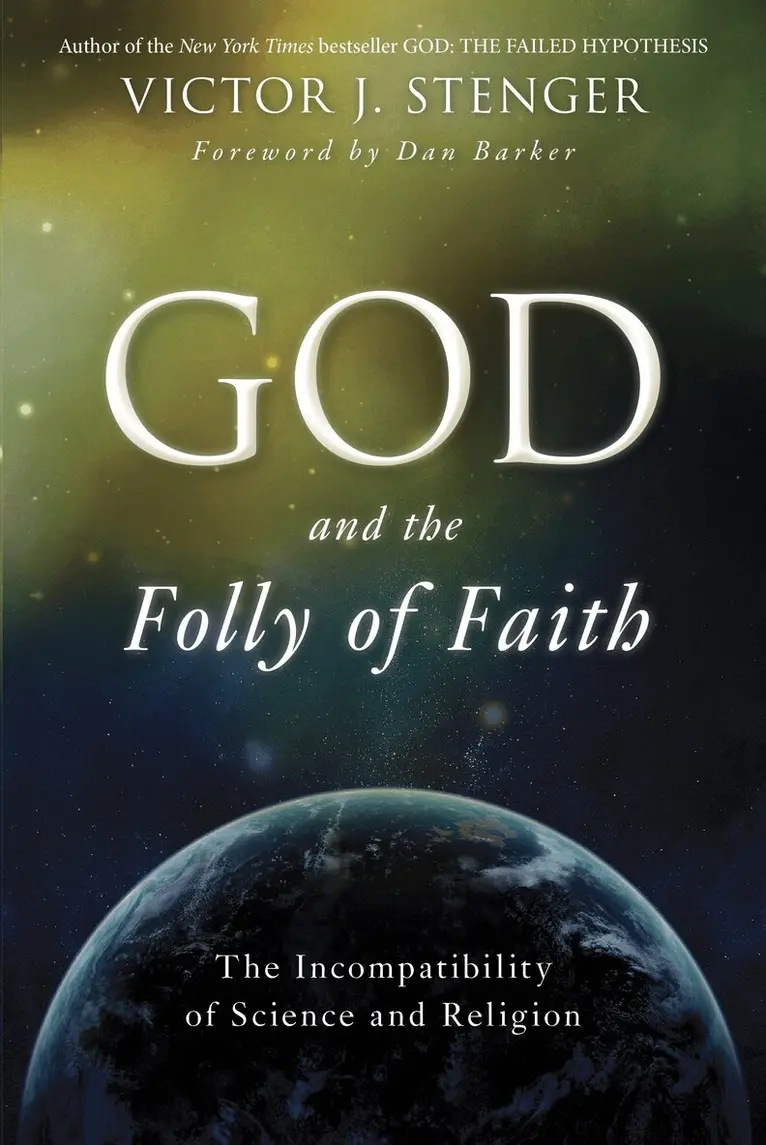
A thorough and hard-hitting critique that is a must read for anyone interested in the interaction between religion and science.It has become the prevalent view among sociologists, historians, and some theistic scientists that religion and science have never been in serious conflict. Some even claim that Christianity was responsible for the development of science. In a sweeping historical survey that begins with ancient Greek science and proceeds through the Renaissance and Enlightenment to contemporary advances in physics and cosmology, Stenger makes a convincing case that not only is this conclusion false, but Christianity actually held back the progress of science for one thousand years. It is significant, he notes, that the scientific revolution of the seventeenth century occurred only after the revolts against established ecclesiastic authorities in the Renaissance and Reformation opened up new avenues of thought. The author goes on to detail how religion and science are fundamentally incompatible in several areas: the origin of the universe and its physical parameters, the origin of complexity, holism versus reductionism, the nature of mind and consciousness, and the source of morality. In the end, Stenger is most troubled by the negative influence that organized religion often exerts on politics and society. He points out antiscientific attitudes embedded in popular religion that are being used to suppress scientific results on issues of global importance, such as overpopulation and environmental degradation. When religion fosters disrespect for science, it threatens the generations of humanity that will follow ours.