Victor W. Turner – författare
Visar alla böcker från författaren Victor W. Turner. Handla med fri frakt och snabb leverans.
5 produkter
5 produkter
693 kr
Skickas inom 10-15 vardagar
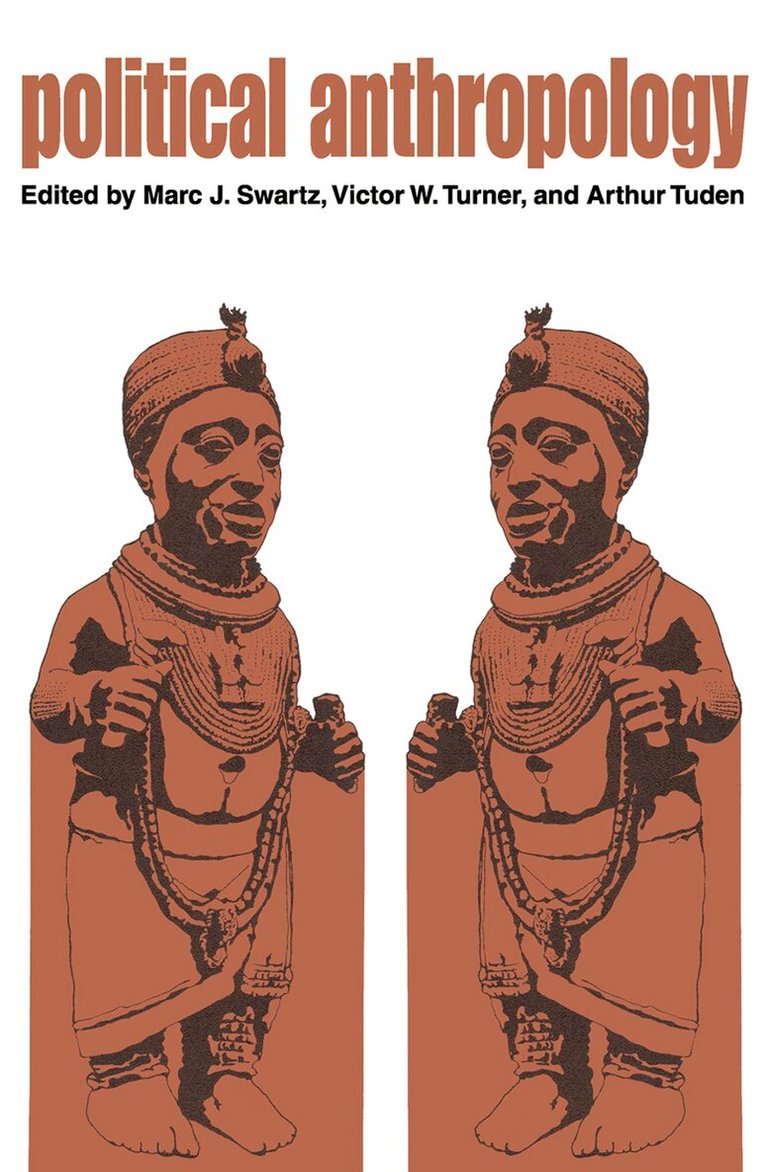
Politics: a static network of structural and functional models? Is it a "given" set of rules, statuses and procedures? Or a dynamic process, a continuum related to the past as well as to the present and continually influenced by pressures within and outside of a society? Taking the latter view of the nature of political behavior, the editors of Political Anthropology here present an original compilation of papers that thoroughly assess contemporary anthropological research and theory on political phenomena and explore the sources and maintenance of political power. One of the aims of this book is to take tentative steps toward resolving the developing crisis by investigating the structure of political action revealed in empirical data. Within the general framework of political dynamics the book uses processes such as decision making, the judicial process, the disturbance and settlement of policy issues, the application of sanctions, and the outcome of disputes among other things. These items will find their places as components of phases in the major sequence. Investigating societies from Africa to Alaska, politics is shown to be a global phenomenon--a "human process of action" centering on the conflict between the "common good" and "interests of groups," and on the resolution or extension of that conflict by the religious, structural, sociocultural, and psychological pressures within and external to a social grouping. Essential reading for anyone concerned with the nature of political process, Political Anthropology presents a fresh, important and comprehensive overview of the "wind of change" currently abroad in the study of political behavior.
273 kr
Skickas inom 5-8 vardagar
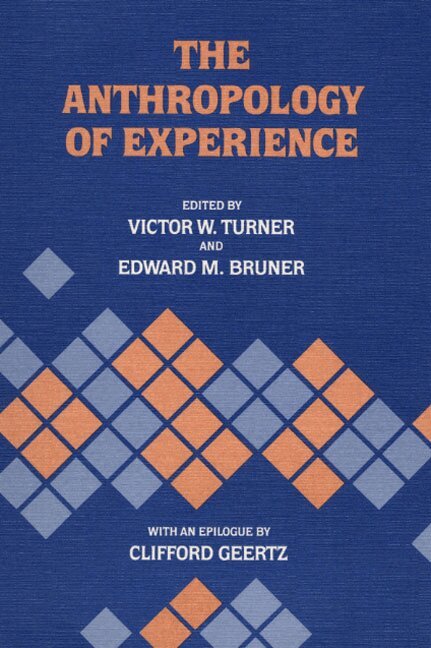
Fourteen authors, including many of the best-known scholars in the field,explore how people actually experience their culture and how those experiences are expressed in forms as varied as narrative, literary work, theater, carnival, ritual, reminiscence, and life review. Their studies will beof special interest for anyone working in anthropological theory, symbolicanthropology, and contemporary social and cultural anthropology, and useful as well for other social scientists, folklorists, literary theorists, and philosophers.
743 kr
Skickas inom 10-15 vardagar
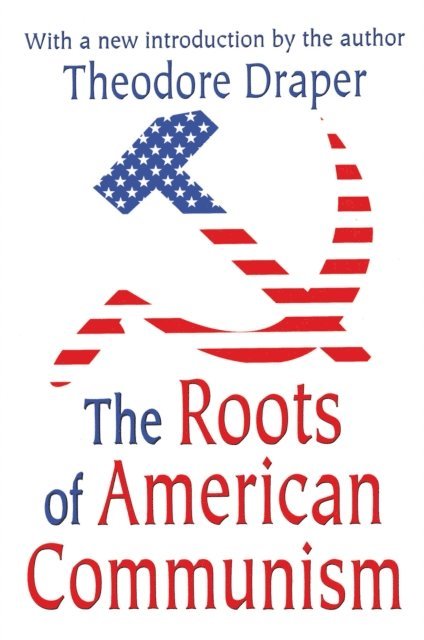
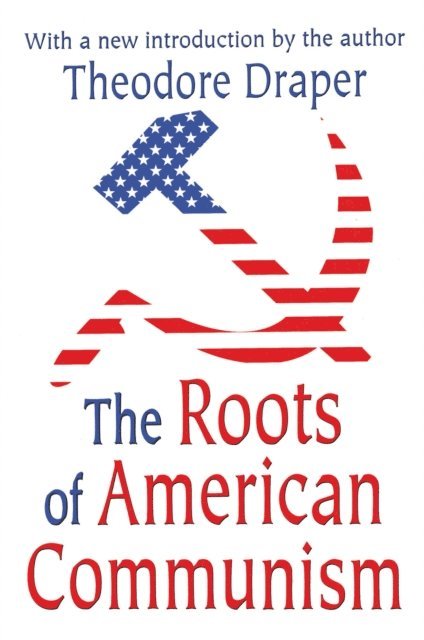
In this definitive history of the evolution of the Com- munist Party in America--from its early background through its founding in 1919 to its emergence as a legal entity in the 1920s--Theodore Draper traces the native and foreign strains that comprised the party. He emphasizes its shifting policies and secrets as well as its open activities. He makes clear how the party in its infancy "was transformed from a new expression of American radicalism to the American appendage of a Russian revolutionary power," a fact that Draper develops in his succeeding volume, American Communism and Soviet Russia.In his special, prescient way, Theodore Draper himself had the final words on American Communism: "It is like a museum of radical politics. In its various stages, it has virtually been all things to all men... There are many ways of trying to understand such a movement, but the first task is historical. In some respects, there is no other way to understand it, or at least to avoid seriously misunderstanding it. Every other approach tends to be static, one-sided or unbalanced."Draper correctly notes that the formative period of the American Communist movement has remained a largely untold and even unknown story. In part, the reasons for this are that the Communist movement, although a child of the West, grew to power in the Soviet East. But Draper rescues this chapter with deep appreciation for the fact that communism was not something that happened just in Russia, but also in the United States. This is a must read for scholars and laypersons alike.This volume is conceived as an independent and self-contained study of the American Communist movement. Draper correctly notes that the formative period is largely untold and even unknown. In part, the reasons for this are that the Communist movement, although a child of the West, grew to power in the Soviet East. Draper appreciates the fact that communism was not something that happened only in Russia, but also took place in the United States. That experience is the focus of this volume.
2 339 kr
Skickas inom 10-15 vardagar
Politics: a static network of structural and functional models? Is it a "given" set of rules, statuses and procedures? Or a dynamic process, a continuum related to the past as well as to the present and continually influenced by pressures within and outside of a society? Taking the latter view of the nature of political behavior, the editors of Political Anthropology here present an original compilation of papers that thoroughly assess contemporary anthropological research and theory on political phenomena and explore the sources and maintenance of political power. One of the aims of this book is to take tentative steps toward resolving the developing crisis by investigating the structure of political action revealed in empirical data. Within the general framework of political dynamics the book uses processes such as decision making, the judicial process, the disturbance and settlement of policy issues, the application of sanctions, and the outcome of disputes among other things. These items will find their places as components of phases in the major sequence. Investigating societies from Africa to Alaska, politics is shown to be a global phenomenon--a "human process of action" centering on the conflict between the "common good" and "interests of groups," and on the resolution or extension of that conflict by the religious, structural, sociocultural, and psychological pressures within and external to a social grouping. Essential reading for anyone concerned with the nature of political process, Political Anthropology presents a fresh, important and comprehensive overview of the "wind of change" currently abroad in the study of political behavior.
2 197 kr
Skickas inom 10-15 vardagar
In this definitive history of the evolution of the Com- munist Party in America--from its early background through its founding in 1919 to its emergence as a legal entity in the 1920s--Theodore Draper traces the native and foreign strains that comprised the party. He emphasizes its shifting policies and secrets as well as its open activities. He makes clear how the party in its infancy "was transformed from a new expression of American radicalism to the American appendage of a Russian revolutionary power," a fact that Draper develops in his succeeding volume, American Communism and Soviet Russia.In his special, prescient way, Theodore Draper himself had the final words on American Communism: "It is like a museum of radical politics. In its various stages, it has virtually been all things to all men... There are many ways of trying to understand such a movement, but the first task is historical. In some respects, there is no other way to understand it, or at least to avoid seriously misunderstanding it. Every other approach tends to be static, one-sided or unbalanced."Draper correctly notes that the formative period of the American Communist movement has remained a largely untold and even unknown story. In part, the reasons for this are that the Communist movement, although a child of the West, grew to power in the Soviet East. But Draper rescues this chapter with deep appreciation for the fact that communism was not something that happened just in Russia, but also in the United States. This is a must read for scholars and laypersons alike.This volume is conceived as an independent and self-contained study of the American Communist movement. Draper correctly notes that the formative period is largely untold and even unknown. In part, the reasons for this are that the Communist movement, although a child of the West, grew to power in the Soviet East. Draper appreciates the fact that communism was not something that happened only in Russia, but also took place in the United States. That experience is the focus of this volume.