Victor Warikandwa – författare
Visar alla böcker från författaren Victor Warikandwa. Handla med fri frakt och snabb leverans.
3 produkter
3 produkter
E-bok
PDF, Engelska, 2019929 kr
Läs direkt efter köp
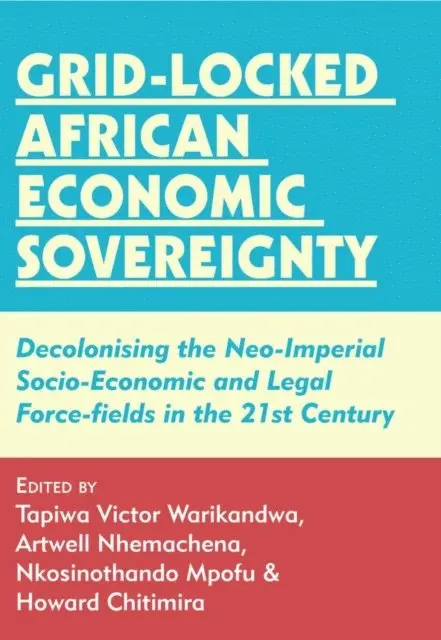
The emergent so-called ,Fourth Industrial Revolution, is regarded by some as a panacea for bringing about development to Africans. This book dismisses this flawed reasoning. Surfacing how ,investors, are actually looting and plundering Africa; how the industrial internet of things, the gig economies, digital economies and cryptocurrencies breach African political and economic sovereignty, the book pioneers what can be called anticipatory economics , which anticipate the future of economies. It is argued that the future of Africans does not necessarily require degrowth, postgrowth, postdevelopment, postcapitalism or sharing/solidarity economies: it requires attention to age-old questions about African ownership and control of their resources. Investors have to invest in ensuring that Africans own and control their resources. Further, it is pointed out that the historical imperial structural creation of forced labour is increasingly morphing into what we call the structural creation of forced leisure which is no less lethal for Africans. Because both the structural creation of forced labour and the structural creation of forced leisure are undergirded by transnational neo-imperial plunder, theft, robbery, looting and dispossession of Africans, this book goes beyond the simplistic arguments that Euro-America developed due to the industrial revolutions.
E-bok
PDF, Engelska, 2018714 kr
Läs direkt efter köp
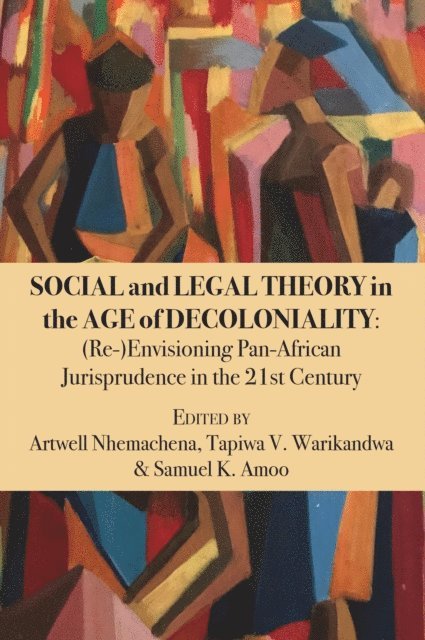
Right from the enslavement era through to the colonial and contemporary eras, Africans have been denied their human essence – portrayed as indistinct from animals or beasts for imperial burdens, Africans have been historically dispossessed and exploited. Postulating the theory of global jurisprudential apartheid, the book accounts for biases in various legal systems, norms, values and conventions that bind Africans while affording impunity to Western states.Drawing on contemporary notions of animism, transhumanism, posthumanism and science and technology studies, the book critically interrogates the possibility of a jurisprudence of anticipation which is attentive to the emergent New World Order that engineers ‘human beings to become nonhumans’ while ‘nonhumans become humans’. Connecting discourses on decoloniality with jurisprudence in the areas of family law, environment, indigenisation, property, migration, constitutionalism, employment and labour law, commercial law and Ubuntu, the book also juggles with emergent issues around Earth Jurisprudence, ecocentrism, wild law, rights of nature, Earth Court and Earth Tribunal. Arguing for decoloniality that attends to global jurisprudential apartheid., this tome is handy for legal scholars and practitioners, social scientists, civil society organisations, policy makers and researchers interested in transformation, decoloniality and Pan-Africanism.
E-bok
PDF, Engelska, 20191 165 kr
Läs direkt efter köp
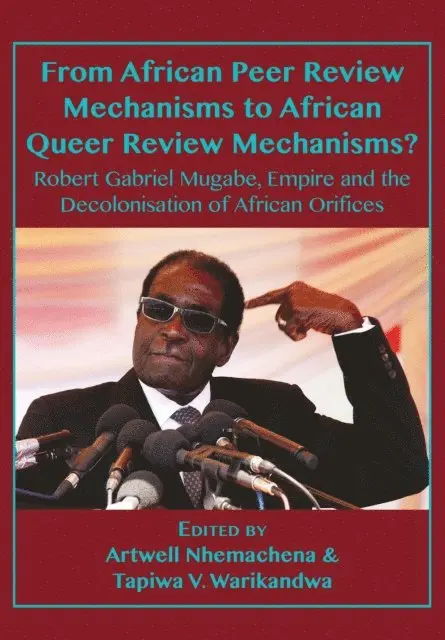
Tracing recent bouts of globalised Mugabephobia to Robert Mugabe,s refusal to be neoimperially penetrated, this book juxtaposes economic liberalisation with the mounting liberalisation of African orifices. Reading land repossession and economic structural adjustment programmes together with what they call neoimperial structural adjustment of African orifices, the authors argue that there has been liberalisation of African orifices in a context where Africans are ironically prevented from repossessing their material resources. Juxtaposing recent bouts of Mugabephobia with discourses on homophobia, the book asks why empire prefers liberalising African orifices rather than attending to African demands for restitution, restoration and reparations. Noting that empire opposes African sovereignty, autonomy, and centralisation of power while paradoxically promoting transnational corporations, centralisation of power over African economies, the book challenges contemporary discourses about shared sovereignty, distributed governance, heterarchy, heteronomy and onticology. Arguing that colonialists similarly denied Africans of their human essence, the tome problematises queer sexualities, homosexuality, ecosexuality, cybersexuality and humanoid robotic sexuality all of which complicate supposedly fundamental distinctions between human beings and animals and machines. Provocatively questioning queer sexuality and liberalised orifices that serve to divert African attention from the more serious unfinished business of repossessing material resources, the book insightfully compares Robert Gabriel Mugabe, Thomas Sankara and Julius Kambarage Nyerere who emphasised the imperatives of African autonomy, ownership, control and sovereignty over natural resources. Observing Africans, interest in repossessing ownership and control over their resources, the book wonders why so much, queer, international attention is focused on foisting queer sexuality while downplaying more burning issues of resource repossession, human dignity, equality and equity craved by Africans for whom life is not confined to sexuality. With insights for scholars in sociology, development studies, law, politics, African studies, anthropology, transformation, decolonisation and decoloniality, the book argues that liberal democracy is a fa,ade in a world that is actually ruled through criminocracy.