Victoria Watson – författare
Visar alla böcker från författaren Victoria Watson. Handla med fri frakt och snabb leverans.
19 produkter
19 produkter
Häftad, Engelska, 2018
252 kr
Skickas inom 5-8 vardagar
Häftad, Engelska, 2018
298 kr
Skickas inom 5-8 vardagar
Häftad, Engelska, 2020
377 kr
Skickas inom 5-8 vardagar
Häftad, Engelska, 2018
524 kr
Skickas inom 5-8 vardagar
Häftad, Engelska, 2016
802 kr
Skickas inom 10-15 vardagar
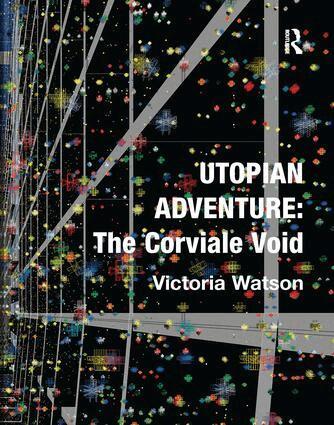
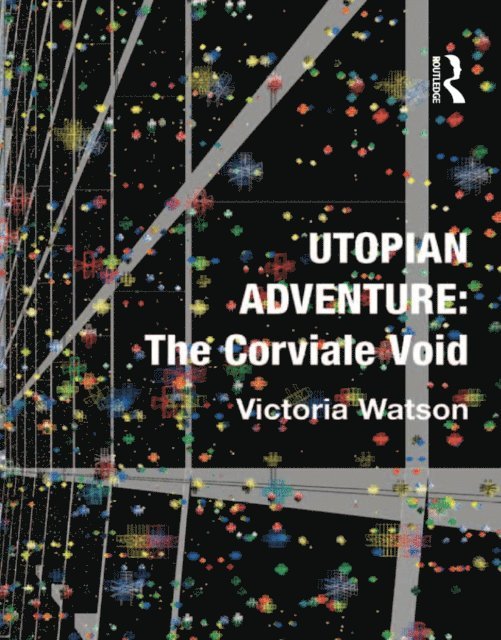
This book is about contemporary issues in architecture and urbanism, taking the form of a project for The Corviale Void, a one kilometre long strip of urban space, immured in the notorious Corviale housing development in the Southwestern sector of Rome. Corviale is a bizarre object, single-minded in its idea, the history of Corviale can be traced to debates in Italian architecture culture of the 1960’s, including Aldo Rossi’s objection to urbanisation, as articulated in his books and projects. On the one hand the project for the Corviale Void begins with one of the original theorists of modern urbanisation and architecture, Giovanni Battista Piranesi, looking into his fascination with the insides of walls. On the other hand the project begins with a new material form, The Air Grid. Like the forms appearing in Piranesi’s etchings, Air Grid is made from a kind of hatching, but Air Grid is hatched out of colour vectors, literally drawn into the air. The human eye is easily mesmerised by the Air Grid, scanning back and forth it reads the colour form as animated, in some sense alive. At the same time as the Italian architects were engaged in those activities that would eventually give birth to the Corviale Void, the painter Yves Klein, was creating The Architecture of the Air. Klein’s work is of special interest to the project of the Corviale Void because of the important role of colour in the development of his thinking about architecture. By attending to Klein’s parallel inquiry Air Grid is brought into dialogue with the philosophy of Arthur Schopenhauer, who was one of the first thinkers to develop a physiological theory of colour. The important thing about Schopenhauer’s thinking is the careful way he looked at physiological phenomena, regarding them as directly informed by metaphysical powers; for Schopenhauer Architecture too is a physiological matter and hence metaphysical. The concluding proposal for the Corviale Void presents a metaphysical archite
E-bok
Engelska, 2016952 kr
Läs direkt efter köp
This book is about contemporary issues in architecture and urbanism, taking the form of a project for The Corviale Void, a one kilometre long strip of urban space, immured in the notorious Corviale housing development in the Southwestern sector of Rome. Corviale is a bizarre object, single-minded in its idea, the history of Corviale can be traced to debates in Italian architecture culture of the 1960’s, including Aldo Rossi’s objection to urbanisation, as articulated in his books and projects. On the one hand the project for the Corviale Void begins with one of the original theorists of modern urbanisation and architecture, Giovanni Battista Piranesi, looking into his fascination with the insides of walls. On the other hand the project begins with a new material form, The Air Grid. Like the forms appearing in Piranesi’s etchings, Air Grid is made from a kind of hatching, but Air Grid is hatched out of colour vectors, literally drawn into the air. The human eye is easily mesmerised by the Air Grid, scanning back and forth it reads the colour form as animated, in some sense alive. At the same time as the Italian architects were engaged in those activities that would eventually give birth to the Corviale Void, the painter Yves Klein, was creating The Architecture of the Air. Klein’s work is of special interest to the project of the Corviale Void because of the important role of colour in the development of his thinking about architecture. By attending to Klein’s parallel inquiry Air Grid is brought into dialogue with the philosophy of Arthur Schopenhauer, who was one of the first thinkers to develop a physiological theory of colour. The important thing about Schopenhauer’s thinking is the careful way he looked at physiological phenomena, regarding them as directly informed by metaphysical powers; for Schopenhauer Architecture too is a physiological matter and hence metaphysical. The concluding proposal for the Corviale Void presents a metaphysical archite
E-bok
PDF, Engelska, 2016919 kr
Läs direkt efter köp
This book is about contemporary issues in architecture and urbanism, taking the form of a project for The Corviale Void, a one kilometre long strip of urban space, immured in the notorious Corviale housing development in the Southwestern sector of Rome. Corviale is a bizarre object, single-minded in its idea, the history of Corviale can be traced to debates in Italian architecture culture of the 1960’s, including Aldo Rossi’s objection to urbanisation, as articulated in his books and projects. On the one hand the project for the Corviale Void begins with one of the original theorists of modern urbanisation and architecture, Giovanni Battista Piranesi, looking into his fascination with the insides of walls. On the other hand the project begins with a new material form, The Air Grid. Like the forms appearing in Piranesi’s etchings, Air Grid is made from a kind of hatching, but Air Grid is hatched out of colour vectors, literally drawn into the air. The human eye is easily mesmerised by the Air Grid, scanning back and forth it reads the colour form as animated, in some sense alive. At the same time as the Italian architects were engaged in those activities that would eventually give birth to the Corviale Void, the painter Yves Klein, was creating The Architecture of the Air. Klein’s work is of special interest to the project of the Corviale Void because of the important role of colour in the development of his thinking about architecture. By attending to Klein’s parallel inquiry Air Grid is brought into dialogue with the philosophy of Arthur Schopenhauer, who was one of the first thinkers to develop a physiological theory of colour. The important thing about Schopenhauer’s thinking is the careful way he looked at physiological phenomena, regarding them as directly informed by metaphysical powers; for Schopenhauer Architecture too is a physiological matter and hence metaphysical. The concluding proposal for the Corviale Void presents a metaphysical archite
Inbunden, Engelska, 2011
2 309 kr
Skickas inom 5-8 vardagar
This book is about contemporary issues in architecture and urbanism, taking the form of a project for The Corviale Void, a one kilometre long strip of urban space, immured in the notorious Corviale housing development in the Southwestern sector of Rome. Corviale is a bizarre object, single-minded in its idea, the history of Corviale can be traced to debates in Italian architecture culture of the 1960’s, including Aldo Rossi’s objection to urbanisation, as articulated in his books and projects. On the one hand the project for the Corviale Void begins with one of the original theorists of modern urbanisation and architecture, Giovanni Battista Piranesi, looking into his fascination with the insides of walls. On the other hand the project begins with a new material form, The Air Grid. Like the forms appearing in Piranesi’s etchings, Air Grid is made from a kind of hatching, but Air Grid is hatched out of colour vectors, literally drawn into the air. The human eye is easily mesmerised by the Air Grid, scanning back and forth it reads the colour form as animated, in some sense alive. At the same time as the Italian architects were engaged in those activities that would eventually give birth to the Corviale Void, the painter Yves Klein, was creating The Architecture of the Air. Klein’s work is of special interest to the project of the Corviale Void because of the important role of colour in the development of his thinking about architecture. By attending to Klein’s parallel inquiry Air Grid is brought into dialogue with the philosophy of Arthur Schopenhauer, who was one of the first thinkers to develop a physiological theory of colour. The important thing about Schopenhauer’s thinking is the careful way he looked at physiological phenomena, regarding them as directly informed by metaphysical powers; for Schopenhauer Architecture too is a physiological matter and hence metaphysical. The concluding proposal for the Corviale Void presents a metaphysical archite
Häftad, Engelska, 2025
204 kr
Skickas inom 5-8 vardagar
Häftad, Engelska, 2020
380 kr
Skickas inom 5-8 vardagar
Häftad, Engelska, 2021
390 kr
Skickas inom 5-8 vardagar
Häftad, Engelska, 2022
354 kr
Skickas inom 3-6 vardagar
Häftad, Engelska, 2023
309 kr
Skickas inom 5-8 vardagar
Inbunden, Engelska, 2024
364 kr
Skickas inom 5-8 vardagar
Inbunden, Engelska, 2025
1 116 kr
Skickas inom 5-8 vardagar
Inbunden, Engelska, 2026
961 kr
Skickas inom 3-6 vardagar
Inbunden, Engelska, 2026
364 kr
Skickas inom 5-8 vardagar
Häftad, Engelska, 2014
144 kr
Skickas inom 5-8 vardagar
81 kr
Läs direkt efter köp