Vieda Skultans – författare
Visar alla böcker från författaren Vieda Skultans. Handla med fri frakt och snabb leverans.
20 produkter
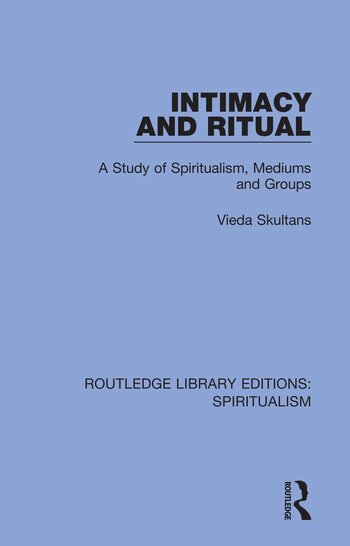
Intimacy and Ritual
A Study of Spiritualism, Medium and Groups
Inbunden, 2019
1517 kr
Lägg i varukorg
Originally published in 1974 Intimacy and Ritual is a sympathetic study of spiritualist activities and their relation to the practitioners’ secular lives. The book, in particular, looks at the therapeutic function of spiritualism. Based on the author’s fieldwork as a ‘participant observer’ among …
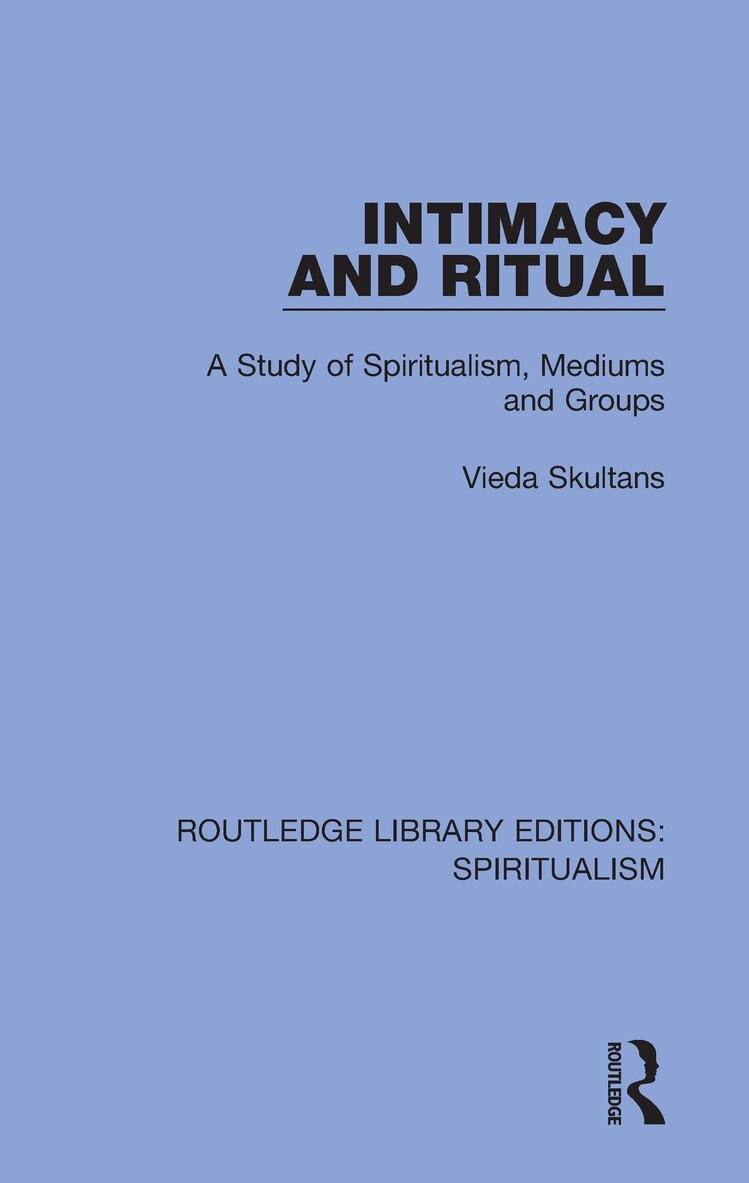
Intimacy and Ritual
A Study of Spiritualism, Medium and Groups
Häftad, 2021
544 kr
Lägg i varukorg
Originally published in 1974 Intimacy and Ritual is a sympathetic study of spiritualist activities and their relation to the practitioners’ secular lives. The book, in particular, looks at the therapeutic function of spiritualism. Based on the author’s fieldwork as a ‘participant observer’ among …
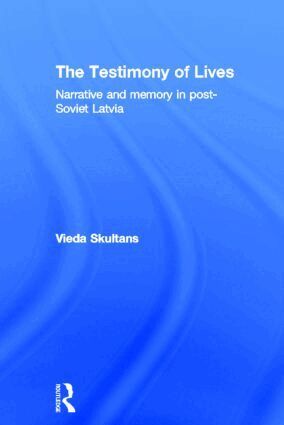
Testimony of Lives
Narrative and memory in post-Soviet Latvia
Inbunden, 1997
2658 kr
Lägg i varukorg
Vieda Skultans left Latvia as a refugee at the age of six months. In 1990, she returned for the first time. This text is both a personal account of a homecoming and an anthropology of a people trying to come to terms with its past and to face an uncertain future. Based on more than 100 interviews …
Testimony of Lives
Narrative and memory in post-Soviet Latvia
Häftad, 1997
870 kr
Lägg i varukorg
Vieda Skultans left Latvia as a refugee at the age of six months. In 1990, she returned for the first time. This text is both a personal account of a homecoming and an anthropology of a people trying to come to terms with its past and to face an uncertain future. Based on more than 100 interviews …
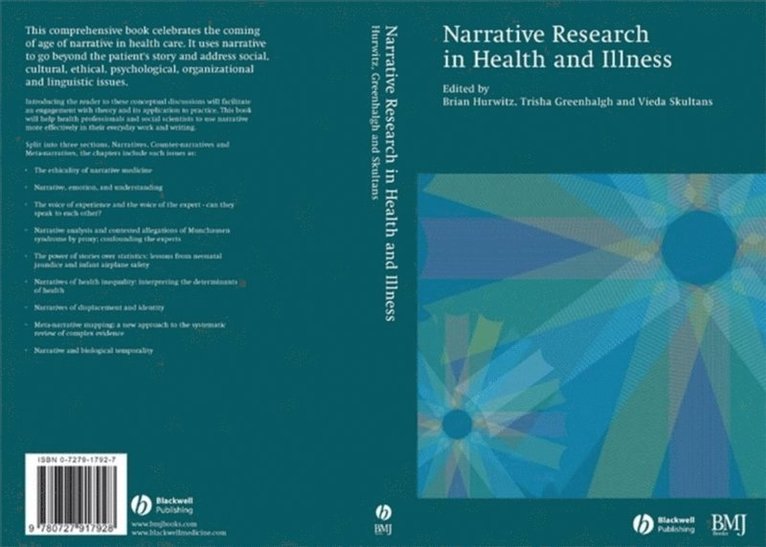
Narrative Research in Health and Illness
Av Brian Hurwitz, Brian Hurwitz m. fl.
Häftad, 2004
1630 kr
Lägg i varukorg
This comprehensive book celebrates the coming of age of narrative in health care. It uses narrative to go beyond the patient's story and address social, cultural, ethical, psychological, organizational and linguistic issues. This book has been written to help health professionals and social …
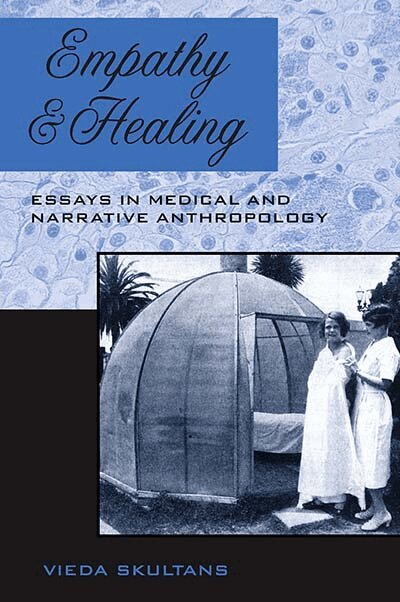
Empathy and Healing
Essays in Medical and Narrative Anthropology
E-bok, 2008
335 kr
Lägg i varukorg
For more than three decades the author has been concerned with issues to do with emotion, suffering and healing. This volume presents ethnographic studies of South Wales, Maharashtra and post-Soviet Latvia connected by a theoretical interest in healing, emotion and subjectivity. Exploring the uses …
Empathy and Healing
Essays in Medical and Narrative Anthropology
Häftad, 2011
527 kr
Lägg i varukorg
For more than three decades the author has been concerned with issues to do with emotion, suffering and healing. This volume presents ethnographic studies of South Wales, Maharashtra and post-Soviet Latvia connected by a theoretical interest in healing, emotion and subjectivity. Exploring the uses …
Intimacy and Ritual
A Study of Spiritualism, Medium and Groups
E-bok, 2019
641 kr
Lägg i varukorg
Originally published in 1974 Intimacy and Ritual is a sympathetic study of spiritualist activities and their relation to the practitioners’ secular lives. The book, in particular, looks at the therapeutic function of spiritualism. Based on the author’s fieldwork as a ‘participant observer’ …
Intimacy and Ritual
A Study of Spiritualism, Medium and Groups
E-bok, 2019
627 kr
Lägg i varukorg
Originally published in 1974 Intimacy and Ritual is a sympathetic study of spiritualist activities and their relation to the practitioners’ secular lives. The book, in particular, looks at the therapeutic function of spiritualism. Based on the author’s fieldwork as a ‘participant observer’ …
Madness and Morals
Ideas on Insanity in the Nineteenth Century
Inbunden, 2022
1882 kr
Lägg i varukorg
First published in 1975, Madness and Morals presents the major preoccupations of nineteenth century society concerning insanity, its problems, and implications. In the introduction to the collection, Vieda Skultans traces developments and changes in the ideas about the insane and their treatment …
Madness and Morals
Ideas on Insanity in the Nineteenth Century
Häftad, 2024
517 kr
Lägg i varukorg
First published in 1975, Madness and Morals presents the major preoccupations of nineteenth century society concerning insanity, its problems, and implications. In the introduction to the collection, Vieda Skultans traces developments and changes in the ideas about the insane and their treatment …
English Madness
Ideas on Insanity 1580-1890
E-bok, 2026
1030 kr
Lägg i varukorg
In this book, originally published in 1979 and a sequel to Madness and Morals https://www.routledge.com/Madness-and-Morals-Ideas-on-Insanity-in-the-Nineteenth-Century/Skultans/p/book/9781032254975 , Vieda Skultans presents an analysis of psychiatric ideas and practices, based on an examination of …
English Madness
Ideas on Insanity 1580-1890
E-bok, 2026
1052 kr
Lägg i varukorg
In this book, originally published in 1979 and a sequel to Madness and Morals https://www.routledge.com/Madness-and-Morals-Ideas-on-Insanity-in-the-Nineteenth-Century/Skultans/p/book/9781032254975 , Vieda Skultans presents an analysis of psychiatric ideas and practices, based on an examination of …
English Madness
Ideas on Insanity 1580–1890
Inbunden, 2026
1567 kr
Lägg i varukorg
In this book, originally published in 1979 and a sequel to Madness and Morals https://www.routledge.com/Madness-and-Morals-Ideas-on-Insanity-in-the-Nineteenth-Century/Skultans/p/book/9781032254975, Vieda Skultans presents an analysis of psychiatric ideas and practices, based on an examination of …
Testimony of Lives
Narrative and memory in post-Soviet Latvia
E-bok, 2002
977 kr
Lägg i varukorg
Vieda Skultans left Latvia as a refugee at the age of six months. In 1990, she returned for the first time. This text is both a personal account of a homecoming and an anthropology of a people trying to come to terms with its past and to face an uncertain future. Based on more than 100 interviews …
Testimony of Lives
Narrative and memory in post-Soviet Latvia
E-bok, 2002
970 kr
Lägg i varukorg
Vieda Skultans left Latvia as a refugee at the age of six months. In 1990, she returned for the first time. This text is both a personal account of a homecoming and an anthropology of a people trying to come to terms with its past and to face an uncertain future. Based on more than 100 interviews …
Narrative Research in Health and Illness
Av Vieda Skultans, Trisha Greenhalgh m. fl.
E-bok, 2008
1896 kr
Lägg i varukorg
This comprehensive book celebrates the coming of age of narrative in health care. It uses narrative to go beyond the patient''s story and address social, cultural, ethical, psychological, organizational and linguistic issues. This book has been written to help health professionals and social …
Empathy and Healing
Essays in Medical and Narrative Anthropology
Inbunden, 2008
1921 kr
Lägg i varukorg
For more than three decades the author has been concerned with issues to do with emotion, suffering and healing. This volume presents ethnographic studies of South Wales, Maharashtra and post-Soviet Latvia connected by a theoretical interest in healing, emotion and subjectivity. Exploring the uses …
Anthropological Approaches to Psychological Medicine
Crossing Bridges
E-bok, 2000
453 kr
Lägg i varukorg
`There are many insights and nuggets of value in this collection. Maurice Lipsedge reminds us how badly psychiatry needs anthropology's insights.This book should contribute to the ongoing dialogue between the two fields.' - The Journal of the Royal Antropological Institute`The editors states in the …
Anthropological Approaches to Psychological Medicine
Crossing Bridges
Av Professor John Cox, Vieda Skultans
Häftad, 2000
415 kr
Lägg i varukorg
`There are many insights and nuggets of value in this collection. Maurice Lipsedge reminds us how badly psychiatry needs anthropology's insights.This book should contribute to the ongoing dialogue between the two fields.' - The Journal of the Royal Antropological Institute`The editors states in the …