Vineer Bhansali – författare
1 272 kr
Skickas inom 3-6 vardagar
"This moves instantly to the top of my recommended list of important reading for concept-oriented fixed income investors. Profit by learning how a true expert makes risk-return trade-offs when constructing portfolios of bonds and related derivatives." -- Darrell Duffie, Dean Witter Distinguished Professor of Finance,Graduate School of Business, Stanford University
"Vineer Bhansali combines the mathematical rigor of a trained physicist with the commonsense wisdom of a school-of-hard-knocks practitioner to deliver a unique prism into the world of bond investment and risk management post the Financial Crisis. The book is not just valuable, but extremely timely. You won't want to read it quickly, but slowly and thoughtfully, as it is an analytical mosaic, not simply a well-written narrative, even though it is indeed that. Bravo, Vineer!" -- Paul McCulley, Managing Director, PIMCO
"Drawing on his years of experience as a portfolio manage, his knowledge of and contributions to the academic literature, and his quantitative training, Bhansali bridges the gap between book knowledge and the practicalities of successful, long-term investing. By focusing attention on big-picture questions that are often forgotten in the course of portfolio 'optimization'--Which options are you short? Who else is in the trade? What will happen in a liquidity-stress scenario?--this book will help asset managers to improve the risk-returncharacteristics of their portfolios and to avert disasters." -- Bruce Tuckman, author of Fixed Income Securities and Director of Financial Markets Research, Center for Financial Stability
"Fixed-income markets used to be peaceful and quiet, but the last several years have shown that these markets can be a little too exciting from time to time, and in this wonderful volume, Vineer Bhansali has done a masterful job of telling us how to deal with this new fixed-income world. With a Ph.D. in particle physics and enormous practical experience in the markets, Dr. Bhansali is uniquely qualified to help investors and portfolio managers navigate through the choppy waters that will likely characterize the financial system for the next several years." -- Andrew W. Lo, Director, Laboratory for Financial Engineering, MIT Sloan School of Management
About the Book
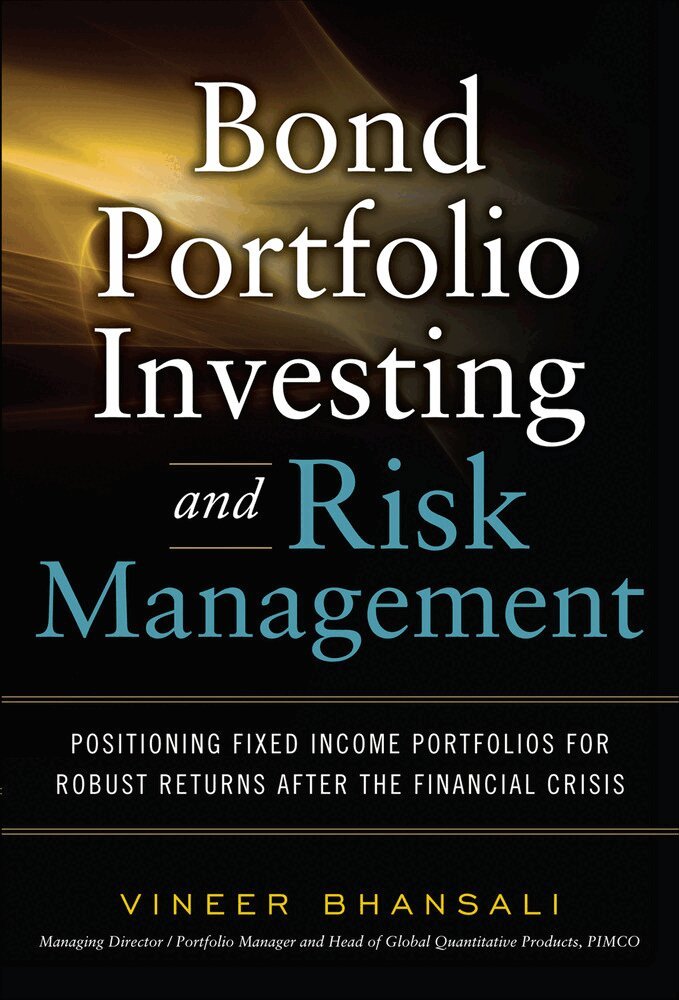
Bond Portfolio Investing and Risk Management helps you build portfolios to add value through every kind of economic cycle. Sharing his years of experience constructing robust, wellperforming portfolios that have navigated recurring crises, PIMCO portfolio managerVineer Bhansali explores the various risk factors inherent in fixed income investments, including yield curve shifts, twists, liquidity, and evolving risk factors such as government policy. Under an option-theory based riskand-return framework, you will gain intimate knowledge of the right valuation, investment, and risk management tools and confidently put them to use in practical portfolioconstruction.
Basing his conclusions on his own expertise and the latest academic and practitioner research, Bhansali provides valuable insight into topics you would be hard-pressed to find elsewhere, such as:
Option-based building blocks to valuationMeasuring liquidity and stress risksAsset selection and risk factorsBuilding state-of-the-art macro modelsInefficiencies in the market1 602 kr
Läs direkt efter köp
Learn the fine art of risk measurement and control—from a senior member of PIMCO!
Bond Portfolio Investing and Risk Management is designed for one purpose—to help you do the most important part of your job.
A top player in the upper echelon of PIMCO, Vineer Bhansali understands the nuances and complexities of managing risk in fixed-income investing better than anyone. In this highly practical guide, he puts his years of experience and the latest research to work in order to help you contend with such issues as:
Liquidity and stress risksAsset allocationMarket anomaliesCross-market relationshipsTail-risk measurementCyclical returnsMacroeconomic dataBond Portfolio Investing and Risk Management details the tools used to offset risk, including their advantages and drawbacks, and explains when to use each one. Bhansali provides practical investment techniques to give you a firm handle on the value and risk of a fixed-income instrument.
1 150 kr
Läs direkt efter köp
A complete guide for professionals with advanced mathematical skills but little or no financial knowledge . . .
You’re smart. Logical. Mathematically adept. One of those people who can make quick work of long, difficult equations. But when it comes to managing a financial portfolio and managing risk, you wonder if you’re missing out.
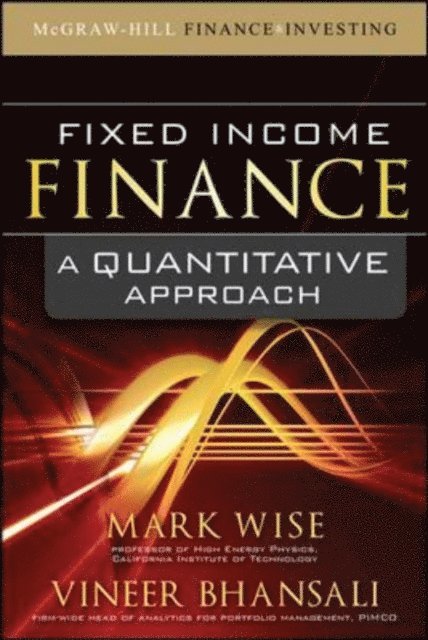
Fixed Income Finance is the book for you. It’s the perfect introduction to the concepts, formulas, applications, and methodology, all derived from first principles, that you need to succeed in the world of quantitative finance—with a special emphasis on fixed incomes. Written by two of the sharpest analytical minds in their fields, this instructive guide takes you through the basics of fixed income finance, including many new and original results, to help you understand:
Treasury Bonds and the Yield CurveThe Macroeconomics behind Term Structure ModelsStructural Models for Corporate Bonds and Portfolio DiversificationOptionsFixed Income DerivativesNumerical TechniquesFilled with step-by-step equations, clear and concise concepts, and ready-to-use formulas, this essential workbook bridges the gap between basic beginners’ primers and more advanced surveys to provide hands-on tools you can begin to use immediately. It’s all you need to put your math skills to work—and make the money work for you.
Brilliantly researched, impeccably detailed, and thoroughly comprehensive, Fixed Income Finance is applied mathematics at its best and most useful.
1 151 kr
Skickas inom 3-6 vardagar
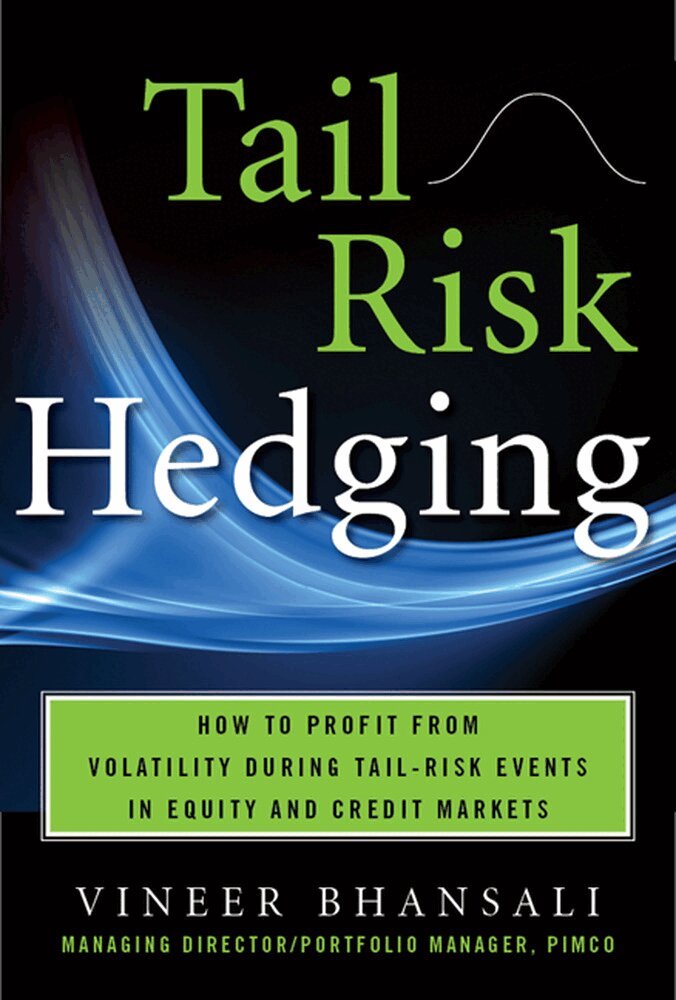
"TAIL RISKS" originate from the failure of mean reversion and the idealized bell curve of asset returns, which assumes that highly probable outcomes occur near the center of the curve and that unlikely occurrences, good and bad, happen rarely, if at all, at either "tail" of the curve. Ever since the global financial crisis, protecting investments against these severe tail events has become a priority for investors and money managers, but it issomething Vineer Bhansali and his team at PIMCO have been doing for over a decade. In one of the first comprehensive and rigorous books ever written on tail risk hedging, he lays out a systematic approach to protecting portfolios from, and potentially benefiting from, rare yet severe market outcomes.
Tail Risk Hedging is built on the author'spractical experience applying macroeconomic forecasting and quantitative modeling techniques across asset markets. Using empirical data and charts, he explains the consequences of diversification failure in tail events andhow to manage portfolios when this happens. He provides an easy-to-use, yet rigorous framework for protecting investment portfolios against tail risk and using tail hedging to play offense. Tail Risk Hedging exploreshow to:
Generate profits from volatility and illiquidity during tail-risk events in equity and credit marketsBuy attractively priced tail hedges that add value to a portfolio and quantify basis riskInterpret the psychology of investors in option pricing and portfolio constructionCustomize explicit hedges for retirement investmentsHedge risk factors such as duration risk and inflation riskManaging tail risk is today's most significant development in risk management, and this thorough guide helps you access every aspect of it. With the time-tested and mathematically rigorous strategies described here, including pieces of computer code, you get access to insights to help mitigate portfolio losses in significant downturns, create explosive liquidity while unhedged participants are forced to sell, and create more aggressive yet tail-risk-focused portfolios. The book also gives you a unique, higher level view of how tail risk is related to investing in alternatives, and of derivatives such as zerocost collars and variance swaps. Volatilityand tail risks are here to stay, and so should your clients' wealth when you use Tail Risk Hedging for managing portfolios.
PRAISE FOR TAIL RISK HEDGING:
"Managing, mitigating, and even exploiting the risk of bad times are the most important concerns in investments. Bhansali puts tail risk hedging and tail risk management under a microscope--pricing, implementation, and showing how we can fine-tune our risk exposures, which are all crucial ways in how we can better weather our bad times." -- ANDREW ANG, Ann F. Kaplan Professor of Business at Columbia University
"This book is critical and accessible reading for fiduciaries, financial consultants and investors interested in both theoretical foundations and practical considerations for how to frame hedging downside risk in portfolios. It is a tremendous resource for anyoneinvolved in asset allocation today." -- CHRISTOPHER C. GECZY, Ph.D., Academic Director, Wharton Wealth Management Initiative and Adj. Associate Professor of Finance, The Wharton School"Bhansali's book demonstrates how tail risk hedging can work, be concretely implemented, and lead to higher returns so that it is possible to have your cake and eat it too! A must read for the savvy investor." -- DIDIER SORNETTE, Professor on the Chair of Entrepreneurial Risks, ETH Zurich
1 457 kr
Läs direkt efter köp
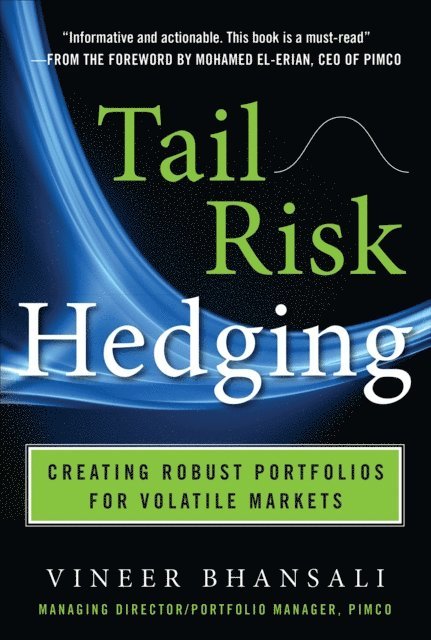
"TAIL RISKS" originate from the failure of mean reversion and the idealized bell curve of asset returns, which assumes that highly probable outcomes occur near the center of the curve and that unlikely occurrences, good and bad, happen rarely, if at all, at either "tail" of the curve. Ever since the global financial crisis, protecting investments against these severe tail events has become a priority for investors and money managers, but it is something Vineer Bhansali and his team at PIMCO have been doing for over a decade. In one of the first comprehensive and rigorous books ever written on tail risk hedging, he lays out a systematic approach to protecting portfolios from, and potentially benefiting from, rare yet severe market outcomes.
Tail Risk Hedging is built on the author''s practical experience applying macroeconomic forecasting and quantitative modeling techniques across asset markets. Using empirical data and charts, he explains the consequences of diversification failure in tail events and how to manage portfolios when this happens. He provides an easy-to-use, yet rigorous framework for protecting investment portfolios against tail risk and using tail hedging to play offense. Tail Risk Hedging explores how to:
Generate profits from volatility and illiquidity during tail-risk events in equity and credit marketsBuy attractively priced tail hedges that add value to a portfolio and quantify basis riskInterpret the psychology of investors in option pricing and portfolio constructionCustomize explicit hedges for retirement investmentsHedge risk factors such as duration risk and inflation riskManaging tail risk is today''s most significant development in risk management, and this thorough guide helps you access every aspect of it. With the time-tested and mathematically rigorous strategies described here, including pieces of computer code, you get access to insights to help mitigate portfolio losses in significant downturns, create explosive liquidity while unhedged participants are forced to sell, and create more aggressive yet tail-risk-focused portfolios. The book also gives you a unique, higher level view of how tail risk is related to investing in alternatives, and of derivatives such as zerocost collars and variance swaps. Volatility and tail risks are here to stay, and so should your clients'' wealth when you use Tail Risk Hedging for managing portfolios.
PRAISE FOR TAIL RISK HEDGING:
"Managing, mitigating, and even exploiting the risk of bad times are the most important concerns in investments. Bhansali puts tail risk hedging and tail risk management under a microscope--pricing, implementation, and showing how we can fine-tune our risk exposures, which are all crucial ways in how we can better weather our bad times." -- ANDREW ANG, Ann F. Kaplan Professor of Business at Columbia University
"This book is critical and accessible reading for fiduciaries, financial consultants and investors interested in both theoretical foundations and practical considerations for how to frame hedging downside risk in portfolios. It is a tremendous resource for anyone involved in asset allocation today." -- CHRISTOPHER C. GECZY, Ph.D., Academic Director, Wharton Wealth Management Initiative and Adj. Associate Professor of Finance, The Wharton School"Bhansali''s book demonstrates how tail risk hedging can work, be concretely implemented, and lead to higher returns so that it is possible to have your cake and eat it too! A must read for the savvy investor." -- DIDIER SORNETTE, Professor on the Chair of Entrepreneurial Risks, ETH Zurich