Vinita Vishwakarma - Böcker
Visar alla böcker från författaren Vinita Vishwakarma. Handla med fri frakt och snabb leverans.
3 produkter
3 produkter
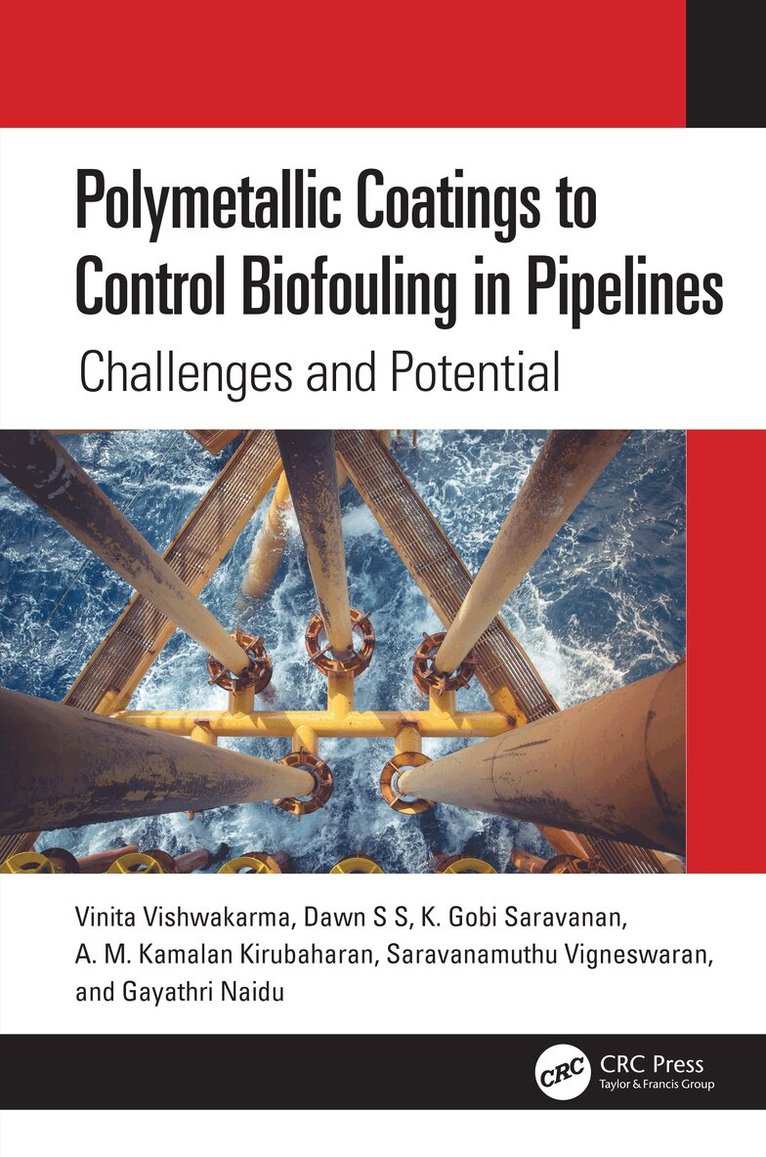
Polymetallic Coatings to Control Biofouling in Pipelines
Challenges and Potential
Inbunden, Engelska, 2021
2 370 kr
Skickas inom 10-15 vardagar
Most of the pipelines used for the transport of various fluids are susceptible to the formation of biofilms, and the undesirable accumulation of microorganisms in pipelines leads to biodeterioration and increases the maintenance cost of the pipelines. This book focuses on nanostructured polymetallic coatings for corrosion and biofouling protection in offshore oil and gas pipelines, marine pipelines, ship structures and port facilities, and corrosion resistance surfaces of several engineered structures. Considering various reasons of biofouling in pipelines that transport crude and refined petroleum, gas, biofuels, and other fluids including sewage, slurry, and water for drinking or irrigation, the underlying mechanism is thoroughly explained. A comparison of various protective techniques is also highlighted for the choice of methods for specific applications.Features: Provides information on biofouling control with broad significance and applicability in various industrial and research areas. Discusses microbially induced corrosion on biofuel transporting pipelines. Includes data from experiments conducted to overcome biofouling and biocorrosion. Gives out particular attention to metallic coatings and environmental considerations. Explores novel technologies preventing biofouling on metallic and polymeric substrates.This book is for researchers and graduate students in Coatings and Paints, Microbiology, Bioprocess Engineering, Biotechnology, Industrial Engineering, Mechanical and Chemical Engineering, Marine Engineering, Surface and Corrosion Engineering, and Water and Wastewater Treatment.
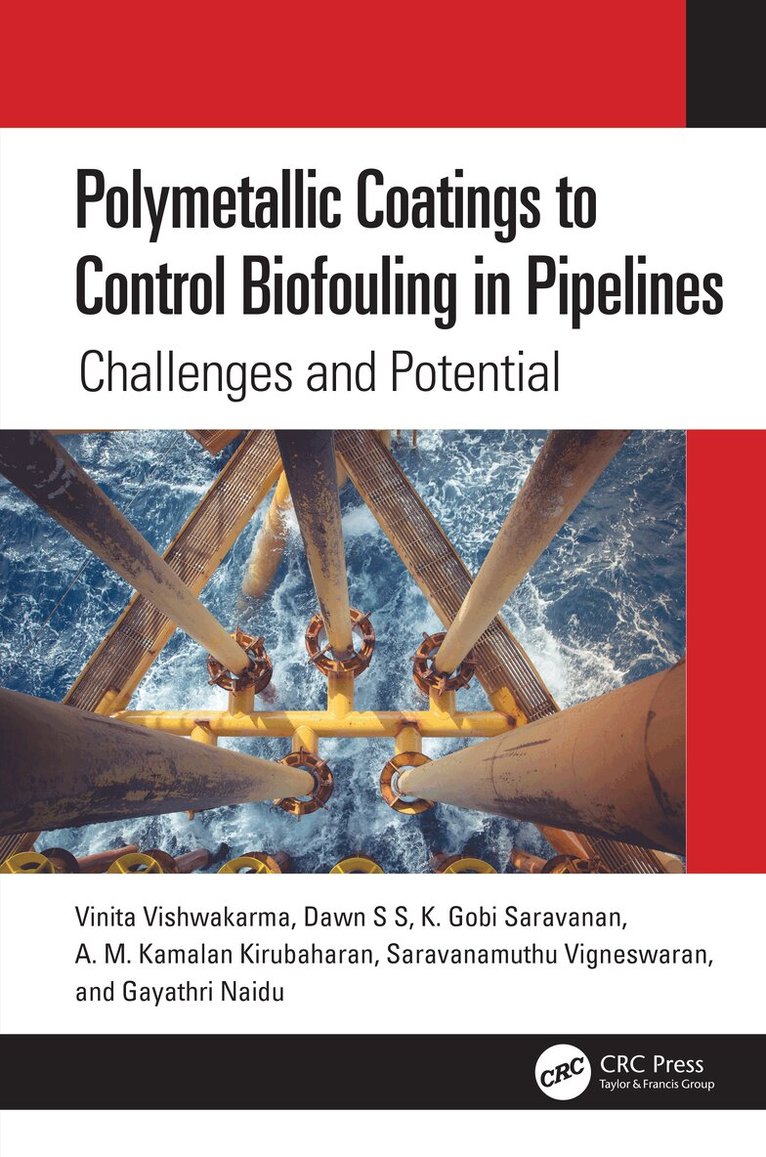
Polymetallic Coatings to Control Biofouling in Pipelines
Challenges and Potential
Häftad, Engelska, 2023
911 kr
Skickas inom 10-15 vardagar
Most of the pipelines used for the transport of various fluids are susceptible to the formation of biofilms, and the undesirable accumulation of microorganisms in pipelines leads to biodeterioration and increases the maintenance cost of the pipelines. This book focuses on nanostructured polymetallic coatings for corrosion and biofouling protection in offshore oil and gas pipelines, marine pipelines, ship structures and port facilities, and corrosion resistance surfaces of several engineered structures. Considering various reasons of biofouling in pipelines that transport crude and refined petroleum, gas, biofuels, and other fluids including sewage, slurry, and water for drinking or irrigation, the underlying mechanism is thoroughly explained. A comparison of various protective techniques is also highlighted for the choice of methods for specific applications.Features: Provides information on biofouling control with broad significance and applicability in various industrial and research areas. Discusses microbially induced corrosion on biofuel transporting pipelines. Includes data from experiments conducted to overcome biofouling and biocorrosion. Gives out particular attention to metallic coatings and environmental considerations. Explores novel technologies preventing biofouling on metallic and polymeric substrates.This book is for researchers and graduate students in Coatings and Paints, Microbiology, Bioprocess Engineering, Biotechnology, Industrial Engineering, Mechanical and Chemical Engineering, Marine Engineering, Surface and Corrosion Engineering, and Water and Wastewater Treatment.
3 370 kr
Kommande
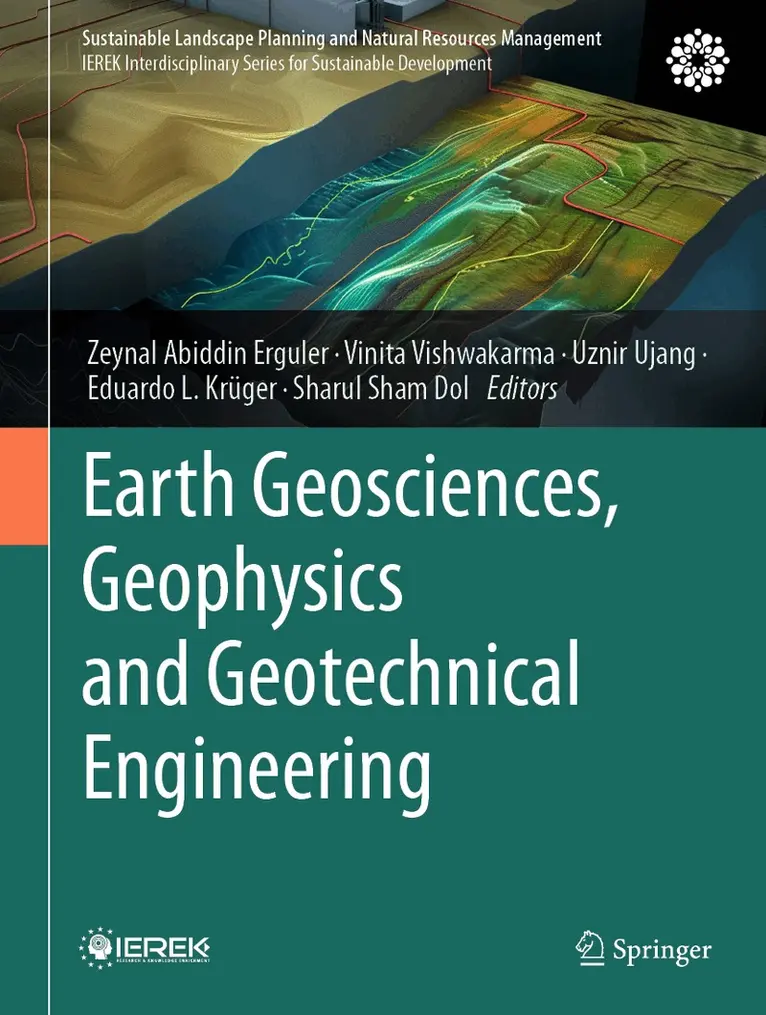
This book aims to provide a comprehensive and multidisciplinary exploration of the crucial role of these disciplines in fostering sustainable practices and effective resource management strategies. Also, it aspires to be a valuable resource for researchers, professionals, and students interested in addressing the pressing global challenges related to resource utilization, environmental protection, and societal well-being. In an era characterized by population growth, rapid urbanization, and environmental degradation, the responsible and efficient management of Earth’s resources has become paramount. Geosciences, encompassing fields such as geology, hydrology, and geomorphology, offer fundamental insights into Earth’s processes, structures, and materials. Geotechnical engineering, on the other hand, focuses on the engineering behavior of geological materials and the design of structures and infrastructures in response to Earth’s conditions. This book recognizes the need for a multidisciplinary approach that integrates geosciences and geotechnical engineering to achieve sustainable resource management. It emphasizes the important role of these disciplines in identifying, assessing, and utilizing various resources, including minerals, water, energy, and land. Geoscientific investigations enable the exploration and characterization of mineral deposits, groundwater resources, and potential sites for renewable energy projects. Geotechnical engineering, in turn, provides critical insights into the behavior and stability of soil and rock masses, allowing for the design of safe and sustainable infrastructure for resource extraction and utilization. Furthermore, sustainable resource management requires a strong focus on environmental protection and the mitigation of natural hazards. Geosciences contribute to the understanding of geological processes and landforms, facilitating the assessment of environmental impacts associated with resource extraction and the development of mitigative measures. Geotechnical engineering expertise is crucial in designing engineered solutions for waste management, land reclamation, and environmental remediation.