Vinod G Shelake - Böcker
Visar alla böcker från författaren Vinod G Shelake. Handla med fri frakt och snabb leverans.
6 produkter
6 produkter
1 091 kr
Skickas inom 10-15 vardagar
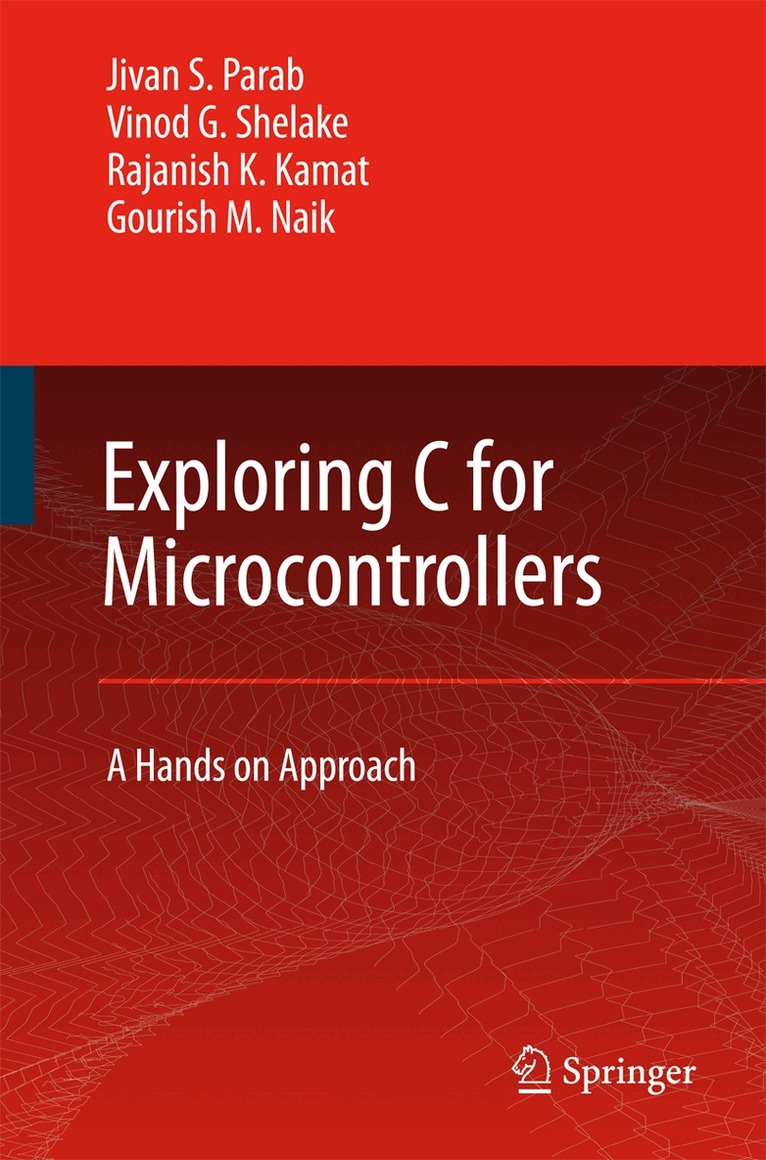
If we accept the premise that an embedded engineer is made rather than born, then how does one go about making a good one? The authors ofthisbookExploring C for Microcontrollers: A Hands-on Approach are certainly “good ones”. Not only do they explore some of the in?uences thatshapedthemselvesbuttheyalsotrytoshape“would-be”embedded engineers. Research and developmental activities in embedded systems has grown in a signi?cant proportion in the recent past. Embedded so- ware design is not new to the world, but with the changing time, it has gained considerable momentum in the recent past, and many young engineers are strongly inclined to pursue their future in this ?eld. The book is mainly targeted to these engineers who would like to understand in great depth the synergetic combination of hardware and software. The book is divided into eight chapters. Chapter 1 introduces a brief background about micro-controllers and explains how they are emb- dedintoproductscommerciallyavailableinthemarkettoemphasizethe importance of these in the daily life of mankind. It also gives an insight into the architectural details and embedded system concepts for s- dents’ projects to motivate them into this exciting ?eld. The rest of the bookconcentratesonsoftwaredevelopment. Theintegrateddevelopment environment (IDE) is introduced in Chapter 2. Again the screen shots and step-by-step procedure will certainly make the students and en- neers fully understand the development process. Chapter 3 di?eren- ates the embedded C paradigm from the conventional ANSI C. Again the authors explain how to successfully overcome the memory and time constraints while developing an embedded C program.
1 059 kr
Skickas inom 10-15 vardagar
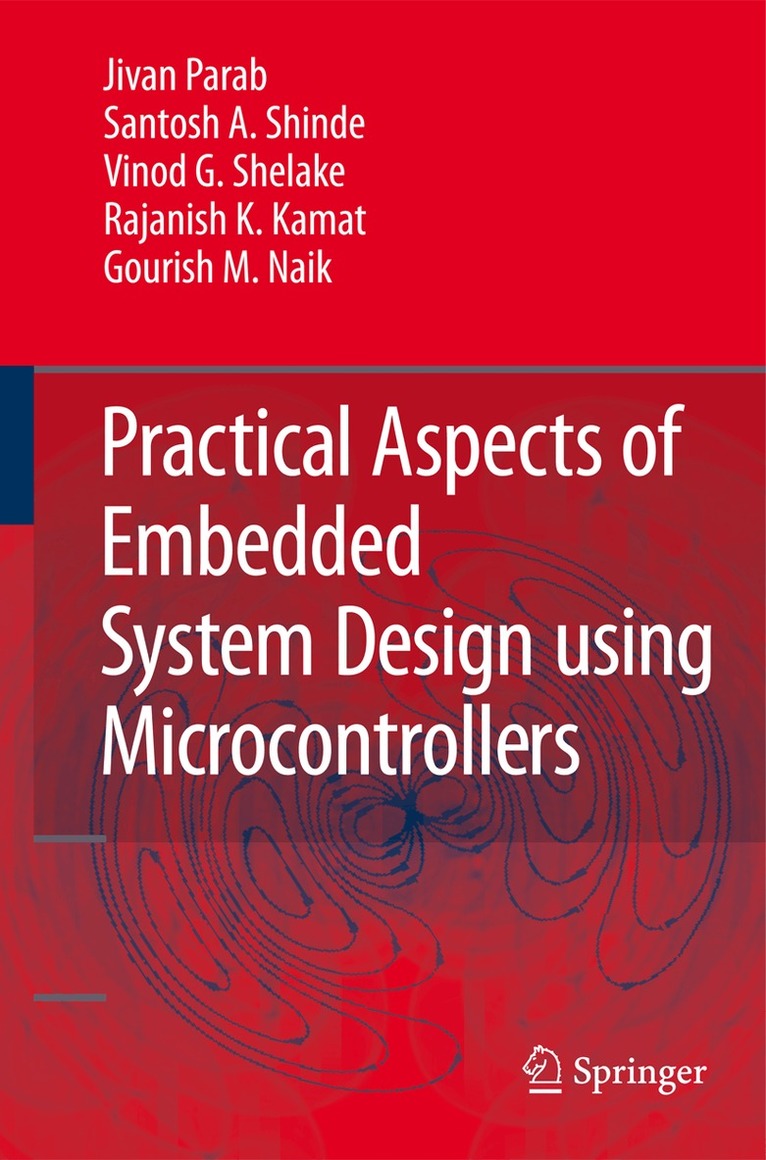
Second in the series, Practical Aspects of Embedded System Design using Microcontrollers emphasizes the same philosophy of “Learning by Doing” and “Hands on Approach” with the application oriented case studies developed around the PIC16F877 and AT 89S52, today’s most popular microcontrollers. Readers with an academic and theoretical understanding of embedded microcontroller systems are introduced to the practical and industry oriented Embedded System design. When kick starting a project in the laboratory a reader will be able to benefit experimenting with the ready made designs and ‘C’ programs. One can also go about carving a big dream project by treating the designs and programs presented in this book as building blocks. Practical Aspects of Embedded System Design using Microcontrollers is yet another valuable addition and guides the developers to achieve shorter product development times with the use of microcontrollers in the days of increased software complexity. Going through the text and experimenting with the programs in a laboratory will definitely empower the potential reader, having more or less programming or electronics experience, to build embedded systems using microcontrollers around the home, office, store, etc. Practical Aspects of Embedded System Design using Microcontrollers will serve as a good reference for the academic community as well as industry professionals and overcome the fear of the newbies in this field of immense global importance.
1 059 kr
Skickas inom 10-15 vardagar
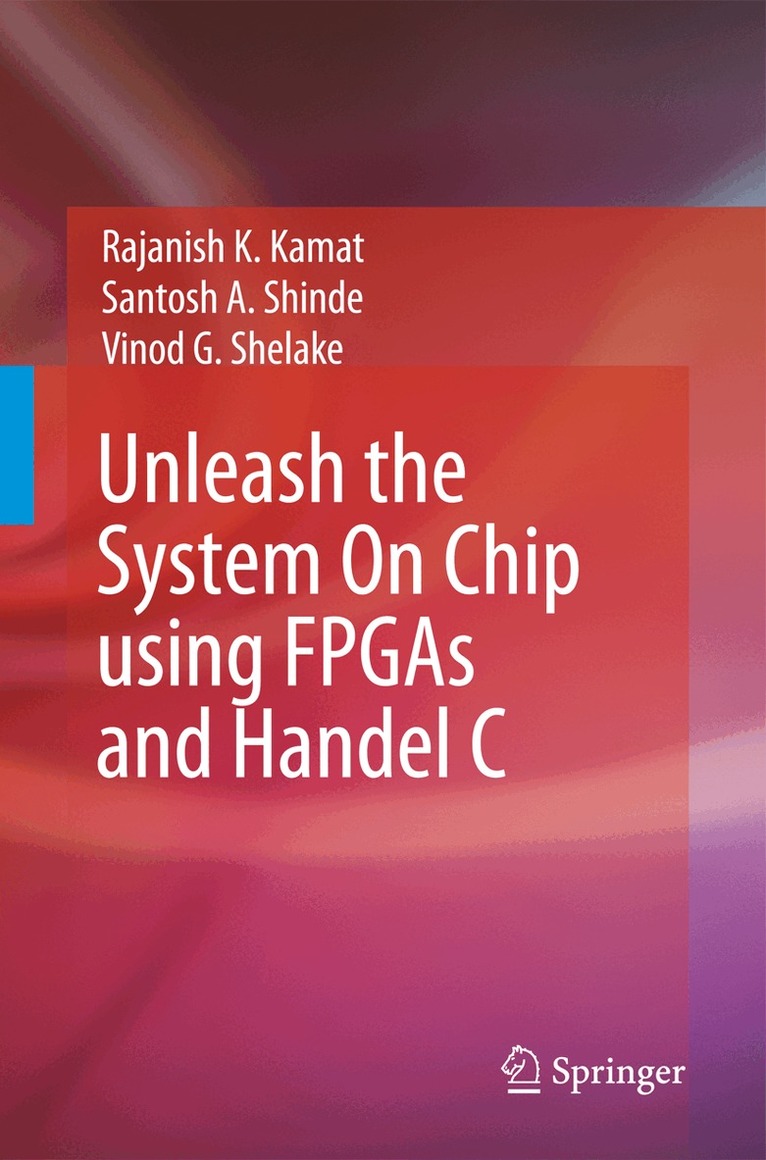
With the rapid advances in technology, the conventional academic and research departments of Electronics engineering, Electrical Engineering, Computer Science, Instrumentation Engineering over the globe are forced to come together and update their curriculum with few common interdisciplinary courses in order to come out with the engineers and researchers with muli-dimensional capabilities. The gr- ing perception of the ‘Hardware becoming Soft’ and ‘Software becoming Hard’ with the emergence of the FPGAs has made its impact on both the hardware and software professionals to change their mindset of working in narrow domains. An interdisciplinary field where ‘Hardware meets the Software’ for undertaking se- ingly unfeasible tasks is System on Chip (SoC) which has become the basic pl- form of modern electronic appliances. If it wasn’t for SoCs, we wouldn’t be driving our car with foresight of the traffic congestion before hand using GPS. Without the omnipresence of the SoCs in our every walks of life, the society is wouldn’t have evidenced the rich benefits of the convergence of the technologies such as audio, video, mobile, IPTV just to name a few. The growing expectations of the consumers have placed the field of SoC design at the heart of at variance trends. On one hand there are challenges owing to design complexities with the emergence of the new processors, RTOS, software protocol stacks, buses, while the brutal forces of deep submicron effects such as crosstalk, electromigration, timing closures are challe- ing the design metrics.
1 059 kr
Skickas inom 10-15 vardagar
If we accept the premise that an embedded engineer is made rather than born, then how does one go about making a good one? The authors ofthisbookExploring C for Microcontrollers: A Hands-on Approach are certainly “good ones”. Not only do they explore some of the in?uences thatshapedthemselvesbuttheyalsotrytoshape“would-be”embedded engineers. Research and developmental activities in embedded systems has grown in a signi?cant proportion in the recent past. Embedded so- ware design is not new to the world, but with the changing time, it has gained considerable momentum in the recent past, and many young engineers are strongly inclined to pursue their future in this ?eld. The book is mainly targeted to these engineers who would like to understand in great depth the synergetic combination of hardware and software. The book is divided into eight chapters. Chapter 1 introduces a brief background about micro-controllers and explains how they are emb- dedintoproductscommerciallyavailableinthemarkettoemphasizethe importance of these in the daily life of mankind. It also gives an insight into the architectural details and embedded system concepts for s- dents’ projects to motivate them into this exciting ?eld. The rest of the bookconcentratesonsoftwaredevelopment. Theintegrateddevelopment environment (IDE) is introduced in Chapter 2. Again the screen shots and step-by-step procedure will certainly make the students and en- neers fully understand the development process. Chapter 3 di?eren- ates the embedded C paradigm from the conventional ANSI C. Again the authors explain how to successfully overcome the memory and time constraints while developing an embedded C program.
1 059 kr
Skickas inom 10-15 vardagar
Second in the series, Practical Aspects of Embedded System Design using Microcontrollers emphasizes the same philosophy of “Learning by Doing” and “Hands on Approach” with the application oriented case studies developed around the PIC16F877 and AT 89S52, today’s most popular microcontrollers. Readers with an academic and theoretical understanding of embedded microcontroller systems are introduced to the practical and industry oriented Embedded System design. When kick starting a project in the laboratory a reader will be able to benefit experimenting with the ready made designs and ‘C’ programs. One can also go about carving a big dream project by treating the designs and programs presented in this book as building blocks. Practical Aspects of Embedded System Design using Microcontrollers is yet another valuable addition and guides the developers to achieve shorter product development times with the use of microcontrollers in the days of increased software complexity. Going through the text and experimenting with the programs in a laboratory will definitely empower the potential reader, having more or less programming or electronics experience, to build embedded systems using microcontrollers around the home, office, store, etc. Practical Aspects of Embedded System Design using Microcontrollers will serve as a good reference for the academic community as well as industry professionals and overcome the fear of the newbies in this field of immense global importance.
1 059 kr
Skickas inom 10-15 vardagar
With the rapid advances in technology, the conventional academic and research departments of Electronics engineering, Electrical Engineering, Computer Science, Instrumentation Engineering over the globe are forced to come together and update their curriculum with few common interdisciplinary courses in order to come out with the engineers and researchers with muli-dimensional capabilities. The gr- ing perception of the ‘Hardware becoming Soft’ and ‘Software becoming Hard’ with the emergence of the FPGAs has made its impact on both the hardware and software professionals to change their mindset of working in narrow domains. An interdisciplinary field where ‘Hardware meets the Software’ for undertaking se- ingly unfeasible tasks is System on Chip (SoC) which has become the basic pl- form of modern electronic appliances. If it wasn’t for SoCs, we wouldn’t be driving our car with foresight of the traffic congestion before hand using GPS. Without the omnipresence of the SoCs in our every walks of life, the society is wouldn’t have evidenced the rich benefits of the convergence of the technologies such as audio, video, mobile, IPTV just to name a few. The growing expectations of the consumers have placed the field of SoC design at the heart of at variance trends. On one hand there are challenges owing to design complexities with the emergence of the new processors, RTOS, software protocol stacks, buses, while the brutal forces of deep submicron effects such as crosstalk, electromigration, timing closures are challe- ing the design metrics.