
Višnja Pavičić Takač – författare
Visar alla böcker från författaren Višnja Pavičić Takač. Handla med fri frakt och snabb leverans.
3 produkter
3 produkter

Del 27 - Second Language Acquisition
Vocabulary Learning Strategies and Foreign Language Acquisition
Häftad, Engelska, 2008
428 kr
Skickas inom 5-8 vardagar
This is the first book that deals primarily with vocabulary learning strategies as a specific and integral subgroup of language learning strategies. Its aim is to define the concept of language learning strategies in general and their features on the basis of cognitive theory and relevant models of second language acquisition as the basis for empirical research. Furthermore, the book gives a survey of relevant research on vocabulary learning strategies and describes three original empirical studies. Thus, the book integrates the approaches of theories of second language acquisition, the theory and practice of instructed foreign (second) language learning, and the findings of current empirical research.

Del 27 - Second Language Acquisition
Vocabulary Learning Strategies and Foreign Language Acquisition
Inbunden, Engelska, 2008
1 273 kr
Skickas inom 5-8 vardagar
This is the first book that deals primarily with vocabulary learning strategies as a specific and integral subgroup of language learning strategies. Its aim is to define the concept of language learning strategies in general and their features on the basis of cognitive theory and relevant models of second language acquisition as the basis for empirical research. Furthermore, the book gives a survey of relevant research on vocabulary learning strategies and describes three original empirical studies. Thus, the book integrates the approaches of theories of second language acquisition, the theory and practice of instructed foreign (second) language learning, and the findings of current empirical research.
Häftad, Engelska, 2011
883 kr
Skickas inom 5-8 vardagar
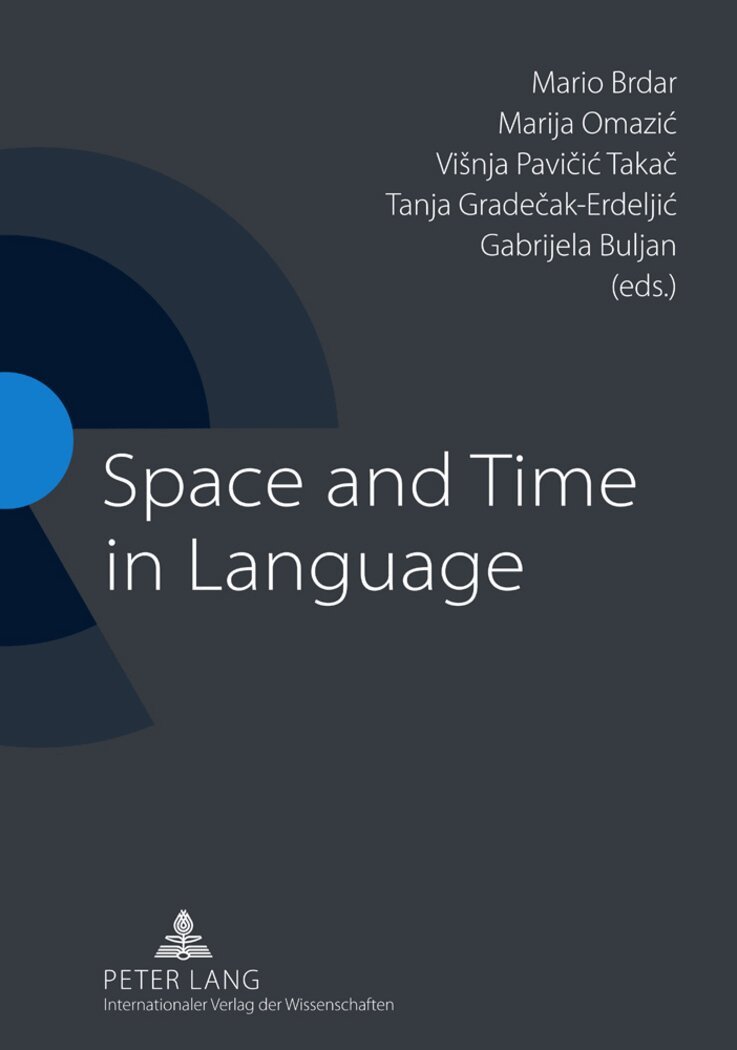
All human activity takes place in space and time in one way or another, which is consequently reflected in our language. We not only talk about space and time but also cannot but ground our linguistic activity in space and time. Furthermore, space and time are closely, although asymmetrically, related in our experience and we often think and talk about one in terms of the other. Specifically, time is conceived in terms of space far more frequently than vice versa. The volume contains a selection of essays that are revised versions of papers presented at the 23rd annual conference of the Croatian Applied Linguistics Society (CALS), entitled «Space and Time in Language: Language in Space and Time», which took place from 21 to 23 May 2009 in Osijek (Croatia).