Vito Adriaensens - Böcker
Visar alla böcker från författaren Vito Adriaensens. Handla med fri frakt och snabb leverans.
5 produkter
5 produkter
453 kr
Skickas inom 3-6 vardagar
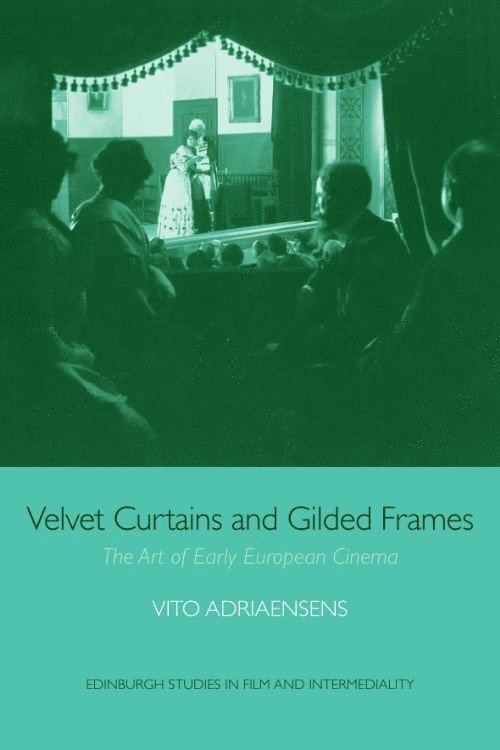
Velvet Curtains and Gilded Frames explores the intermedial context of early cinema. It tackles the first European feature films' intricate relationship with its sister arts to reveal that the period referred to by historians as the "long nineteenth century" was one in which Bourgeois Realism reigned supreme. The nineteenth-century rise of the middle class coincided with realism becoming the dominant artistic mode in both form and content, leading to a revival of genre painting in the art academies; the supremacy of the social melodrama on the stage; and the advent of Pictorialism in photography. In its quest for artistic legitimacy, European filmmakers sought to win over middle-class audiences with films based on popular works of art - the first "art films" - by employing similar visual and narrative strategies as its artistic counterparts.
1 179 kr
Skickas
Analyzes the visual and cultural context of Europe's first feature films from 19th century painting to pictorial photographySheds new light on the late 19th and early 20th century's cultural contextInnovatively brings together different media, their artistic traditions, and their respective theoretical and discursive paradigmsPresents an alternative history of early European cinema by analyzing it from an inclusive art historical perspectiveThoroughly explores the first European feature films' cinematic form and functionVelvet Curtains and Gilded Frames explores the intermedial context of early cinema. It tackles the first European feature films' intricate relationship with its sister arts to reveal that the period referred to by historians as the long nineteenth century" was one in which Bourgeois Realism reigned supreme. The nineteenth-century rise of the middle class coincided with realism becoming the dominant artistic mode in both form and content, leading to a revival of genre painting in the art academies; the supremacy of the social melodrama on the stage; and the advent of Pictorialism in photography. In its quest for artistic legitimacy, European filmmakers sought to win over middle-class audiences with films based on popular works of art - the first "art films" - by employing similar visual and narrative strategies as its artistic counterparts."
1 942 kr
Skickas inom 3-6 vardagar
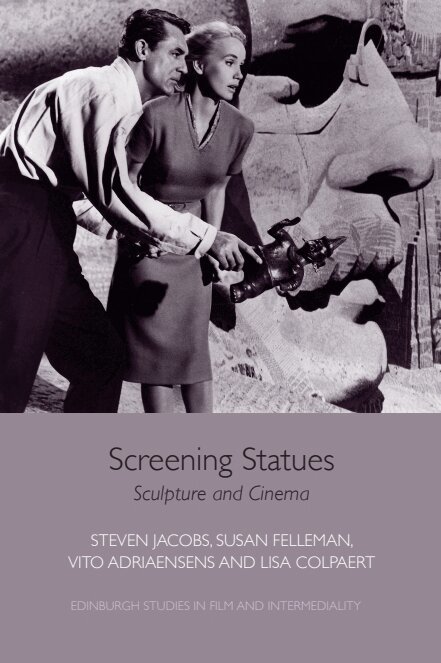
Screening Statues: Sculpture and Cinema is the first book to focus on the relationship between sculpture and the silver screen. It covers a broad range of magical, mystical and phenomenological interactions between the two media, from early film's eroticized tableaux vivants to enigmatic sculptures in modernist cinema. Sculptures are literally brought to life on the silver screen, while living people are turned into, or trapped inside, statuary. The book examines key sculptural motifs and cinematic sculpture in film history through a series of case studies and through an extensive reference gallery of 150 different films. Considering the work of directors like Georges Melies, Jean Cocteau and Alain Resnais, as well as films like House of Wax, Jason and the Argonauts and Clash of the Titans, this is an innovative exploration of two different media, their artistic traditions and their respective theoretical paradigms.
318 kr
Skickas
This book examines the impact since 1600 of out migration from Scotland on the homeland, the migrants, and the destinations in which they settled. It does so through a focus on the under-researched themes of slavery, cross-cultural encounters, economics, war, tourism, and the modern diaspora since 1945.
569 kr
Skickas inom 3-6 vardagar
Screening Statues: Sculpture and Cinema is the first book to focus on the relationship between sculpture and the silver screen. It covers a broad range of magical, mystical and phenomenological interactions between the two media, from early film’s eroticized tableaux vivants to enigmatic sculptures in modernist cinema. Sculptures are literally brought to life on the silver screen, while living people are turned into, or trapped inside, statuary. The book examines key sculptural motifs and cinematic sculpture in film history through a series of case studies and through an extensive reference gallery of 150 different films. Considering the work of directors like Georges Méliès, Jean Cocteau and Alain Resnais, as well as films like House of Wax, Jason and the Argonauts and Clash of the Titans, this is an innovative exploration of two different media, their artistic traditions and their respective theoretical paradigms.