Vito N. Ghionna – författare
Visar alla böcker från författaren Vito N. Ghionna. Handla med fri frakt och snabb leverans.
3 produkter
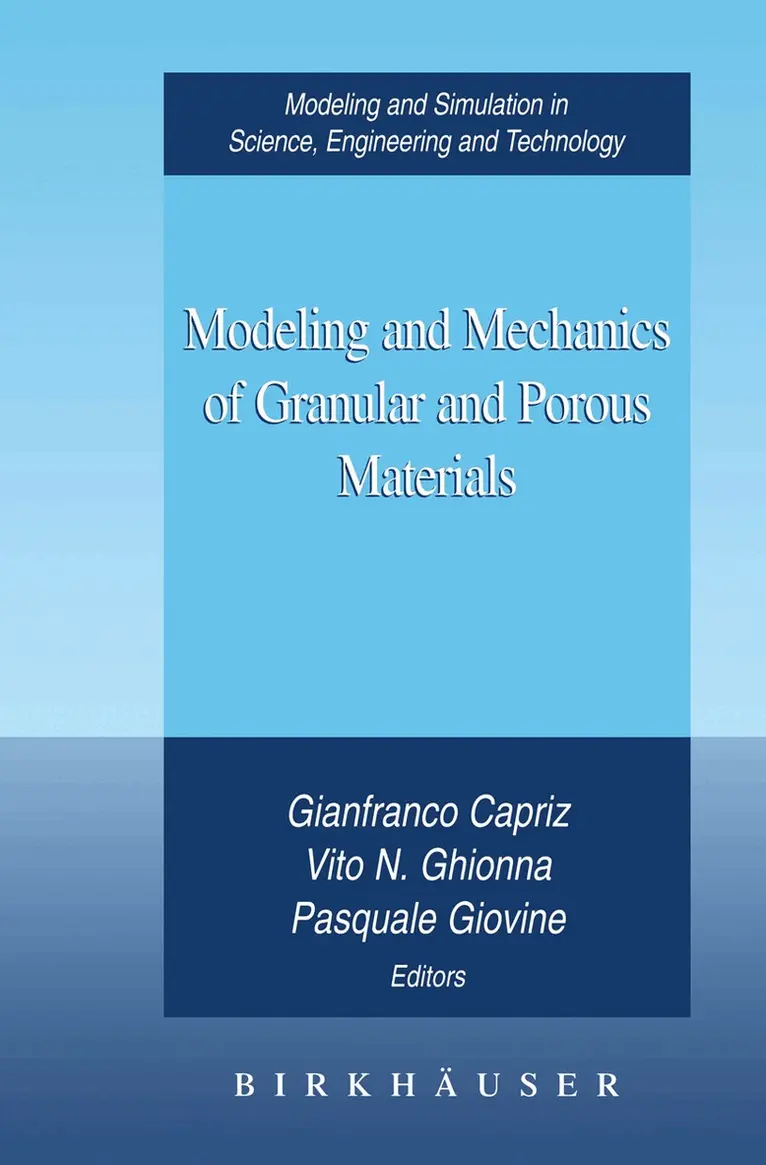
Modeling and Mechanics of Granular and Porous Materials
Av Gianfranco Capriz, Vito N. Ghionna m. fl.
Inbunden, 2002
2188 kr
Lägg i varukorg
Modelling of granular and porous materials in science and engineering touches all kinds of problems arising from the necessity to successfully describe the behaviour of materials naturally existing in our surroundings. The book brings together scientists in engineering and mathematicians interested …
Modeling and Mechanics of Granular and Porous Materials
Av Pasquale Giovine, Vito N. Ghionna m. fl.
E-bok, 2012
2862 kr
Lägg i varukorg
Soils are complex materials: they have a particulate structure and fluids can seep through pores, mechanically interacting with the solid skeleton. Moreover, at a microscopic level, the behaviour of the solid skeleton is highly unstable. External loadings are in fact taken by grain chains which are …
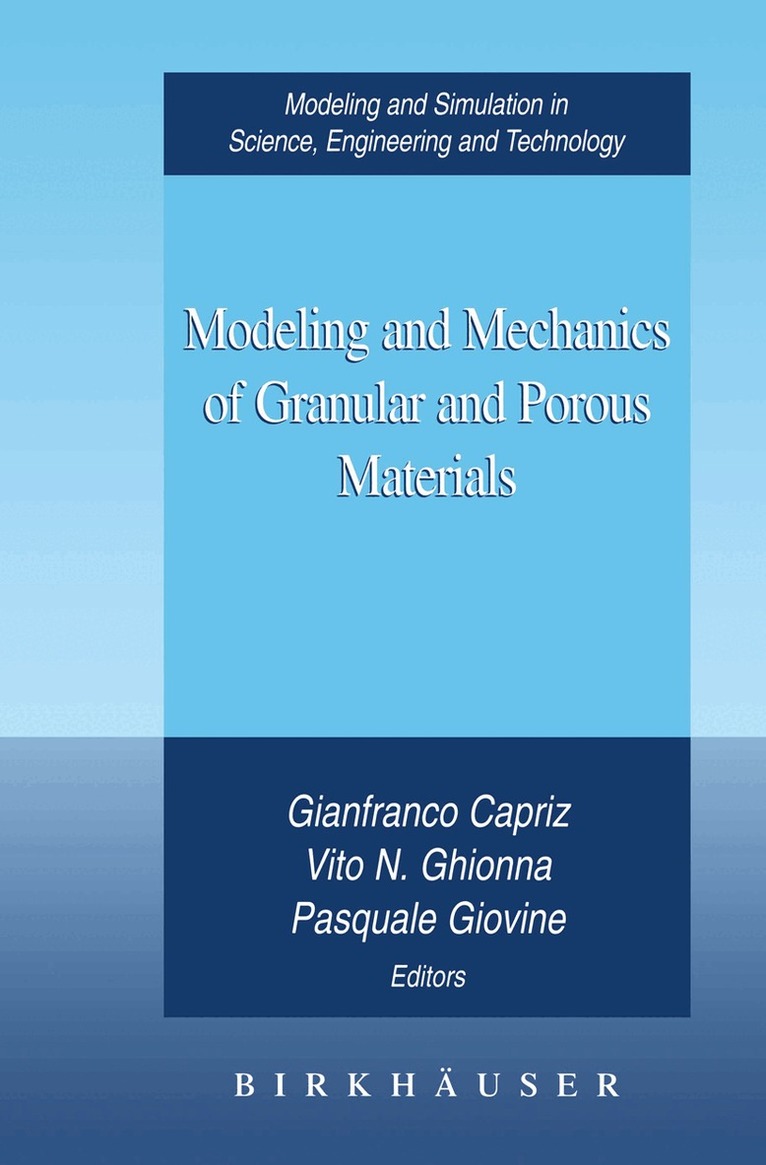
Modeling and Mechanics of Granular and Porous Materials
Av Gianfranco Capriz, Vito N. Ghionna m. fl.
Häftad, 2012
2194 kr
Lägg i varukorg
Soils are complex materials: they have a particulate structure and fluids can seep through pores, mechanically interacting with the solid skeleton. Moreover, at a microscopic level, the behaviour of the solid skeleton is highly unstable. External loadings are in fact taken by grain chains which are …