Vittorio Gallese – författare
Visar alla böcker från författaren Vittorio Gallese. Handla med fri frakt och snabb leverans.
4 produkter
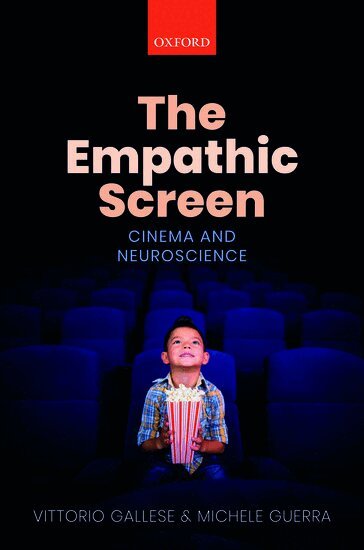
The Empathic Screen
Cinema and Neuroscience
Av Vittorio Gallese, Michele Guerra
Inbunden, 2019
1091 kr
Lägg i varukorg
Why do people go to the movies? What does it mean to watch a movie? To what extent is the perceived fictional nature of movies different from our daily perception of the real world?We live in a time where the power of images has strongly invaded our everyday life, and we need new instruments and …
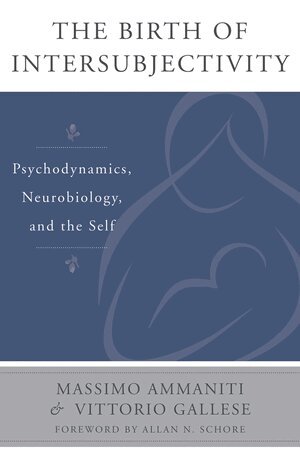
Birth of Intersubjectivity
Psychodynamics, Neurobiology, and the Self
Av Massimo Ammaniti, Vittorio Gallese
Inbunden, 2014
477 kr
Lägg i varukorg
This book, the exciting collaboration of a developmental psychoanalyst at the forefront of functional magnetic resonance attachment research and a leading neurobiological researcher on mirror neurons, presents a fresh and innovative look at intersubjectivity from a neurobiological and developmental …
Empathic Screen
Cinema and Neuroscience
Av Michele Guerra, Vittorio Gallese
E-bok, 2019
779 kr
Lägg i varukorg
Why do people go to the movies? What does it mean to watch a movie? To what extent is the perceived fictional nature of movies different from our daily perception of the real world? We live in a time where the power of images has strongly invaded our everyday life, and we need new instruments and …
Empathic Screen
Cinema and Neuroscience
Av Michele Guerra, Vittorio Gallese
E-bok, 2019
779 kr
Lägg i varukorg
Why do people go to the movies? What does it mean to watch a movie? To what extent is the perceived fictional nature of movies different from our daily perception of the real world? We live in a time where the power of images has strongly invaded our everyday life, and we need new instruments and …