V.K. Astashev - Böcker
Visar alla böcker från författaren V.K. Astashev. Handla med fri frakt och snabb leverans.
4 produkter
4 produkter
1 588 kr
Skickas inom 10-15 vardagar
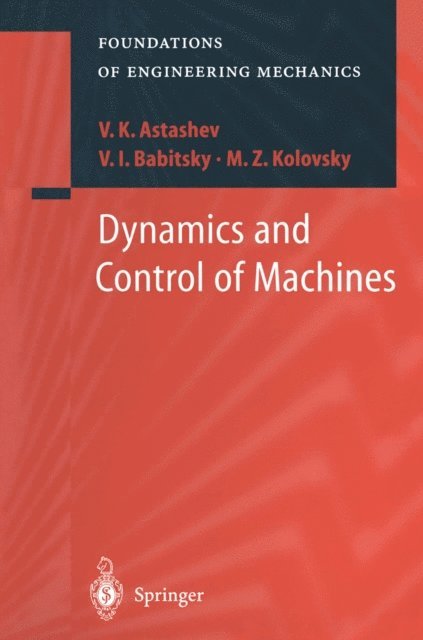
Basic models and concepts of machine dynamics and motion control are presented in the order of the principal steps of machine design. The machine is treated as a coupled dynamical system, including drive, mechanisms and controller, to reveal its behavior at different regimes through the interaction of its units under dynamic and processing loads.
1 588 kr
Skickas inom 10-15 vardagar
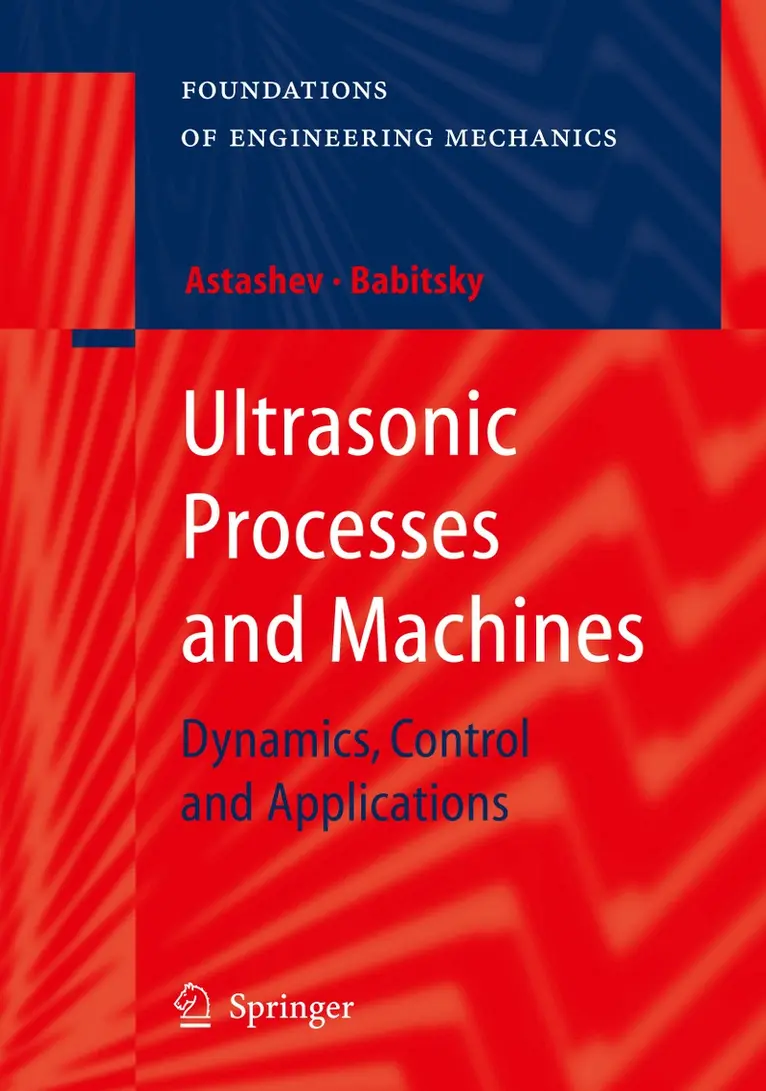
I don’t mind your thinking slowly, I mind your publishing faster than you think. Wolfgang Pauli (1900-1958) Technologies that use high frequency (ultrasonic) vibration to intensify processes are gaining wide recognition in scienti?c and industrial envir- ments. By superimposing high frequency vibration, the basic mechanical - haviour of many processesand materialsis seen to be transformed.This leads to the developmentof newmachines and processeswith advancedcharacter- tics. Despite the fact that ultrasonic technology has been employed for many years, there is no generalised understanding of ultrasonic machines and p- cesses.Theirdesignanddevelopmenthasmainlybeenachievedusingheuristic methods based on linear acoustical considerations. This book is intended to bridge the gap between the theory and prac- cal use of ultrasonic technology. It presents generalised foundations for the dynamics and control of ultrasonic processing systems. The main concept presented is to consider ultrasonic systems as special kinds of vibratory - chines that function by exploiting nonlinear dynamic processes. This assumes coupled considerations between the ultrasonic vibration’s in?uence on the processes, and the consequence of the transformed processing loads on the excitation and control of the working tools’ vibration. Analysis is conducted in a uni?ed manner and is based on structural and frequency methods that have become well established in engineering practice. These methods are adjusted by the authors for the application to nonlinear ultrasonic systems.
1 588 kr
Skickas inom 10-15 vardagar
I don’t mind your thinking slowly, I mind your publishing faster than you think. Wolfgang Pauli (1900-1958) Technologies that use high frequency (ultrasonic) vibration to intensify processes are gaining wide recognition in scienti?c and industrial envir- ments. By superimposing high frequency vibration, the basic mechanical - haviour of many processesand materialsis seen to be transformed.This leads to the developmentof newmachines and processeswith advancedcharacter- tics. Despite the fact that ultrasonic technology has been employed for many years, there is no generalised understanding of ultrasonic machines and p- cesses.Theirdesignanddevelopmenthasmainlybeenachievedusingheuristic methods based on linear acoustical considerations. This book is intended to bridge the gap between the theory and prac- cal use of ultrasonic technology. It presents generalised foundations for the dynamics and control of ultrasonic processing systems. The main concept presented is to consider ultrasonic systems as special kinds of vibratory - chines that function by exploiting nonlinear dynamic processes. This assumes coupled considerations between the ultrasonic vibration’s in?uence on the processes, and the consequence of the transformed processing loads on the excitation and control of the working tools’ vibration. Analysis is conducted in a uni?ed manner and is based on structural and frequency methods that have become well established in engineering practice. These methods are adjusted by the authors for the application to nonlinear ultrasonic systems.
1 588 kr
Skickas inom 10-15 vardagar
Basic models and concepts of machine dynamics and motion control are presented in the order of the principal steps of machine design. The machine is treated as a coupled dynamical system, including drive, mechanisms and controller, to reveal its behavior at different regimes through the interaction of its units under dynamic and processing loads. The main dynamic effects in machines are explained. The influence of component compliances on accuracy, stability and efficiency of the machines is analyzed. Methods for decreasing internal and external vibration activity of machines are described. The dynamic features of digital control are considered. Special attention is given to machines with intense dynamic behavior: resonant and hand-held percussion ones. Targeted to engineers as well as to lecturers and advanced students.