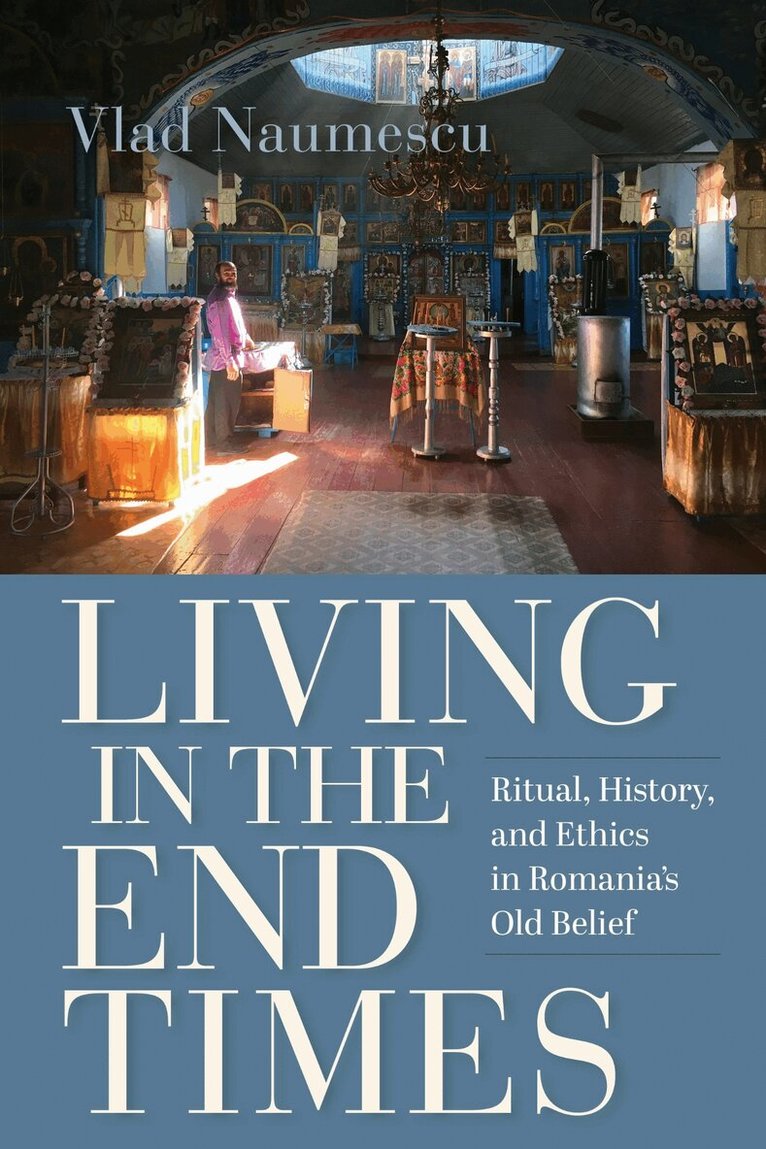
In the Danube Delta, on the border between Romania and Ukraine, a shrinking community of Russian Old Believers – Orthodox Christians who rejected seventeenth-century religious reforms in Russia – has struggled for survival, withdrawn from the world while simultaneously trying to engage with it. Waves of social change, from internal divisions and migration to external secularization and modernization, have reinforced this community's commitment to the old Orthodox rites and customs, as well as their long-standing conviction that the end times are imminent.Living in the End Times offers an in-depth ethnographic and historical exploration of the persistence of this community in contemporary Romania. Vlad Naumescu examines their ways of making history, pursuing continuity, and inscribing their historical experience into a narrative of radical hope. The interwoven life stories of the Old Believers challenge broader dichotomies of the secular and the religious, socialist and post-socialist, and continuity and rupture, revealing a community whose obligation to bear the past sanctifies the present and gives scope to the future. Against the threats of spiritual doubt, ritual failure, and lacking priesthood that have defined centuries of religious crisis, Old Belief has already provided its adherents the means to turn rupture into continuity, loss into creative transformation, and endings into beginnings. Living in the End Times reveals how the most orthodox of Eastern Christians became modern by staying true to their faith, inviting us to reconsider the nature of orthodoxy, historicity and modernity.
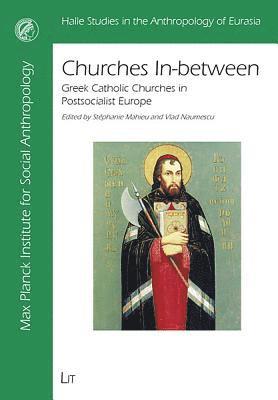
Eastern Rite Catholic Churches occupy an ambiguous position between two religious worlds and challenge the idea of a sharp religious and political dichotomy between Eastern and Western Europe. After decades of repression under socialism, the churches known popularly in Central Europe as Greek Catholic have successfully undertaken a process of revitalisation. This has been marked by competition with other churches, both over material properties and over people's souls. How can a Greek Catholic "identity" be recreated? Can these churches provide a distinctive "product" for the new "religious marketplace"? By exploring such questions the contributors to this volume shed fresh light on the social and political shaping of religious phenomena in the era of postsocialism and also on more general issues of belief, practice, transmission and syncretism.
In the Danube Delta, on the border between Romania and Ukraine, a shrinking community of Russian Old Believers – Orthodox Christians who rejected seventeenth-century religious reforms in Russia – has struggled for survival, withdrawn from the world while simultaneously trying to engage with it. Waves of social change, from internal divisions and migration to external secularization and modernization, have reinforced this community's commitment to the old Orthodox rites and customs, as well as their long-standing conviction that the end times are imminent.Living in the End Times offers an in-depth ethnographic and historical exploration of the persistence of this community in contemporary Romania. Vlad Naumescu examines their ways of making history, pursuing continuity, and inscribing their historical experience into a narrative of radical hope. The interwoven life stories of the Old Believers challenge broader dichotomies of the secular and the religious, socialist and post-socialist, and continuity and rupture, revealing a community whose obligation to bear the past sanctifies the present and gives scope to the future. Against the threats of spiritual doubt, ritual failure, and lacking priesthood that have defined centuries of religious crisis, Old Belief has already provided its adherents the means to turn rupture into continuity, loss into creative transformation, and endings into beginnings. Living in the End Times reveals how the most orthodox of Eastern Christians became modern by staying true to their faith, inviting us to reconsider the nature of orthodoxy, historicity and modernity.
Eastern Rite Catholic Churches occupy an ambiguous position between two religious worlds and challenge the idea of a sharp religious and political dichotomy between Eastern and Western Europe. After decades of repression under socialism, the churches known popularly in Central Europe as Greek Catholic have successfully undertaken a process of revitalisation. This has been marked by competition with other churches, both over material properties and over people's souls. How can a Greek Catholic "identity" be recreated? Can these churches provide a distinctive "product" for the new "religious marketplace"? By exploring such questions the contributors to this volume shed fresh light on the social and political shaping of religious phenomena in the era of postsocialism and also on more general issues of belief, practice, transmission and syncretism.