Vladimir Biti - Böcker
Visar alla böcker från författaren Vladimir Biti. Handla med fri frakt och snabb leverans.
10 produkter
10 produkter
2 246 kr
Skickas inom 10-15 vardagar
The book presents Winfried Georg Sebald and Ian McEwan as paradigmatic post-imperial writers who enmeshed in the hierarchies of power inherited from their imperial times, strive to disentangle themselves from that burdensome legacy. To achieve this, they undertake a subtle detachment from the analogously implicated subject positions of their protagonists. In Sebald’s works, these positions are closer to the historical victims of the Third Reich who used to suppress their past experiences, whereas in McEwan’s works, they incline toward the systemic ‘beneficiaries’ of the British Empire who used to overlook their present privileges. However, in distinction to their protagonists’ denied involvements, both authors recognize their implication in their protagonists’ pasts and presents. Such a detachment from familiar protagonists requires the consent of unknown and scattered readers with whom they forge a long-distance solidarity, connective association or complicitous alliance. Thus, to exempt themselves from one complicity, they enter another one.
776 kr
Kommande
The book presents Winfried Georg Sebald and Ian McEwan as paradigmatic post-imperial writers who enmeshed in the hierarchies of power inherited from their imperial times, strive to disentangle themselves from that burdensome legacy. To achieve this, they undertake a subtle detachment from the analogously implicated subject positions of their protagonists. In Sebald’s works, these positions are closer to the historical victims of the Third Reich who used to suppress their past experiences, whereas in McEwan’s works, they incline toward the systemic ‘beneficiaries’ of the British Empire who used to overlook their present privileges. However, in distinction to their protagonists’ denied involvements, both authors recognize their implication in their protagonists’ pasts and presents. Such a detachment from familiar protagonists requires the consent of unknown and scattered readers with whom they forge a long-distance solidarity, connective association or complicitous alliance. Thus, to exempt themselves from one complicity, they enter another one.
1 802 kr
Skickas inom 5-8 vardagar
Focused on the recently hotly debated topic at the crossroads of various human and social sciences, this book investigates the emergence of the cosmopolitan idea of literature and its impact on the reconfiguration of the European and non-European political spaces. The birthplace of this idea is its designers’ traumatic experience as induced by the disconcerting condition of their abode.The thesis is that the eighteenth and nineteenth century’s cosmopolitan projects that grow out of such deep frustrations trace the twentieth century’s global democracy. This hidden origin of cosmopolitan projects dismantles the usual European representation of modernization as universal progress as myopic. Rather than being a generous action of prominent subjects such as Voltaire, Kant, and Goethe, or Bakhtin, Derrida and Deleuze, cosmopolitanism is an enforced reaction of the instances dispossessed by injury that search for the ways of healing it. Yet as soon as their remedy establishes itself as the ground for universal reconciliation, it risks suppressing other’s trauma, i.e. turns from politics into a police. Articulating the author’s position in the recent debates on the structure of democracy, the epilogue suggests an alternative strategy.
Del 7 - Culture & Conflict
Tracing Global Democracy
Literature, Theory, and the Politics of Trauma
Häftad, Engelska, 2017
333 kr
Skickas inom 5-8 vardagar
Focused on the recently hotly debated topic at the crossroads of various human and social sciences, this book investigates the emergence of the cosmopolitan idea of literature and its impact on the reconfiguration of the European and non-European political spaces. The birthplace of this idea is its designers’ traumatic experience as induced by the disconcerting condition of their abode.The thesis is that the eighteenth and nineteenth century’s cosmopolitan projects that grow out of such deep frustrations trace the twentieth century’s global democracy. This hidden origin of cosmopolitan projects dismantles the usual European representation of modernization as universal progress as myopic. Rather than being a generous action of prominent subjects such as Voltaire, Kant, and Goethe, or Bakhtin, Derrida and Deleuze, cosmopolitanism is an enforced reaction of the instances dispossessed by injury that search for the ways of healing it. Yet as soon as their remedy establishes itself as the ground for universal reconciliation, it risks suppressing other’s trauma, i.e. turns from politics into a police. Articulating the author’s position in the recent debates on the structure of democracy, the epilogue suggests an alternative strategy.
1 713 kr
Skickas inom 5-8 vardagar
This book proposes a new departure point for the investigation of transnational literary alliances: the traumatic constellation of translatio imperii, which followed the dissolution of the East-Central European empires in the 1920s and the crumbling of the West European colonial empires in the 1950s. To prevent their breakdown, the former transitioned from a ‘sovereign’ to a ‘disciplinary’ mode of administration of their peripheries, the latter from the merciless assimilation of their colonial constituencies to their affirmative regeneration. This book treats Franz Kafka as the writer of the first transition, prefiguring J. M. Coetzee as the writer of the second. In a series of close readings, it investigates the particular ways in which the restructuring of power relations between the agencies in their fictions is a response to the delineated post-imperial reconfiguration of the new countries’ governmental techniques. By displacing their narrative authority beyond the reach of their readers, they laid bare the sudden withdrawal of transcendental guarantees from the world of human commonality. This entailed an unstable and elusive configuration of their fictional worlds as a key feature of post-imperial literature.
Del 20 - Culture & Conflict
Post-imperial Literature
Translatio Imperii in Kafka and Coetzee
Häftad, Engelska, 2024
242 kr
Skickas inom 3-6 vardagar
This book proposes a new departure point for the investigation of transnational literary alliances: the traumatic constellation of translatio imperii, which followed the dissolution of the East-Central European empires in the 1920s and the crumbling of the West European colonial empires in the 1950s. To prevent their breakdown, the former transitioned from a ‘sovereign’ to a ‘disciplinary’ mode of administration of their peripheries, the latter from the merciless assimilation of their colonial constituencies to their affirmative regeneration. This book treats Franz Kafka as the writer of the first transition, prefiguring J. M. Coetzee as the writer of the second. In a series of close readings, it investigates the particular ways in which the restructuring of power relations between the agencies in their fictions is a response to the delineated post-imperial reconfiguration of the new countries’ governmental techniques. By displacing their narrative authority beyond the reach of their readers, they laid bare the sudden withdrawal of transcendental guarantees from the world of human commonality. This entailed an unstable and elusive configuration of their fictional worlds as a key feature of post-imperial literature.
618 kr
Tillfälligt slut
Del 19 - Balkan Studies Library
Claiming the Dispossession
The Politics of Hi/storytelling in Post-imperial Europe
Inbunden, Engelska, 2017
1 763 kr
Skickas inom 5-8 vardagar
With the Treaty of Versailles, the Western nation-state powers introduced into the East Central European region the principle of national self-determination. This principle was buttressed by frustrated native elites who regarded the establishment of their respective nation-states as a welcome opportunity for their own affirmation. They desired sovereignty but were prevented from accomplishing it by their multiple dispossession. National elites started to blame each other for this humiliating condition. The successor states were dispossessed of power, territories, and glory. The new nation-states were frustrated by their devastating condition. The dispersed Jews were left without the imperial protection. This embarrassing state gave rise to collective (historical) and individual (fictional) narratives of dispossession. This volume investigates their intended and unintended interaction.Contributors are: Davor Beganović, Vladimir Biti, Zrinka Božić-Blanuša, Marko Juvan, Bernarda Katušić, Nataša Kovačević, Petr Kučera, Aleksandar Mijatović, Guido Snel, and Stijn Vervaet.
1 712 kr
Skickas inom 5-8 vardagar
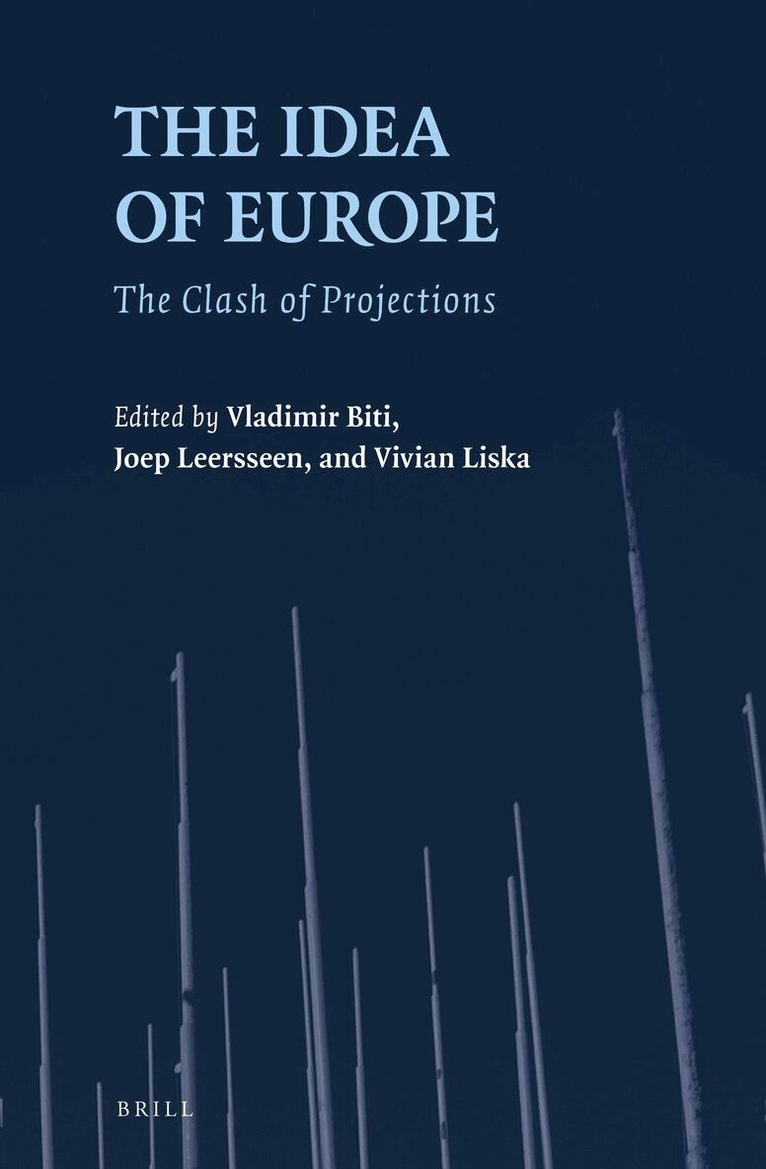
Recent developments within and beyond Europe have variously challenged the very idea of Europe, calling it into question and demanding reconsideration of its underlying assumptions. The essays collected here reassess the contemporary position of a perceived “European” identity in the world, overshadowed as it is by the long antecedents and current crisis of triumphalist Eurocentrism. While Eurocentrism itself is still a potent mind-set, it is now increasingly challenged by intra-European crises and by the emergence of autonomously non-European perceptions of Europe. The perspectives assembled here come from the fields of political, cultural and literary history, contemporary history, social and political science and philosophy.Contributors are: Damir Arsenijević, Luiza Bialasiewicz, Vladimir Biti, Lucia Boldrini, Gerard Delanty, César Domínguez, Nikol Dziub, Rodolphe Gasché, Aage Hansen-Löve, Shigemi Inaga, Joep Leerssen, and Vivian Liska.
Del 22 - Studia Imagologica
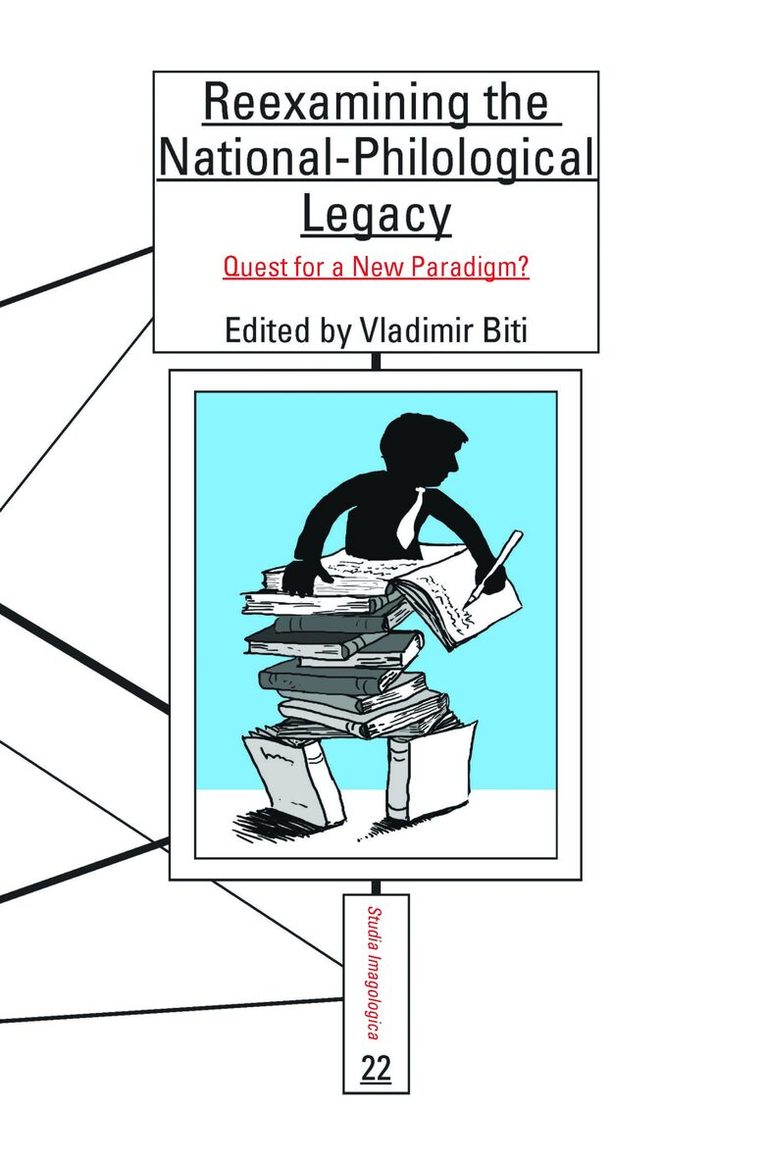
Reexamining the National-Philological Legacy
Quest for a New Paradigm?
Häftad, Engelska, 2014
1 523 kr
Skickas inom 5-8 vardagar
Has thinking, working and teaching in terms of national literatures become obsolete in today’s globalized world of hyphenated languages, literatures and cultures? Since the rise of modern European national philologies coincided with the emergence of modern European nation-states, does the dissolution of the latter in the European supranational unity imply the suspension of the former? Or we must, on the contrary, consider the fact that today’s Europe is not only postnational but, in its re-nationalized East-Central-European part, post-multinational as well, i.e., emerging out of the breakdown of the postimperial state formations such as the Soviet Union, Czechoslovakia and Yugoslavia?