Vladimir Hachinski – författare
Visar alla böcker från författaren Vladimir Hachinski. Handla med fri frakt och snabb leverans.
2 produkter
2 produkter
Inbunden, Engelska, 2003
4 842 kr
Skickas inom 7-10 vardagar
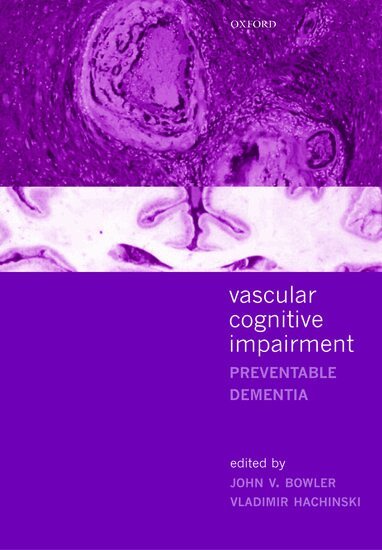
Vascular dementia, caused by multiple small strokes, is the second commonest cause of dementia behind Alzheimer's disease. In recent years there has been a radical reappraisal of the concept of vascular dementia and a move away from an Alzheimer-based diagnostic paradigm towards one more appropriately tailored for vascular disease. Vascular Cognitive Impairment presents a new definition for this class of cerebrovascular process with an emphasis on early detection, prompt treatment and the prevention of disease progression.Vascular Cognitive Impairment: Preventable Dementia presents an overview of the current state of our knowledge in this field. It reviews the historical background, prevalence, risk factors and economic consequences of the condition. In addition, the book summarises our knowledge of the pathological process, describing insight derived from genetic and imaging studies, before examining opportunities for early diagnosis, prevention and the options for management, both now, and as a result of ongoing clinical trials.With contributions from an expert team of international contributors, this book provides a comprehensive summary of the state-of-the-art in this field, providing a framework for a new understanding of a complex, disabling but Preventable condition.
Inbunden, Engelska, 2001
1 147 kr
Tillfälligt slut
The treatment of stroke remains ineffective, and prevention is the key issue for this common disease. Norris and Hachinski have recruited an international group of experts to provide a comprehensive, critical review of the evidence on the primary and secondary prevention of cerebrovascular disease and to translate this information into clinical practice. The authors present fresh information on established risk factors such as atrial fibrillation, smoking and hypertension and on new risk factors such as homocysteinemia and the paradoxical role of alcohol. They cover the protective effects of lifestyle changes, diet, exercise, and estrogen. Under secondary prevention, they deal with aspirin, antiplatelet therapy, surgical measures to prevent stroke, angioplasty and stenting, and the importance of cardiac anomalies increasingly revealed by high-definition imaging. While endarterectomy remains controversial for asymptomatic carotid stenosis, it has been clearly defined as the single most effective strategy in secondary prevention.In a concluding section that will be particularly valuable to clinical readers, the authors provide a lucid, balanced discussion of how the findings from clinical trials, where patients are highly selected, closely monitored, and given the highest standard of care, can be effectively applied in the everyday practice of medicine.