Vladimir Kopta – Författare
Visar alla böcker från författaren Vladimir Kopta. Handla med fri frakt och snabb leverans.
3 produkter
3 produkter
591 kr
Skickas inom 10-15 vardagar
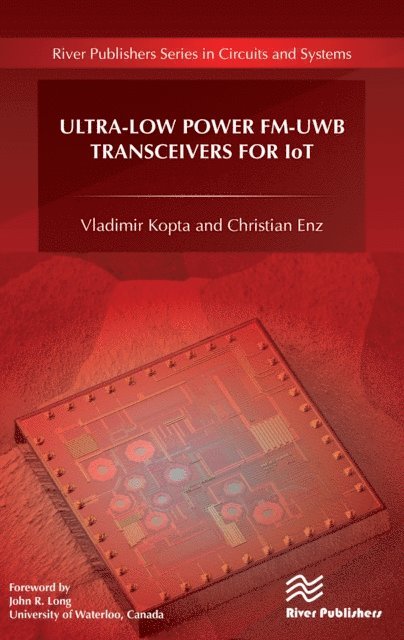
Over the past two decades we have witnessed the increasing popularity of the internet of things. The vision of billions of connected objects, able to interact with their environment, is the key driver directing the development of future communication devices. Today, power consumption as well as the cost and size of radios remain some of the key obstacles towards fulfilling this vision. Ultra-Low Power FM-UWB Transceivers for IoT presents the latest developments in the field of low power wireless communication. It promotes the FM-UWB modulation scheme as a candidate for short range communication in different IoT scenarios. The FM-UWB has the potential to provide exactly what is missing today. This spread spectrum technique enables significant reduction in transceiver complexity, making it smaller, cheaper and more energy efficient than most alternative options.The book provides an overview of both circuit-level and architectural techniques used in low power radio design, with a comprehensive study of state-of-the-art examples. It summarizes key theoretical aspects of FM-UWB with a glimpse at potential future research directions. Finally, it gives an insight into a full FM-UWB transceiver design, from system level specifications down to transistor level design, demonstrating the modern power reduction circuit techniques.Ultra-Low Power FM-UWB Transceivers for IoT is a perfect text and reference for engineers working in RF IC design and wireless communication, as well as academic staff and graduate students engaged in low power communication systems research.
852 kr
Skickas
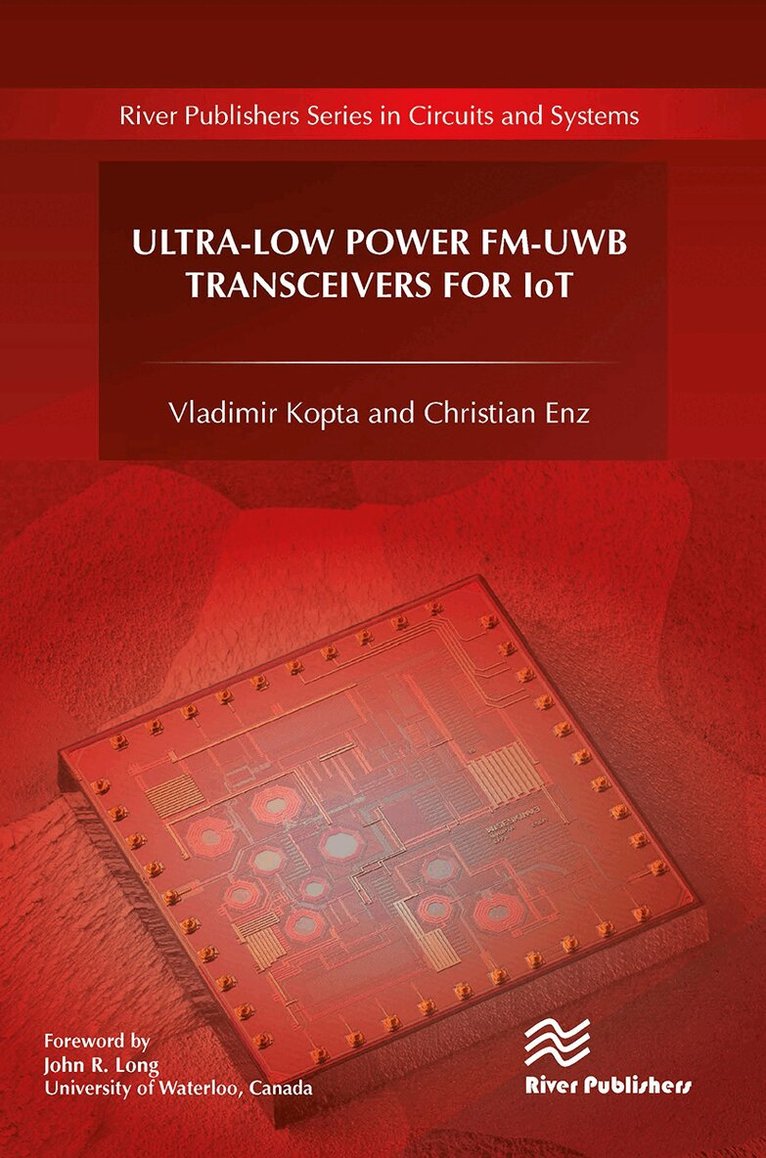
Over the past two decades we have witnessed the increasing popularity of the internet of things. The vision of billions of connected objects, able to interact with their environment, is the key driver directing the development of future communication devices. Today, power consumption as well as the cost and size of radios remain some of the key obstacles towards fulfilling this vision. Ultra-Low Power FM-UWB Transceivers for IoT presents the latest developments in the field of low power wireless communication. It promotes the FM-UWB modulation scheme as a candidate for short range communication in different IoT scenarios. The FM-UWB has the potential to provide exactly what is missing today. This spread spectrum technique enables significant reduction in transceiver complexity, making it smaller, cheaper and more energy efficient than most alternative options.The book provides an overview of both circuit-level and architectural techniques used in low power radio design, with a comprehensive study of state-of-the-art examples. It summarizes key theoretical aspects of FM-UWB with a glimpse at potential future research directions. Finally, it gives an insight into a full FM-UWB transceiver design, from system level specifications down to transistor level design, demonstrating the modern power reduction circuit techniques.Ultra-Low Power FM-UWB Transceivers for IoT is a perfect text and reference for engineers working in RF IC design and wireless communication, as well as academic staff and graduate students engaged in low power communication systems research.
843 kr
Skickas
This book is an introduction to the topic of integrated power management systems. More specifically, it targets the battery powered systems on a chip that provide different functions such as wireless connectivity, sensing (e.g. temperature, pressure, movement), localization, processing, and more. Power management is a crucial part of such systems, as they must provide different power supplies, tailored to the requirements of each sub-block, and must maintain high efficiency in order to allow for a long battery life. The book covers the fundamental principles and guidelines needed to start the design of an integrated power management system, and an overview of practical techniques used in state-of-the-art implementations.Technical topics include:Low-dropout regulators (LDO)Fundamental analysis and design techniquesOverview of modern techniquesSwitching convertersInductive and capacitive DC–DC convertersSteady state efficiency optimizationControl techniquesLow-power techniquesAuxiliary circuits and system integrationVoltage and current referencesClock generatorsSystem interface.It is ideal for fresh undergraduate and graduate students starting their careers, but also useful for experienced electronics engineers that are new to the power management domain and power electronics.