V.W. Berninger - Böcker
Visar alla böcker från författaren V.W. Berninger. Handla med fri frakt och snabb leverans.
5 produkter
5 produkter
1 545 kr
Skickas inom 10-15 vardagar
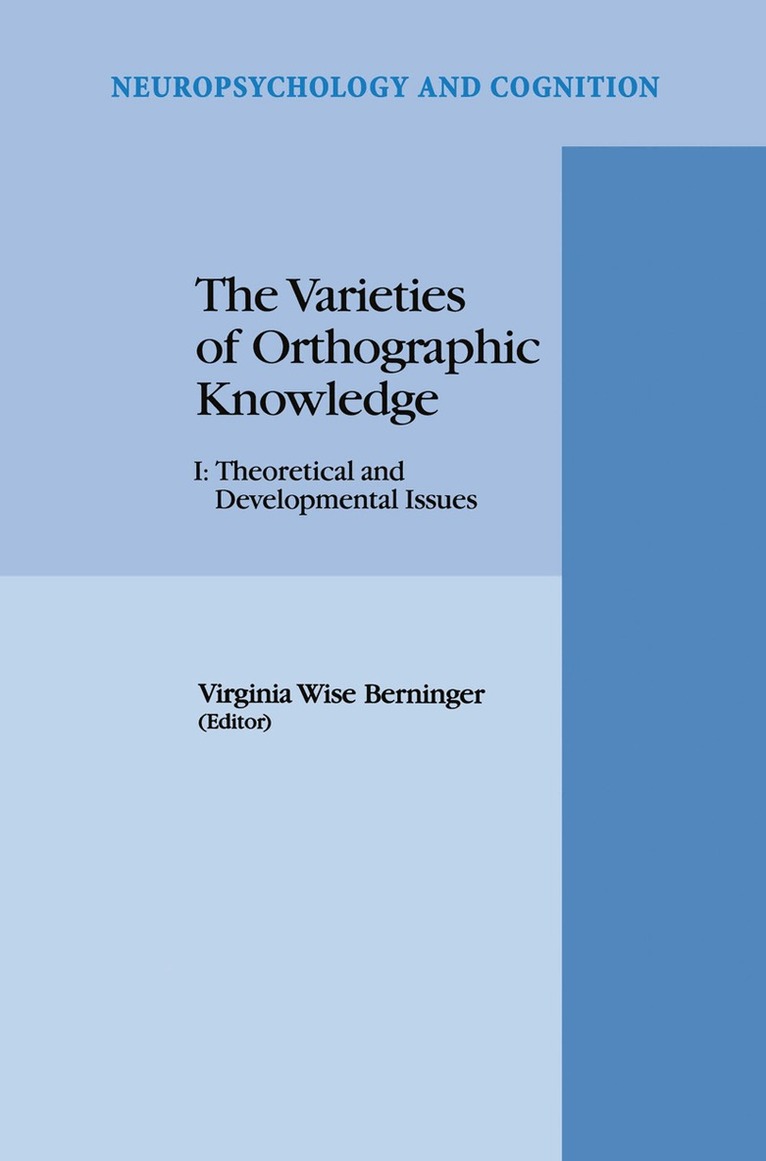
This volume is the first of a two-part series dealing with the theoretical, definitional, methodological and developmental issues involved in investigating the role of orthography in reading and writing. Although research on orthography has a long history in experimental psychology and neuropsychology, it was relatively neglected during the past decade when researchers turned their attention to phonological processes in literacy. However, interest in orthography is re-emerging as the research reported in this series demonstrates. Taken together, the two volumes report evidence for shared and independent genetic pathways, shared and independent electrophysiological brain activity, and shared and independent behavioural indices of orthographic and phonological processes and emphasize the similarities and differences of orthographies across languages. Volume I proposes a theoretical framework based on the multiple dimensions of orthographic knowledge for guiding future research. It should be suitable for basic and applied researchers and graduate students in cognitive and developmental psychology, neuropsychology, linguistics and educators.

2 938 kr
Skickas inom 10-15 vardagar
This volume is the first of a two-part series dealing with the theoretical, definitional, methodological and developmental issues involved in investigating the role of orthography in reading and writing. Although research on orthography has a long history in experimental psychology and neuropsychology, it was relatively neglected during the past decade when researchers turned their attention to phonological processes in literacy. However, interest in orthography is re-emerging as the research reported in this series demonstrates. Taken together, the two volumes report evidence for shared and independent genetic pathways, shared and independent electrophysiological brain activity, and shared and independent behavioural indices of orthographic and phonological processes and emphasize the similarities and differences of orthographies across languages. Volume I proposes a theoretical framework based on the multiple dimensions of orthographic knowledge for guiding future research. It is suitable for basic and applied researchers and graduate students in cognitive and developmental psychology, neuropsychology, linguistics and educators.
Varieties of Orthographic Knowledge
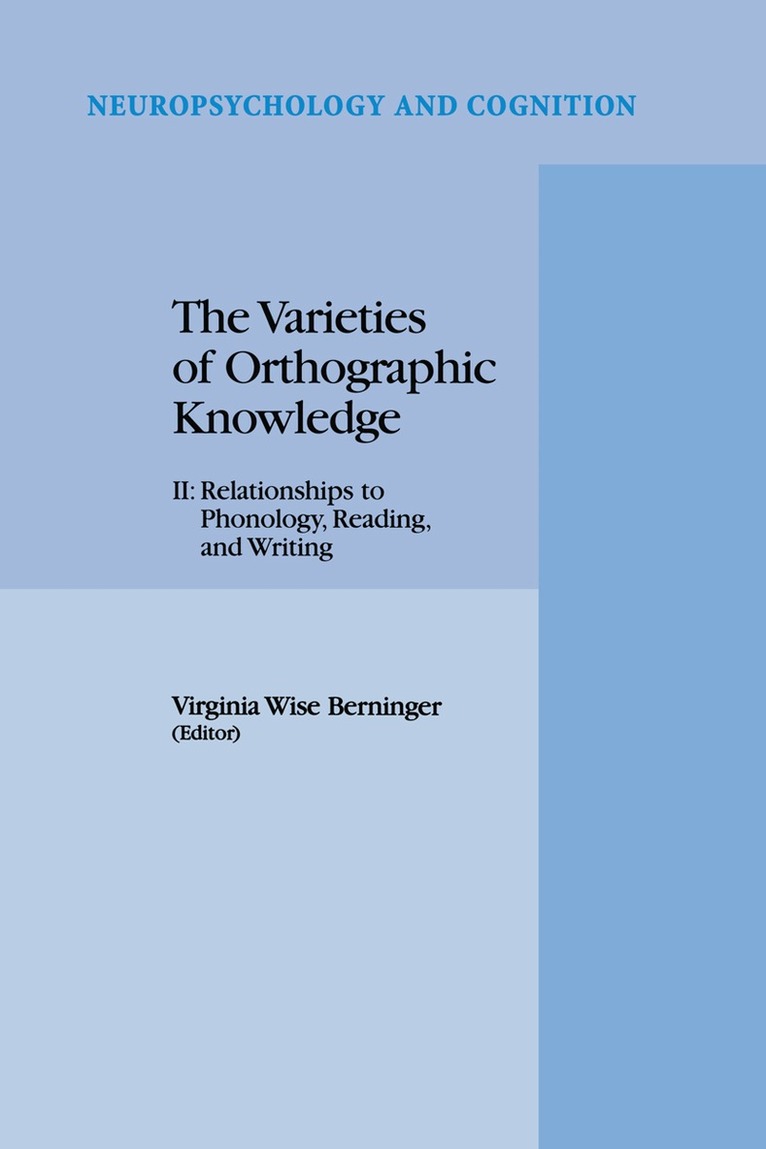
II: Relationships to Phonology, Reading, and Writing
Inbunden, Engelska, 1995
1 637 kr
Skickas inom 10-15 vardagar
This volume is the second of a two-part set dealing with the theoretical, definitional, methodological and developmental issues involved in investigating the role of orthography in reading and writing. Taken together, the two volumes report evidence for shared and independent genetic pathways, shared and independent electrophysiological brain activity, and shared/independent behavioural indices of orthographic and phonological processes as well as emphasize the similarities/differences of orthographies across languages. Volume II proposes a theoretical framework based on the multiple dimensions of orthographic knowledge for guiding future research on the relationship of orthography to phonology, reading, and writing.
1 545 kr
Skickas inom 10-15 vardagar
This volume is the first of a two-part series dealing with the theoretical, definitional, methodological, and developmental issues involved in investigating the role of orthography in reading and writing. Although research on orthography has a long history in experimental psychology and neuropsychology, it was relatively neglected during the past decade when researchers turned their attention to phonological processes in literacy. However, interest in orthography is reemerging as the research reported in this series demonstrates. Taken together, the two volumes report evidence for shared and independent genetic pathways, shared and independent electrophysiological brain activity, and shared and independent behavioral indices of orthographic and phonological processes and emphasize the similarities and differences of orthographies across languages. Volume I proposes a theoretical framework based on the multiple dimensions of orthographic knowledge for guiding future research. For basic and applied researchers and graduate students in cognitive and developmental psychology, neuropsychology, linguistics, and education.
Del 11 - Neuropsychology and Cognition
Varieties of Orthographic Knowledge
II: Relationships to Phonology, Reading, and Writing
Häftad, Engelska, 2012
1 545 kr
Skickas inom 10-15 vardagar
The role of orthography in reading and writing is not a new topic of inquiry. For example, in 1970 Venezky made a seminal contribution with The Structure of English Orthography in which he showed how both sequential redundancy (probable and permissible letter sequences) and rules of letter-sound correspondence contribute to orthographic structure. In 1972 Kavanagh and Mattingly edited Language by Eye and by Ear which contained important linguistic studies of the orthographic system. In 1980 Ehri introduced the concept of orthographic images, that is, the representation of written words in memory, and proposed that the image is created by an amalgamation of the word's orthographic and phonological In 1981 Taylor described the evolution of properties. orthographies in writing systems-from the earliest logographies for pictorial representation of ideas to syllabaries for phonetic representation of sounds to alphabets for phonemic representation of sounds. In 1985 Frith proposed a stage model for the role of orthographic knowledge in development of word recognition: Initially in the logographic stage a few words can be recognized on the basis of partial spelling information; in the alphabetic stage words are recognized on the basis of grapheme-phoneme correspondence; in the orthographic stage spelling units are recognized automatically without phonological mediation. In 1990 Adams applied connectionism to an analysis of the orthographic processing of skilled readers: letter patterns emerge from the association units linking individual letters.