W. Bleifeld – Författare
Visar alla böcker från författaren W. Bleifeld. Handla med fri frakt och snabb leverans.
4 produkter
4 produkter
1 094 kr
Skickas inom 10-15 vardagar
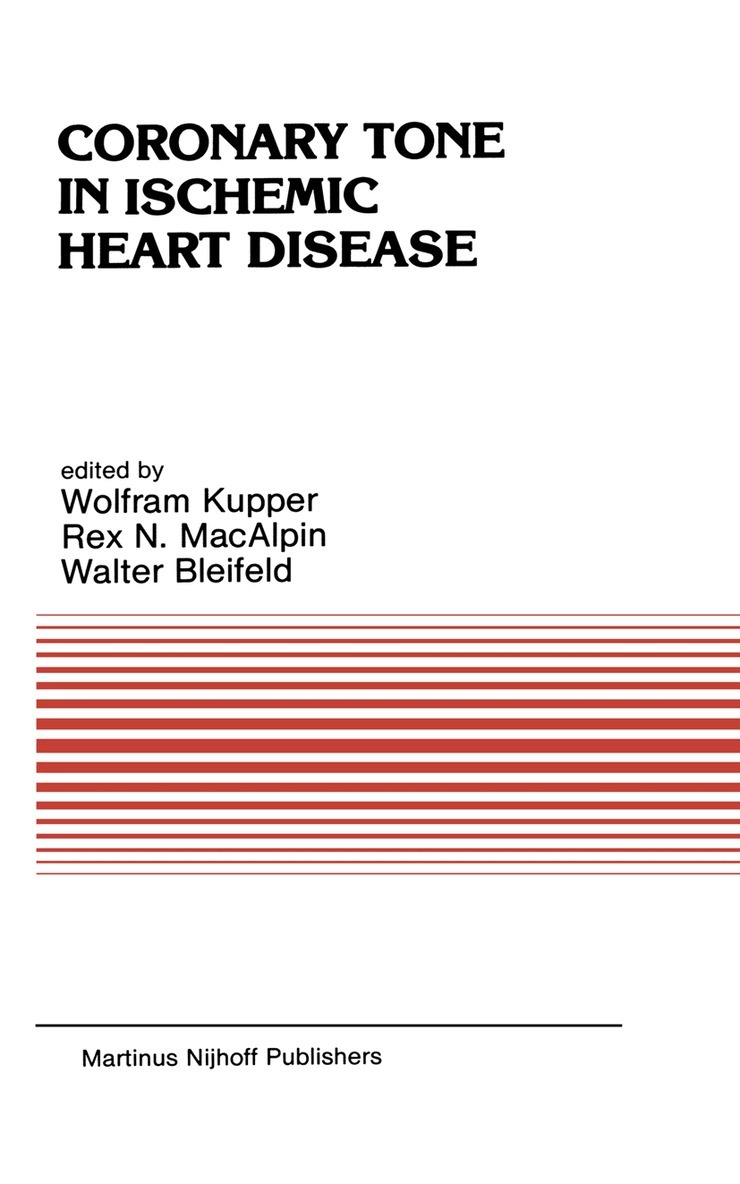
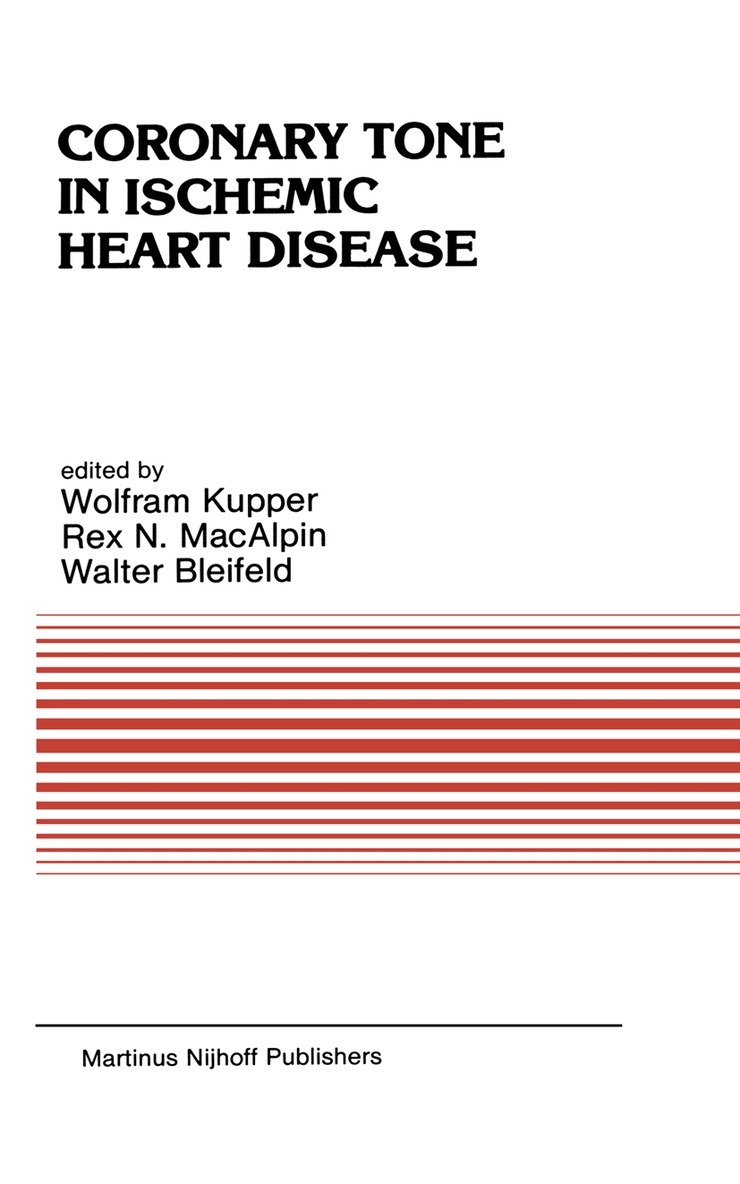
W. KUPPER Coronary artery vasoconstriction is not only the mechanism responsible for Prinzmetal's variant angina, but may also be involved in stable angina pectoris and myocardial infarction. However, the underlying patho-physiological mecha- nisms and the importance of coronary vasoconstriction in these syndromes is still largely unknown. Several hypotheses have been proposed. Sympathetic nervous activity plays a key role in the regulation of coronary blood flow, but mechanical or humoral constrictive factors may be active as well. a-adrenergic tone Adrenergic nerve fibers accompany coronary vessels of any size. The stimulation of cardiac sympathetic nerves causes an increase in coronary blood flow. If, however, chronotropic and inotropic effects of adrenergic stimulation are sup- pressed pharmacologically by beta-adrenoceptor blockade, a reduction in flow is observed. Thus, the primary effect of sympathetic stimulation on the coronary arteries is the alpha-adrenergic mediated vasoconstriction. Functionally inner- vated alpha-adrenoceptors have been documented both in large coronary con- ductance arteries and in the small resistance vessels.Animal studies and a human study have documented that a permanent constrictor tone is present on the coronary circulation both at rest and during exercise; this condition could be prevented with alpha-adrenoceptor blockade or was absent after heart transplan- tation. Therefore, alpha-adrenoceptor mediated coronary constriction is an at- tractive hypothesis as a possible pathophysiological mechanism of inappropriate coronary vasoconstriction and cororiary vasospasm.
1 094 kr
Skickas inom 10-15 vardagar
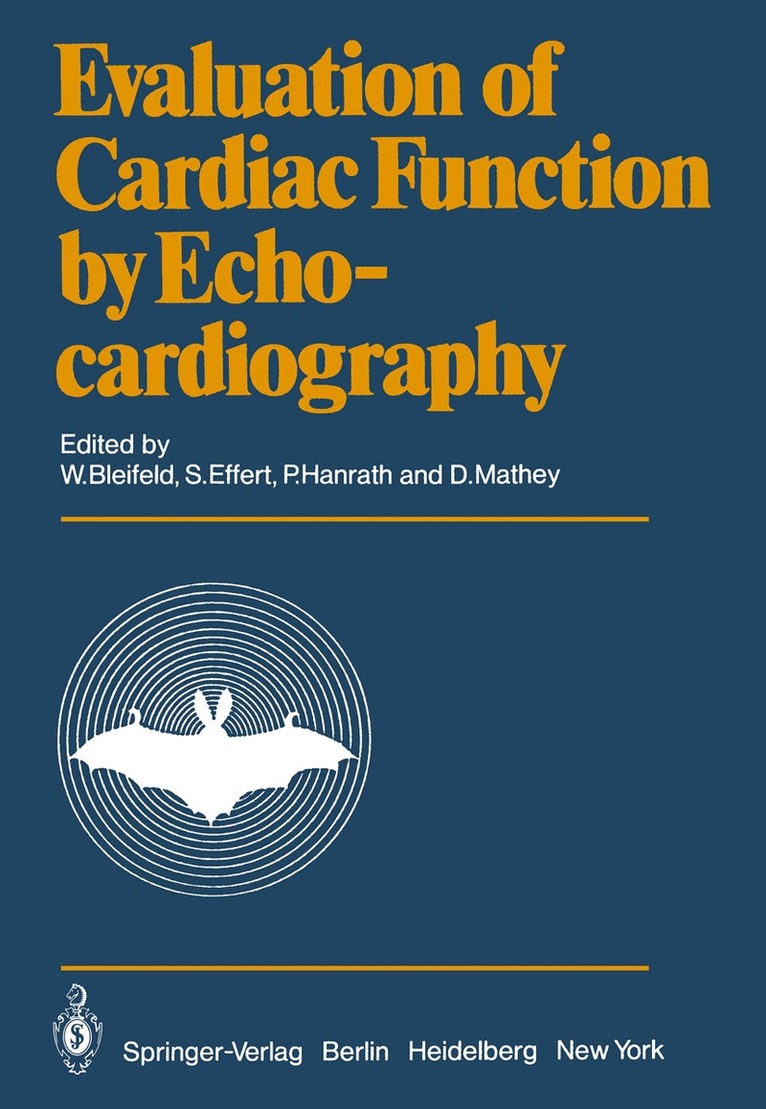
Echocardiography has recently become one of' the most important techniques in clinical cardiology. The major advantage of this method is its noninvasive nature enabling us to apply it under a widespread variety of clinical conditions. In the late 1960s, when research and clinical application of echo cardiography were started, and during the first decade investigations were mainly focused on the morphology of the valves and the chambers of the heart. The introduction of two-dimensional echocardiography was a major breakthrough in visualizing different portions of the heart. How ever, the poor resolution of the first devices provided only little qualitative information. With the introduction of phased array 2-D-echo-devices yielding better results and the application of computer techniques for the processing of M-mode and two-dimensional echo cardiograms, a great amount of qualitative information has become available to describe not only the morphology, but also the dynamic function of the heart in a noninvasive manner. This volume summarizes the lectures held at the International Symposium on Echocardiography, Hamburg, September 1978, endeavoring to review the current state of knowledge with regard to echo cardiography in the experimental and clinical setting. We herewith thank all lecturers, who have contributed to the publication and the Pharma-Schwarz Company which enabled us to organize this meeting by a generous subsidy.
1 094 kr
Skickas inom 10-15 vardagar
W. KUPPER Coronary artery vasoconstriction is not only the mechanism responsible for Prinzmetal's variant angina, but may also be involved in stable angina pectoris and myocardial infarction. However, the underlying patho-physiological mecha- nisms and the importance of coronary vasoconstriction in these syndromes is still largely unknown. Several hypotheses have been proposed. Sympathetic nervous activity plays a key role in the regulation of coronary blood flow, but mechanical or humoral constrictive factors may be active as well. a-adrenergic tone Adrenergic nerve fibers accompany coronary vessels of any size. The stimulation of cardiac sympathetic nerves causes an increase in coronary blood flow. If, however, chronotropic and inotropic effects of adrenergic stimulation are sup- pressed pharmacologically by beta-adrenoceptor blockade, a reduction in flow is observed. Thus, the primary effect of sympathetic stimulation on the coronary arteries is the alpha-adrenergic mediated vasoconstriction. Functionally inner- vated alpha-adrenoceptors have been documented both in large coronary con- ductance arteries and in the small resistance vessels.Animal studies and a human study have documented that a permanent constrictor tone is present on the coronary circulation both at rest and during exercise; this condition could be prevented with alpha-adrenoceptor blockade or was absent after heart transplan- tation. Therefore, alpha-adrenoceptor mediated coronary constriction is an at- tractive hypothesis as a possible pathophysiological mechanism of inappropriate coronary vasoconstriction and cororiary vasospasm.
Del 22 - Developments in Cardiovascular Medicine
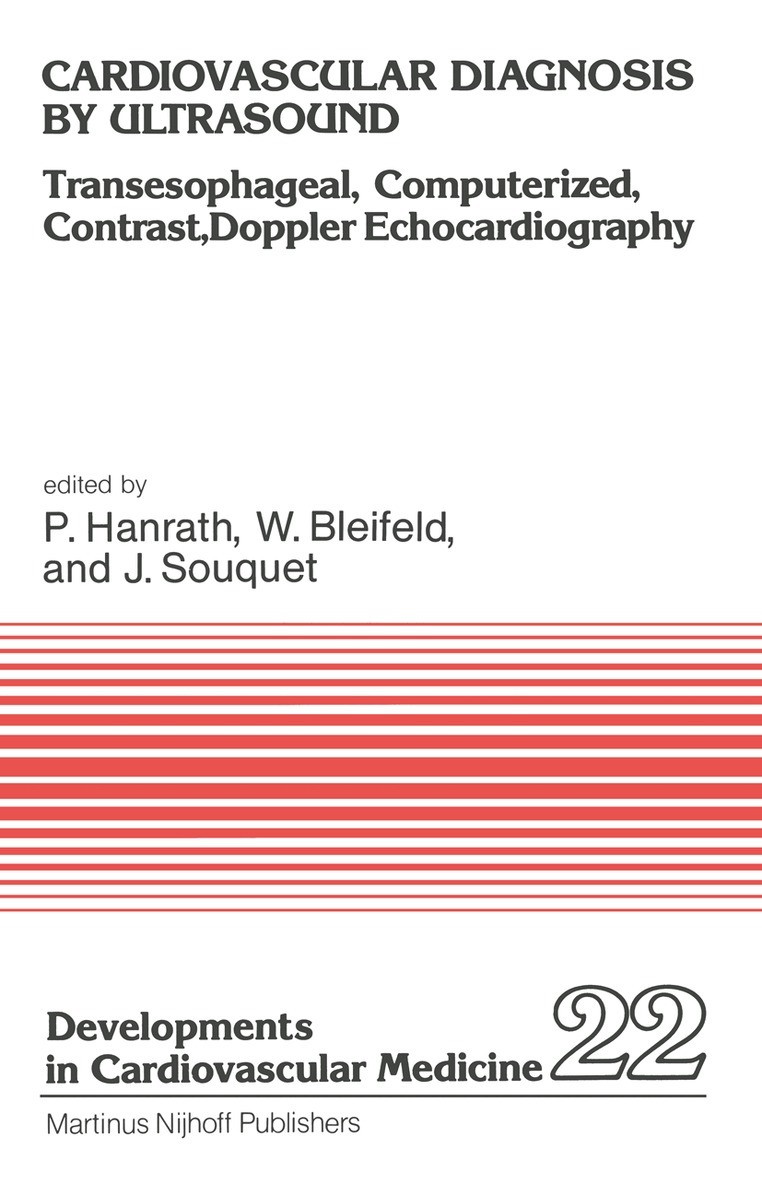
Cardiovascular Diagnosis by Ultrasound
Transesophageal, Computerized, Contrast, Doppler Echocardiography
Häftad, Engelska, 2011
550 kr
Skickas inom 10-15 vardagar
This volume contains most of the invited lectures presented at the second "Interna- tional Symposium on the Evaluation of Cardiac Dynamics by Ultrasound" which was held on May 27-28, 1982, in Hamburg. Main topics of the symposium dealt with new echocardiographic technologies such as the transesophageal technique and digital image processing of echocardio- grams, as well as with latest clinical and experimental results in the fields of contrast and Doppler echocardiography, tissue characterization and analysis of left ventricular function. We are greatly indebted to all participants who kept a very tight schedule in order to have these proceedings available at the time of the meeting. We cordially thank Dr. M. Schluter for his editorial assistance, Mrs. B. Kratzenberg for her secretarial help, and the Pharma-Schwarz Company for their generous financial support. Hamburg, May 1982 The Editors CONTRIBUTORS ABE, A., First Department of Medicine, Osaka University Medical School, 1-1-50, Fukushi- ma, Fukushima-ku, Osaka 553, Japan. BACKS, B., Medizinische Universitiitsklinik Bonn, Abteilung fUr Kardiologie, 5300 Bonn, BRO. BAKER, D.W., Ph.D.,Squibb Medical Systems International, 2100 124th Avenue NE, Bellevue, WA 98005, USA. BIAMINO, G., M.D., Klinikum Steglitz, Kardiologische Abteilung, Hindenburgdamm 30, 1000 Berlin 20, BRO. BLEIFELD, W., M.D., Abteilung fiir Kardiologie, Universitiitskrankenhaus Eppendorf, Martini- strasse 52, 2000 Hamburg 20, BRO. BOM, K., Ph.D., Thorax Center, Erasmus University, P.O. Box 1738, 3000 DR Rotterdam, The Netherlands.