W. Ed Watt – författare
Visar alla böcker från författaren W. Ed Watt. Handla med fri frakt och snabb leverans.
9 produkter
9 produkter
Del 71 - NATO Science Partnership Subseries: 2
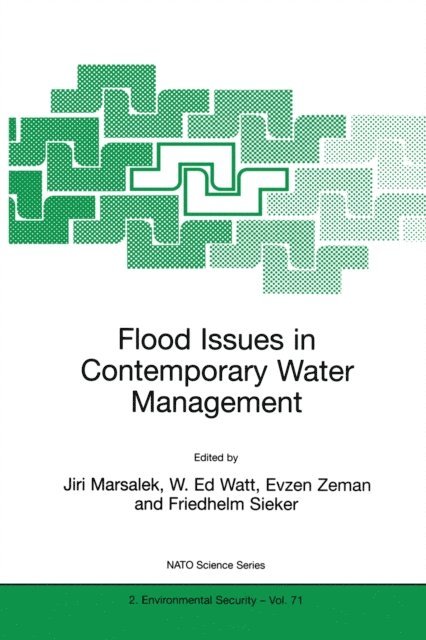
Flood Issues in Contemporary Water Management
Inbunden, Engelska, 2000
1 082 kr
Skickas inom 10-15 vardagar
In 1997, disastrous flooding running through the Czech Republic, Poland, and Germany took the lives of a great number of people and caused economic damage estimated in tens of billions of dollars. Flooding of the Yangtze river in 1998 killed more than 3000 people, dislocated 230 million souls, and caused direct damage of more than $ 45 billion. Both the general public and the experts are asking what we can learn from these recent events to reduce loss of life and flood damage. The 1997 floods were dealt with by experts from the Czech Republic, Poland and Germany, who presented timely reports on combatting floods, both success stories and shortcomings. This experience is further extended by reports from experts drawn from 13 other countries, developing a broad overview of flood risk management, flood impacts on water quality, human health, and natural ecosystems.
Häftad, Engelska, 2000
1 082 kr
Skickas inom 10-15 vardagar
In 1997, disastrous flooding running through the Czech Republic, Poland, and Germany took the lives of a great number of people and caused economic damage estimated in tens of billions of dollars. Flooding of the Yangtze river in 1998 killed more than 3000 people, dislocated 230 million souls, and caused direct damage of more than $ 45 billion. Both the general public and the experts are asking what we can learn from these recent events to reduce loss of life and flood damage. The 1997 floods were dealt with by experts from the Czech Republic, Poland and Germany, who presented timely reports on combatting floods, both success stories and shortcomings. This experience is further extended by reports from experts drawn from 13 other countries, developing a broad overview of flood risk management, flood impacts on water quality, human health, and natural ecosystems.
Inbunden, Engelska, 2001
1 082 kr
Skickas inom 10-15 vardagar
Notwithstanding past achievements, flood damage continues to rise throughout the world as the magnitudes of floods increase, partly as a result of poor land management and partly by climate change, growing populations and continuing development in flood-prone areas, and the aging and deterioration of flood defences. One of the major goals of water management is the protection of society from floods. That issue is addressed here in terms of such broad issues as flood analysis, flood impact, non-structural and structural flood management measures, Non-structural measures focus on flood plain management, flood insurance, flood forecasting and warning, and emergency measures during floods. Structural measures focus on catchment management, embankments and flood reservoirs. Post-flood measures are also discussed. Future planning of flood management should be based on a clear understanding of the effectiveness interventions and their impacts on river catchment ecosystems.
Häftad, Engelska, 2001
1 082 kr
Skickas inom 10-15 vardagar
Notwithstanding past achievements, flood damage continues to rise throughout the world as the magnitudes of floods increase, partly as a result of poor land management and partly by climate change, growing populations and continuing development in flood-prone areas, and the aging and deterioration of flood defences. One of the major goals of water management is the protection of society from floods. That issue is addressed here in terms of such broad issues as flood analysis, flood impact, non-structural and structural flood management measures. Non-structural measures focus on flood plain management, flood insurance, flood forecasting and warning, and emergency measures during floods. Structural measures focus on catchment management, embankments and flood reservoirs. Post-flood measures are also discussed. Future planning of flood management should be based on a clear understanding of the effectiveness interventions and their impacts on river catchment ecosystems.
Inbunden, Engelska, 2003
3 231 kr
Skickas inom 10-15 vardagar
Urban water management issues are particularly important in the countries in transition in Central and Eastern Europe. During the last decade, political, economic and social changes in these countries have influenced almost every element of the public sector, including water services. There is an urgent need for the various countries to exchange information on this issue and to identify the best approaches to achieve this transition. This volume focuses on the acute problems in the field of Urban Water Management in Central and Eastern Europe countries in transition, giving an illustration of the transfer of know-how from traditional NATO countries. The following issues are discussed: wastewater impacts on receiving waters and groundwater; urban drainage planning and management; urban flood protection and management; combined sewer overflow management and control; challenges to urban water supply; wastewater technologies and management; urban river catchment management - case studies; private sector participation in urban water services delivery - case studies; and information technologies in urban water management - case studies (GIS, data management).
Häftad, Engelska, 2003
3 231 kr
Skickas inom 10-15 vardagar
Urban water management issues are particularly important in the countries in transition in Central and Eastern Europe. During the last decade, political, economic and social changes in these countries have influenced almost every element of the public sector, including water services. There is an urgent need for the various countries to exchange information on this issue and to identify the best approaches to achieve this transition. This volume focuses on the acute problems in the field of Urban Water Management in Central and Eastern Europe countries in transition, giving an illustration of the transfer of know-how from traditional NATO countries. The following issues are discussed: wastewater impacts on receiving waters and groundwater; urban drainage planning and management; urban flood protection and management; combined sewer overflow management and control; challenges to urban water supply; wastewater technologies and management; urban river catchment management - case studies; private sector participation in urban water services delivery - case studies; and information technologies in urban water management - case studies (GIS, data management).
E-bok
PDF, Engelska, 20123 809 kr
Läs direkt efter köp
Urban population growth dramatically alters material and energy fluxes in the affected areas, with concomitant changes in landscape, altered fluxes of water, sediment, chemicals and pathogens and increased releases of waste heat. These changes then impact on urban ecosystems, including water resources and result in their degradation. Such circumstances make the provision of water services to urban populations even more challenging. Changing weather patterns, rising temperature and large variations in precipitation contr- ute to increased damages, caused by weather related disasters, including floods. Ones of the major contributors to increasing flood peaks are land use changes and particularl- urban development. Consequently, there is a need to look for low environmental impact land development and to manage runoff in urban areas by storm water management. Much progress in the management of urban waters has been achieved in the most - vanced jurisdictions, but much more remains to be done. In this respect the EC Water Framework Directive can provide some guidance. Urban water management issues are particularly important in the countries in transition in Central and Eastern Europe. During the last decade political, economical and social changes in the countries under transition have influenced almost every element of the public sector, including water services. There is an urgent need for exchange of information among various countries on this issue and for identification of best approaches to achieving this transition.
E-bok
PDF, Engelska, 20121 339 kr
Läs direkt efter köp
Notwithstanding past achievements, flood damage continues to rise throughout the world as the magnitudes of floods increase, partly as a result of poor land management and partly by climate change, growing populations and continuing development in flood-prone areas, and the aging and deterioration of flood defences. One of the major goals of water management is the protection of society from floods. That issue is addressed here in terms of such broad issues as flood analysis, flood impact, non-structural and structural flood management measures. Non-structural measures focus on flood plain management, flood insurance, flood forecasting and warning, and emergency measures during floods. Structural measures focus on catchment management, embankments and flood reservoirs. Post-flood measures are also discussed. Future planning of flood management should be based on a clear understanding of the effectiveness interventions and their impacts on river catchment ecosystems.
E-bok
PDF, Engelska, 20121 339 kr
Läs direkt efter köp
In 1997 disastrous flooding running through the Czech Republic, Poland, Germany took the lives of a great number of people and caused economic damage estimated in tens of billions of dollars. Flooding of the Yangtze river in 1998 killed more than 3000 people, dislocated 230 million souls, and caused direct damage of more than $ 45 billion. Both the general public and the experts are asking what we can learn from these recent events to reduce loss of life and flood damage. The 1997 floods were dealt with by experts from the Czech Republic, Poland and Germany, who presented timely reports on combatting floods, both success stories and shortcomings. This experience is further extended by reports from experts drawn from 13 other countries, developing a broad overview of flood risk management, covering the ecosystem approach to flood management, including socioeconomic issues, flood impacts on water quality, human health, and natural ecosystems.