W. Gibson Wood – författare
Visar alla böcker från författaren . Handla med fri frakt och snabb leverans.
6 produkter
6 produkter
Inbunden, Engelska, 1993
891 kr
Skickas inom 10-15 vardagar
Inbunden, Engelska, 1989
2 155 kr
Skickas inom 10-15 vardagar
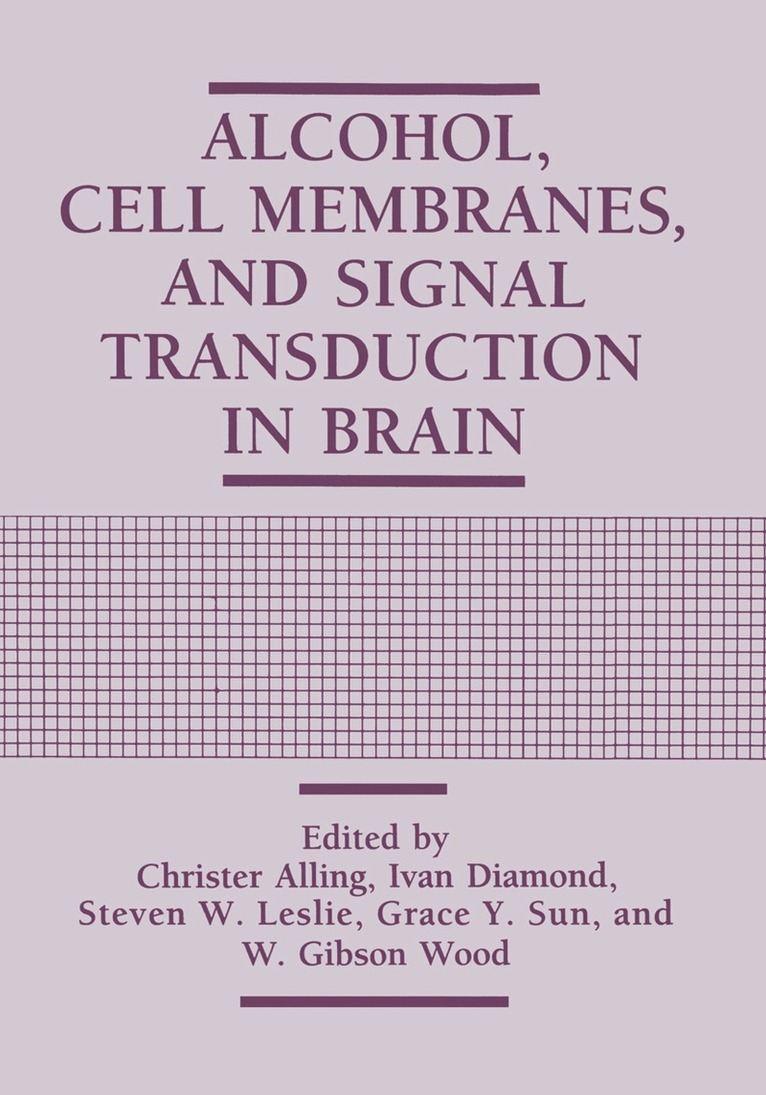
Alcohol abuse throughout the world is associated with serious social and medical implications. Problems such as intoxication, tol erance, and development of physical dependence have been well recognized. The central nervous system and the liver are especially affected. There is little doubt that alcohol abuse can result in organ damage, which in turn leads to deleterious health consequences to the individual. Understanding ethanol action presents a special and functional diver challenge because of its molecular simplicity sity. In fact, the ability for alcohol to disrupt cellular function is at tributed to its cellular injury without regard to an apparent specific mechanism of action. Nevertheless, the key to an effective treatment to this problem is through research into understanding the mechan isms underlying how ethanol interacts with cells and membranes. This book is the result of a cooperative effort among scientists from many nations who met in a symposium in Taipei, Taiwan, ROC, July 1988. The focus of this book is on experimental ap proaches to better understand the molecular mechanisms of ethanol on the biological system. These recent advances in the examination of the alcohol effects on cellular function are divided into four sec tions. The first section addresses specific actions of ethanol on the central nervous system. The second section is directed to the use of cell cuI tures in ethanol research and the usefulness of cell cultures in examination of the effects of ethanol in vitro.
E-bok
PDF, Engelska, 20122 840 kr
Läs direkt efter köp
Alcohol abuse throughout the world is associated with serious social and medical implications. Problems such as intoxication, tol erance, and development of physical dependence have been well recognized. The central nervous system and the liver are especially affected. There is little doubt that alcohol abuse can result in organ damage, which in turn leads to deleterious health consequences to the individual. Understanding ethanol action presents a special and functional diver challenge because of its molecular simplicity sity. In fact, the ability for alcohol to disrupt cellular function is at tributed to its cellular injury without regard to an apparent specific mechanism of action. Nevertheless, the key to an effective treatment to this problem is through research into understanding the mechan isms underlying how ethanol interacts with cells and membranes. This book is the result of a cooperative effort among scientists from many nations who met in a symposium in Taipei, Taiwan, ROC, July 1988. The focus of this book is on experimental ap proaches to better understand the molecular mechanisms of ethanol on the biological system. These recent advances in the examination of the alcohol effects on cellular function are divided into four sec tions. The first section addresses specific actions of ethanol on the central nervous system. The second section is directed to the use of cell cuI tures in ethanol research and the usefulness of cell cultures in examination of the effects of ethanol in vitro.
Häftad, Engelska, 2011
2 155 kr
Skickas inom 10-15 vardagar
Alcohol abuse throughout the world is associated with serious social and medical implications. Problems such as intoxication, tol erance, and development of physical dependence have been well recognized. The central nervous system and the liver are especially affected. There is little doubt that alcohol abuse can result in organ damage, which in turn leads to deleterious health consequences to the individual. Understanding ethanol action presents a special and functional diver challenge because of its molecular simplicity sity. In fact, the ability for alcohol to disrupt cellular function is at tributed to its cellular injury without regard to an apparent specific mechanism of action. Nevertheless, the key to an effective treatment to this problem is through research into understanding the mechan isms underlying how ethanol interacts with cells and membranes. This book is the result of a cooperative effort among scientists from many nations who met in a symposium in Taipei, Taiwan, ROC, July 1988. The focus of this book is on experimental ap proaches to better understand the molecular mechanisms of ethanol on the biological system. These recent advances in the examination of the alcohol effects on cellular function are divided into four sec tions. The first section addresses specific actions of ethanol on the central nervous system. The second section is directed to the use of cell cuI tures in ethanol research and the usefulness of cell cultures in examination of the effects of ethanol in vitro.
Häftad, Engelska, 2012
560 kr
Skickas inom 10-15 vardagar
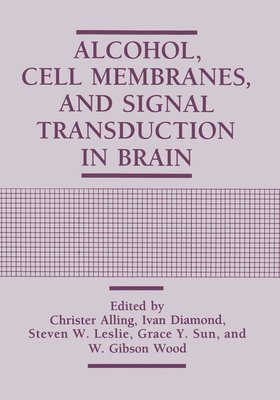
Alcohol abuse and alcoholism are international problems whose costs economical ly, psychologically and medically have been well documented. Alcohol is a unique drug in that the effects of excessive use can have a deleterious effect on most if not all organs of the body. The brain is one of the organs most affected by excessive alcohol consumption. Effects on the brain can be seen in cognitive function, brain structure and neurochemistry. Over the past few years, there have been significant advances made in understanding how alcohol affects brain neurochemistry. This book examines four major areas, i. e. , membrane lipids, receptors and ion channels, second messengers, and gene expression, where significant advancements have been made. The book is divided into four sections based on the four major areas. In each section, data are examined that cover a range of approaches from in vitro to in vivo studies. The section on membrane lipids includes recent developments in how ethanol affects membrane cholesterol domains, polyunsaturated fatty acids, the cause and consequences of phosphatidylethanol formation, and the modulation of membrane protein function by lipid-protein interaction. The second section comprises chapters on NMDA and 5-HT3 receptors, including new aspects on alcohol neurotoxicity and the molecular heterogeneity that may underlie differences in alcohol sensitivity as well as chapters on GABA-gated chloride flux, and calcium channels.
E-bok
PDF, Engelska, 2012734 kr
Läs direkt efter köp
Alcohol abuse and alcoholism are international problems whose costs economical ly, psychologically and medically have been well documented. Alcohol is a unique drug in that the effects of excessive use can have a deleterious effect on most if not all organs of the body. The brain is one of the organs most affected by excessive alcohol consumption. Effects on the brain can be seen in cognitive function, brain structure and neurochemistry. Over the past few years, there have been significant advances made in understanding how alcohol affects brain neurochemistry. This book examines four major areas, i. e. , membrane lipids, receptors and ion channels, second messengers, and gene expression, where significant advancements have been made. The book is divided into four sections based on the four major areas. In each section, data are examined that cover a range of approaches from in vitro to in vivo studies. The section on membrane lipids includes recent developments in how ethanol affects membrane cholesterol domains, polyunsaturated fatty acids, the cause and consequences of phosphatidylethanol formation, and the modulation of membrane protein function by lipid-protein interaction. The second section comprises chapters on NMDA and 5-HT3 receptors, including new aspects on alcohol neurotoxicity and the molecular heterogeneity that may underlie differences in alcohol sensitivity as well as chapters on GABA-gated chloride flux, and calcium channels.