W. Gross-Fengels – författare
Visar alla böcker från författaren W. Gross-Fengels. Handla med fri frakt och snabb leverans.
3 produkter
3 produkter
E-bok
PDF, Tyska, 2013503 kr
Läs direkt efter köp
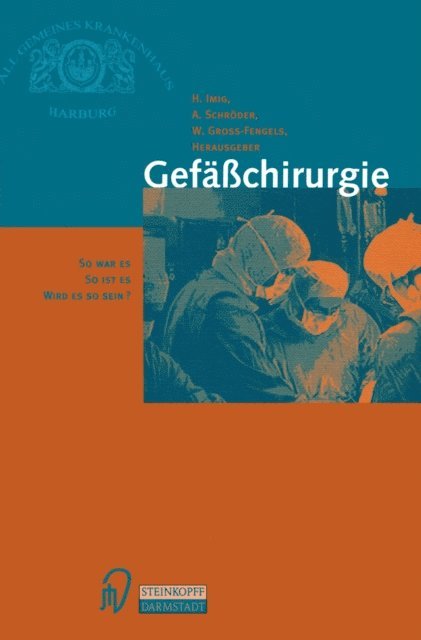
Die Gefäßchirurgie wandelt sich. Neue Verfahren scheinen Altbewährtes abzulösen. Die medizinischen Strukturen erfahren entsprechende Änderungen. Ist eine Kooperation zwischen der Gefäßchirurgie und der Interventionellen Radiologie möglich? Im Juni 1997 trafen sich namhafte Spezialisten auf dem Kongress für Gefäßchirurgie am AK Hamburg-Harburg. Neben einer Bestandsaufnahme der gegenwärtigen Situation und ihren empirischen Wurzeln, wurden Perspektiven für die Zukunft der Gefäßchirurgie vorgestellt und diskutiert.
Häftad, Tyska, 2014
524 kr
Skickas inom 10-15 vardagar
Die Gefäßchirurgie wandelt sich. Neue Verfahren scheinen Altbewährtes abzulösen. Die medizinischen Strukturen erfahren entsprechende Änderungen. Ist eine Kooperation zwischen der Gefäßchirurgie und der Interventionellen Radiologie möglich? Im Juni 1997 trafen sich namhafte Spezialisten auf dem Kongress für Gefäßchirurgie am AK Hamburg-Harburg. Neben einer Bestandsaufnahme der gegenwärtigen Situation und ihren empirischen Wurzeln, wurden Perspektiven für die Zukunft der Gefäßchirurgie vorgestellt und diskutiert.
Häftad, Engelska, 2014
561 kr
Skickas inom 10-15 vardagar
Over the years, interventional radiology has developed many effective and less invasive procedures. As the number and types of interven tions increase, radiologists are becoming more and more involved in clinical patient care. This includes pre-interventional patient workup, sophisticated medical therapy and monitoring during interventions, regular inpatient rounds and complete follow-up management. Therefore interventional radiologists are faced with a broad spectrum of clinical and pharmacological questions. Adjunctive medical therapy should increase the patient's comfort, should improve the success rates, and should further reduce the risks of the procedures. In order to fulfill our responsibility to the patients, a profound knowledge of certain drugs is indispensable. This in cludes, for example, sedatives, analgesics, cardiovascular drugs and agents to prevent infections, thromboembolic complications or restenoses. Moreover, a good monitoring system during complex procedures will increase the safety of radiological interventions. These topics and several more have been presented and discussed during an international symposium in Basel, Switzerland, in January 1992. It is the benefit of the authors, that all these results could be published shortly after the event. Connected with our thanks to all the co-workers the editors hope to find this publication assisting an increasing number of safe interventions.