W.-H. Steeb - Böcker
Visar alla böcker från författaren W.-H. Steeb. Handla med fri frakt och snabb leverans.
5 produkter
5 produkter
2 101 kr
Skickas inom 10-15 vardagar
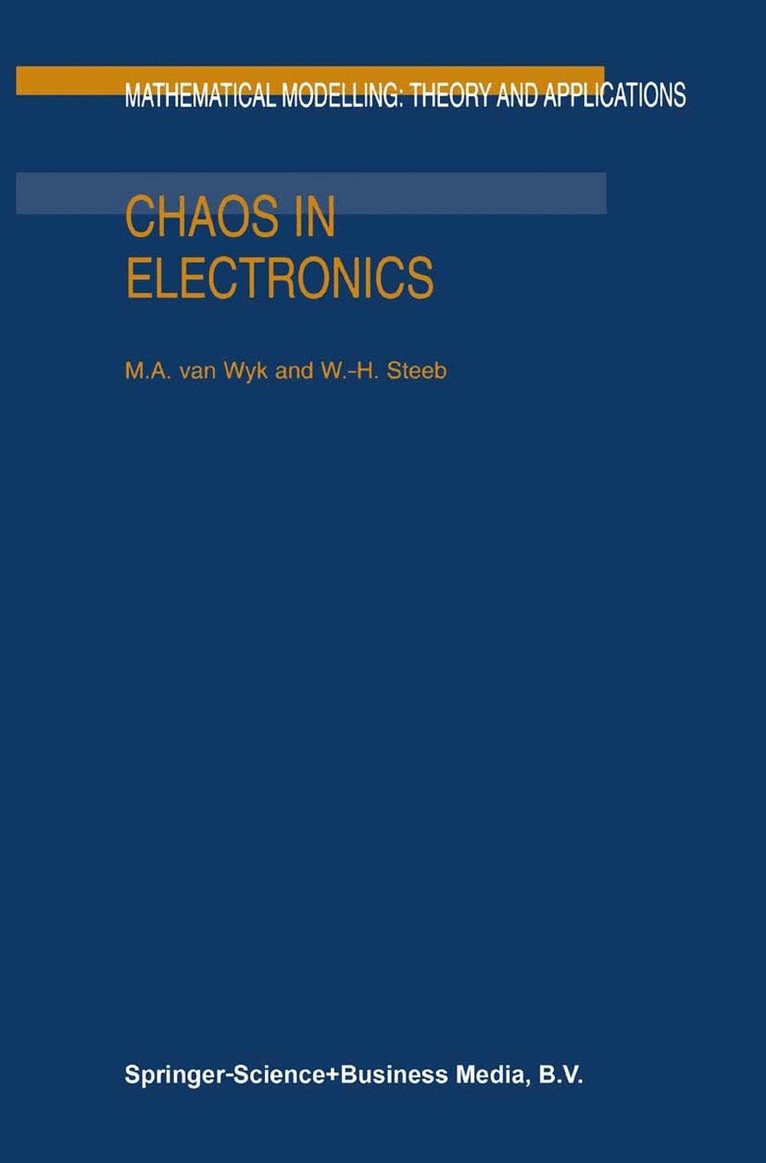
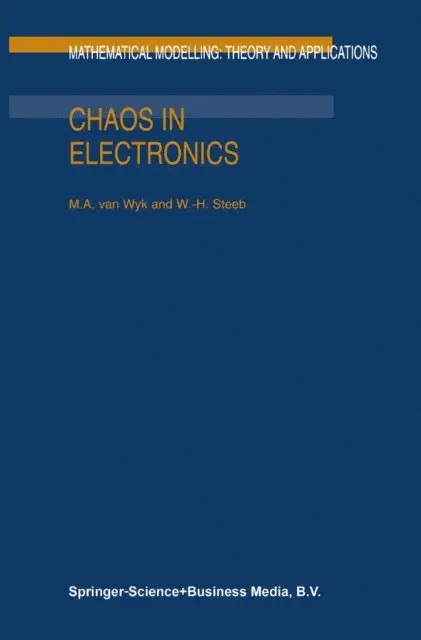
Many dynamical systems in physics, chemistry and biology exhibit complex be haviour. The apparently random motion of a fluid is the best known example. How ever also vibrating structures, electronic oscillators, magnetic devices,lasers, chemical oscillators, and population kinetics can behave in a complicated manner. One can find irregular oscillations, which is now known as chaotic behaviour. The research field of nonlinear dynamical systems and especially the study of chaotic systems has been hailed as one of the important breaktroughs in science this century. The sim plest realization of a system with chaotic behaviour is an electronic oscillator. The purpose of this book is to provide a comprehensive introduction to the application of chaos theory to electronic systems. The book provides both the theoretical and experimental foundations of this research field. Each electronic circuit is described in detail together with its mathematical model. Controlling chaos of electronic oscilla tors is also included. End of proofs and examples are indicated by •. Inside examples the end of proofs are indicated with O. We wish to express our gratitude to Catharine Thompson for a critical reading of the manuscript. Any useful suggestions and comments are welcome. Email address of the first author: MVANWYK@TSAMAIL. TRSA. AC. ZA Email address of the first author: WHS@RAU3. RAU. AC. ZA Home page of the authors: http://zeus. rau. ac. za/steeb/steeb. html xi Chapter 1 Introduction 1.
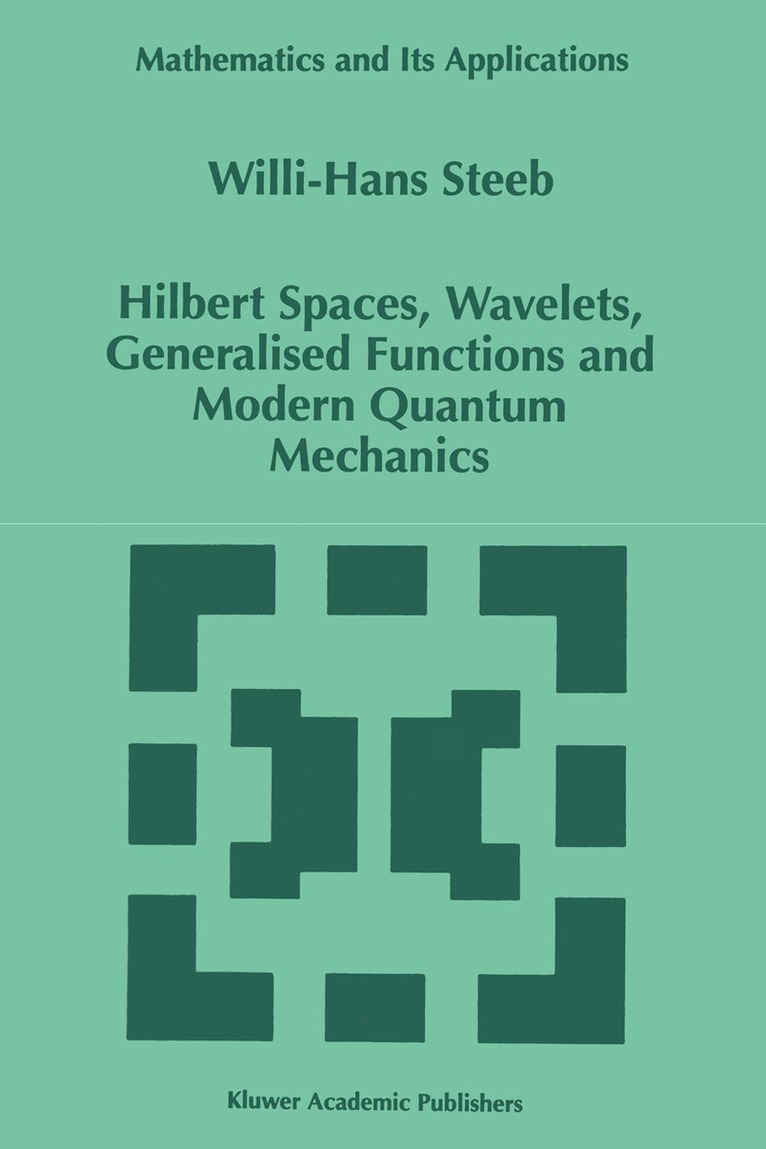
Hilbert Spaces, Wavelets, Generalised Functions and Modern Quantum Mechanics
Inbunden, Engelska, 1998
1 064 kr
Skickas inom 10-15 vardagar
This book provides an introduction to Hilbert space theory, Fourier transform and wavelets, linear operators, generalized functions and quantum mechanics. Although quantum mechanics has been developed between 1925 and 1930 in the last twenty years a large number of new aspect and techniques have been introduced. The book also covers these new fields in quantum mechanics. In quantum mechanics the basic mathematical tools are the theory of Hilbert spaces, the theory of linear operators, the theory of generalized functions and Lebesgue inte- gration theory. Many excellent textbooks have been written on Hilbert space theory and linear operators in Hilbert spaces. Comprehensive surveys of this subject are given by Weidmann [68], Prugovecki [47], Yosida [69], Kato [31], Richtmyer [49], Sewell [54] and others. The theory of generalized functions is also well covered in good textbooks (Gelfand and Shilov [25], Vladimirov [67]. Furthermore numerous textbooks on quantum mechanics exist (Dirac [17], Landau and Lifshitz [36], Mes- siah [41], Gasiorowicz [24], Schiff [51], Eder [18] and others).Besides these books there are several problem books on quantum mechanics (Fliigge [22], Constantinescu and Magyari [15], ter Haar [64], Mavromatis [39], Steeb [59], Steeb [60], Steeb [61]) and others). Computer algebra implementations of quantum mechanical problems are described by Steeb [59]. Unfortunately, many standard textbooks on quantum mechanics neglect the math- ematical background. The basic mathematical tools to understand quantum me- chanics should be fully integrated into an education in quantum mechanics.
333 kr
Skickas inom 10-15 vardagar
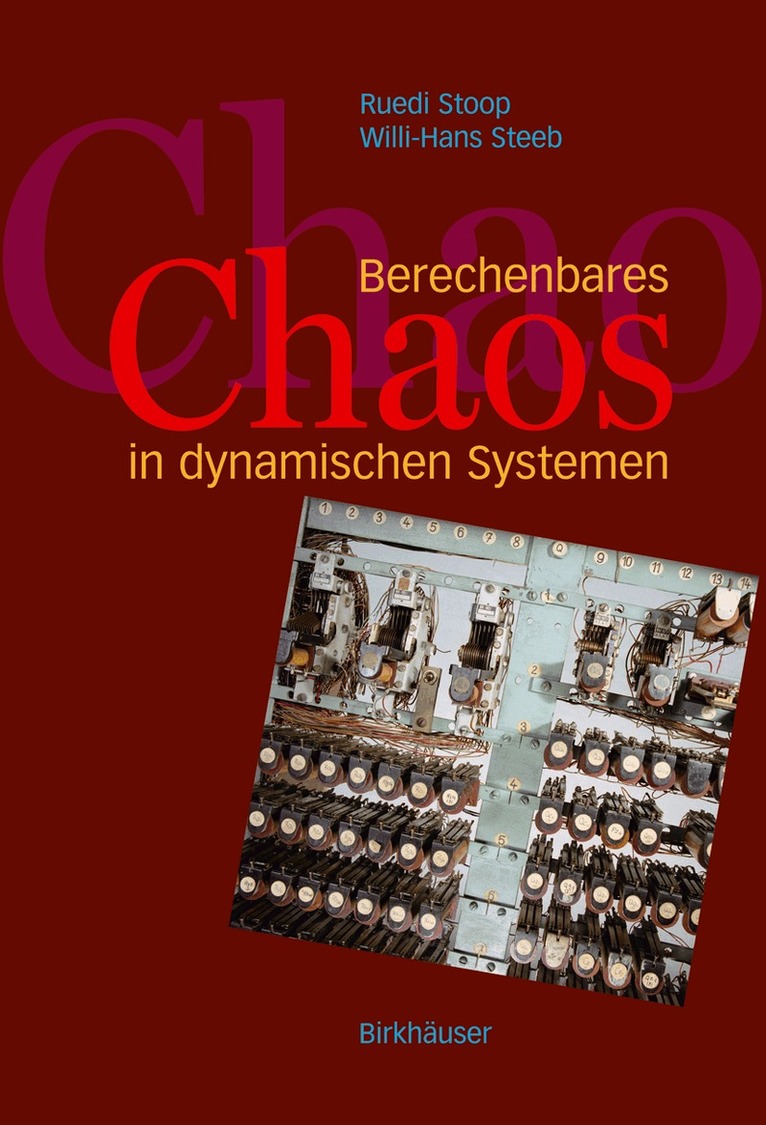
Dieses Lehrbuch bietet eine grundlegende Einführung in chaotische Systeme, welche keinerlei Abstriche an mathematischer Exaktheit macht. Der Text umfasst einerseits in ansprechender Tiefe die klassischen theoretischen Gesichtspunkte der dynamischen Systeme, wobei alle wesentlichen Beispiele der Literatur ausührlich behandelt werden. Daneben befasst er sich mit moderneren Fragestellungen, wie etwa nach der Natur der Berechenbarkeit oder der Verlässlichkeit des Computers. Die Abgrenzung zu fortgeschrittenen Methoden ist klar gegeben durch den Ausschluss statistischer Methoden. Zu den Kernphänomenen werden kurze, aber vollständige Programme in der Programmiersprache Mathematica angegeben, welche leicht zu verstehen sind und die man für das individuelle Experimentieren leicht übernehmen und anpassen kann. Über 180 Beispiele und Übungsaufgaben veranschaulichen das Material und vertiefen das Verständnis des Lesers. Biographien von historischen Schlüsselpersönlichkeiten bereichern den Text.
2 101 kr
Skickas inom 10-15 vardagar
This book gives a comprehensive introduction to the application of nonlinear dynamics to electronic systems, providing both the theoretical and experimental foundations for this research field. All relevant electronic circuits with chaotic behaviour are described and discussed in detail. Audience: The book is suitable for graduate students and researchers whose work involves circuits, control systems, and the mathematics of engineering.
1 064 kr
Skickas inom 10-15 vardagar
This book provides an introduction to Hilbert space theory, Fourier transform and wavelets, linear operators, generalized functions and quantum mechanics. Although quantum mechanics has been developed between 1925 and 1930 in the last twenty years a large number of new aspect and techniques have been introduced. The book also covers these new fields in quantum mechanics. In quantum mechanics the basic mathematical tools are the theory of Hilbert spaces, the theory of linear operators, the theory of generalized functions and Lebesgue inte- gration theory. Many excellent textbooks have been written on Hilbert space theory and linear operators in Hilbert spaces. Comprehensive surveys of this subject are given by Weidmann [68], Prugovecki [47], Yosida [69], Kato [31], Richtmyer [49], Sewell [54] and others. The theory of generalized functions is also well covered in good textbooks (Gelfand and Shilov [25], Vladimirov [67]. Furthermore numerous textbooks on quantum mechanics exist (Dirac [17], Landau and Lifshitz [36], Mes- siah [41], Gasiorowicz [24], Schiff [51], Eder [18] and others).Besides these books there are several problem books on quantum mechanics (Fliigge [22], Constantinescu and Magyari [15], ter Haar [64], Mavromatis [39], Steeb [59], Steeb [60], Steeb [61]) and others). Computer algebra implementations of quantum mechanical problems are described by Steeb [59]. Unfortunately, many standard textbooks on quantum mechanics neglect the math- ematical background. The basic mathematical tools to understand quantum me- chanics should be fully integrated into an education in quantum mechanics.