W. Holmes Finch - Böcker
Visar alla böcker från författaren W. Holmes Finch. Handla med fri frakt och snabb leverans.
11 produkter
11 produkter
2 224 kr
Skickas inom 10-15 vardagar
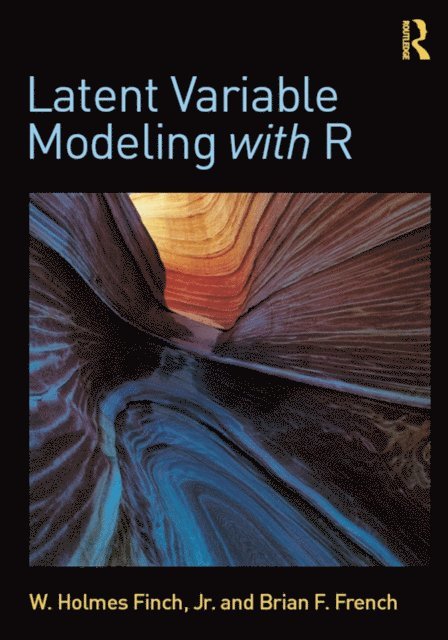
This book demonstrates how to conduct latent variable modeling (LVM) in R by highlighting the features of each model, their specialized uses, examples, sample code and output, and an interpretation of the results. Each chapter features a detailed example including the analysis of the data using R, the relevant theory, the assumptions underlying the model, and other statistical details to help readers better understand the models and interpret the results. Every R command necessary for conducting the analyses is described along with the resulting output which provides readers with a template to follow when they apply the methods to their own data. The basic information pertinent to each model, the newest developments in these areas, and the relevant R code to use them are reviewed. Each chapter also features an introduction, summary, and suggested readings. A glossary of the text’s boldfaced key terms and key R commands serve as helpful resources. The book is accompanied by a website with exercises, an answer key, and the in-text example data sets.Latent Variable Modeling with R:-Provides some examples that use messy data providing a more realistic situation readers will encounter with their own data.-Reviews a wide range of LVMs including factor analysis, structural equation modeling, item response theory, and mixture models and advanced topics such as fitting nonlinear structural equation models, nonparametric item response theory models, and mixture regression models.-Demonstrates how data simulation can help researchers better understand statistical methods and assist in selecting the necessary sample size prior to collecting data.-www.routledge.com/9780415832458 provides exercises that apply the models along with annotated R output answer keys and the data that corresponds to the in-text examples so readers can replicate the results and check their work.The book opens with basic instructions in how to use R to read data, download functions, and conduct basic analyses. From there, each chapter is dedicated to a different latent variable model including exploratory and confirmatory factor analysis (CFA), structural equation modeling (SEM), multiple groups CFA/SEM, least squares estimation, growth curve models, mixture models, item response theory (both dichotomous and polytomous items), differential item functioning (DIF), and correspondance analysis. The book concludes with a discussion of how data simulation can be used to better understand the workings of a statistical method and assist researchers in deciding on the necessary sample size prior to collecting data. A mixture of independently developed R code along with available libraries for simulating latent models in R are provided so readers can use these simulations to analyze data using the methods introduced in the previous chapters.Intended for use in graduate or advanced undergraduate courses in latent variable modeling, factor analysis, structural equation modeling, item response theory, measurement, or multivariate statistics taught in psychology, education, human development, and social and health sciences, researchers in these fields also appreciate this book’s practical approach. The book provides sufficient conceptual background information to serve as a standalone text. Familiarity with basic statistical concepts is assumed but basic knowledge of R is not.
797 kr
Skickas inom 10-15 vardagar
This book demonstrates how to conduct latent variable modeling (LVM) in R by highlighting the features of each model, their specialized uses, examples, sample code and output, and an interpretation of the results. Each chapter features a detailed example including the analysis of the data using R, the relevant theory, the assumptions underlying the model, and other statistical details to help readers better understand the models and interpret the results. Every R command necessary for conducting the analyses is described along with the resulting output which provides readers with a template to follow when they apply the methods to their own data. The basic information pertinent to each model, the newest developments in these areas, and the relevant R code to use them are reviewed. Each chapter also features an introduction, summary, and suggested readings. A glossary of the text’s boldfaced key terms and key R commands serve as helpful resources. The book is accompanied by a website with exercises, an answer key, and the in-text example data sets.Latent Variable Modeling with R:-Provides some examples that use messy data providing a more realistic situation readers will encounter with their own data.-Reviews a wide range of LVMs including factor analysis, structural equation modeling, item response theory, and mixture models and advanced topics such as fitting nonlinear structural equation models, nonparametric item response theory models, and mixture regression models.-Demonstrates how data simulation can help researchers better understand statistical methods and assist in selecting the necessary sample size prior to collecting data.-www.routledge.com/9780415832458 provides exercises that apply the models along with annotated R output answer keys and the data that corresponds to the in-text examples so readers can replicate the results and check their work.The book opens with basic instructions in how to use R to read data, download functions, and conduct basic analyses. From there, each chapter is dedicated to a different latent variable model including exploratory and confirmatory factor analysis (CFA), structural equation modeling (SEM), multiple groups CFA/SEM, least squares estimation, growth curve models, mixture models, item response theory (both dichotomous and polytomous items), differential item functioning (DIF), and correspondance analysis. The book concludes with a discussion of how data simulation can be used to better understand the workings of a statistical method and assist researchers in deciding on the necessary sample size prior to collecting data. A mixture of independently developed R code along with available libraries for simulating latent models in R are provided so readers can use these simulations to analyze data using the methods introduced in the previous chapters.Intended for use in graduate or advanced undergraduate courses in latent variable modeling, factor analysis, structural equation modeling, item response theory, measurement, or multivariate statistics taught in psychology, education, human development, and social and health sciences, researchers in these fields also appreciate this book’s practical approach. The book provides sufficient conceptual background information to serve as a standalone text. Familiarity with basic statistical concepts is assumed but basic knowledge of R is not.
807 kr
Skickas inom 10-15 vardagar
Like its bestselling predecessor, Multilevel Modeling Using R, Third Edition provides the reader with a helpful guide to conducting multilevel data modeling using the R software environment.After reviewing standard linear models, the authors present the basics of multilevel models and explain how to fit these models using R. They then show how to employ multilevel modeling with longitudinal data and demonstrate the valuable graphical options in R. The book also describes models for categorical dependent variables in both single-level and multilevel data.The third edition of the book includes several new topics that were not present in the second edition. Specifically, a new chapter has been included, focussing on fitting multilevel latent variable modeling in the R environment. With R, it is possible to fit a variety of latent variable models in the multilevel context, including factor analysis, structural models, item response theory, and latent class models. The third edition also includes new sections in Chapter 11 describing two useful alternatives to standard multilevel models, fixed effects models and generalized estimating equations. These approaches are particularly useful with small samples and when the researcher is interested in modeling the correlation structure within higher-level units (e.g., schools). The third edition also includes a new section on mediation modeling in the multilevel context, in Chapter 11.This thoroughly updated revision gives the reader state-of-the-art tools to launch their own investigations in multilevel modeling and gain insight into their research.
1 819 kr
Skickas inom 10-15 vardagar
Like its bestselling predecessor, Multilevel Modeling Using R, Third Edition provides the reader with a helpful guide to conducting multilevel data modeling using the R software environment.After reviewing standard linear models, the authors present the basics of multilevel models and explain how to fit these models using R. They then show how to employ multilevel modeling with longitudinal data and demonstrate the valuable graphical options in R. The book also describes models for categorical dependent variables in both single-level and multilevel data.The third edition of the book includes several new topics that were not present in the second edition. Specifically, a new chapter has been included, focussing on fitting multilevel latent variable modeling in the R environment. With R, it is possible to fit a variety of latent variable models in the multilevel context, including factor analysis, structural models, item response theory, and latent class models. The third edition also includes new sections in Chapter 11 describing two useful alternatives to standard multilevel models, fixed effects models and generalized estimating equations. These approaches are particularly useful with small samples and when the researcher is interested in modeling the correlation structure within higher-level units (e.g., schools). The third edition also includes a new section on mediation modeling in the multilevel context, in Chapter 11.This thoroughly updated revision gives the reader state-of-the-art tools to launch their own investigations in multilevel modeling and gain insight into their research.
2 155 kr
Skickas inom 10-15 vardagar
This book is designed to provide students, teachers, and researchers with a text that includes a full range of statistical methods available to address commonly encountered research problems. Many textbooks for introductory, intermediate, and advanced statistics courses focus heavily on parametric methods. However, in practice, the assumptions underlying these methods are frequently not met, therefore calling into question their use. This book addresses this issue by presenting parametric, nonparametric, robust, and Bayesian techniques that are appropriate for research scenarios often encountered in practice and typically found in statistics courses. For each of these major topics, the standard parametric approach is presented, along with the assumptions underlying it and the methods used to assess the viability of these assumptions. Next, a set of alternative techniques for the research scenario is presented and applied to the motivating example that begins each chapter. Each chapter concludes with a summary focused on how researchers should select which method to use when and a summary of the material covered in the chapter. The chapters have motivating examples that serve as an anchor for discussion of the featured methods. The focus of the chapters is intended to be conceptual (as opposed to highly technical) to make the text useful to individuals with a wide array of statistical backgrounds. More technical material is included in each chapter for interested readers and instructors who would like to focus more attention on it. Instructors will be able to use this book as a main text in introductory, intermediate, and some specialized statistics courses such as nonparametric and robust methods. In addition, researchers and data analysts from a wide array of disciplines will be able to use this book as a primary resource in their work.Key features of this book are as follows: It presents a full range of statistical options available to researchers for major problems faced in the social and life sciences, health care, and business. It explains how to evaluate a dataset to determine which statistical approach (e.g., standard parametric, nonparametric, robust, Bayesian) may be optimal. It features a website containing datasets and computer code.
861 kr
Skickas inom 10-15 vardagar
This book is designed to provide students, teachers, and researchers with a text that includes a full range of statistical methods available to address commonly encountered research problems. Many textbooks for introductory, intermediate, and advanced statistics courses focus heavily on parametric methods. However, in practice, the assumptions underlying these methods are frequently not met, therefore calling into question their use. This book addresses this issue by presenting parametric, nonparametric, robust, and Bayesian techniques that are appropriate for research scenarios often encountered in practice and typically found in statistics courses. For each of these major topics, the standard parametric approach is presented, along with the assumptions underlying it and the methods used to assess the viability of these assumptions. Next, a set of alternative techniques for the research scenario is presented and applied to the motivating example that begins each chapter. Each chapter concludes with a summary focused on how researchers should select which method to use when and a summary of the material covered in the chapter. The chapters have motivating examples that serve as an anchor for discussion of the featured methods. The focus of the chapters is intended to be conceptual (as opposed to highly technical) to make the text useful to individuals with a wide array of statistical backgrounds. More technical material is included in each chapter for interested readers and instructors who would like to focus more attention on it. Instructors will be able to use this book as a main text in introductory, intermediate, and some specialized statistics courses such as nonparametric and robust methods. In addition, researchers and data analysts from a wide array of disciplines will be able to use this book as a primary resource in their work.Key features of this book are as follows: It presents a full range of statistical options available to researchers for major problems faced in the social and life sciences, health care, and business. It explains how to evaluate a dataset to determine which statistical approach (e.g., standard parametric, nonparametric, robust, Bayesian) may be optimal. It features a website containing datasets and computer code.
2 029 kr
Skickas inom 10-15 vardagar
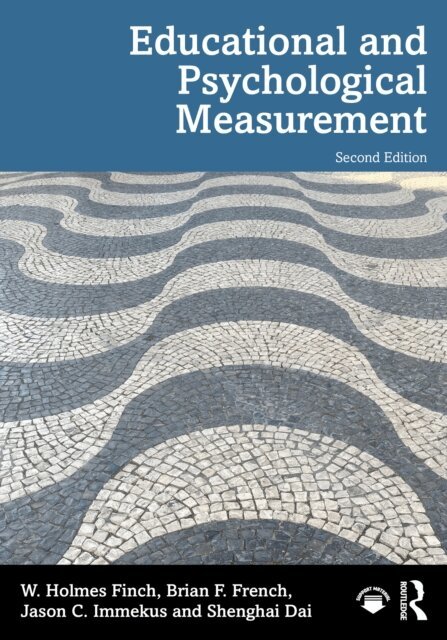
This new text provides the most current coverage of measurement and psychometrics in a single volume. Authors W. Holmes Finch, Brian F. French, Jason C. Immekus, and Shenghai Dai first review the basics of psychometrics and measurement, before moving on to more complex topics such as equating and scaling, item response theory, standard setting, and computer adaptive testing. Also included are discussions of cutting-edge topics utilized by practitioners in the field, such as automated test development, game-based assessment, and automated test scoring. This book is ideal for use as a primary text for graduate-level psychometrics/measurement courses, as well as for researchers in need of a broad resource for understanding test theory.Now in its second edition, Educational and Psychological Measurement features new material on:Ethical and fairness issues in testing, quality control in testing, alternative measurement models and scaling methods for psychological assessment, computerized assessment, and application of machine learning methods. It also contains pedagogical features such as “How it Works” and “Psychometrics in the Real World” boxes that break down important concepts through worked examples and show how theory can be applied to practice.End-of-chapter exercises allow students to test their comprehension of the material, while suggested readings and website links provide resources for further investigationA collection of free online resources includes the full output from R, SPSS, and Excel for each of the analyses conducted in the book, as well as additional exercises, sample homework assignments, answer keys, and PowerPoint lecture slides
1 074 kr
Skickas inom 10-15 vardagar
This new text provides the most current coverage of measurement and psychometrics in a single volume. Authors W. Holmes Finch, Brian F. French, Jason C. Immekus, and Shenghai Dai first review the basics of psychometrics and measurement, before moving on to more complex topics such as equating and scaling, item response theory, standard setting, and computer adaptive testing. Also included are discussions of cutting-edge topics utilized by practitioners in the field, such as automated test development, game-based assessment, and automated test scoring. This book is ideal for use as a primary text for graduate-level psychometrics/measurement courses, as well as for researchers in need of a broad resource for understanding test theory.Now in its second edition, Educational and Psychological Measurement features new material on:Ethical and fairness issues in testing, quality control in testing, alternative measurement models and scaling methods for psychological assessment, computerized assessment, and application of machine learning methods. It also contains pedagogical features such as “How it Works” and “Psychometrics in the Real World” boxes that break down important concepts through worked examples and show how theory can be applied to practice.End-of-chapter exercises allow students to test their comprehension of the material, while suggested readings and website links provide resources for further investigationA collection of free online resources includes the full output from R, SPSS, and Excel for each of the analyses conducted in the book, as well as additional exercises, sample homework assignments, answer keys, and PowerPoint lecture slides
719 kr
Tillfälligt slut
2 929 kr
Tillfälligt slut
This new text provides the most current coverage of measurement and psychometrics in a single volume. Authors W. Holmes Finch and Brian F. French first review the basics of psychometrics and measurement, before moving on to more complex topics such as equating and scaling, item response theory, standard setting, and computer adaptive testing. Also included are discussions of cutting-edge topics utilized by practitioners in the field, such as automated test development, game-based assessment, and automated test scoring. This book is ideal for use as a primary text for graduate-level psychometrics/measurement courses, as well as for researchers in need of a broad resource for understanding test theory. Features: "How it Works" and "Psychometrics in the Real World" boxes break down important concepts through worked examples, and show how theory can be applied to practice. End-of-chapter exercises allow students to test their comprehension of the material, while suggested readings and website links provide resources for further investigation.A collection of free online resources include the full output from R, SPSS, and Excel for each of the analyses conducted in the book, as well as additional exercises, sample homework assignments, answer keys, and PowerPoint lecture slides.
1 709 kr
Tillfälligt slut
This new text provides the most current coverage of measurement and psychometrics in a single volume. Authors W. Holmes Finch and Brian F. French first review the basics of psychometrics and measurement, before moving on to more complex topics such as equating and scaling, item response theory, standard setting, and computer adaptive testing. Also included are discussions of cutting-edge topics utilized by practitioners in the field, such as automated test development, game-based assessment, and automated test scoring. This book is ideal for use as a primary text for graduate-level psychometrics/measurement courses, as well as for researchers in need of a broad resource for understanding test theory. Features: "How it Works" and "Psychometrics in the Real World" boxes break down important concepts through worked examples, and show how theory can be applied to practice. End-of-chapter exercises allow students to test their comprehension of the material, while suggested readings and website links provide resources for further investigation.A collection of free online resources include the full output from R, SPSS, and Excel for each of the analyses conducted in the book, as well as additional exercises, sample homework assignments, answer keys, and PowerPoint lecture slides.