W. James Potter - Böcker
2 661 kr
Skickas inom 3-6 vardagar
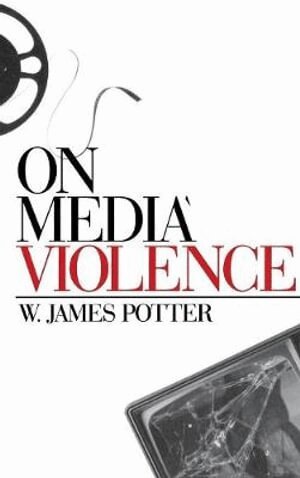
On Media Violence is a definitive examination of this hotly debated social topic. Media scholar W. James Potter asks provocative questions such as: How much media violence is there? What are the meanings conveyed in the way violence is portrayed? What effect does it have on viewers individually, as members of particular groups, and as members of society?
The book is organized in four parts. The first part presents a thorough review of more than 40 years of research and theories about media violence. The second part is an extended critique of the assumptions and practices of that research and thinking. The book proposes re-conceptions of definitions of violence, context, levels of phenomena, the role of human development, effects, risk, and the nature of the media industries. Potter also addresses the necessity for a reconfiguration of the methodological tasks used to assess the content and effects of media violence. The final part introduces Lineation Theory, a suggested perspective and new theoretical approach explaining it.
On Media Violence is essential reading for students and scholars of Media Studies, Communication Theory, Popular Culture, Social Psychology, and Sociology. Part I of the book offers a thorough review of more than 40 years of research on media violence. Part II proposes re-conceptions of these theories, focusing in particular on violence, context, levels of phenomena, human development, effects, risk, and the media industries. In the latter half of the book, Part III addresses the necessity for a reconfiguration of the methodological tasks used to assess media violence. Part IV introduces the concept of Lineation Theory, a suggested perspective for thinking about media violence and a new theoretical approach to explaining it.
On Media Violence is essential reading for students and scholars of Media Studies, Communication Theory, Popular Culture, Social Psychology, and Sociology.
1 714 kr
Skickas inom 3-6 vardagar
On Media Violence is a definitive examination of this hotly debated social topic. Media scholar W. James Potter asks provocative questions such as: How much media violence is there? What are the meanings conveyed in the way violence is portrayed? What effect does it have on viewers individually, as members of particular groups, and as members of society?
The book is organized in four parts. The first part presents a thorough review of more than 40 years of research and theories about media violence. The second part is an extended critique of the assumptions and practices of that research and thinking. The book proposes re-conceptions of definitions of violence, context, levels of phenomena, the role of human development, effects, risk, and the nature of the media industries. Potter also addresses the necessity for a reconfiguration of the methodological tasks used to assess the content and effects of media violence. The final part introduces Lineation Theory, a suggested perspective and new theoretical approach explaining it.
On Media Violence is essential reading for students and scholars of Media Studies, Communication Theory, Popular Culture, Social Psychology, and Sociology. Part I of the book offers a thorough review of more than 40 years of research on media violence. Part II proposes re-conceptions of these theories, focusing in particular on violence, context, levels of phenomena, human development, effects, risk, and the media industries. In the latter half of the book, Part III addresses the necessity for a reconfiguration of the methodological tasks used to assess media violence. Part IV introduces the concept of Lineation Theory, a suggested perspective for thinking about media violence and a new theoretical approach to explaining it.
On Media Violence is essential reading for students and scholars of Media Studies, Communication Theory, Popular Culture, Social Psychology, and Sociology.
2 239 kr
Skickas inom 3-6 vardagar
Well-known journal editors and Communication scholars Alison Alexander and W. James Potter provide an insider's guide to getting published in scholarly communication journals. Alexander and Potter begin with a review of the manuscript submission process followed by coverage of writing traps that should be avoided. Additional chapters, written by eight other distinguished journal editors, tell prospective authors what editors and reviewers look for when deciding which articles should be published and which should not.
Researchers, students, and professionals will find helpful and practical discussions on writing literature reviews, theoretical essays, quantitative and qualitative studies, interpretive inquiries, and critical, cultural and historical essays.
1 229 kr
Skickas inom 3-6 vardagar
Well-known journal editors and Communication scholars Alison Alexander and W. James Potter provide an insider's guide to getting published in scholarly communication journals. Alexander and Potter begin with a review of the manuscript submission process followed by coverage of writing traps that should be avoided. Additional chapters, written by eight other distinguished journal editors, tell prospective authors what editors and reviewers look for when deciding which articles should be published and which should not.
Researchers, students, and professionals will find helpful and practical discussions on writing literature reviews, theoretical essays, quantitative and qualitative studies, interpretive inquiries, and critical, cultural and historical essays.
2 271 kr
Skickas inom 3-6 vardagar
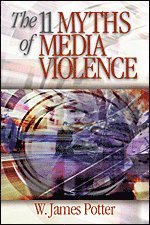
"Potter's The 11 Myths of Media Violence is a groundbreaking, innovative look at a problem that continues to produce controversy even though researchers have been studying it for more than half a century. . . By explicitly describing the various forces that impede public comprehension of the issue, and by organizing the book around 11 central misunderstandings, Potter brilliantly illuminates the thorny issues that surround the media violence debate. His writing is both clear and compelling. Students, researchers, journalists, policy-makers, and parents will enjoy this book and achieve an in-depth understanding of the issues and their implications for society."
-Joanne Cantor, Professor Emerita, University of Wisconsin-Madison and author of Mommy, I'm Scared: How TV and Movies Frighten Children and What We Can Do to Protect Them
"The 11 Myths of Meida Violence is indispensable reading for anyone interested in the issue media violence. Potter's thought-provoking challenges to arguments that media violence is harmless or benign are clearly articulated, empirically sound, and undeniably essential in our violence-saturated culture. This book is certain to be a primary reference for students, scholars, and policy makers dealing with how best to address the psychological, social, and legal implications of violence in the media."
-Mary Beth Oliver, Penn State University
"It is a wonderful summary of the key issues in this hotly debated area. . . This book is a "must read" for anyone involved in the media violence debate."
-Craig A. Anderson, Iowa State University
"The 11 Myths of Media Violence is a must read for everyone who has ever sat in front of a television. Potter indicts our culture thirsty for a quick fix and simple black and white answers. He reminds us we live in a wonderful world of mystery, complexity and untold shades of gray. I must order more copies of this book for the many friends and cohorts with whom I attempt to discuss the harms of media violence."
-Ann Simonton, Director of Media Watch
"This well-written study adds many fresh perspectives to a continuing social and public policy debate. . . . Highly recommended."
—CHOICE
Violence sells. The media industries say they are simply businesses responding to market desires, but when they are criticized for contributing to a culture of violence, they claim First Amendment protection. If anything, media violence is more prevalent today than at any other time in the past. Yet, although scientific researchers have produced a strong body of evidence demonstrating that exposure to media violence harms society, that evidence has never been translated into practical and accessible ideas.
The 11 Myths of Media Violence clearly explains why media violence has not only been allowed but encouraged to escalate. Esteemed author W. James Potter challenges many of our assumptions about the relationship between media and violence. He argues that these assumptions are the primary barriers preventing us from confronting the issue of violence in films, TV, and video games.
While dispelling misperceptions and evoking emotions, each chapter:
identifies a myth, its origin, its acceptance by the public, and its growth in popularity. analyzes the faulty nature of the myth and shows how it deflects attention away from the truth. presents "dilemmas" that challenge readers to reconsider their assumptions. includes a list of indispensable references.The 11 Myths of Media Violence provides an in-depth review of how Congress, journalists, and researchers contribute to the problem and raises important questions that place the reader at the heart of the conflict. W. James Potter takes a broad social science approach, presenting technical information in a direct, balanced, and very readable manner.
Students and scholars of Mass Media, Communications, Film, and Sociology will find The 11 Myths of Media Violence inspires passionate discussion and innovative research. Consumer activists, teachers, and families will find it an essential resource and invaluable step toward finding solutions to this critical social issue.
2 661 kr
Skickas inom 3-6 vardagar
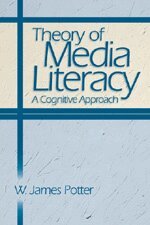
Theory of Media Literacy is an essential resource to a wide audience within the media discipline. The book provides empirical researchers with direction to test the theory and extend our understanding of how the media affect individuals and society. Practitioners will find it helpful in developing strategies to achieve goals and, at the same time, avoid high risks of negative effects. In addition, new scholars will find it to be an excellent introduction to various media literacy research.
2 029 kr
Skickas inom 10-15 vardagar
929 kr
Skickas inom 10-15 vardagar
1 580 kr
Skickas inom 5-8 vardagar
In this media-saturated world, we must learn how to navigate through the overwhelming flood of information so that we can avoid the risks and maximize its potential to help us. Media Literacy shows you how. Drawing from thousands of media research studies, author W. James Potter explores the key components to understanding the fascinating world of mass media. In this thoroughly updated and revised Tenth Edition, Potter presents more discussions of digital media and numerous examples and facts to help you understand how the media operate, how they attract your attention, and how they influence you. Each chapter concludes with a set of exercises to help you apply the chapter material to everyday life and engage in a step-by-step process to increase your own media literacy.
3 173 kr
Skickas inom 3-6 vardagar
"Arguing for a General Framework for Mass Media Scholarship challenges scholars and students to consider and reconsider what we know about media and how we think about media. As such, the book provides an important framework for thinking about knowledge—regardless of the discipline… The text provides all of the necessary tools to move the field forward in a way that will increase the rigor of the work being done and augment the overall profile of the discipline." –Dana Mastro, University of Arizona
In this groundbreaking book, W. James Potter presents an innovative perspective to media scholars and students who are frustrated with the fragmentation of research findings across so many journals, books, and fields. Arguing for a General Framework for Mass Media Scholarship presents a clear plan for a more efficient way to build knowledge about the mass media so that it can be better organized and made more useful. Key Features
Conducts an in-depth analysis of mass media scholarship's four major facets of effects, content, audiences, and organizations Presents a significant shift in conceptualizing media effects and ways research can be conducted to generate more useful knowledge about media influence Develops "narrative line" as a tool to guide analyses about how content decisions are made by producersSynthesizes a system of explanation about why audiences attend to certain messages and how individuals construct meaning from those messagesIncorporates an analysis of mass media organizations to provide greater context of understanding messages and their effects on individuals and macro units in society"The book will play an important role in providing structure to a broad, fragmented discipline. I believe it will, at the very least, create important dialogues about what we now know/understand about areas of mass media, and where we should move as a discipline… This book is clearly a 'call to arms' for mass media scholars to ratchet up the quality of research (and what we know), to see the interconnections within and among strands of scholarship, and to move forward in a more efficient, organized manner. Professor Potter should be commended for this." —Roger Cooper, Ohio University
"This book is...that call to action that comes forward every few years, to wake us up and challenge our ways of doing things, not by being radical, but via synthesis... I've been waiting for several years for a book like this." —Sahara Byrne, Cornell University
2 191 kr
Skickas inom 3-6 vardagar
"Arguing for a General Framework for Mass Media Scholarship challenges scholars and students to consider and reconsider what we know about media and how we think about media. As such, the book provides an important framework for thinking about knowledge—regardless of the discipline… The text provides all of the necessary tools to move the field forward in a way that will increase the rigor of the work being done and augment the overall profile of the discipline." –Dana Mastro, University of Arizona
In this groundbreaking book, W. James Potter presents an innovative perspective to media scholars and students who are frustrated with the fragmentation of research findings across so many journals, books, and fields. Arguing for a General Framework for Mass Media Scholarship presents a clear plan for a more efficient way to build knowledge about the mass media so that it can be better organized and made more useful. Key Features
Conducts an in-depth analysis of mass media scholarship's four major facets of effects, content, audiences, and organizations Presents a significant shift in conceptualizing media effects and ways research can be conducted to generate more useful knowledge about media influence Develops "narrative line" as a tool to guide analyses about how content decisions are made by producersSynthesizes a system of explanation about why audiences attend to certain messages and how individuals construct meaning from those messagesIncorporates an analysis of mass media organizations to provide greater context of understanding messages and their effects on individuals and macro units in society"The book will play an important role in providing structure to a broad, fragmented discipline. I believe it will, at the very least, create important dialogues about what we now know/understand about areas of mass media, and where we should move as a discipline… This book is clearly a 'call to arms' for mass media scholars to ratchet up the quality of research (and what we know), to see the interconnections within and among strands of scholarship, and to move forward in a more efficient, organized manner. Professor Potter should be commended for this." —Roger Cooper, Ohio University
"This book is...that call to action that comes forward every few years, to wake us up and challenge our ways of doing things, not by being radical, but via synthesis... I've been waiting for several years for a book like this." —Sahara Byrne, Cornell University
501 kr
Skickas inom 5-8 vardagar
1 290 kr
Skickas inom 5-8 vardagar
2 515 kr
Skickas inom 3-6 vardagar
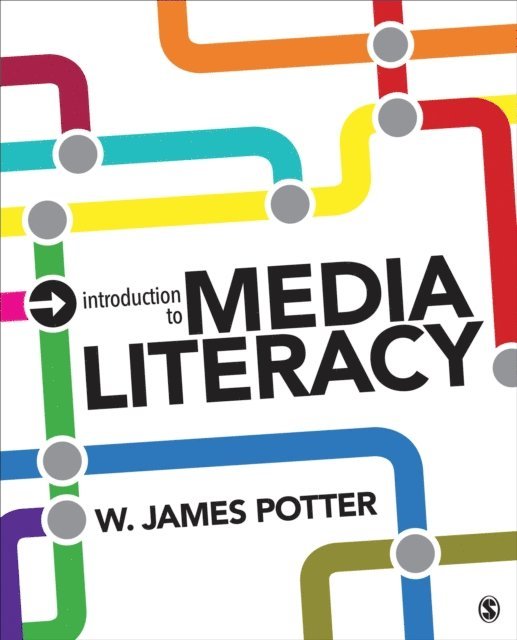
Introduction to Media Literacy builds students’ media literacy step-by-step to make them more knowledgeable and engaged producers and consumers of media. In nine streamlined chapters, students learn how the mass media operate and how to use the media in better ways to achieve their own personal goals. All of the essential media topics are covered—from understanding media audiences, industries, and effects to confronting controversies like media ownership, privacy, and violence—in a concise format that keeps students focused on effectively improving their media literacy skills.
Give your students the SAGE edge!
SAGE edge offers a robust online environment featuring an impressive array of free tools and resources for review, study, and further exploration, keeping both instructors and students on the cutting edge of teaching and learning.
1 476 kr
Skickas inom 10-15 vardagar
742 kr
Skickas inom 10-15 vardagar